Top 20 Natural Monuments around Niersbach
Best natural monuments around Niersbach are found within the scenic Moselle Valley, characterized by rolling hills, vineyards, and the Kyll Valley. The region, part of the Bernkastel-Wittlich district, offers a diverse natural landscape. It is a popular destination for nature and hiking enthusiasts, with features like the Meulenwald Forest and sections of the Eifelsteig trail. The area provides opportunities to explore varied natural environments through outdoor activities.
Best natural monuments around Niersbach
- The most popular natural monuments is Viktoria Spring…
Last updated: May 12, 2026
Tanzlay Waterfall and Rock Formations
Highlight • Waterfall
Translated by Google •
Tip by

Viktoria Spring (Heckenmünster)
Highlight • Natural Monument
Translated by Google •
Tip by

Sign up now to discover places like this
Get recommendations on the best single tracks, peaks, & plenty of other exciting outdoor places.
Sign up for free
Hüttingen Waterfall
Highlight • Waterfall
After a thunderstorm or during the snowmelt the stream can lead a lot of water.
Translated by Google •
Tip by

Werdelstein
Highlight • Natural Monument
Tip by

Six burial mounds near Binsfeld
Highlight • Historical Site
Translated by Google •
Tip by

Sign up for free to discover even more natural monuments around Niersbach.
Sign up for free
Already have an account?
Start today with a free account
Your next adventure awaits.
Login or Signup
Tips from the Community

For the sulfur spring, see e.g. https://kulturdb.de/einobjekt.php?id=1720
0
0

Beautiful and wildly romantic, too bad there's no waterfall because of the drought...can someone turn on the tap? 😉
0
0

The path was restored and reopened in September 2023.
2
0

Looking for a waterfall with a high viaduct, passable for buses in the Eifel!
0
0

Completely dried up in the summer of 2023 and partly very destroyed by the flood 2 years ago. But you can still walk the path well. You should be sure-footed and not afraid of heights. Not recommended with small children and anxious dogs. (if someone comes towards you, you don't always have space to avoid) If you like rocks, you'll like it without water!
1
0
Update September 2023: Tanzlay hiking trail has been reopened. In addition, a bridge that was washed away in 2021 was rebuilt down by the river, so that you can do a nice circular hike of 8-10 km. Condition report from February no longer applies (except no water, still damp) Almost no water in February, but still a bit muddy. Descent from the waterfall is rather very difficult. Impressive and interesting in places. I would not recommend it as a hiking route.
2
0

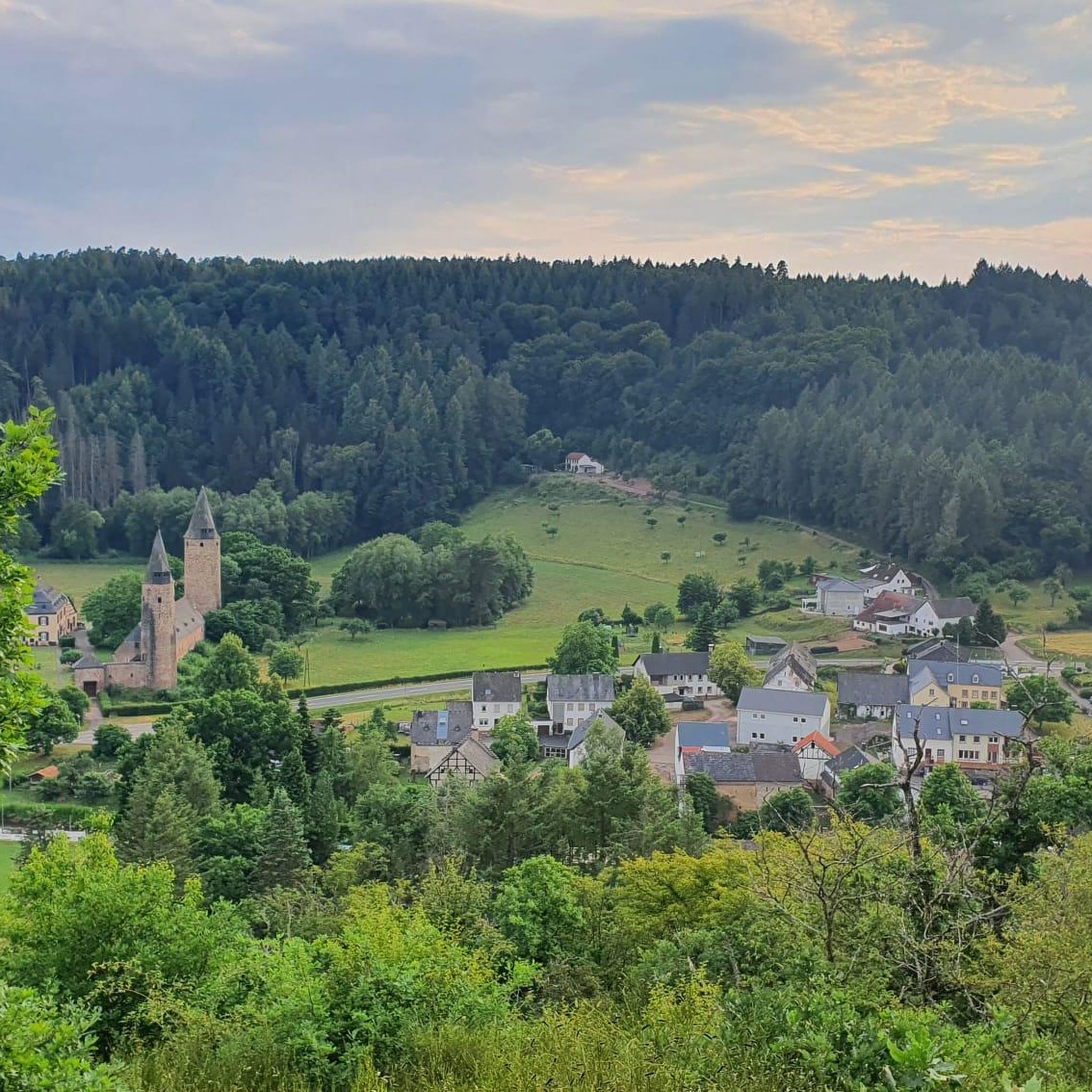
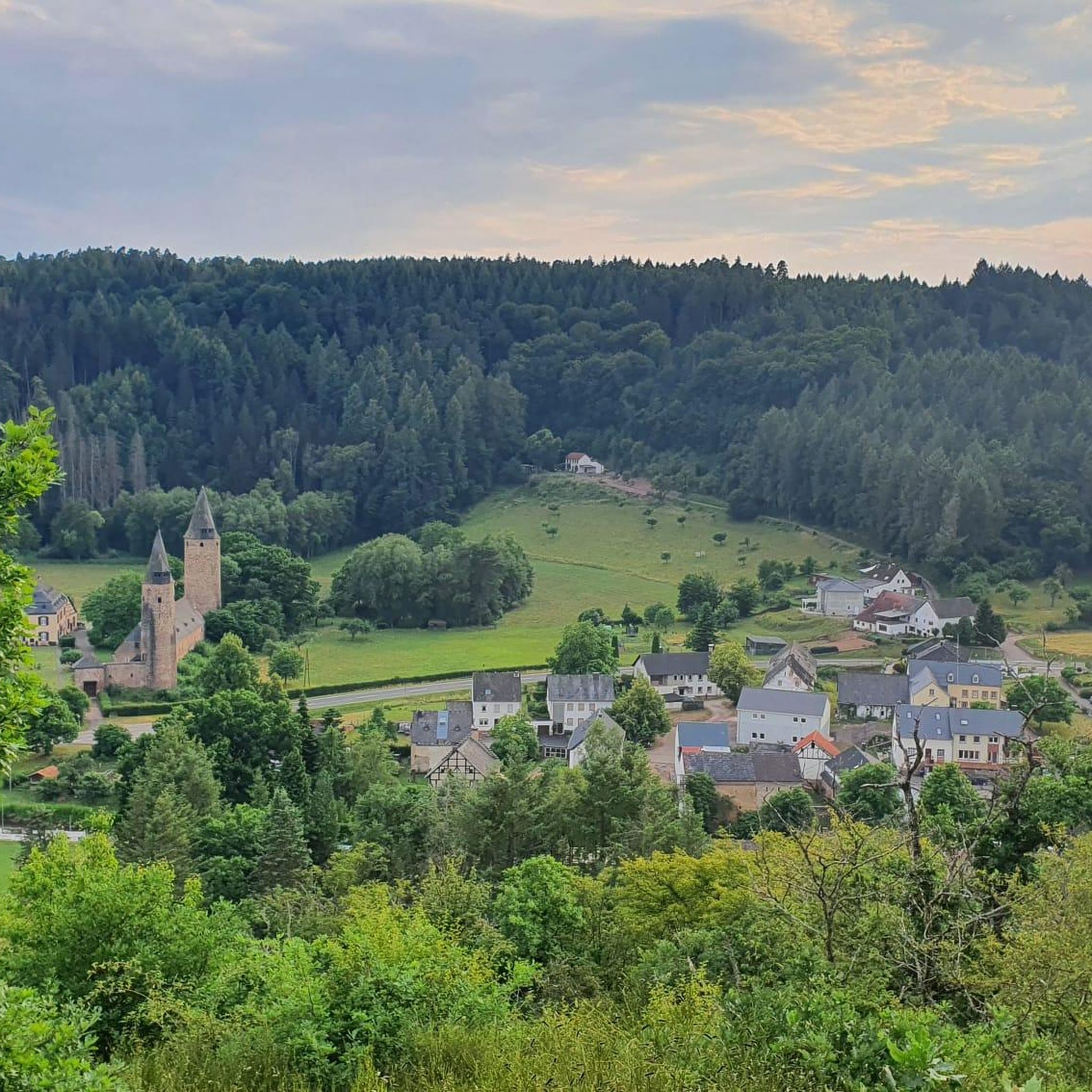
The CO2 springs are classified as simple acid springs. The gas, carbonic acid dissolved in water, rises through the cracks in the fault line and partially dissolves in the groundwater at a shallow depth. The now slightly acidic water dissolves mineral compounds from the rock it flows through, which settle on the earth's surface as spring sediment. The mineral springs around Heckenmünster have a high iron content, which results from the fact that in the subsurface of the spring areas, at a depth of approximately 10-20 m, there is a red iron horizon through which the springs flow. The springs generally produce extremely low water flow, between 1 and 3 liters per minute. The Viktoria spring in Heckenmünster was used commercially around the turn of the century; between 1880 and 1900, approximately 50,000 bottles of mineral water were bottled annually. In the immediate vicinity of the spring, you can still find many pieces of glass and broken bottles that were broken or discarded at the time. Source: Eifel.info
0
0

Unfortunately no drinking water for the bottle. But in an idyllic location.
0
0
Frequently Asked Questions
What are some unique natural monuments to visit around Niersbach?
Beyond the well-known spots, you can explore the Viktoria Spring (Heckenmünster), a carbonated spring surrounded by a pine forest with historical significance dating back to Roman times. Another unique site is Werdelstein, a pillar-like rock formation steeped in local legends and history.
Are there any impressive waterfalls or rock formations to explore?
Yes, the region features several impressive natural formations. You can visit the Tanzlay Waterfall and Rock Formations, which offers a trail-like path for sure-footed hikers. Additionally, the Hüttingen Waterfall, formed by a village stream, provides a picturesque and easily accessible spot for rest.
What kind of historical natural monuments can I find in the Niersbach area?
The Niersbach area offers natural monuments with historical significance. The Viktoria Spring (Heckenmünster) was used as a bath by the Romans. You can also visit the Barrow Group Im Friedbüsch, an extensive burial mound field from the Iron Age, offering insights into ancient cultures.
Are there family-friendly natural monuments suitable for children?
Yes, several natural monuments are suitable for families. The Viktoria Spring (Heckenmünster) is considered family-friendly, offering a pleasant spot in a pine forest. The Hüttingen Waterfall is centrally located and provides a nice resting place for all ages.
Can I bring my dog to the natural monuments around Niersbach?
Generally, the natural landscapes around Niersbach, including forests and trails leading to natural monuments, are dog-friendly. However, it's always recommended to keep dogs on a leash, especially in nature reserves or near wildlife, and to respect local signage. Specific rules for each monument might vary, so check on-site information.
What are the best times of year to visit the natural monuments in Niersbach?
The natural monuments around Niersbach are beautiful year-round. Spring offers blossoming landscapes, while autumn provides vibrant deciduous forests, especially along the Moselle Valley and in the Meulenwald. Summer is ideal for hiking and outdoor activities, and even winter can offer a serene, picturesque experience, though some trails might be more challenging when wet or icy.
Are there hiking opportunities near these natural monuments?
Absolutely. The region is a popular destination for hiking enthusiasts. You can find numerous trails, including sections of the Eifelsteig and routes within the Meulenwald Forest. For specific hiking routes, explore the Hiking around Niersbach guide, which features trails like the 'Bruch Historic Oil Mill – Bruch Castle loop' and 'Village Smithy Greverath – Kneipp Rest Area Greverath loop'.
What other outdoor activities can I do in the natural surroundings of Niersbach?
Beyond hiking, the natural surroundings of Niersbach are excellent for cycling. The Kyll Valley Cycle Path offers an immersive experience through nature. You can find various routes for mountain biking and road cycling. Check out the MTB Trails around Niersbach and Road Cycling Routes around Niersbach guides for detailed options.
Where can I find places to rest or eat near the natural monuments?
While specific cafes or pubs might not be directly adjacent to every natural monument, the villages and towns in the Niersbach area, such as Hüttingen, offer opportunities for rest and refreshments. The Hüttingen Waterfall, for instance, is centrally located in the village and provides a pleasant spot for a break.
How can I reach the natural monuments around Niersbach by public transport or car?
Niersbach is situated in the Bernkastel-Wittlich district, making it accessible by car, with parking often available near trailheads or village centers. Public transport options might be more limited for direct access to every remote natural monument, but local bus services connect the main villages. It's advisable to check local transport schedules for specific routes to your desired starting points.
Are there any circular hiking trails that include natural monuments?
Yes, the region offers circular hiking opportunities that incorporate natural monuments and scenic views. For example, the Meulenwaldroute, an Eifelsteig experience loop, is a 34 km trail that showcases varied landscapes. While not all natural monuments are on dedicated circular routes, many can be integrated into longer loop hikes starting from nearby villages.
What makes the broader natural landscape around Niersbach special?
The broader natural landscape around Niersbach is defined by the scenic Moselle Valley, with its rolling hills, vineyards, and the picturesque Kyll Valley. The Meulenwald Forest provides extensive wooded areas, and the region's proximity to the Eifelsteig means diverse geological formations and pristine nature. It's the combination of these varied environments that creates a compelling natural experience.
Most popular routes around Niersbach
Most popular attractions around Niersbach

Get inspired with the komoot mobile app


Explore more
Extend your search for the best caves by checking out these guides of the top ones around Niersbach:
