Top 20 Natural Monuments around Scheuern
Natural monuments around Scheuern offer diverse geological formations and scenic landscapes. The region features ancient rock formations, river valleys, and historical natural sites. These areas provide opportunities to observe unique geological features and experience varied natural environments. The landscape is shaped by historical geological processes, creating distinct natural landmarks.
Best natural monuments around Scheuern
- The most popular natural monuments is Mariensäule Waxweiler, a man-made monument that is dedicated to the Virgin Mary and built in gratitude for the preservation…
Last updated: June 24, 2026
Mariensäule Waxweiler
Highlight • Monument
Translated by Google •
Tip by

Roter Puhl Sandstone Cliffs on the Enz
Highlight • Natural Monument
Translated by Google •
Tip by

Sign up now to discover places like this
Get recommendations on the best single tracks, peaks, & plenty of other exciting outdoor places.
Sign up for free
Roter Puhl
Highlight • Natural Monument
Translated by Google •
Tip by

Marien Chapel and Madonna in the 700-year-old oak near Neuerburg
Highlight • Religious Site
Translated by Google •
Tip by

Prümtalweg Trail, Naturpark Südeifel
Highlight • Trail
"The path lives from the silence and seclusion in the Prümtal and the numerous waters that flow into it. The Prüm has dug itself deep into the rock here, …
Translated by Google •
Tip by

Sign up for free to discover even more natural monuments around Scheuern.
Sign up for free
Already have an account?
Start today with a free account
Your next adventure awaits.
Login or Signup
Tips from the Community

At the "Roter Puhl" the Enz has cut into the slope covered with beech trees at a considerable height. Here the rock of the middle Bunter sandstone from the Triassic period stands in bright orange-red colors. These deposits in river and delta areas are around 220 million years old. Source: https://www.naturpark-suedeifel.de/a-roter-puhl
1
0

At the "Roter Puhl" the Enz has cut the beech slope at a stately height. Here, in bright orange-red colors, the middle red sandstone rock of the Triassic geologic age can be seen. These deposits in river and delta areas are about 220 million years old. The oblique stratification of the sandstone visible in the bedrock in alternating layers with horizontal strata and gravel bands testifies to the different flow conditions of the primordial waters. The arch's shape is the result of thousands of years of exposure to water from the meandering Enz River. The surface of the rock face is still subject to constant weathering, in places the rock is slightly more porous. An interesting insight into the floor structure can be obtained in the upper part. The overlying Earths here only reach a thickness of less than a meter. Natural crevices provide nesting and breeding grounds for the kingfisher, which is native to the area.
7
0
The memorial with its many thank you plaques is always a popular place of worship. Every year on a May Sunday there is a procession from the parish church to the Marian column. In 1998 the parish community celebrated the 50th anniversary of the Marian Column with several hundred believers. In recent years, the taller trees have increasingly blocked the view of the Marian Column. In 2004, the Board of Trustees of today's Gerhard Faber Foundation took on the task of redesigning the entire complex. In cooperation with the local population, the square around the Marian Column was completely renovated. Source: https://www.naturpark-suedeifel.de/a-mariensaeule
5
0

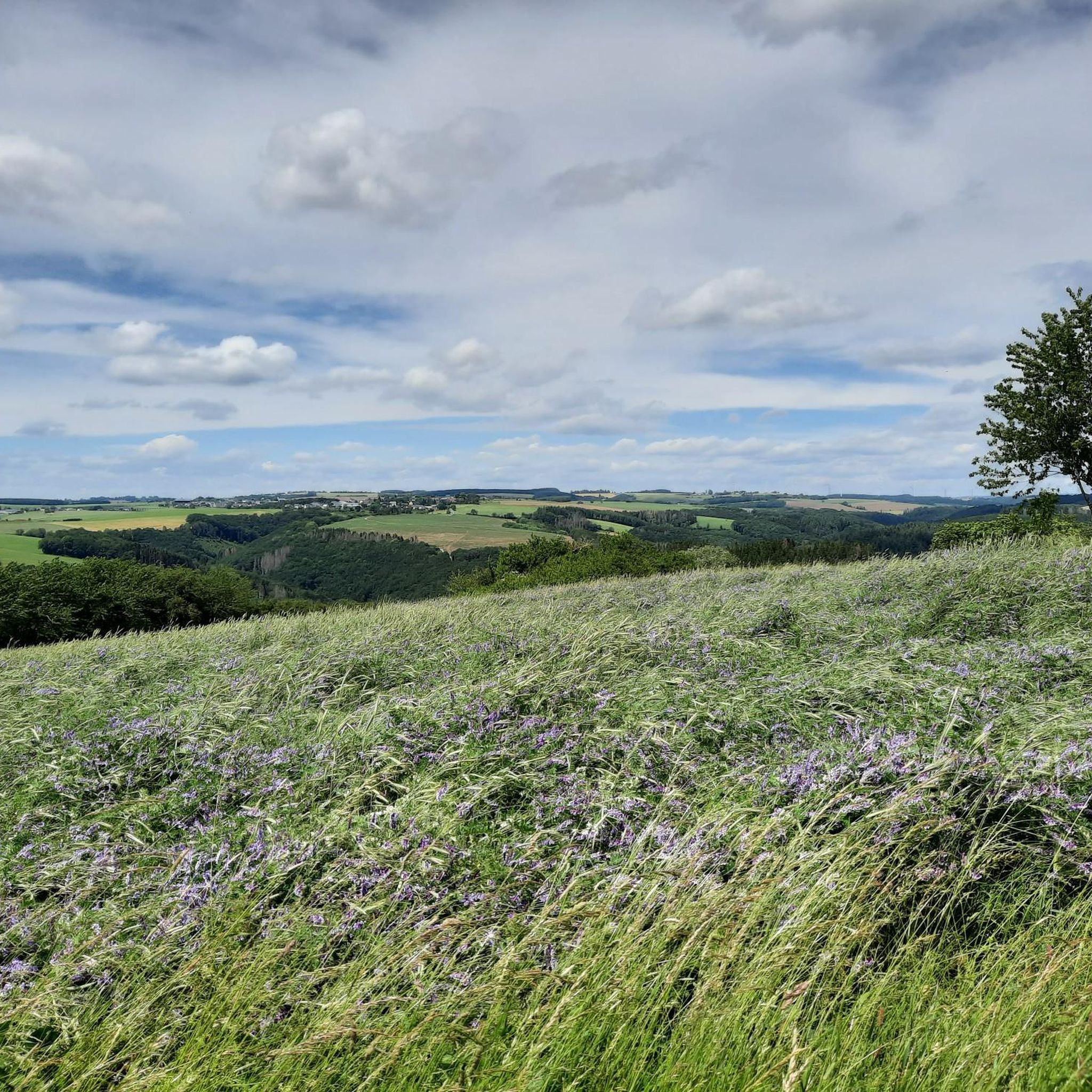
The Marian column stands high above Waxweiler
3
0

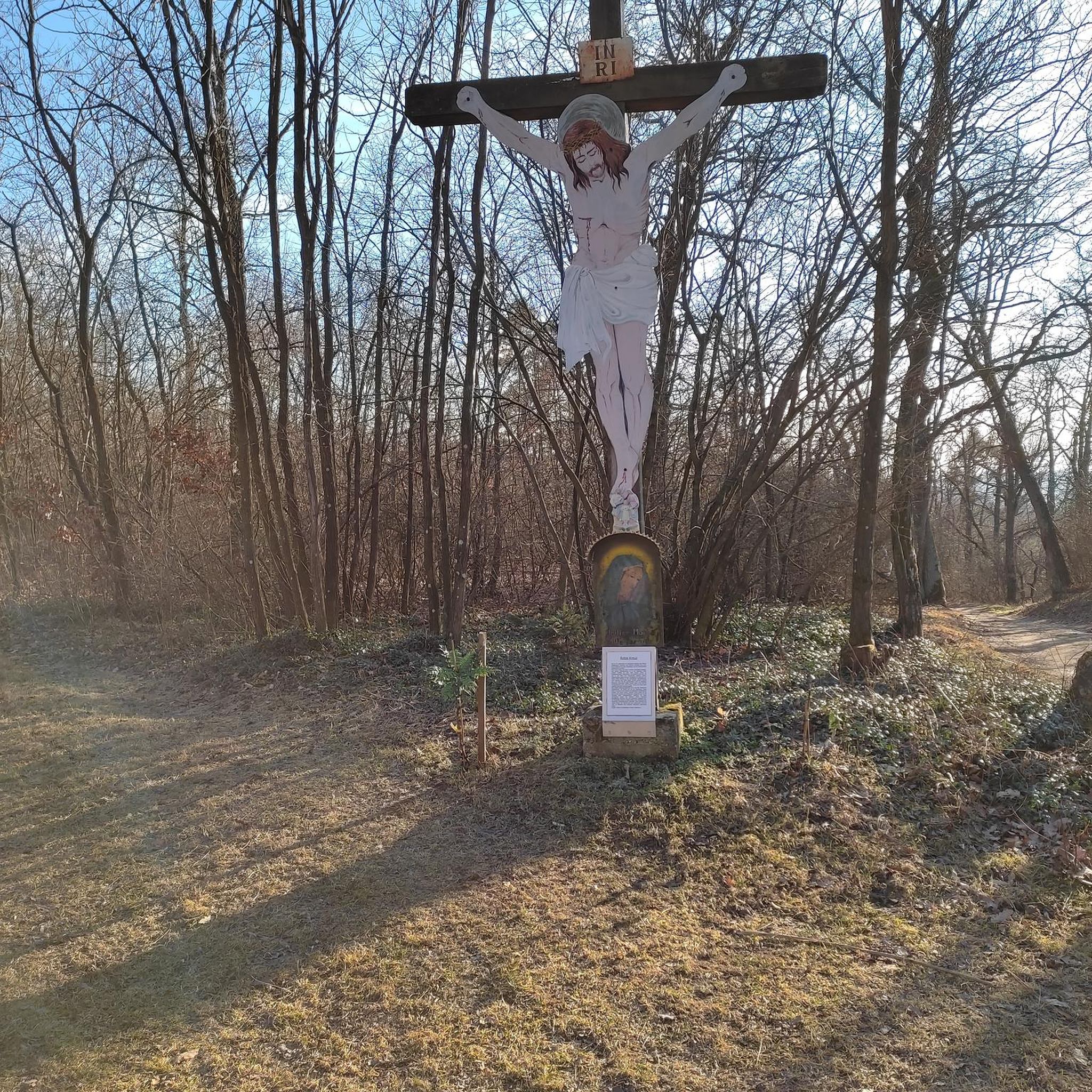
Above the castle complex is the pilgrimage site of the Neuburg citizens: The 46 cm tall Madonna, a replica of the Altötting Madonna from the 17th century donated by Kuno von Falkenstein, stands in a 700-year-old oak tree. Age and candle smoke have colored the statue of the Madonna dark brown, almost black. Station paintings of the Seven Sorrows of Mary, created by sculptor J. Hess in the 19th century, lead to this lonely pilgrimage site. https://neuerburg-eifel.de/index.php/stadt-neuerburg/wandern
1
0
The burning candles in the little chapel light up the tree opposite. At least that's how it looks when you approach in the dark from the other side of the creek valley.
1
0
Opposite the chapel there is an old tree with a holy picture built into a column.
1
0
Here you can pause and light a candle. Many small signs thank Maria for help!
1
0
Frequently Asked Questions
What unique geological features can I find among the natural monuments around Scheuern?
The region around Scheuern offers diverse geological formations. You can explore the impressive red sandstone cliffs at Roter Puhl, where the Enz river has cut into the slope, revealing Triassic geologic age formations. In the broader Vulkaneifel area, you'll also find ancient reef formations like the Gerolsteiner Dolomites, which were once a subtropical shallow sea, and unique mineral formations such as veins of agate and jasper in fields near Scheuern, Tholey.
Are there any significant historical or cultural natural monuments in the Scheuern area?
Yes, the area features several sites with both natural and historical significance. The Mariensäule Waxweiler is a man-made monument dedicated to the Virgin Mary, built in gratitude for the town's preservation during WWII, offering a great view of Waxweiler. Another notable site is the Marien Chapel and Madonna in the 700-year-old oak near Neuerburg, which combines a historic chapel with a large, hollowed-out ancient oak tree, providing a place for reflection.
What are the most impressive rock formations to see?
The Roter Puhl is a must-see, featuring a rock face made of red sandstone where the Enz river has carved into the slope, showcasing Triassic geologic age formations in impressive red hues. Additionally, the Gerolsteiner Dolomites, located in the nearby Vulkaneifel region, present incredibly beautiful and imposing rock formations that are remnants of ancient coral reefs.
Are there volcanic lakes (Maare) near Scheuern?
While not directly in Scheuern, the broader Vulkaneifel region, which includes areas near Kalenborn-Scheuern, is famous for its volcanic activity and the resulting 'Maare' or volcanic lakes. These crater lakes are a significant natural highlight, offering unique ecological systems and picturesque landscapes ideal for nature lovers.
What kind of hiking trails can I find around the natural monuments near Scheuern?
You can find a variety of hiking trails. The Prümtalweg Trail in Naturpark Südeifel offers a varied river landscape with terraces and floodplain meadows. Near Kalenborn-Scheuern, a varied hiking trail leads past the Millstone Caves on the Rother Kopf, providing insights into historical milling practices and local geology. Many trails offer scenic views and opportunities to explore the geological features of the area.
Are there cycling opportunities near the natural monuments?
Yes, there are numerous cycling opportunities. For touring cyclists, routes like the 'Weidendell Tunnel – Arzfelder See loop' or 'Path Along the Prüm River – Old Bridge, Bettingen loop' are available. Mountain bikers can explore trails such as 'View of Naturpark Südeifel – O Da Wingerde Bench loop'. Road cyclists can enjoy routes like 'Mural on the Vianden Dam – View of Bivels from Per Loch loop'. You can find more details on these and other routes in the Cycling around Scheuern, MTB Trails around Scheuern, and Road Cycling Routes around Scheuern guides.
What are some family-friendly natural monuments to visit?
Several natural monuments are suitable for families. The Mariensäule Waxweiler is considered family-friendly and offers a nice view. The Marien Chapel and Madonna in the 700-year-old oak near Neuerburg is also a family-friendly historical and natural site. The Roter Puhl, with its impressive red sandstone cliffs, is part of an easy hike and is also tagged as family-friendly.
When is the best time of year to visit the natural monuments around Scheuern?
The best time to visit the natural monuments around Scheuern is generally from spring to autumn (April to October). During these months, the weather is usually pleasant for hiking and outdoor activities, and the natural landscapes are at their most vibrant. Spring brings blooming flora, while autumn offers beautiful foliage. Some trails might be accessible in winter, but conditions can be challenging due to snow or ice.
Are there options for accommodation and dining near the natural monuments?
Yes, the region offers various options for accommodation and dining. Nearby towns and villages, especially those in the Vulkaneifel area like Kalenborn-Scheuern, provide guesthouses, hotels, and holiday rentals. You'll also find local cafes and pubs where you can enjoy regional cuisine and refreshments after exploring the natural monuments.
What do visitors enjoy most about the natural monuments around Scheuern?
Visitors particularly appreciate the diverse geological formations, such as the impressive red sandstone cliffs at Roter Puhl Sandstone Cliffs on the Enz, and the serene beauty of sites like the Marien Chapel and Madonna in the 700-year-old oak near Neuerburg. The community also highlights the great views from places like Mariensäule Waxweiler and the peaceful, secluded nature of trails like the Prümtalweg Trail.
Are there any natural monuments that offer good viewpoints?
Absolutely. The Mariensäule Waxweiler offers a very impressive view of the town of Waxweiler. Additionally, the Gerolsteiner Dolomites in the Vulkaneifel region provide noteworthy views from Munterley and Hustley into the Kylltal, showcasing the dramatic ancient reef formations.
What is the 'Roter Puhl' and what makes it special?
The Roter Puhl is a natural monument characterized by impressive red sandstone cliffs. It's special because the Enz river has cut into the slope, revealing striking red sandstone formations from the Triassic geologic age, approximately 220 million years old. The oblique stratification visible in the bedrock testifies to ancient river conditions, and natural crevices in the rock face provide nesting grounds for kingfishers.
Most popular routes around Scheuern
Most popular attractions around Scheuern

Get inspired with the komoot mobile app


Explore more
Extend your search for the best caves by checking out these guides of the top ones around Scheuern:
