Top 20 Natural Monuments around Schlettau
Best natural monuments around Schlettau are found in the scenic Ore Mountains (Erzgebirge) region of Saxony, Germany. The area features a diverse natural landscape, offering impressive geological formations and significant ecological sites. Visitors can explore a variety of natural wonders, from dramatic viewpoints to unique gorges and tranquil lakes. This region provides numerous opportunities to experience the natural environment.
Best natural monuments around Schlettau
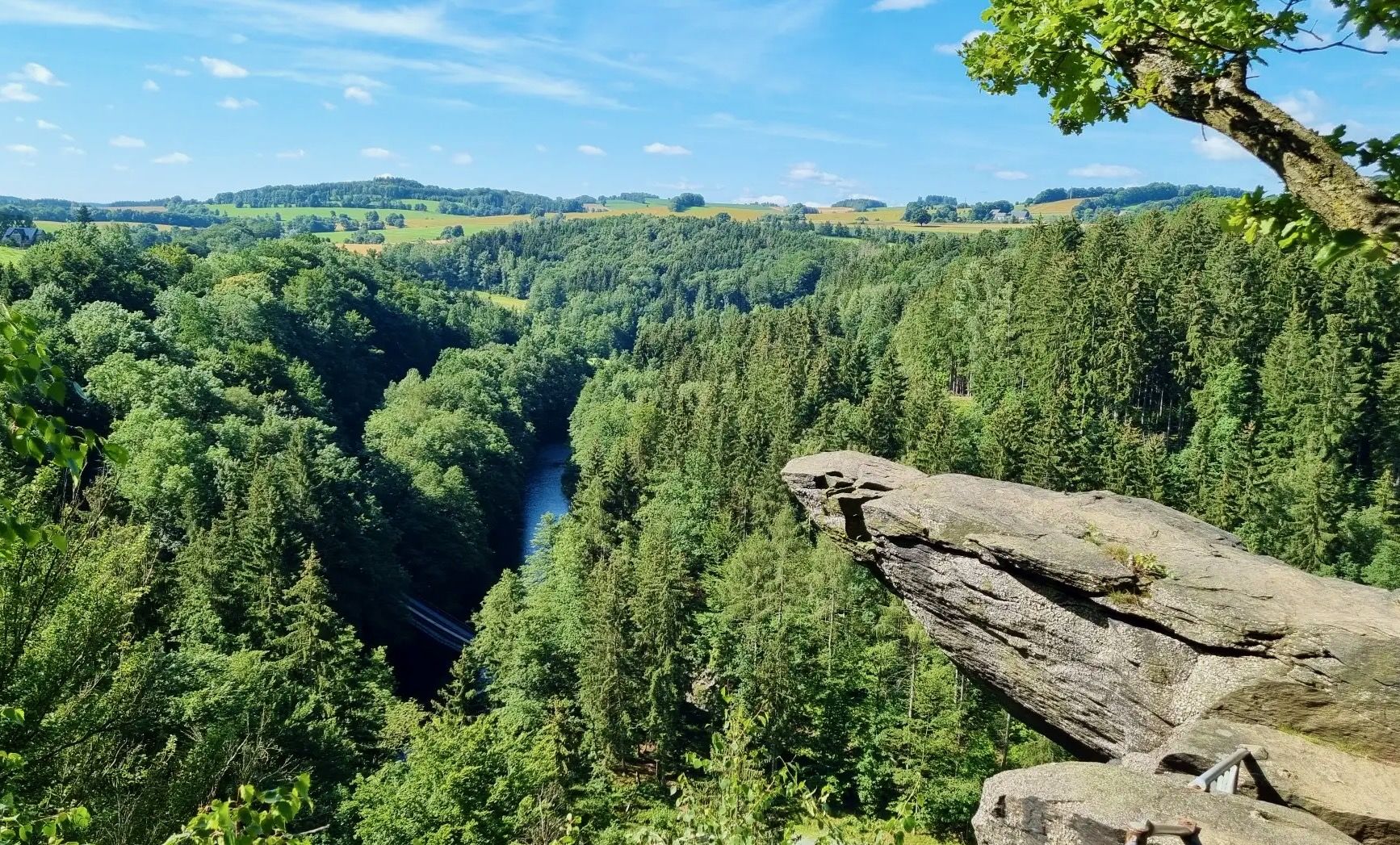
- The most popular natural monuments is Wolkensteiner Schweiz Viewpoint, a viewpoint that offers views into the deep valley. The deep valley with exposed gneiss is the result of the erosion of the Zschopau river.
- Another must-see spot is Greifensteine Observation Rock, a natural monument and viewpoint. From this lookout rock, visitors can experience panoramic views of the Ore Mountains peaks and surrounding valleys.
- Visitors also love Cranzahl Dam, a lake and natural monument. This dam offers a circular route and provides a wonderful view from its rest areas.
- Schlettau is known for viewpoints, gorges, and lakes. The area offers a variety of natural monuments to see and explore, including rock formations and dams.
- The natural monuments around Schlettau are appreciated by the komoot community. More than 2200 upvotes and over 2100 photos highlight the appeal of these locations.
Last updated: May 11, 2026
Greifensteine Observation Rock
Highlight • Natural Monument
Translated by Google •
Tip by

Bridge Cliff
Highlight • Viewpoint
Translated by Google •
Tip by

Sign up now to discover places like this
Get recommendations on the best single tracks, peaks, & plenty of other exciting outdoor places.
Sign up for free
Wolkensteiner Schweiz Viewpoint
Highlight • Viewpoint
Translated by Google •
Tip by

Wolf Gorge (Wolkenstein Gorge)
Highlight • Gorge
Translated by Google •
Tip by

Cranzahl Dam
Highlight (Segment) • Lake
Translated by Google •
Tip by

Sign up for free to discover even more natural monuments around Schlettau.
Sign up for free
Already have an account?
Start today with a free account
Your next adventure awaits.
Login or Signup

Other adventures around Schlettau

Tips from the Community

The rock massif between Wolkenstein and Floßplatz, the "Wolkenstein Switzerland", is a great place for hiking with small scrambles and wonderful views, but there are also many opportunities for climbing here 🙃.
15
0

The Greifensteine are a rock formation in Saxony, known for climbing and mountaineering, among other things. Their highest point reaches an elevation of approximately 731 meters above sea level. The area around the Greifensteine is a nature reserve.
16
0
The path through the Wolfsschlucht Gorge leads down to the river. This is also the starting point for the via ferratas.
7
1
The origin of such a notch could be a geological fault with rock material that is more susceptible to erosion.
5
2
The path through the Wolfsschlucht leads down to the river. This is also where the via ferrata starts.
21
2
The deep valley with exposed gneiss is the result of the erosion of the Zschopau, which rises on the Fichtelberg and has been flowing in a northerly direction with a greater gradient since the uplift of the Ore Mountains block in the Tertiary period, and flows into the Freiberg Mulde near Döbeln. Steep, often bizarre rock faces are created on steep slopes by the increased flow speed. The most impressive formation is probably an overhanging cliff.
31
1
The sign is located at the access point to the impressive bridge cliff.
31
0
The deep valley with exposed gneiss is the result of the erosion of the Zschopau, which rises on the Fichtelberg and has been flowing in a northerly direction with a greater gradient since the uplift of the Ore Mountains block in the Tertiary period, and flows into the Freiberg Mulde near Döbeln. Steep, often bizarre rock faces are created on steep slopes by the increased flow speed. The most impressive formation is probably an overhanging cliff.
9
0
Frequently Asked Questions
What unique geological features can I explore near Schlettau?
Just a short distance from Schlettau, you can discover the impressive "Organ Pipes" basalt columns at Scheibenberg. These vertical columns formed from an Oligocene-era lava flow, offering a stunning display of geological history. The site was recognized as a "National Geotope" and is part of the UNESCO World Heritage Montane Region/Krušnohoří. You can learn more about this unique formation on iugs-geoheritage.org.
Are there any significant ecological sites to visit in the region?
Yes, the Kleiner Kranichsee High Moor, located southwest of Johanngeorgenstadt, is one of the most significant and best-preserved high moors in the Ore Mountains. It features a unique ecosystem with specialized flora like peat mosses, cotton grasses, and insectivorous plants such as sundew. A wooden boardwalk and observation tower allow visitors to experience this rare natural environment. Further details can be found on wikipedia.org.
What are some popular viewpoints among the natural monuments around Schlettau?
The region offers several stunning viewpoints. The Greifensteine Observation Rock provides panoramic views of the Ore Mountains peaks and surrounding valleys. Another popular spot is the Bridge Cliff, which offers breathtaking views into the Zschopautal valley, especially beautiful in autumn. Additionally, the Wolkensteiner Schweiz Viewpoint offers impressive views into a deep valley carved by the Zschopau river.
Can I find family-friendly natural monuments in the area?
Absolutely. The Cranzahl Dam is a great family-friendly option, offering a beautiful circular route and wonderful views from its rest areas. While bathing is not allowed as it supplies drinking water, the scenic walk around the dam is enjoyable for all ages. The Bridge Cliff is also categorized as family-friendly, providing a rewarding view after a moderate walk.
Are there opportunities for hiking or other outdoor activities near these natural monuments?
Yes, the area around Schlettau is excellent for outdoor activities. You can find numerous routes for gravel biking, cycling, and mountain biking. For example, there are moderate to difficult gravel biking routes like the "Röhrgraben Divider – Greifensteine Rock Formations loop from Ehrenfriedersdorf." Cycling enthusiasts can enjoy easy routes such as the "Kneipp Pool with Shelter – Crottendorf Church loop from Schlettau." For mountain bikers, challenging routes like the "Fichtelberg Weather Station – Fichtelberg Peace Bell loop from Scheibenberg" are available. Explore more routes in our guides for Gravel biking around Schlettau, Cycling around Schlettau, and MTB Trails around Schlettau.
What kind of wildlife can I expect to see?
While specific wildlife sightings can vary, the Kleiner Kranichsee High Moor is known for its unique flora, including peat mosses, cotton grasses, dwarf shrubs, and insectivorous plants like sundew. The broader Ore Mountains region, with its forests and diverse habitats, supports various bird species, small mammals, and insects. Keep an eye out for local fauna during your visits to these natural areas.
What is the best time of year to visit the natural monuments around Schlettau?
The natural monuments around Schlettau are beautiful year-round. However, many visitors particularly enjoy the autumn months when the foliage turns vibrant colors, offering spectacular views, especially from spots like the Bridge Cliff. Spring and summer are ideal for hiking and cycling, with lush greenery and pleasant weather. Winter offers a different charm, with opportunities for winter hiking amidst snow-covered landscapes.
Are there any gorges or dramatic rock formations to explore?
Yes, the region is home to impressive gorges and rock formations. The Wolf Gorge (Wolkenstein Gorge) offers a path leading down to the river, with a family-friendly via ferrata nearby. The Wolkensteiner Schweiz Viewpoint overlooks a deep valley with exposed gneiss and steep, often bizarre rock faces created by river erosion. The "Organ Pipes" at Scheibenberg also present a dramatic geological formation of basalt columns.
What do visitors particularly enjoy about the natural monuments in this region?
Visitors frequently praise the breathtaking panoramic views from various lookout points, such as the Greifensteine Observation Rock and Bridge Cliff. The unique geological formations like the "Organ Pipes" and the serene, untouched nature of the Kleiner Kranichsee High Moor are also highly appreciated. Many enjoy the well-maintained circular routes and the opportunities for photography, especially during the colorful autumn season.
Are there any natural monuments with historical significance?
The "Organ Pipes" at Scheibenberg hold historical significance beyond their geological formation. The basalt from this site was quarried for building materials until 1936, when the area was designated for protection to preserve these striking columns. This decision marked an early recognition of the site's natural value and its importance for future generations.
How long does it typically take to explore these natural monuments?
The duration varies depending on the monument and your activity. For instance, a visit to the "Organ Pipes" at Scheibenberg, including a moderate hike to the observation tower, can take a few hours. A circular walk around the Cranzahl Dam might take 1-2 hours. Exploring the Kleiner Kranichsee High Moor via its boardwalk and observation tower also typically takes a couple of hours. Longer hiking or cycling tours in the region can span half a day or more.
Most popular routes around Schlettau
Most popular attractions around Schlettau

Get inspired with the komoot mobile app


Explore more
Extend your search for the best caves by checking out these guides of the top ones around Schlettau:
