Top 20 Natural Monuments around Eichigt
Best natural monuments around Eichigt are found in the Vogtland district of Saxony, Germany. The region is characterized by a blend of natural landscapes and historical significance, notably at the Dreiländereck. This area marks the convergence of historical borders and offers insights into both ecological preservation and historical context. Visitors can explore diverse natural features and sites of historical importance.
Best natural monuments around Eichigt
- The most popular natural monuments is Tripoint Bavaria–Saxony–Czech Republic, a man-made monument that marks…
Last updated: June 24, 2026
Bad Elster Rose Garden
Highlight • Natural Monument
Translated by Google •
Tip by


Sign up now to discover places like this
Get recommendations on the best single tracks, peaks, & plenty of other exciting outdoor places.
Sign up for free
Zeidelweidetal Nature Reserve
Highlight • Natural Monument
Translated by Google •
Tip by

Swedish Oak at Heißenstein
Highlight • Natural Monument
Translated by Google •
Tip by
St. Mary's Spring
Highlight • Natural Monument
Translated by Google •
Tip by
Sign up for free to discover even more natural monuments around Eichigt.
Sign up for free
Already have an account?
Start today with a free account
Your next adventure awaits.
Login or Signup


Tips from the Community

A historic oak tree that has suffered some weather-related damage over time. It's remarkable how old it has become.
0
0

The freestanding pedunculate oak at Heißenstein is also called the "Swedish oak." It is the oldest and most imposing tree in the spa town. The oak, which has stood here for approximately 325 years, has a short, early-branching trunk and a very broad, spreading crown. At a height of one meter, the trunk has a circumference of 5.02 meters; just thirty centimeters higher, it already has a circumference of 5.25 meters, and the crown reaches a whopping 28 meters. On August 21, 2023, a fifty-centimeter-wide main branch broke off the oak and fell onto private property. It narrowly missed a porch swing but took down a power line. The crown was then secured and moderately shortened.
14
1


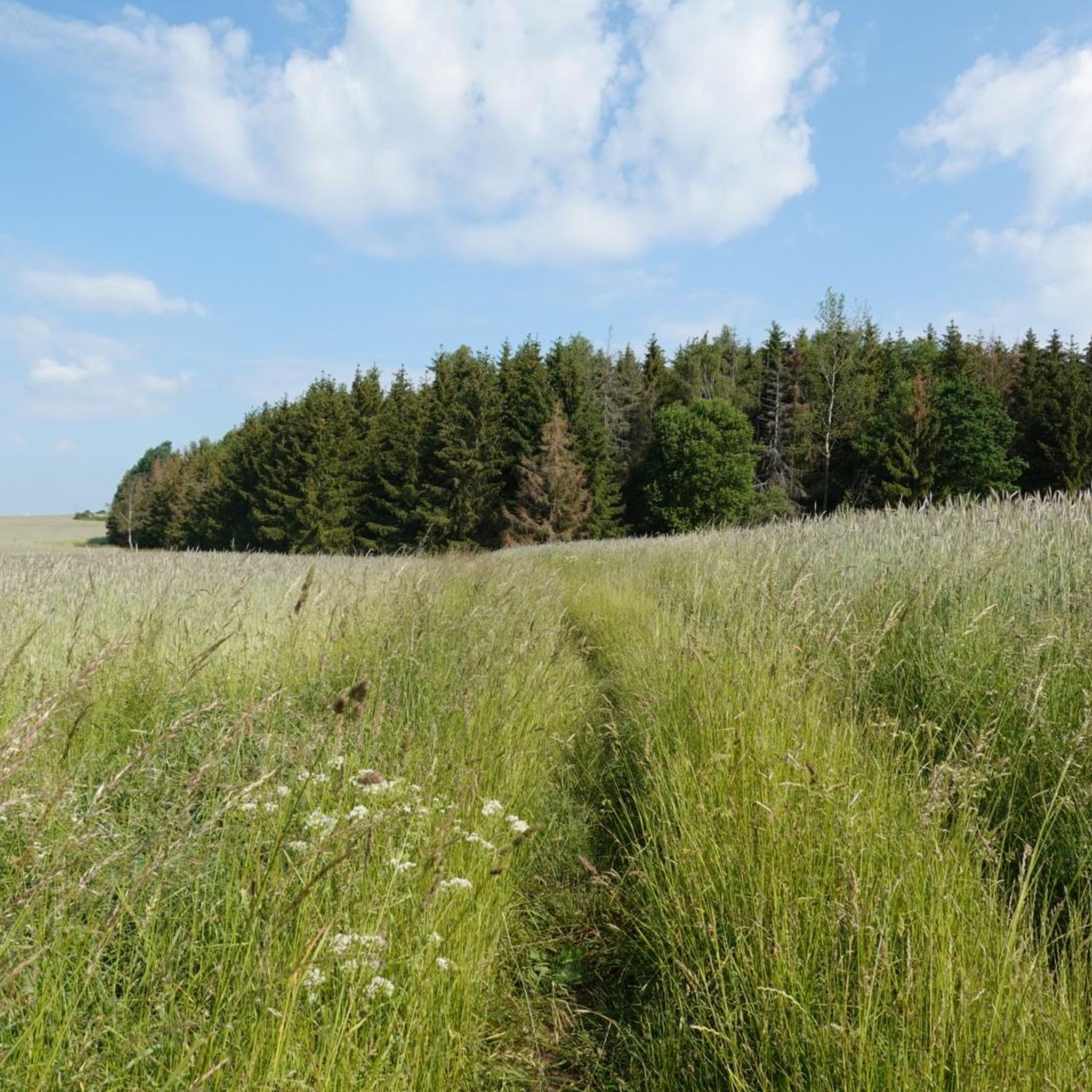
Unfortunately, nothing to see in winter. Be sure to come back in summer.
0
1
The springs of the Marienquelle were discovered in 1810 when the riverbed of the White Elster was straightened. During the redesign of today's bathing area in the mid-1930s, today's spring house was built in a central location as Bad Elster's fountain temple, with the widely visible golden statue of a jug bearer on the roof of the building. After a major flood, the interior design was completely redesigned again from 1954 to 1956. The color scheme was developed by Bernhard Kretzschmar from the Dresden Academy of Fine Arts and the impressive leaded glass windows were created by Walter Womacka (Berlin Art Academy). While tasting Bad Elster's five famous healing springs from the charming spring bowl in the center of the spring, visitors can also admire the special railing design based on the Plauen lace. Source: https://badelster.de/touristinformation/stadtrundgang/marienquelle
1
0

Drink healthily, I have tried some spring water, some tastes quite good 😊
0
0
Really beautifully laid out and very well maintained 👍👍👍
0
2

The nature reserve is in the immediate vicinity of the Vogtland Clinic, making the beautiful tour also interesting for rehabilitation patients!
0
0
Frequently Asked Questions
What are some unique natural monuments to visit around Eichigt?
The most prominent natural monument is the Tripoint Bavaria–Saxony–Czech Republic, a historically significant location where three borders meet. Another notable site is the Zeidelweidetal Nature Reserve, offering diverse flora and fauna along a stream. You can also visit the Swedish Oak at Heißenstein, an ancient and imposing tree.
What historical significance do the natural monuments in Eichigt hold?
The Tripoint Bavaria–Saxony–Czech Republic is particularly rich in history. It once marked a tangible part of the Iron Curtain, dividing West Germany, East Germany, and Czechoslovakia. Today, it serves as a symbol of connection and nature conservation, with information panels and historical boundary markers, including one from 1844, commemorating its past.
Are there family-friendly natural monuments in the Eichigt area?
Yes, several natural monuments are suitable for families. The Tripoint Bavaria–Saxony–Czech Republic offers a picnic area and a playground called "Muschelparadies" on the Czech side. The Zeidelweidetal Nature Reserve features well-accessible hiking trails, and the Gondelteich Bad Elster allows for rowing boat rentals and walks around the lake.
What kind of outdoor activities can I enjoy near Eichigt's natural monuments?
The region offers various outdoor activities. You can explore hiking and cycling routes along the Green Belt, which follows the former Iron Curtain near the Dreiländereck. For more structured activities, komoot provides guides for running trails, MTB trails, and road cycling routes in the vicinity of Eichigt.
Are there specific hiking trails that incorporate these natural monuments?
Many hiking trails in the region lead to or pass by these natural monuments. For instance, the Tripoint Bavaria–Saxony–Czech Republic is a destination for numerous hiking trails, including those from the Kammweg and the Ostweg. The Zeidelweidetal Nature Reserve also has well-accessible hiking trails for exploring its natural surroundings.
What is the best time of year to visit the natural monuments around Eichigt?
The natural monuments around Eichigt can be enjoyed in all seasons. Spring and summer are ideal for experiencing the diverse flora, such as the rhododendrons blooming around Gondelteich Bad Elster in May, and the roses at Bad Elster Rose Garden. Autumn offers beautiful foliage, and even late winter can provide a unique perspective on the natural beauty and historical sites like the Dreiländereck.
Are there any natural reserves or protected areas worth exploring?
Yes, the Zeidelweidetal Nature Reserve is a significant protected area between Bad Elster and Adorf. It consists of three separate areas with a stream running through it, preserving diverse flora and fauna. Additionally, the broader area around the Dreiländereck is part of the "Green Belt Germany," a vast ecological network dedicated to nature conservation.
What do visitors particularly appreciate about the natural monuments in Eichigt?
Visitors frequently praise the blend of natural beauty and historical significance, especially at the Tripoint Bavaria–Saxony–Czech Republic, noting it as a beautiful and historical place with informative panels. The Zeidelweidetal Nature Reserve is appreciated for its well-accessible trails and natural surroundings, while the Bad Elster Rose Garden is loved for its beautifully landscaped green areas and seating.
Can I find places to eat or stay near the natural monuments?
While specific cafes or accommodations directly adjacent to every natural monument are not listed, the towns and municipalities surrounding Eichigt, such as Bad Elster and Adorf, offer various options for dining and lodging. The region is well-equipped for visitors, and you can find local cafes, restaurants, and accommodation within a short distance from the natural sites.
Is the Dreiländereck accessible for all visitors?
The Tripoint Bavaria–Saxony–Czech Republic is generally accessible, with opportunities for hiking and cycling along the Green Belt. While specific details on wheelchair accessibility for every path are not provided, the area is designed for visitors to experience its natural and historical aspects, including picnic areas and a playground on the Czech side.
Are there any notable trees or geological features to see?
Yes, the Swedish Oak at Heißenstein is a remarkable natural monument, estimated to be around 325 years old with a broad, spreading crown. While the Eichigt-Schönbrunn granite massif exists, it is primarily of scientific interest and not a visible, accessible natural monument for the general public.
How can I reach the natural monuments around Eichigt by public transport?
Public transport options to the Eichigt region are available, connecting to nearby towns like Bad Elster and Adorf. From these central locations, you can often find local bus services or walking/cycling routes that lead to the natural monuments. It's advisable to check local transport schedules for the most up-to-date information on reaching specific sites.
Most popular routes around Eichigt
Most popular attractions around Eichigt

Get inspired with the komoot mobile app


Explore more
Extend your search for the best caves by checking out these guides of the top ones around Eichigt:
