Top 5 Natural Monuments in Copacabana
Natural monuments in Copacabana, located on the shores of Lake Titicaca, offer a landscape characterized by high-altitude summits, significant rock formations, and historical sites. This region provides opportunities to explore natural viewpoints and ancient cultural landmarks. The area's geography includes several peaks and a prominent lake, making it a destination for those interested in both natural beauty and historical exploration.
Best natural monuments in Copacabana
- The most popular natural monument is Cerro Calvario, a viewpoint that offers views down…
Last updated: July 15, 2026
Cerro Calvario
Highlight • Viewpoint
Translated by Google •
Tip by

Sacred Rock (Titikala)
Highlight • Natural Monument
Translated by Google •
Tip by

Sign up now to discover places like this
Get recommendations on the best single tracks, peaks, & plenty of other exciting outdoor places.
Sign up for free
Cerro Palla Khasa Summit
Highlight • Summit
Translated by Google •
Tip by

Cerro Tikani
Highlight • Summit
Translated by Google •
Tip by

Horca del Inca
Highlight • Historical Site
La Horca del Inca, however, was an astronomical cult site of the pre-Inca cultures.
Translated by Google •
Tip by

Start today with a free account
Your next adventure awaits.
Login or Signup
Popular around Copacabana
Tips from the Community

it is not a gallows, the name is a fake invented by the Spanish. it is an astronomical observatory for the solstice
0
0

The Spaniards, who discovered this structure many years ago, thought it was a gallows used by the Incas. La Horca del Inca, however, was an astronomical cult site of the pre-Inca cultures.
0
0

Cerro Tikani, at 3,936 meters, is the highest point in the northern part of the island. The climb is somewhat challenging due to the altitude, but the view from up here is impressive.
1
0
The Way of the Cross was built on this hill in the 1950s when the government decided that Copacabana should have more to offer its thousands of pilgrims than just the Basilica of the Virgin Mary.
2
0

The climb at the height should not be underestimated, it just isn't like that. THE view is also worth it 🤓
2
0
Titikala, also called Titi Qala (Aymara Titi = "Puma", Kala = "Rock"; originally probably Thakshi cala), also called Sacred Rock[1], is a rock formation that is considered the most important shrine of the Inca and also the most important indigenous shrine functioned in the region. Titikala is located in the sanctuary area on the Titicaca Island. The name Thakshi cala for the sacred rock is probably the origin of the name Titicaca and Titikala (see Lake Titicaca#Origin of the name). Two hundred meters west of the Sacred Rock is the Inca ruin Chinkana. From Wikipedia
0
0

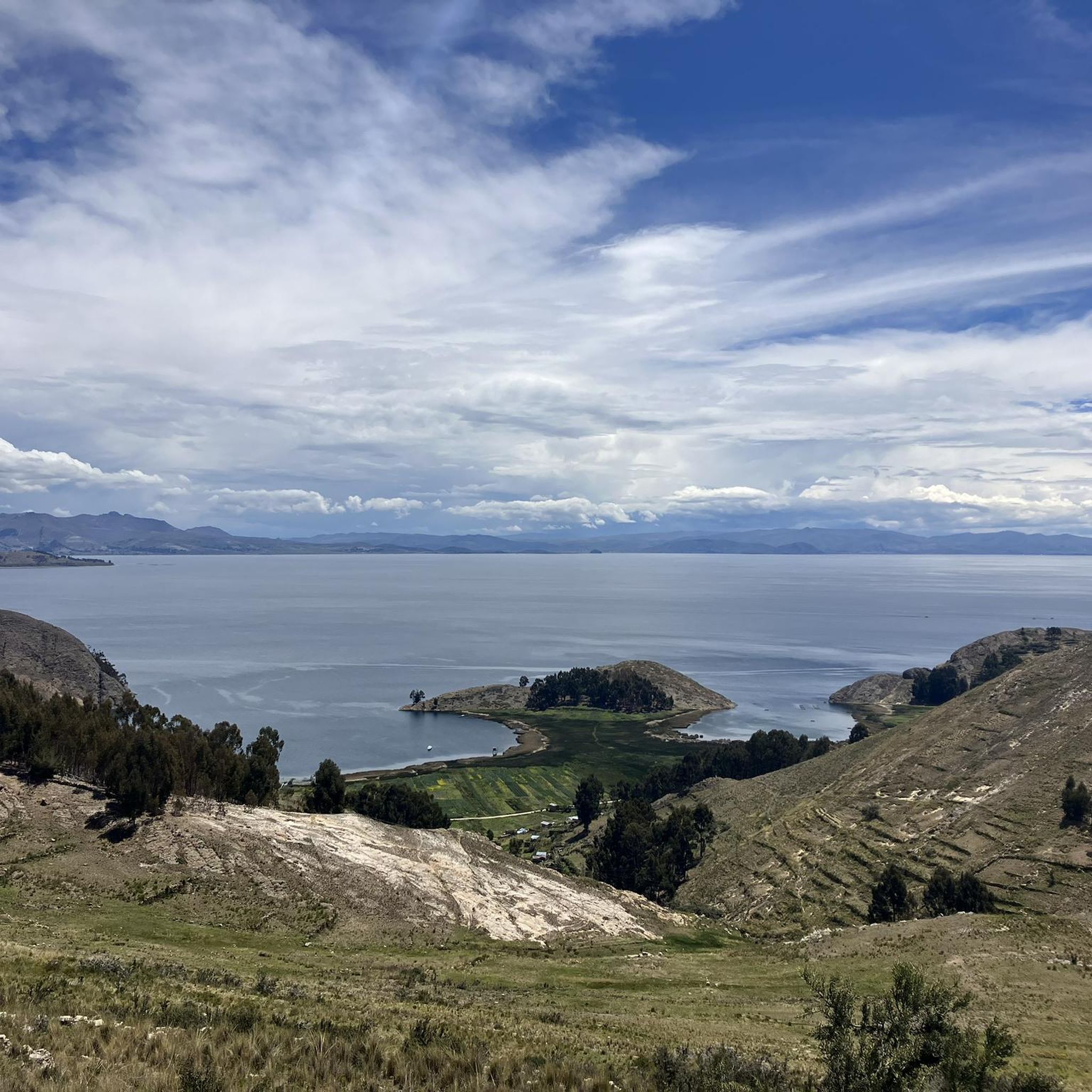
Beautiful views down to Copacabana and Lake Titicaca. The climb is strenuous but well worth it, especially at sunset. Be sure to pack a headlamp or flashlight in the evening/night.
3
0

Cerro Palla Khasa is the highest mountain on Isla del Sol. From its summit you have a wonderful view of the island and also of the mountains covered with glaciers on the horizon.
2
0
Frequently Asked Questions
What are some of the most popular natural monuments to visit in Copacabana?
Among the most popular natural monuments in Copacabana, you'll find Cerro Calvario, a viewpoint offering stunning vistas of Copacabana and Lake Titicaca, particularly at sunset. Another significant site is the Sacred Rock (Titikala), an important historical and religious site for the Inca. For those seeking panoramic views from a higher elevation, Cerro Palla Khasa Summit on Isla del Sol is highly regarded.
Are there any natural monuments in Copacabana with historical or cultural significance?
Yes, Copacabana is rich in sites with historical and cultural importance. The Sacred Rock (Titikala) is considered the most important shrine of the Inca and is believed to be the origin of the name Titicaca. Additionally, Horca del Inca, though mistakenly named by the Spanish, was an astronomical cult site of pre-Inca cultures.
What kind of views can I expect from the natural monuments in Copacabana?
The natural monuments in Copacabana offer breathtaking views, primarily due to their high-altitude locations. From Cerro Calvario, you can see down to Copacabana town and across Lake Titicaca. Cerro Palla Khasa Summit provides wonderful views of Isla del Sol and distant glacier-covered mountains. Similarly, Cerro Tikani, the highest point in the northern part of the island, offers impressive panoramic vistas.
How difficult are the climbs to the summits and viewpoints in Copacabana?
The difficulty varies. The climb to Cerro Calvario is considered strenuous, especially due to the altitude, but is well worth the effort. For higher summits like Cerro Tikani, the climb is challenging, primarily because of the elevation (3,936 meters). It's important to account for the altitude when planning your ascent.
Are there family-friendly natural monuments or activities in Copacabana?
While many of the natural monuments involve climbs that can be strenuous, the general area around Copacabana and Lake Titicaca offers opportunities for families. For example, the easier sections of the 'Cerro Calvario – Plaza 2 de Febrero, Copacabana loop' hiking route could be suitable for families looking for a less demanding walk, offering views without a full summit ascent. Always consider the altitude when planning activities with children.
What outdoor activities can I do near the natural monuments in Copacabana?
Hiking is a primary activity near Copacabana's natural monuments. You can explore various trails, such as the challenging 'Playa de las Sirenas – Cerro Santa Barbara Junction loop from Isla del Sol' or the moderate 'Traditional Rural Houses – Cerro Santa Barbara Junction loop from Yumani'. For an easier option, consider the 'Cerro Calvario – Plaza 2 de Febrero, Copacabana loop from Copacabana'. You can find more details on these and other routes in the Hiking in Copacabana guide.
What should I wear or bring when visiting natural monuments in Copacabana?
Given the high altitude and potential for strenuous climbs, it's advisable to wear comfortable hiking shoes and layered clothing. Evenings can get cool, especially after sunset, so a jacket is recommended. For those planning to stay out until sunset at viewpoints like Cerro Calvario, packing a headlamp or flashlight is essential for the descent.
What do visitors enjoy most about the natural monuments in Copacabana?
Visitors consistently highlight the incredible panoramic views, especially at sunset, from viewpoints like Cerro Calvario. The unique combination of natural beauty with deep historical and cultural significance, such as at the Sacred Rock (Titikala) and Horca del Inca, also leaves a lasting impression. The rewarding feeling after a challenging climb to a summit like Cerro Palla Khasa is also frequently mentioned.
Are there any specific tips for visiting Cerro Calvario?
When visiting Cerro Calvario, be prepared for a strenuous climb, especially considering the altitude. Many visitors recommend timing your visit for sunset to experience the most beautiful views down to Copacabana and Lake Titicaca. If you plan to stay for sunset, remember to bring a headlamp or flashlight for your descent in the evening or night.
What is the significance of the Sacred Rock (Titikala)?
The Sacred Rock (Titikala) is a highly significant natural monument, considered the most important shrine of the Inca. It is also believed to be the origin of the name Titicaca itself. Located in a sanctuary area on Isla del Sol, it holds deep indigenous religious and historical importance, with the Inca ruin Chinkana just 200 meters to its west.
Can I find accommodation or food options near the natural monuments?
Copacabana town, being the main hub, offers various cafes, restaurants, and accommodation options. While specific natural monuments like summits or historical sites might not have facilities directly adjacent, they are generally accessible from areas where amenities are available. It's advisable to plan your meals and stays in Copacabana town or other populated areas on Isla del Sol, depending on which monument you are visiting.
Most popular routes in Copacabana
Most popular attractions in Copacabana

Get inspired with the komoot mobile app


Explore more
Extend your search for the best caves by checking out these guides of the top ones in Copacabana:
