Top 20 Natural Monuments in Ancash
Natural monuments in Ancash are concentrated within the Cordillera Blanca and Cordillera Huayhuash mountain ranges in Peru's central highlands. This region features towering snow-capped peaks, glacial lagoons, and high-altitude ecosystems. Huascarán National Park, a UNESCO World Heritage Site, protects a significant portion of these natural features. The area offers diverse landscapes for exploration, including numerous trekking routes and mountaineering spots.
Best natural monuments in Ancash
- The most popular natural monuments is Lake Churup, a lake known for its clean,…
Last updated: July 15, 2026
Lake Churup
Highlight • Lake
Translated by Google •
Tip by

Punta Unión Pass
Highlight • Mountain Pass
Translated by Google •
Tip by

Sign up now to discover places like this
Get recommendations on the best single tracks, peaks, & plenty of other exciting outdoor places.
Sign up for free
Laguna Wilcacocha
Highlight • Lake
Translated by Google •
Tip by

Chain-Assisted Climb in Huascarán National Park
Highlight (Segment) • Climb
Translated by Google •
Tip by

Arhuaycocha Lake
Highlight • Lake
Translated by Google •
Tip by
Huascarán
Highlight • Summit
whc.unesco.org/en/list/333
en.wikipedia.org/wiki/Huascar%C3%A1n_National_Park
Translated by Google •
Tip by

Laguna Parón Viewpoint
Highlight • Viewpoint
Translated by Google •
Tip by

Quebrada Santa Cruz
Highlight • Gorge
Translated by Google •
Tip by
View of Artesonraju
Highlight • Viewpoint
Translated by Google •
Tip by

Laguna Orconcocha
Highlight • Lake
en.wikipedia.org/wiki/Langanuco_Lakes
Translated by Google •
Tip by
Sign up for free to discover even more natural monuments in Ancash.
Sign up for free
Already have an account?
Start today with a free account
Your next adventure awaits.
Login or Signup

Other adventures in Ancash

Tips from the Community

One of the highest passes in the area, making it particularly challenging for altitude. Both sides provide equal challenge, but both also host magnificent views of Taulliraju, Tuctubamba and the rest of the Cordillera Blanca. There's also a camp halfway up on the west side with a nearby stream.
0
0

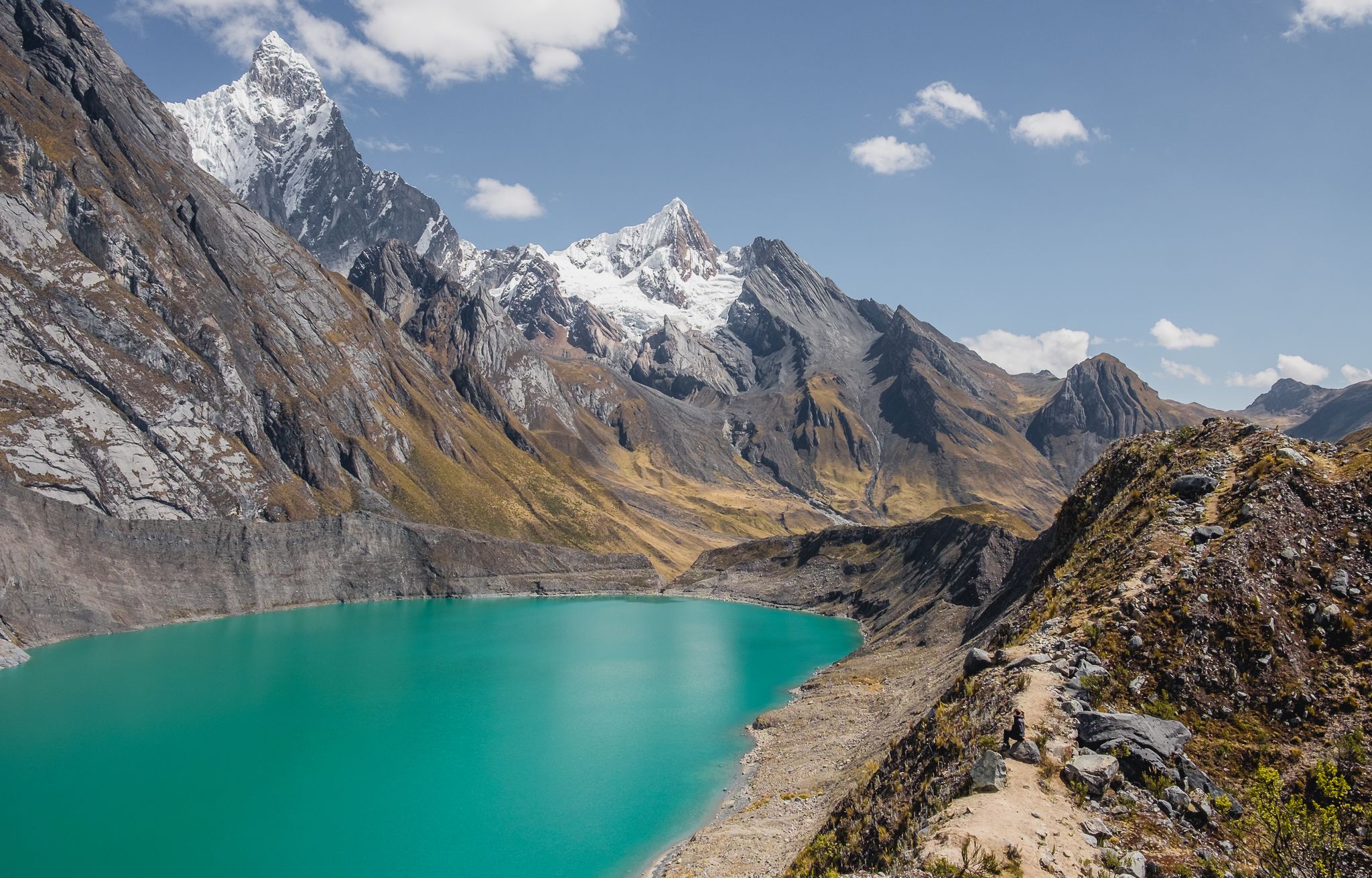
Serene silence during the acclimatization walk for the trek through the Cordillera Blanca that literally lies before you from this point
0
0

Great lagoon in deep blue with 6,000m peaks with snow peaks in the background 😍
0
0

The hike is technically easy, except for a small section with a via ferrata. Getting there from Huaraz is easy with the public buses (colectivos), which leave from an unofficial bus stop on the corner of Avenida Agustín Gamarra and Av. Las Américas. It is advisable to start as early as possible in order to catch the last bus back in the evening. The journey takes about an hour. The climb up to 4400m was quite exhausting, luckily we were acclimatized.
1
0
At this point you should not be afraid of heights. The via ferrata does not require a climbing harness. If it rains or snows it will be very slippery, so it is better to take the alternative ascent or descent.
1
0
A wonderful place at the Laguna Churup at an altitude of 4450m. In the background is the Nevado Churup with its majestic glaciers. From midday onwards there are often numerous tourists, so it is worth coming early.
0
0

Huascarán National Park is located in the Andean region of the Cordillera Blanca located north of Lima. The starting point for countless treks is the town of Huaraz. From here with Colectivos (local mini buses) you can reach the starting points of the treks.
0
0

Make sure you start your return journey in good time in case the weather changes and there is a risk of rain or thunderstorms. Some sections can then become tricky. When we started to back off, we first got into light rain and then there was a near threat of a thunderstorm.
0
0
Frequently Asked Questions
What are some unique natural monuments to visit in Ancash beyond the most popular ones?
Beyond the well-known sites, consider exploring Laguna Wilcacocha in the Sierra Negra, which offers panoramic views of the Cordillera Blanca. Another unique experience is the Chain-Assisted Climb in Huascarán National Park, providing a challenging ascent with rewarding viewpoints.
What kind of landscapes can I expect to see among Ancash's natural monuments?
Ancash's natural monuments showcase a diverse range of landscapes, primarily within the Cordillera Blanca and Cordillera Huayhuash. You'll encounter towering snow-capped peaks like Nevado Huascarán, pristine turquoise glacial lagoons such as Laguna Parón and the Llanganuco Lakes, deep ravines like Quebrada Santa Cruz, and high-altitude ecosystems with unique flora and fauna.
What makes the Cordillera Huayhuash a significant natural monument in Ancash?
The Cordillera Huayhuash is renowned for offering some of the most spectacular treks globally. It features a dense concentration of snow peaks, glaciers, numerous lakes, waterfalls, and alpine meadows, all within close proximity. This creates an incredibly diverse and visually stunning trekking circuit, making it a premier destination for backpackers and mountaineers seeking pristine wilderness.
Are permits required to visit natural monuments in Ancash, especially within Huascarán National Park?
Yes, permits are generally required for entry into Huascarán National Park, which encompasses many of Ancash's natural monuments. These permits help protect the park's biodiversity and maintain its infrastructure. For detailed information on permits and fees, it's advisable to check the official Huascarán National Park website or consult local tour operators. You can find more information about the park on nationalparksassociation.org or Wikipedia.
What is the best time of year to visit the natural monuments in Ancash?
The best time to visit Ancash's natural monuments is typically during the dry season, which runs from May to September. During these months, you can expect clearer skies, less rainfall, and more stable weather conditions, ideal for trekking, mountaineering, and enjoying the panoramic views of the Cordillera Blanca and Huayhuash.
What kind of wildlife can I expect to see in Ancash's natural monuments?
The region, particularly Huascarán National Park, is rich in biodiversity. You might spot endangered species such as the Andean condor, spectacled bear, and vicuña. The unique plant species, like the giant bromeliad Puya Raimondi, can also be observed, especially near areas like Nevado Pastoruri.
Are there family-friendly natural monuments or trails in Ancash?
While many trails are challenging due to altitude, some natural monuments offer more accessible experiences. For instance, the hike to Laguna Parón is considered to be of low difficulty, making it suitable for most visitors. The Llanganuco Lakes are also easily accessible and offer stunning scenic beauty without requiring extensive trekking.
What outdoor activities can I do near the natural monuments in Ancash?
Ancash is a prime destination for adventure sports. You can enjoy extensive hiking and trekking, with Huascarán National Park alone offering 25 trekking routes. Mountaineering is popular on peaks like Huascarán, and there are opportunities for canoeing on the Santa River. For specific hiking routes, explore the Hiking in Ancash guide, or for running, check out the Running Trails in Ancash guide.
What do visitors enjoy most about the natural monuments in Ancash?
Visitors frequently praise the spectacular scenery, particularly the combination of snow-capped mountains and vibrant turquoise lakes. The sense of accomplishment from challenging treks, such as reaching Punta Unión Pass, is also highly valued. Many appreciate the opportunity for acclimatization hikes like the one to Lake Churup, which prepares them for more demanding adventures while offering breathtaking views.
How can I get to the natural monuments in Ancash using public transport?
Many natural monuments, especially those accessible from Huaraz, can be reached by public transport. Colectivos (mini-buses) are a common and affordable way to get around. For example, you can take a colectivo from Huaraz to the Puente Santa Cruz bridge to access trails leading to Laguna Wilcacocha. For more remote areas, organized tours or private transportation might be necessary.
Are there any natural monuments in Ancash that offer views of iconic mountains like Artesonraju?
Yes, Laguna Parón Viewpoint is an excellent spot to witness iconic mountains. From here, you can enjoy panoramic views of Artesonraju, which famously inspired the Paramount Pictures logo, along with Pisco, Pirámide de Garcilaso, and Caraz, all reflected in the incredibly bright turquoise waters of Laguna Parón.
What are the geological highlights of the natural monuments in Ancash?
Ancash is home to significant geological wonders, most notably the Cordillera Blanca, which is the world's highest tropical glaciated area. It boasts 660 tropical glaciers and 300 glacial lakes, offering unique insights into glacial formations and the impacts of climate change. The region's dramatic peaks and valleys are a testament to powerful geological processes.
Most popular routes in Ancash
Most popular attractions in Ancash

Get inspired with the komoot mobile app


Didn’t find what you were looking for?
Find even more amazing natural monuments in Ancash by checking out the top Highlights region by region:
Explore more
Extend your search for the best caves by checking out these guides of the top ones in Ancash:
