Top 4 Mountain Passes in Cajatambo
Mountain passes in Cajatambo are primarily located within the Cordillera Huayhuash range, a mountainous area known for its high-altitude terrain. This region features views of glaciers, lakes, and peaks, attracting trekkers and mountaineers. Many of these routes are part of multi-day treks. The passes offer diverse landscapes and challenging conditions for outdoor exploration.
Top mountain passes in Cajatambo
- The most popular mountain passes is Trapecio Pass, a mountain_pass that offers views of bright blue lakes in the valley and…
Last updated: July 15, 2026
Jurau Pass Descent
Highlight • Mountain Pass
Translated by Google •
Tip by

Trapecio Pass
Highlight • Mountain Pass
Translated by Google •
Tip by

Sign up now to discover places like this
Get recommendations on the best single tracks, peaks, & plenty of other exciting outdoor places.
Sign up for free
Tapush Pass
Highlight • Mountain Pass
Translated by Google •
Tip by
Ascent to Paso Tapush
Highlight (Segment) • Mountain Pass
Translated by Google •
Tip by
Ascent to Paso San Antonio
Highlight (Segment) • Mountain Pass
Translated by Google •
Tip by
Start today with a free account
Your next adventure awaits.
Login or Signup
Popular around Cajatambo
Other adventures in Cajatambo

Tips from the Community

Hello Mia, I'm a little confused by your comment. The Jurau Pass is not considered easy but it is a much easier and less steep alternative to the San Antonio and Santa Rosa Pass. I haven't done the tour yet (plan is next year) but I found quite a lot of information about it. I would therefore be very happy to hear back from you as to whether it is actually that demanding or whether you perhaps meant the San Antonio. Best wishes Piet
0
0

The descent from the Jurau Pass to Juraucocha is completely pathless and very steep. There are a few cairns, but not enough to orient yourself in the scree desert. The GPX track here is very imprecise. There are countless steep cliffs that must be avoided. It is possible to descend to Juraucocha, but it is very challenging. Going uphill is a lost cause without a guide.
0
0

On the way you always had great views of the surrounding mountains and you passed small shepherds' huts.
1
0
The climb from Huayllapa to the top of the pass takes a long time, but at the top you are rewarded with a great view.
0
0
The steep and strenuous climb up to Paso San Antonio (5,020 meters) is worth it. With every step the panorama gets better.
1
0
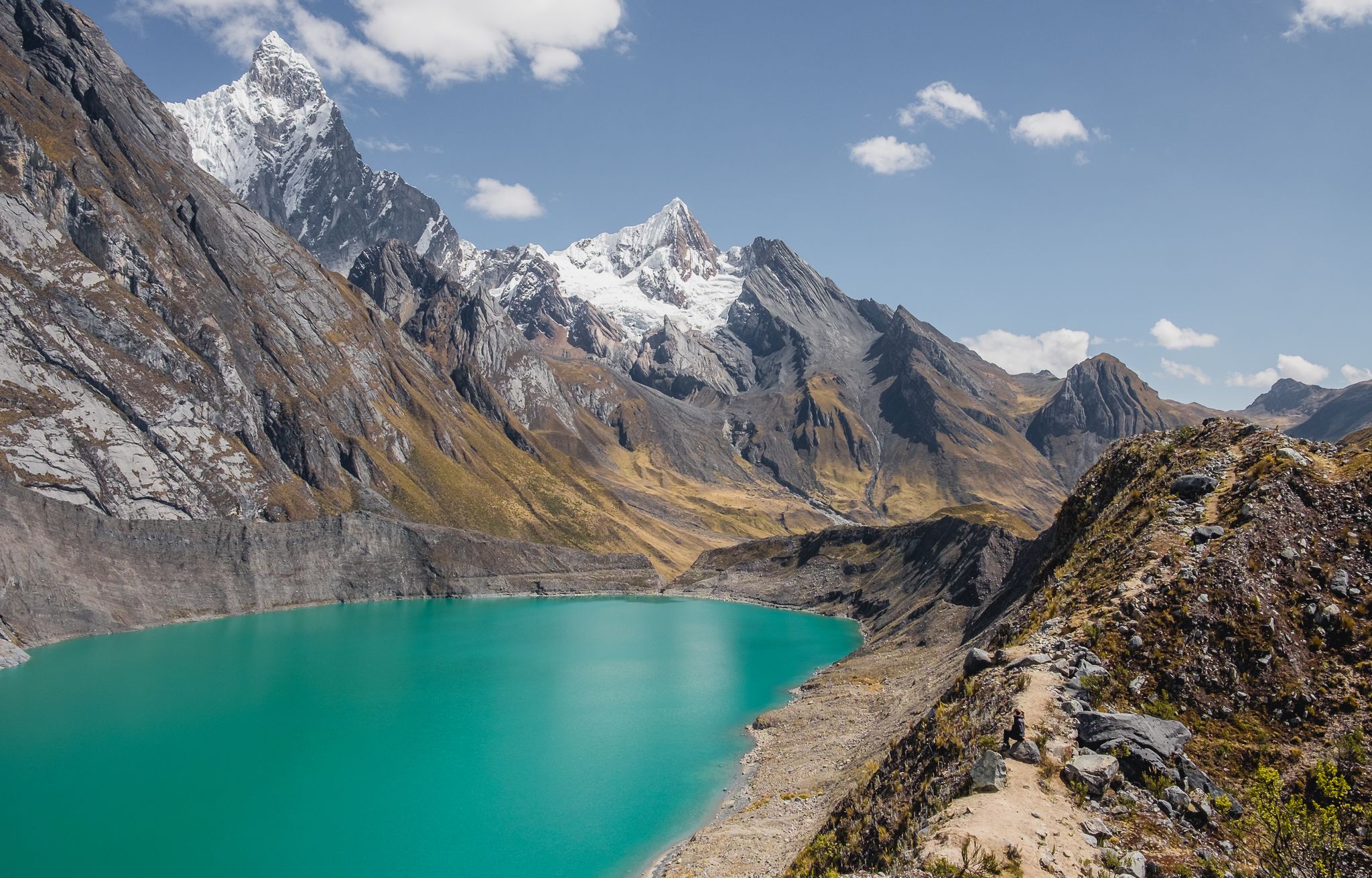
Breathtaking views await you on this 5,040 meter high mountain pass. There are bright blue lakes in the valley and a mighty glacier rises opposite.
0
0
Frequently Asked Questions
What is the typical difficulty level of mountain passes in Cajatambo?
Mountain passes in Cajatambo, particularly within the Cordillera Huayhuash range, are generally known for being challenging. Many routes involve steep and strenuous climbs, often reaching elevations above 5,000 meters. For instance, the Ascent to Paso San Antonio is described as a steep and strenuous climb, and the Jurau Pass Descent can be pathless and very steep. However, there are also intermediate options like Tapush Pass, which offers a rewarding view after a long climb.
Which mountain passes offer the most spectacular views in Cajatambo?
Many passes in Cajatambo are renowned for their breathtaking panoramas. Trapecio Pass (5,040 meters) is celebrated for its views of bright blue lakes and a mighty glacier. Ascent to Paso San Antonio (5,020 meters) provides an ever-improving panorama as you ascend. Other passes like Cuyoc Pass, Siula Pass, and Rondoy Pass also offer expansive views of glaciers, pristine lakes, and majestic peaks like Yerupajá and Siula Grande.
What natural features can I expect to see when visiting Cajatambo's mountain passes?
The mountain passes in Cajatambo are set within the stunning Cordillera Huayhuash, offering incredible natural beauty. You can expect to see numerous glaciers, pristine blue lakes (such as Siula Lake, Quesillococha Lake, and Cutacocha Lake), and jagged snow-capped peaks like Yerupajá, Siula Grande, Carnicero, and Jirishanca. The high-altitude landscapes are dramatic and largely untouched.
What is the best time of year to visit the mountain passes in Cajatambo?
The best time to visit the mountain passes in Cajatambo, particularly for trekking in the Cordillera Huayhuash, is generally during the dry season, which runs from May to September. During these months, you can expect more stable weather, clearer skies, and less rainfall, making the challenging high-altitude treks more manageable and offering better visibility for the spectacular views.
Do I need permits to trek the mountain passes in Cajatambo, especially in the Cordillera Huayhuash?
Yes, trekking in the Cordillera Huayhuash, where many of Cajatambo's mountain passes are located, typically requires permits and payment of entry fees. These fees contribute to the local communities and conservation efforts. It's advisable to arrange permits in advance, often through a local tour operator, especially for multi-day treks. Individual trekkers should inquire about the specific requirements for entry and camping.
How can I access the trailheads for the mountain passes in Cajatambo?
Accessing trailheads for mountain passes in Cajatambo often involves local transportation from nearby towns. Public transport options can be limited, and many trekkers arrange private transport or use services provided by tour operators to reach the more remote starting points. Parking facilities at trailheads are generally basic or non-existent, reflecting the region's remote and sparsely inhabited nature.
What kind of wildlife might I encounter around the Cajatambo mountain passes?
The remote and pristine environment around Cajatambo's mountain passes is home to diverse Andean wildlife. Visitors might spot Andean foxes, vicuñas grazing in the high-altitude grasslands, and various bird species, including the majestic condor soaring overhead. The region's isolation helps preserve these natural habitats.
What should I pack for a trek to the mountain passes in Cajatambo?
Given the high altitudes and challenging conditions, packing appropriately is crucial. Essentials include warm, layered clothing suitable for varying temperatures, waterproof and windproof outer layers, sturdy hiking boots, a good quality sleeping bag (if camping), sun protection (hat, sunglasses, high SPF sunscreen), a first-aid kit, sufficient water and purification tablets, and high-energy snacks. Trekking poles are also highly recommended for stability on steep ascents and descents.
Are there any less-known or 'hidden gem' mountain passes worth exploring in Cajatambo?
While many passes like Trapecio and San Antonio are well-known, the vastness of the Cordillera Huayhuash means there are always less-frequented routes. Passes like Cacananpunta (4,700 meters), which marks a continental divide, or Sambunya Pass (4,740 meters) offer amazing photographic opportunities and splendid views of the Huayhuash range, often with fewer trekkers. These can provide a more solitary experience amidst stunning scenery.
Are there options for circular hiking routes around the Cajatambo passes?
Yes, the Cajatambo region, particularly the Cordillera Huayhuash, is famous for its multi-day circular trekking routes that incorporate several mountain passes. These circuits are considered among the most beautiful and challenging in the world, allowing trekkers to traverse multiple passes like Trapecio, Cuyoc, Siula, and Rondoy, offering continuous panoramic views and a comprehensive experience of the range's diverse landscapes.
Are there any family-friendly mountain passes or trails in the Cajatambo region?
The mountain passes in Cajatambo are predominantly high-altitude and challenging, often part of multi-day treks, making them less suitable for young children or families seeking easy walks. Most passes require significant physical exertion and acclimatization. For families, it might be better to look for shorter, lower-altitude day hikes in the valleys surrounding the main trekking circuits, rather than attempting the passes themselves.
How long do treks typically take across Cajatambo's mountain passes?
Most treks that incorporate Cajatambo's mountain passes are part of multi-day expeditions, particularly the renowned Cordillera Huayhuash circuit. These treks typically range from 8 to 14 days, depending on the specific route and pace. Individual passes are usually crossed as part of a longer journey, with daily segments often involving several hours of strenuous hiking to reach and descend from the pass.
Most popular attractions in Cajatambo

Get inspired with the komoot mobile app


Explore more
See even more epic mountain passes by checking out these guides in Cajatambo:
