Top 13 Natural Monuments in Caylloma
Natural monuments in Caylloma Province, Peru, feature a diverse range of geological formations and ecosystems. The region is characterized by deep canyons, volcanic landscapes, and high-Andean environments. These areas offer opportunities to observe unique natural phenomena and local wildlife. Caylloma provides access to significant natural landmarks within its varied terrain.
Best natural monuments in Caylloma
- The most popular natural monument is View of Colca Canyon, a viewpoint that offers immense geographical scale and dramatic mountain views of one of…
Last updated: July 15, 2026
Suspension Bridge over Colca Canyon
Highlight • Bridge
Translated by Google •
Tip by

Hot springs by the Colca River
Highlight • Natural Monument
Tip by

Sign up now to discover places like this
Get recommendations on the best single tracks, peaks, & plenty of other exciting outdoor places.
Sign up for free
Oqolle Terraces
Highlight • Historical Site
(1200 A.C.)
Tip by

Cruz del Cóndor Viewpoint
Highlight • Viewpoint
Tip by
Mirador de los Volcanes
Highlight • Viewpoint
Tip by
Achachihua Viewpoint
Highlight • Viewpoint
Tip by

Cruz de la Misión Viewpoint
Highlight (Segment) • Viewpoint
Translated by Google •
Tip by

View of Colca Canyon
Highlight (Segment) • Viewpoint
Showing Translation
Tip by

Condor Viewing Point
Highlight (Segment) • Viewpoint
Translated by Google •
Tip by

San Miguel Viewpoint
Highlight • Viewpoint
Translated by Google •
Tip by
Sign up for free to discover even more natural monuments in Caylloma.
Sign up for free
Already have an account?
Start today with a free account
Your next adventure awaits.
Login or Signup
Popular around Caylloma
Tips from the Community

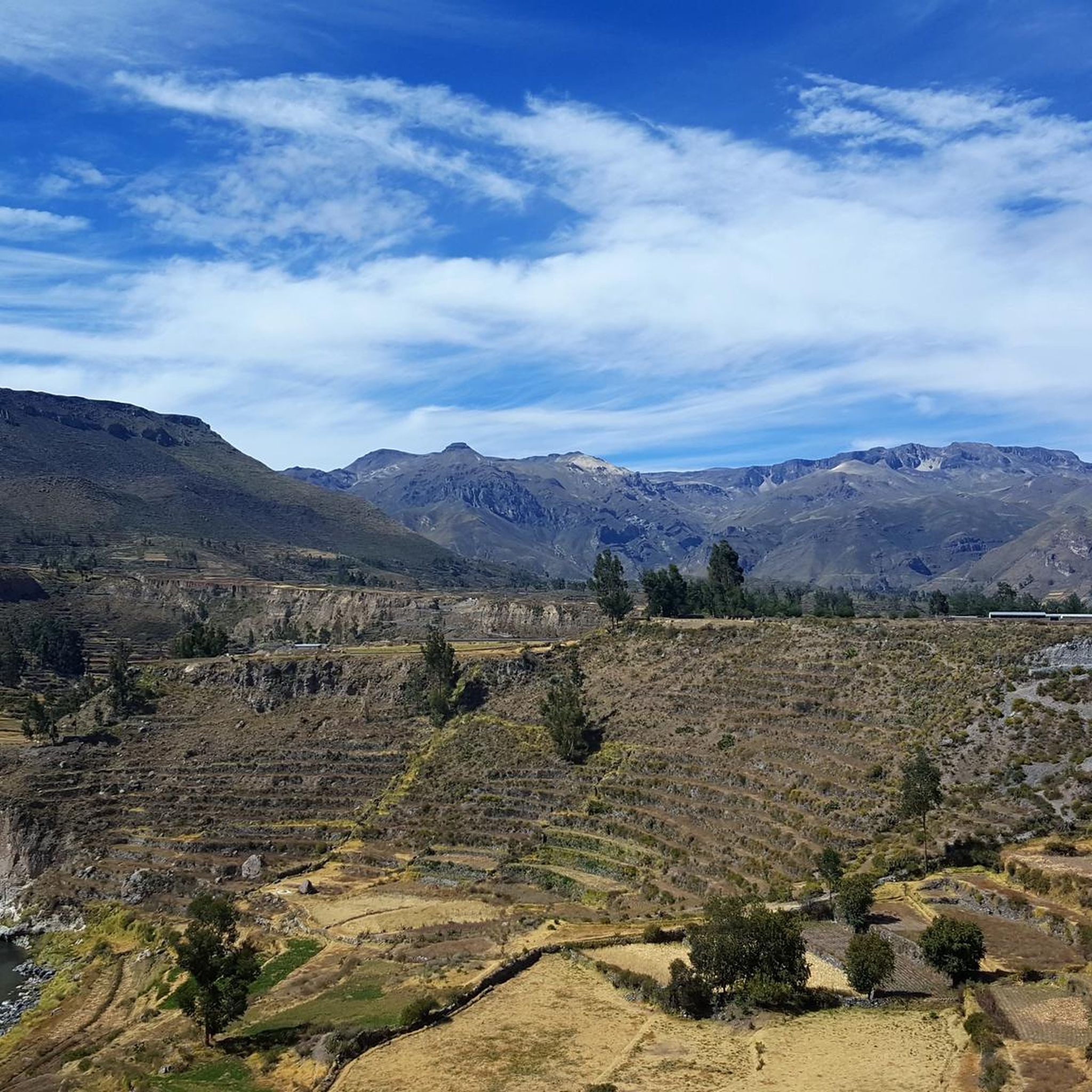
The upper slopes of the canyon are often structured by human hands into terraces, many of them several hundred years old, which the current inhabitants use for their efficient land cultivation. These terrace structures gave the Andes mountain range its name.
2
0
The Mirador Achachihua is a popular starting point for hikes near Cabanaconde. The route is about 3 km long and has hardly any elevation difference, making it an easy hike. The route is accessible all year round and offers a picturesque setting with views of the Colca Canyon and the surrounding villages.
0
0

The Colca-Yanque Hot Springs are situated near the town of Yanque in the scenic Colca Valley. They offer a relaxing experience, especially after trekking the Colca Canyon. Visitors can enjoy warm thermal pools, with the nearby river offering a refreshing contrast for a cooler dip. Facilities include toilets, showers and changing rooms. As of 2025, the entrance fee is 15 soles.
0
0

We did the 3-day trek at the end of the rainy season and set off at 8 a.m. on day 1. By 10 a.m., it was already extremely hot, forcing us to take more breaks than usual. So be sure to bring enough water (at least 3 liters per person) and start early!
1
0
From here you have a perfect view of Sangalle, whoever walks the 1200 m down into the valley will find a little paradise here.
1
0

A sporty climb of over 1000 hm from the Colca valley comes to an end here. Usual start time 4.30am at the oasis. A small stall has been placed tactically up here. There is even hot coffee for those who need something to warm up after the exhausting ascent.
4
1

On our tour with the highest point. From here you have a fantastic all-round view of all the volcanoes. Stop by all means.
1
0
One of the many cult sites of the Incas. Here rituals are performed to pay homage to Pachamama.
1
0
Frequently Asked Questions
What are the most popular natural monuments in Caylloma Province?
Caylloma Province is renowned for its diverse natural wonders. Among the most popular are the Cruz del Cóndor Viewpoint, famous for observing Andean condors, and the general View of Colca Canyon, offering immense geographical scale. Visitors also frequently enjoy the Suspension Bridge over Colca Canyon, which provides unique views of rock formations and thermal springs below.
What unique geological features can I explore in Caylloma?
Caylloma boasts several unique geological formations. The Choqolaqa Stone Forest features naturally sculpted rock formations resembling human figures and animals, offering a surreal experience. The Imata Stone Forest, often visited with the Pillones Waterfall, also presents enormous volcanic rock formations shaped by natural elements into imaginative forms, including the 'dimensional portal of Imata'.
Where can I observe wildlife in Caylloma's natural monuments?
For wildlife observation, the Cruz del Cóndor Viewpoint in Colca Canyon is a prime location to witness the majestic Andean condor. The Salinas and Aguada Blanca National Reserve is another excellent spot, home to vicuñas, foxes, vizcachas, and various high-Andean birds, including Andean flamingos at Laguna Salinas. You might also spot vizcachas and vicuñas on the trails near Pillones Waterfall and Imata Stone Forest.
Are there any family-friendly natural monuments or activities in Caylloma?
Yes, the Cruz del Cóndor Viewpoint is considered family-friendly, offering an accessible way to see the Andean condors. Additionally, the towns within Colca Canyon, such as Chivay, offer thermal baths like La Calera, which can be a relaxing activity for families. Exploring the unique formations of the Choqolaqa Stone Forest can also be an engaging experience for all ages.
What is the best time to visit the natural monuments in Caylloma?
The dry season, typically from May to November, is generally considered the best time to visit Caylloma's natural monuments. During this period, the weather is clearer, making it ideal for condor sightings at Colca Canyon and for enjoying the landscapes without heavy rain. Laguna Salinas in the Salinas and Aguada Blanca National Reserve transforms into a dazzling white salt flat during the dry season, offering spectacular views.
Are there hot springs near the natural monuments in Caylloma?
Yes, there are several hot springs available. Below the Suspension Bridge over Colca Canyon, you can find hot thermal springs. Additionally, the Hot springs by the Colca River near Yanque offer a relaxing experience with thermal pools and facilities. Chivay, a town in the Colca Canyon, is also noted for its La Calera thermal baths.
What kind of hiking trails are available near Caylloma's natural monuments?
Caylloma offers a variety of hiking experiences. For instance, the climb to the View of Colca Canyon can be steep. More challenging routes include the ascent to Cruz de la Misión Viewpoint, which involves over 1000 meters of elevation gain. For those looking for specific routes, you can find options like the Sangalle Oasis – View of Colca Canyon loop from Cabanaconde, or easier walks like the Yuraq Qaqa Pre-Inca Tombs loop from Coporaque, all detailed in the Hiking in Caylloma guide.
What should I know about altitude when visiting Caylloma's natural monuments?
Many natural monuments in Caylloma, such as the Pillones Waterfall and Imata Stone Forest, are situated at high altitudes, often above 4,200 meters above sea level. Colca Canyon itself is also at a significant elevation. It's advisable to acclimatize gradually to avoid altitude sickness. Staying hydrated and taking it easy on your first day can help.
Are there any historical or cultural sites integrated with the natural monuments?
Yes, the Colca Canyon area is rich in history. The Oqolle Terraces are a notable historical site, showcasing ancient agricultural practices. The canyon itself is lined with ancient agricultural terraces, reflecting the rich Andean culture and history of the region. Towns like Chivay and Cabanaconde also preserve traditional Andean culture.
What is special about Laguna Salinas in the Salinas and Aguada Blanca National Reserve?
Laguna Salinas is a significant feature within the Salinas and Aguada Blanca National Reserve. During the dry season, it transforms into a dazzling white salt flat, creating a stunning visual spectacle. It's also a crucial habitat for diverse high-Andean birds, including Andean flamingos, making it an excellent spot for birdwatching and landscape photography.
Can I visit the Pillones Waterfall and Imata Stone Forest together?
Yes, the Pillones Waterfall and Imata Stone Forest are often visited together due to their proximity in the district of San Antonio de Chuca. They offer surreal and otherworldly landscapes, perfect for photography and an authentic, off-the-beaten-path experience. The descent to the waterfall provides an invigorating hike.
What do visitors enjoy most about the natural monuments in Caylloma?
Visitors frequently highlight the immense geographical scale and dramatic mountain views, especially at the View of Colca Canyon. The opportunity to see Andean condors at close range from the Cruz del Cóndor Viewpoint is also a major draw. Many appreciate the unique rock formations, the relaxing thermal springs, and the overall immersive experience in pure, expansive nature.
Most popular routes in Caylloma
Most popular attractions in Caylloma

Get inspired with the komoot mobile app


Didn’t find what you were looking for?
Find even more amazing natural monuments in Caylloma by checking out the top Highlights region by region:
