Top 8 Natural Monuments around Small Isles
Best natural monuments around Small Isles are found across the archipelago's four main islands: Rum, Eigg, Canna, and Muck. These islands feature a wealth of dramatic and unique natural monuments, including significant geological formations and diverse landscapes. The Small Isles collectively form a National Scenic Area, recognized for their unspoiled landscapes and rich geological history, much of which was formed by volcanic activity.
Best natural monuments around Small Isles
- The most popular natural monument is Askival Peak, a natural…
Last updated: June 30, 2026
Askival Peak
Highlight • Natural Monument
Tip by

An Sgùrr Summit
Highlight • Viewpoint
Tip by

Sign up now to discover places like this
Get recommendations on the best single tracks, peaks, & plenty of other exciting outdoor places.
Sign up for free
Massacre Cave
Highlight • Historical Site
Tip by

Sgòrr an Fharaidh
Highlight • Viewpoint
Tip by
Singing Sands Beach
Highlight • Viewpoint
Tip by
Sign up for free to discover even more natural monuments around Small Isles.
Sign up for free
Already have an account?
Start today with a free account
Your next adventure awaits.
Login or Signup
Popular around Small Isles
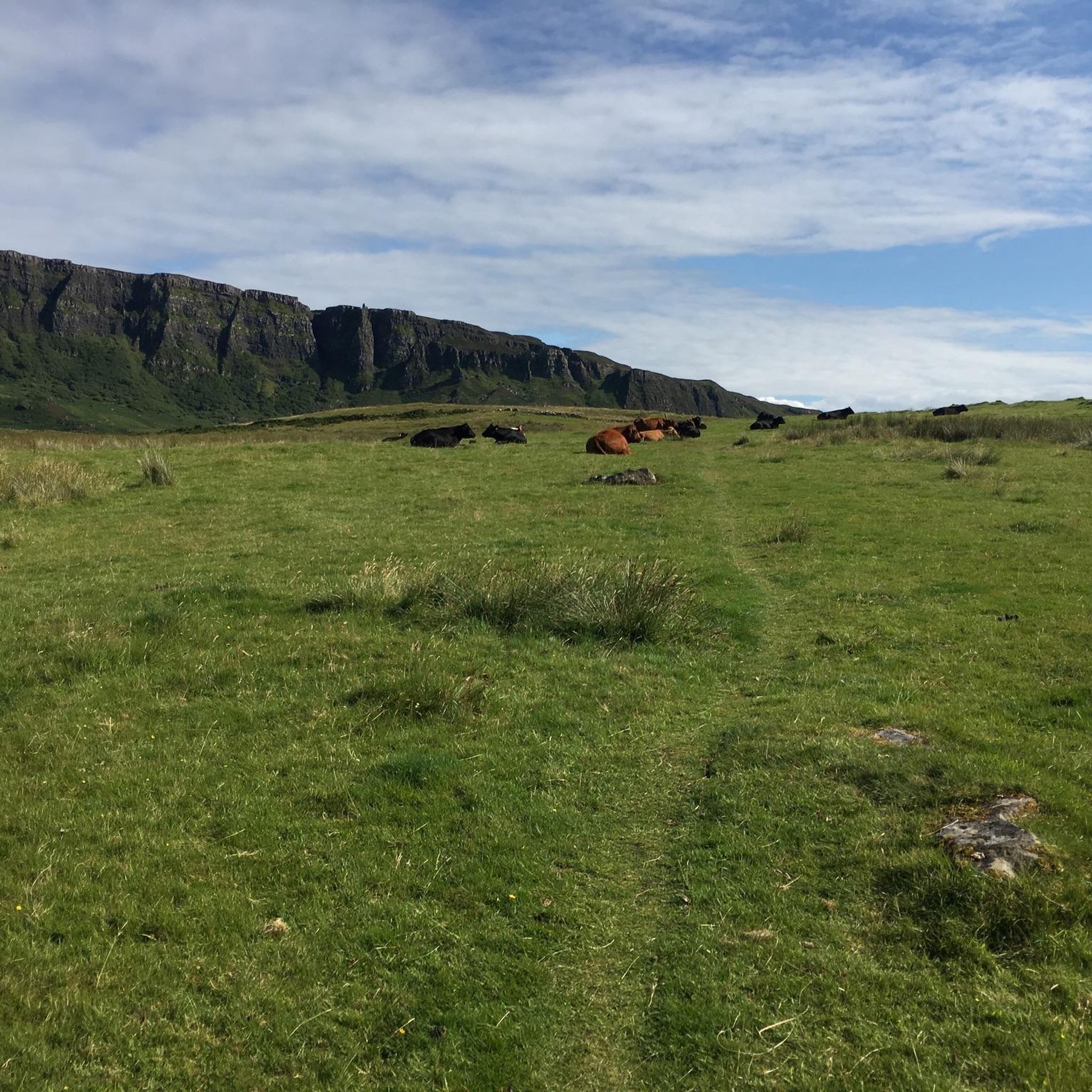
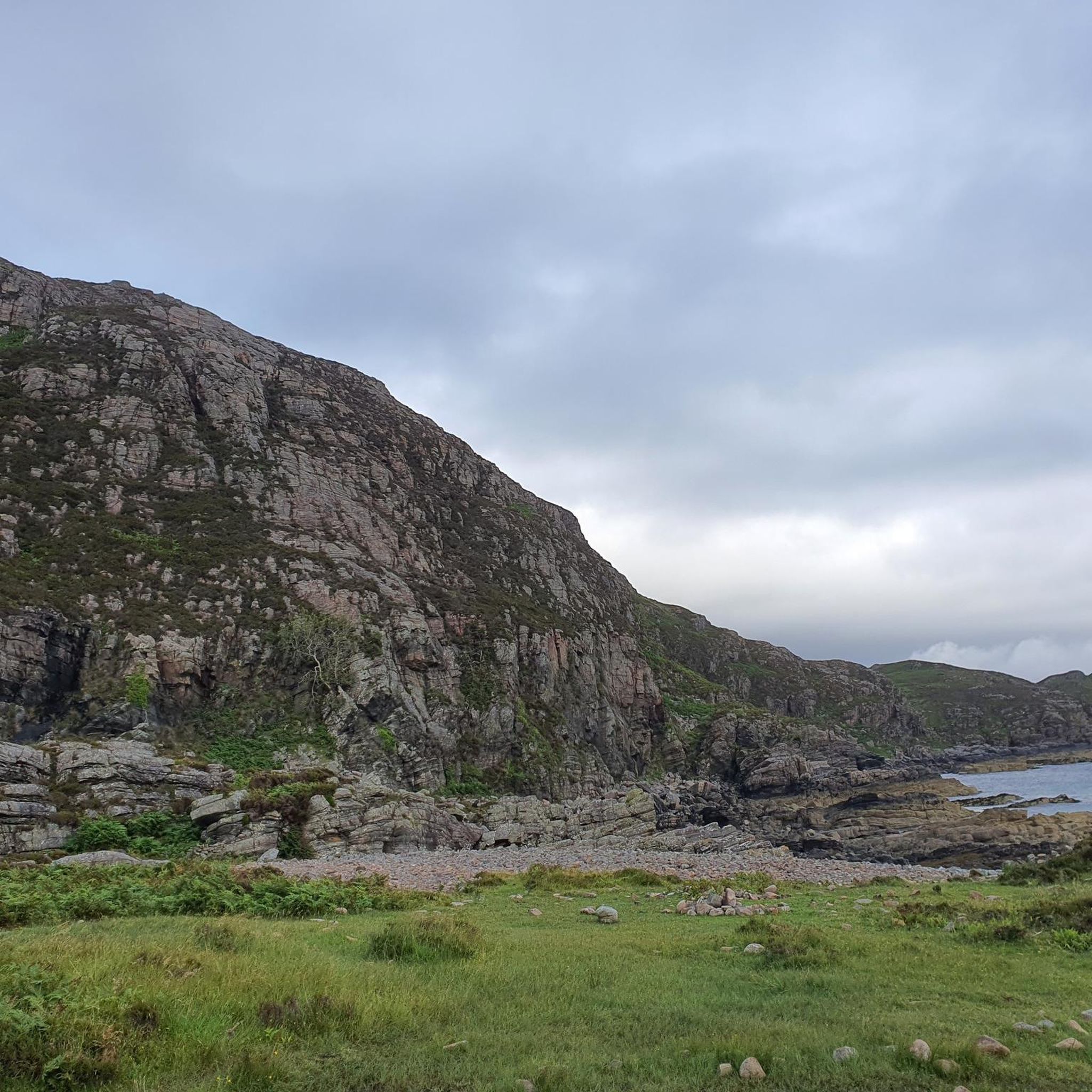
Tips from the Community

Massacre Cave has a small entrance, but when you're through the narrow channel it opens out and extends back in the dark some 79 metres. You will need a torch to explore it. The cave has a gruesome past, back in 1577 a group of Macleods from Skye landed on the island in a long running feud with the Macdonalds. The entire population of the island hid in the cave for 3 days. As the Macleods sailed away they finally spotted a lookout and were able to trace his footsteps in the snow back to the cave. The Macleods built a huge fire and the smoke killed the 395 people trapped inside.
1
0
If the visuals of this beach aren't enough for you, it will also sing to you! When dry the quartz sand makes a rasping, squeaking noise as it's scuffed by the wind, or as you walk across it.
1
0

At 812m this is the highest point on Rum and therefor the highest peak in the Rum Cuillin. It's a brilliant, scramble pyramidal peak standing at the head of the Cuillin ridge and offering awesome views across the island and across to Eigg. It's a tough expedition of a run but very satisfying especially if you camp or stay at the bothy and make it a two day adventure.
0
0
At 340m this is the highest point on the band of cliffs to the east of Cleadale in northern Eigg. The ridgeline creates a great running loop climbing up at one end and following the ridge until you can drop back to Cleadale at the other end, it's about 6km. The views across to Rum are inspiring.
0
0
At 340m this is the highest point on the band of cliffs to the east of Cleadale in northern Eigg. The ridgeline creates a great walking loop climbing up at one end and following the ridge until you can drop back to Cleadale at the other end, it's about 6km. The views across to Rum are inspiring.
0
0
The highest point on Eigg at 393m climbing An Sgùrr offers incredible views of the island and neighbouring Rum. The mountain was formed when a volcano erupted, filling the local valley with lava. This cooled and solidified, over time the softer surrounding rock eroded away leaving An Sgùrr as an inverted valley.
0
0

The Isle of Skye isn’t the only Scottish island with a Cuillin ridge. The extraordinary island of Rum has its own alternative version – and Askival is its crown, the highest and most satisfying peak of the Rum Cuillin. The majestic pyramidal peak is the highlight of this classic Inner Hebrides ridge traverse.
1
0
Frequently Asked Questions
What are some of the most unique natural monuments in the Small Isles?
The Small Isles are home to several distinctive natural monuments. On Rum, you can explore Askival Peak, the highest point of the Rum Cuillin, offering impressive views. On Eigg, the dramatic pitchstone ridge of An Sgùrr Summit is a must-see, known for its unique inverted valley shape. Additionally, the Singing Sands Beach on Eigg produces a unique sound when walked upon due to its quartz composition.
What is the best time of year to visit the natural monuments in the Small Isles?
The best time to visit the natural monuments in the Small Isles is generally during the spring and summer months (May to September). During this period, the weather is milder, days are longer, and wildlife, such as puffins on Sanday's sea stacks, is more active. However, weather in the Inner Hebrides can be unpredictable, so it's always wise to be prepared for various conditions.
Are there family-friendly natural monuments or walks in the Small Isles?
Yes, there are several options suitable for families. On Eigg, the Singing Sands Beach offers a fun and unique experience for all ages. For an easier walk, consider the 'Massacre Cave and Cathedral Cave from Galmisdale' route on Eigg, which is an easy hike of about 3 km. The white sandy beaches of Muck, particularly Gallanach Bay, are also great for families to explore and spot seals.
What kind of wildlife can I expect to see near the natural monuments?
The Small Isles are rich in wildlife. Near the sea stacks on Sanday (connected to Canna), you can spot puffins during the summer months. The entire Isle of Rum is a National Nature Reserve, renowned for its red deer population and successful reintroduction of white-tailed sea eagles. On Muck, Gallanach Bay is known for its large seal colony. Many areas also offer opportunities to see various seabirds.
Are there any natural monuments with historical significance?
Yes, Massacre Cave on the Isle of Eigg is a notable natural monument with a grim historical past. This substantial cavern, carved into Tertiary basalts, was the site of a tragic event in 1577. Visitors can explore its depths with a torch, though caution is advised.
What geological features make the Small Isles unique?
The Small Isles are geologically fascinating, largely formed by volcanic activity around 60 million years ago. Rum features the Rum Cuillin, the remains of an ancient volcano, with Askival Peak as its highest point. Eigg boasts An Sgùrr Summit, a dramatic pitchstone ridge formed from solidified lava. Canna's Compass Hill is unique for its high iron content, causing compasses to deviate. These features highlight the islands' volcanic origins and ongoing geological processes.
Are permits needed to visit natural monuments on Rum?
The entire Isle of Rum is a National Nature Reserve. While general access for walking and exploring is usually permitted, specific activities or access to certain sensitive areas might require permission or adherence to local guidelines. It's always advisable to check with Scottish Natural Heritage or local authorities for any specific permit requirements, especially for camping or large groups, to ensure responsible visiting.
What hiking opportunities are available near the natural monuments on the Isle of Rum?
The Isle of Rum offers challenging and rewarding hiking. You can tackle the 'Rum Cuillin Traverse' or 'The full Rùm Cuillin loop including Barkeval', both difficult routes that take you across the island's dramatic peaks, including Askival Peak. For more details on these and other routes, you can explore the Hiking around Small Isles guide.
Can I find hiking trails near natural monuments on the Isle of Eigg?
Absolutely. The Isle of Eigg is excellent for hiking. You can climb An Sgùrr Summit for incredible panoramic views. Another option is the ridgeline walk to Sgòrr an Fharaidh, which offers inspiring views towards Rum. For a unique experience, try the 'Singing Sands Trail' to the Singing Sands Beach. Find more routes in the Running Trails around Small Isles guide and Hiking around Small Isles guide.
What natural monuments can I explore on the Isle of Canna?
On the Isle of Canna, a fascinating natural anomaly is Compass Hill, known for its high iron content that causes compasses to deviate. Connected to Canna by a tidal bridge, the island of Sanday features amazing sea stacks that are home to puffins during the summer months, making it a great spot for wildlife enthusiasts.
What natural features are notable on the Isle of Muck?
Despite being the smallest of the Small Isles, Muck offers beautiful natural features. Beinn Airein is the highest point on the island, providing dramatic views. The island also boasts stunning white sandy beaches, particularly at Gallanach Bay, and dramatic cliffs along its south and west sides, which are perfect for wildlife viewing, including a large seal colony.
Where can I find unique beaches among the natural monuments?
The Small Isles are home to some truly unique beaches. The Singing Sands Beach (Camas Sgiotaig) on the Isle of Eigg is famous for the 'singing' sound its quartz sands produce when walked upon. The Isle of Muck also offers beautiful white sandy beaches, such as those at Gallanach Bay, which are ideal for relaxation and wildlife spotting.
Most popular routes around Small Isles
Most popular attractions around Small Isles

Get inspired with the komoot mobile app


Explore more
Extend your search for the best caves by checking out these guides of the top ones around Small Isles:
