Top 13 Natural Monuments around Vide e Cabeça e Cabeça e Cabeça
Natural monuments around Vide e Cabeça e Cabeça e Cabeça are situated within the Serra da Estrela Natural Park, Portugal's largest protected area. This region features a landscape shaped by glacial activity, including valleys, lagoons, and prominent rock formations. The area is characterized by its diverse hydrogeology, with numerous springs, rivers, and waterfalls. It offers a range of natural features for exploration, from high-altitude lakes to river beaches nestled in mountainous terrain.
Best natural monuments around Vide e Cabeça e…
Last updated: June 29, 2026
Long Lake
Highlight • Lake
Translated by Google •
Tip by

Lapa dos Dinheiros River Beach
Highlight • Beach
Translated by Google •
Tip by

Sign up now to discover places like this
Get recommendations on the best single tracks, peaks, & plenty of other exciting outdoor places.
Sign up for free
Foz d'Égua
Highlight • Beach
Translated by Google •
Tip by
Cornos do Diabo
Highlight • Natural Monument
Translated by Google •
Tip by
Poço da Broca de Serapitel
Highlight • Waterfall
Translated by Google •
Tip by

Sign up for free to discover even more natural monuments around Vide e Cabeça e Cabeça e Cabeça.
Sign up for free
Already have an account?
Start today with a free account
Your next adventure awaits.
Login or Signup
Popular around Vide e Cabeça e Cabeça e Cabeça
Other adventures around Vide e Cabeça e Cabeça e Cabeça

Tips from the Community

The Devil's Horns are a prominent granite rock formation with two horn-like points, located in the Serra da Estrela mountain range, near Lapa dos Dinheiros and Senhora do Desterro (not in Gerês, but in Seia, Portugal). They are the highlight of a famous circular hiking trail that follows a water channel and the Caniça stream, offering stunning landscapes, lagoons, and waterfalls. 👍🥾
0
0

The Lapa dos Dinheiros river beach is in perfect harmony with nature. Located in the parish of Lapa dos Dinheiros, on the Caniça River, a right-bank tributary of the Alva River, this bathing area is nestled in a mountainous landscape dominated by the Lapa Souto (south of Lapa) and imposing granite outcrops. With clear water, very appealing for swimming, the beach boasts the award for accessible beach and has lifeguards and a bar available to visitors. The rugged terrain of the valley causes the river to form a succession of small waterfalls nearby. The Lapa Souto, in addition to its valuable collection of centuries-old chestnut trees, is also home to a high level of biodiversity. From the bridge, a pedestrian path leads to the Moura Hole and a viewpoint over the Caniça Waterfalls. The Buraco da Moura is a natural cave system created by the sliding and accumulation of large granite blocks, which formed a complex system of rooms and galleries. How to get there? Once in Seia, follow the EN231 to S. Romão. From there, continue uphill for about 5 km, toward Loriga/Lapa, until you find the sign for Lapa dos Dinheiros on the left. Once inside the town, simply follow the beach signs. Coordinates: 40º 23′ 07.0″ N / 7º 41′ 50.1″ W
1
0
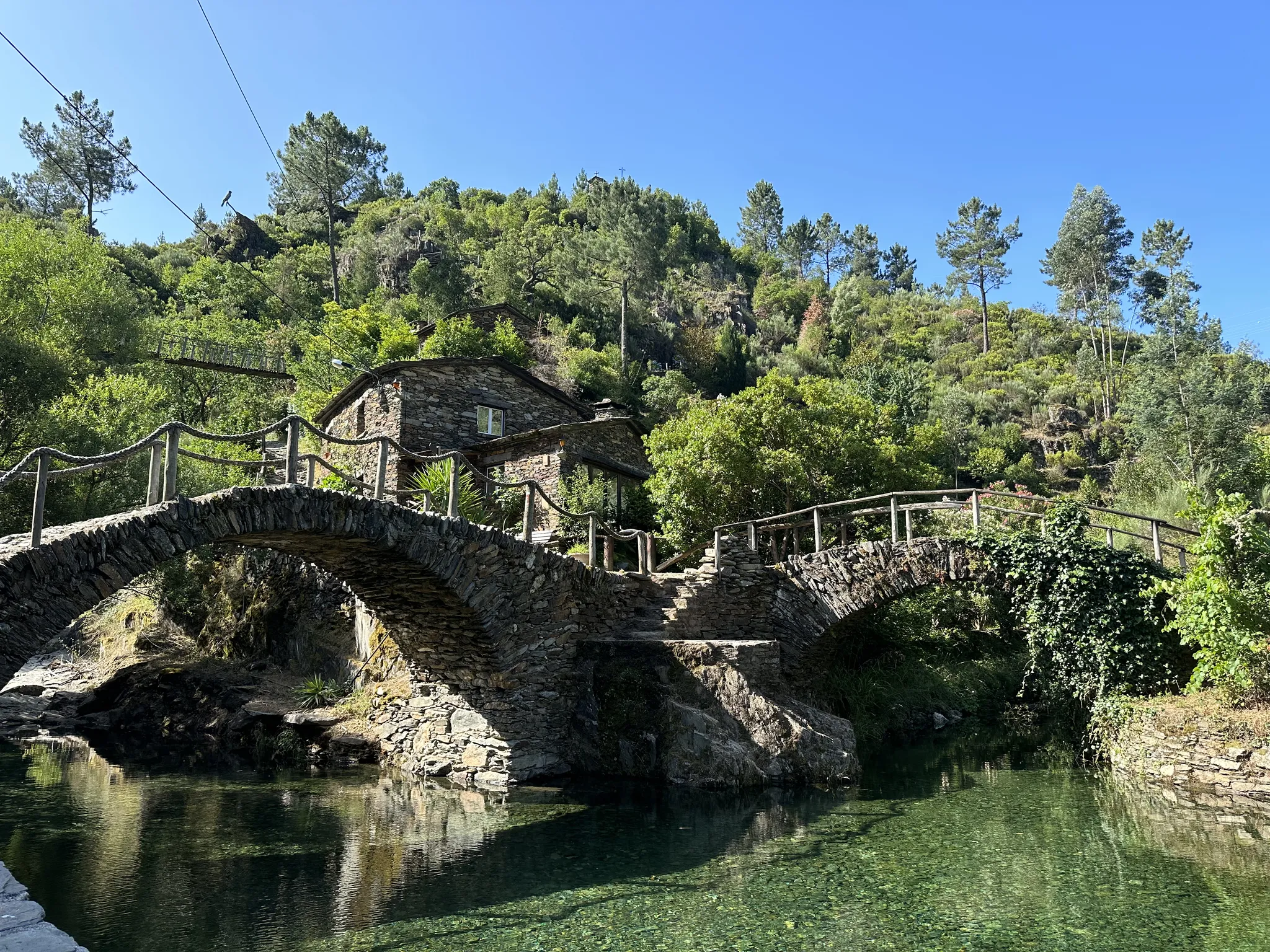
Both Piódão and Foz d'Égua are accessible by car. But it's worth hiking the trail that connects them. It takes about 45 minutes, downhill from Piódão to Foz d'Égua (remember that the return is a slight climb). It's worth crossing the restored suspension bridge in Foz d'Égua before returning to Piódão. The Foz d'Égua pool is a popular spot for a dip in its very cold waters. Dipping your feet in the icy water of the stream is always very pleasant after a hike, immersing yourself in nature. I did it and recommend it. 👍🥾
1
0
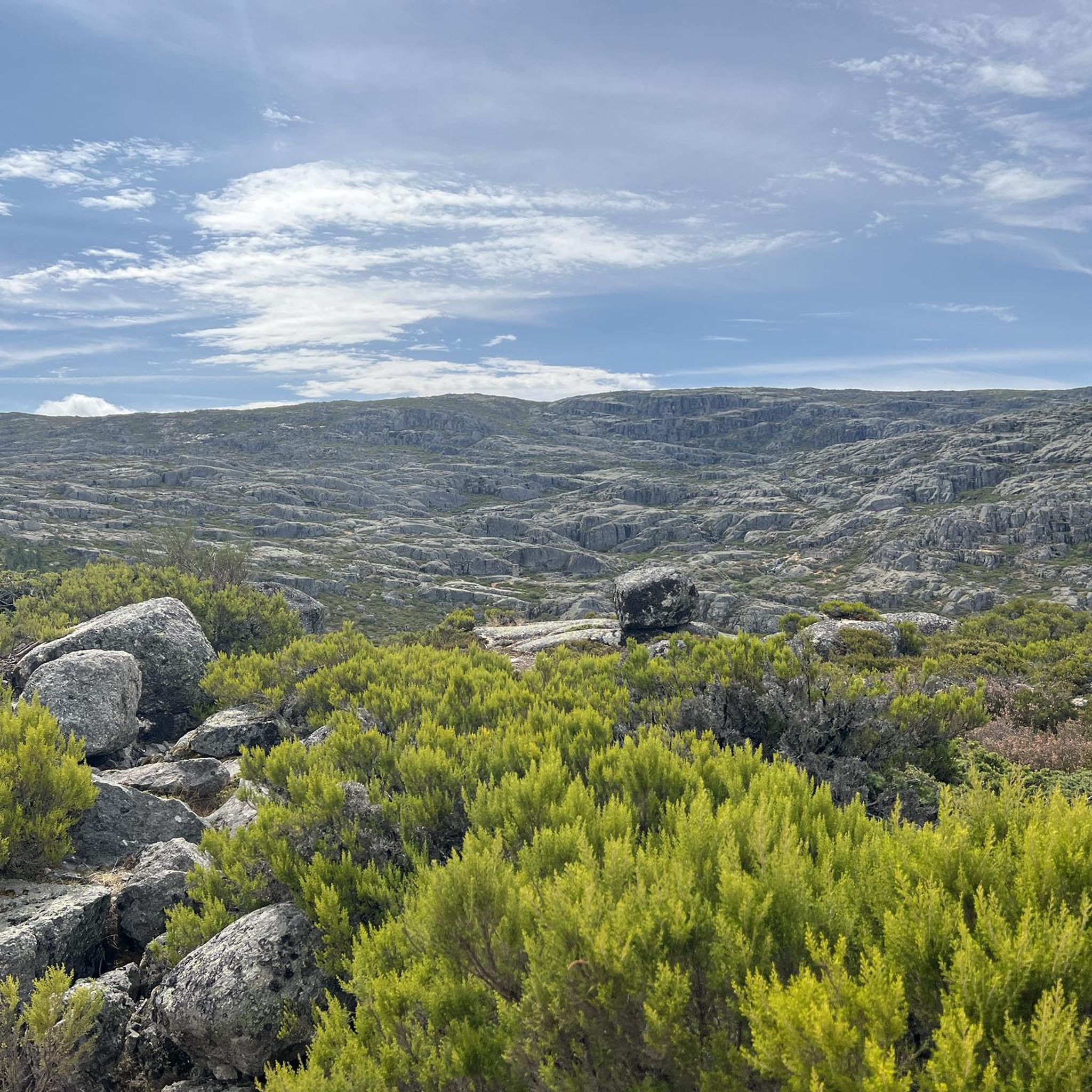
Located at an altitude of approximately 1,600 meters, Lagoa Comprida is the largest water reservoir in the Serra da Estrela, intended for hydroelectric generation. This natural lake lies in a wide depression of glacial origin, approximately one kilometer long, which fed the Covão Grande glacier. Numerous glacial scars are visible along its banks, making this lake one of the most interesting geomorphological sites in the Serra da Estrela. Construction on this lake began in 1911, and by 1914, it was already six meters high. Later, in 1965, it underwent heightening work that increased its height to 28 meters, currently boasting a storage capacity of approximately 14 cubic hectometers, flooding an area of approximately 80 hectares. Small streams of water flow into this lagoon, as well as water retained in the Covões dos Conchos and Covões do Meio and carried to this lagoon through underground tunnels.
6
1

Nestled in the Açor mountains, near Piódão, the river beach of Foz d’Égua is an enchanted corner that comes alive in the summer. Where the Piódão and Chãs d’Égua streams meet, a natural pool is formed, surrounded by rustic bridges, old mills and shale everywhere.
3
0
The enigmatic Devil's Horns rise from the granite, defying the sky with their six-metre height. Sculpted by erosion over the centuries, they earned this bold name thanks to their sharp and imposing profile. But the charm doesn't end there: around this unique formation, there are small crystal-clear lagoons and serene waterfalls, creating a true natural refuge that seems to have come straight out of a fantasy story.
3
1
Nestled on the banks of the Caniça river, a tributary of the Alva river, this beach area is a haven in the middle of a mountainous landscape, where ancient chestnut trees and granite blocks shape the scenery. The crystal-clear, inviting water is perfect for a refreshing dip. The beach, which has been awarded the title of accessible, has lifeguards and a bar, making the experience even more enjoyable.
3
0
Hidden in the Açor mountains, near the historic village of Piódão, the river beach of Foz d’Égua is a small paradise, especially in summer. Where the Piódão and Chãs d’Égua streams meet, a body of water forms, surrounded by rustic bridges, old shale mills and rocks shaped by the current. The landscape is serene, but getting there is a bit of an adventure: a rough trail winds down to the water, crossing terraces and shale steps that make the arrival part of the experience.
5
1
Frequently Asked Questions
What types of natural monuments can I expect to find around Vide e Cabeça?
The region around Vide e Cabeça, nestled within the Serra da Estrela Natural Park, offers a diverse range of natural monuments. You'll discover stunning glacial lakes like Long Lake, picturesque river beaches such as Lapa dos Dinheiros River Beach and Foz d'Égua, and unique rock formations like the Cornos do Diabo. The area is also rich in waterfalls and natural springs, reflecting its varied hydrogeology.
What are some unique geological features in the Serra da Estrela Natural Park near Vide e Cabeça?
The Serra da Estrela Natural Park is a testament to glacial activity, featuring distinct glacial valleys and numerous lagoons formed approximately 30,000 years ago. A notable example is Long Lake, a large glacial lake with visible glacial scars along its banks. The park also boasts the highest point in mainland Portugal, Torre, offering panoramic views of this ancient landscape.
Are there any notable waterfalls or river beaches to visit?
Yes, the area is known for its beautiful waterfalls and river beaches. You can visit the Lapa dos Dinheiros River Beach, which is set amidst ancient chestnut trees and granite blocks, offering clear water for swimming. Another popular spot is Foz d'Égua, a river beach where the Piódão and Chãs d’Égua streams converge to form a natural pool. For waterfalls, the Cabouqueiras Waterfalls (Balocas) and Poço do Inferno are particularly scenic, with the latter featuring a natural pool.
What do visitors particularly enjoy about the natural monuments in this area?
Visitors frequently praise the stunning scenery, the tranquility, and the opportunities for outdoor activities. The crystal-clear waters at places like Lapa dos Dinheiros River Beach are highlighted as perfect for a refreshing dip. The unique geological formations, such as the Cornos do Diabo, and the serene beauty of glacial lakes like Long Lake, are also highly appreciated for their photographic opportunities and natural appeal.
What is the best time of year to visit the natural monuments around Vide e Cabeça?
The summer months are particularly popular for visiting the river beaches and natural pools, such as Foz d'Égua and Poços de Broca, when the water is inviting for swimming. For hiking and exploring the mountainous terrain, spring and autumn offer pleasant temperatures and vibrant landscapes, avoiding the heat of summer and the potential snow of winter at higher altitudes.
Are there family-friendly natural monuments or activities suitable for children?
Yes, several natural monuments are suitable for families. Foz d'Égua is categorized as family-friendly, offering a natural pool for swimming. Lapa dos Dinheiros River Beach is also a great option, with clear water, lifeguards, and a bar, making it an accessible and enjoyable spot for families.
Are any natural monuments around Vide e Cabeça accessible for wheelchairs?
Yes, Lapa dos Dinheiros River Beach has been awarded the title of an accessible beach, making it suitable for wheelchair users. It provides facilities and clear water for enjoyment in a natural setting.
What hiking opportunities are available near these natural monuments?
The region offers numerous hiking opportunities. You can explore routes like the 'Ribeira de Loriga Route' or the 'Tour da Eira (PR 4) — circular route in Serra da Estrela'. For more options, including easy and difficult trails, you can find detailed guides on Hiking around Vide e Cabeça and Easy hikes around Vide e Cabeça.
Are there cycling routes in the vicinity of the natural monuments?
Yes, there are cycling routes available. For example, the 'Blue Tour of Piódão — Historic Villages of Portugal' offers a challenging ride. You can find more cycling routes and detailed information in the Cycling around Vide e Cabeça guide.
Are there any ancient historical sites linked to the natural landscape?
While not strictly natural monuments, the area around Vide e Cabeça features archaeological discoveries such as ancient rock art from the Bronze Age at sites like Ferraduras, Carvalhinhos, and Fontes do Cide. These historical artworks are intrinsically linked to the natural rock formations and landscapes, adding a cultural dimension to the natural environment.
Where can I find clear springs and tranquil natural settings?
The area around Cabeço de Vide is particularly noted for its 'crystal clear water from the numerous springs' and the surrounding forest. This offers a tranquil natural setting, ideal for those seeking a peaceful escape and a connection with nature.
What is the 'eye-shaped water mirror' at Cabouqueiras Waterfalls?
At the Cabouqueiras Waterfalls (Balocas), there is a notable feature described as an 'eye-shaped water mirror.' Local legends claim this natural cascade has no bottom and extends all the way to the sea, adding a mystical element to this scenic spot.
Most popular routes around Vide e Cabeça e Cabeça e Cabeça
Most popular attractions around Vide e Cabeça e Cabeça e Cabeça

Get inspired with the komoot mobile app


Explore more
Extend your search for the best caves by checking out these guides of the top ones around Vide e Cabeça e Cabeça e Cabeça:
