Attractions and Places To See around Freixo - Top 6
Attractions and places to see around Freixo, specifically Freixo de Espada à Cinta in northeastern Portugal, encompass historical landmarks, natural landscapes, and cultural sites. This region is recognized for its Manueline architecture and its location within the Douro International Natural Park. The area offers a variety of places to explore, from ancient villages to river crossings.
Best attractions and places to see around Freixo
- The most popular attractions is Castelo Mendo Historic Village, a historical site with medieval roots,…
Last updated: June 29, 2026
Castelo Mendo Historic Village
Highlight • Historical Site
Translated by Google •
Tip by

Leomil
Highlight • Settlement
Translated by Google •
Tip by
Sign up now to discover places like this
Get recommendations on the best single tracks, peaks, & plenty of other exciting outdoor places.
Sign up for free
Freineda
Highlight • Settlement
Translated by Google •
Tip by
Old Bridge Over the Côa River
Highlight • Bridge
Translated by Google •
Tip by
Ford of the Côa River
Highlight • River
Translated by Google •
Tip by
Sign up for free to discover even more attractions around Freixo.
Sign up for free
Already have an account?
Start today with a free account
Your next adventure awaits.
Login or Signup
Popular around Freixo
Tips from the Community

Not a safe crossing. Perhaps ok in summer but we went in April, the water was deep and the rapids were strong and knocked me off my feet.
0
0

For centuries, crossing the Côa Valley was only possible via two bridges: the São Roque Bridge and this one, the Ponte Grande, the gateway to Almeida. Built in the 17th century and renovated in the 19th century, the Ponte Grande was forever linked to the Battle of the Côa in 1810, when the Portuguese-British forces resisted the third Napoleonic invasion. Today, the bridge remains a silent guardian of that memory.
3
0
Leomil was born in the 9th century, when the king awarded the warrior Leodmiro for his fights against the Moors. From the 13th century onward, it became the only Portuguese commandery of the Order of Roncesvalles, in Navarre, which administered it for six centuries. From chickens and wheat paid in rent to vast estates spread across the country, Leomil prospered under this unique rule. Today, few inhabitants remain, and agriculture continues to mark the rhythm of this village where markers bearing the initials "RV" (Roncesvalles) still survive, a living memory of the ancient order.
2
0
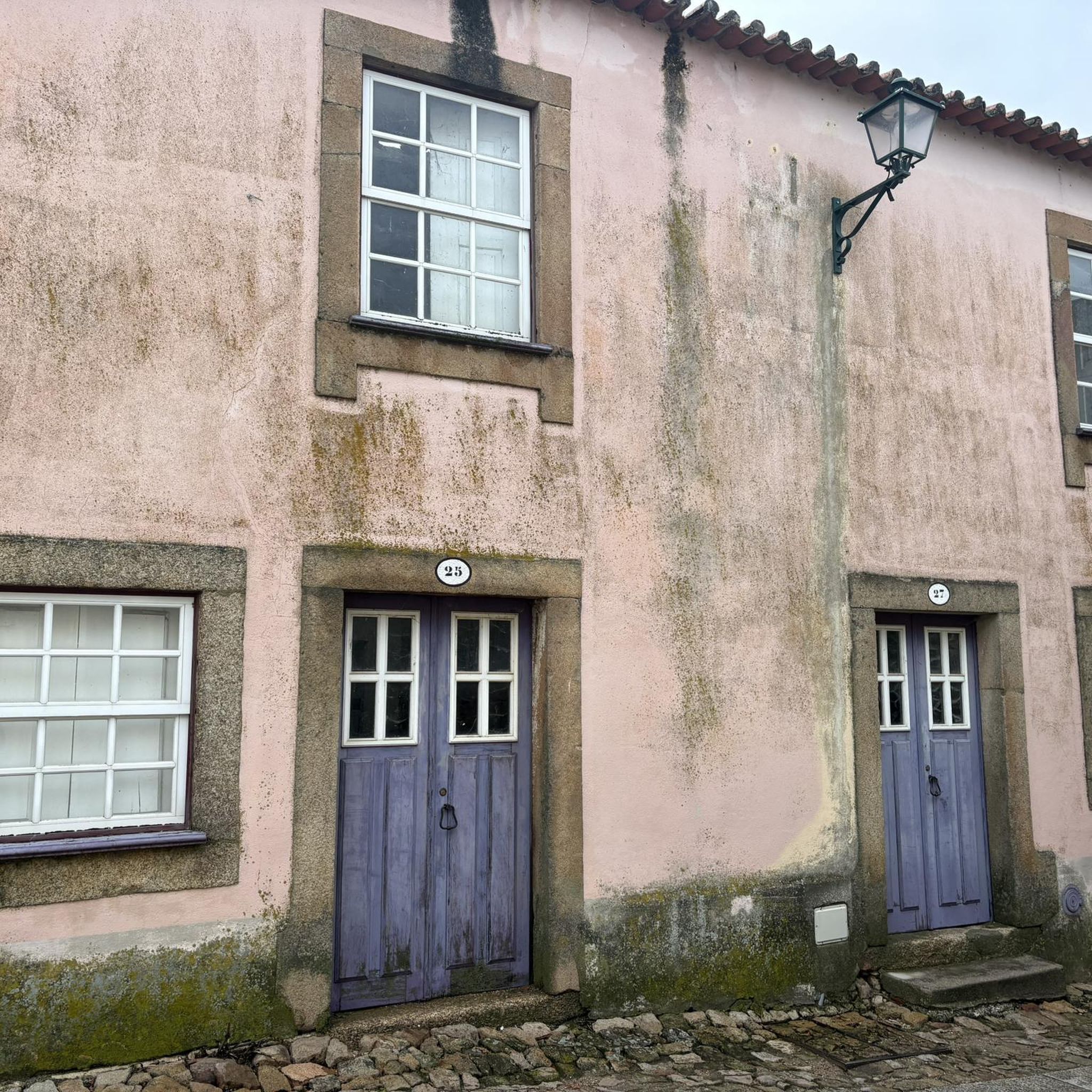
Castelo Mendo is a historic village with medieval roots, marked by two walls: the oldest, dating from the 12th century, surrounds the old town with its castle and the church of Santa Maria; the second, built by King Dinis in the 14th century, protected the Gothic suburb. The site was a living border between Portugal and León until the Treaty of Alcanices (1297), guarding strategic passages over the Côa River. At the entrance, two Vetón bellows, stone figures in the shape of wild boars, recall even more remote origins. Classified as a Property of Public Interest since 1984, Castelo Mendo today stands as a rare testament to the border region's history and Portuguese medieval splendor.
2
0
Descending the Côa Valley, the crossing today takes place near the river beach, where once there was a ferry. This ancient crossing point, used since ancient times, has left traces of its past: ceramics, coins, and Roman remains still bear witness to the place's long history.
1
0
Freineda, a small border village, welcomed Lord Wellington between late 1812 and the spring of 1813, during the Peninsular War. In a stone house next to the church, the general established his headquarters, while the rest of the general staff dispersed to neighboring villages. Although described at the time as poverty-stricken, the village became the scene of major military decisions. Today, it remains modest and small, but keeps the memory of that time alive: on the facade of the house where Wellington lived, a plaque commemorates his visit.
2
0


Castelo Mendo is surrounded by a fortified wall with six medieval gates. Two wild boar sculptures stand to the left and right of the main entrance. The simple stone houses originally consisted of two floors. The ground floor housed livestock, while the upper floor served as a residential building. The extremely narrow streets made it relatively easy to defend the town, which was repeatedly a battlefield during the wars in which Portugal participated, especially against Spain.
2
2
Frequently Asked Questions
What historical sites can I explore in Freixo de Espada à Cinta?
Freixo de Espada à Cinta is rich in history. You can visit the ancient Castelo Mendo Historic Village, known for its medieval walls and castle. Other significant historical landmarks include the Castle of Freixo de Espada à Cinta with its unique Heptagonal Tower, the Main Church of Freixo de Espada à Cinta, and the Manueline Pillory. The village of Leomil also holds historical significance as a former Portuguese commandery of the Order of Roncesvalles.
Where can I see examples of Manueline architecture in Freixo de Espada à Cinta?
Freixo de Espada à Cinta is celebrated as Portugal's most Manueline village. You'll find numerous examples throughout the historic center, particularly in the intricate Manueline windows and doors, with around 150 such examples. The Main Church of Freixo de Espada à Cinta also features an imposing Manueline portal.
Are there any museums in Freixo de Espada à Cinta?
Yes, Freixo de Espada à Cinta offers a couple of interesting museums. You can visit the Casa do Poeta Guerra Junqueiro & Casa Junqueiro Museum, dedicated to the poet born in the village. Additionally, the Silk and Territory Museum highlights the region's unique heritage as the only area in the Iberian Peninsula where silk is produced entirely by hand.
What natural attractions are there in Freixo de Espada à Cinta?
The municipality of Freixo de Espada à Cinta is largely situated within the stunning Douro International Natural Park, offering unique natural beauty and diverse flora and fauna along the Douro River. A popular spot for relaxation is the Praia Fluvial da Congida (Congida River Beach), located directly on the Douro River. You can also find ancient Mazouco Rock Engravings, including the first open-air Paleolithic rock art site discovered in Portugal.
Where are the best viewpoints to see the Douro River in Freixo de Espada à Cinta?
Freixo de Espada à Cinta boasts several spectacular viewpoints offering panoramic vistas of the Douro River. Highly recommended are the Miradouro do Penedo Durão, which provides wide-ranging views over the Douro International Natural Park, and the Miradouro da Cruzinha (Lagoaça) for a striking view of the Douro's meander. Other notable viewpoints include Carrascalinho, Colado, and Assumadouro.
Are there family-friendly attractions or activities in Freixo de Espada à Cinta?
Many of the natural attractions, such as the Praia Fluvial da Congida (Congida River Beach) and the various viewpoints, are suitable for families. Exploring the historic center with its unique Manueline architecture and visiting the Freineda village, which is categorized as family-friendly, can also be enjoyable for all ages. Boat tours along the Douro International Natural Park from Congida River Pier are another great family option.
What outdoor activities can I do near Freixo?
Beyond exploring the attractions, you can enjoy various outdoor activities. The region offers several hiking routes, including Malhadinha, Carrascalinho, Mazouco, Penedo Durão, and sections of the Douro Internacional and Douro Wine Routes. For road cycling enthusiasts, there are routes available such as the Castelo Rodrigo Village – Almeida Castle loop or the Fortress of Almeida loop. You can find more details on these and other cycling routes on the Road Cycling Routes around Freixo guide.
What is the significance of the Old Bridge Over the Côa River?
The Old Bridge Over the Côa River, also known as Ponte Grande, is a 17th-century structure that was crucial for crossing the Côa Valley. It gained historical prominence during the Battle of the Côa in 1810, where Portuguese-British forces resisted the third Napoleonic invasion. It stands as a silent guardian of that memory.
Is there a legendary tree in Freixo de Espada à Cinta?
Yes, Freixo de Espada à Cinta is home to the legendary Freixo Duarte D'Armas. This ash tree, approximately 500 to 550 years old and 12 meters tall, is a cultural and historical landmark in the village's main square. Legend has it that a knight once thrust his sword into its trunk, a unique feature associated with the town's name.
What is the best time of year to visit Freixo de Espada à Cinta for outdoor activities?
The best time to visit Freixo de Espada à Cinta for outdoor activities like hiking and exploring viewpoints is typically during the spring (April to June) and autumn (September to October). During these seasons, the weather is generally mild and pleasant, making it ideal for enjoying the natural landscapes of the Douro International Natural Park and the river beach without the intense heat of summer.
Are there any other 'Freixo' locations in Portugal worth noting?
While this guide focuses on Freixo de Espada à Cinta, other notable 'Freixo' locations in Portugal include the stunning Palácio do Freixo (Freixo Palace) in Porto, a magnificent Baroque house now a historic hotel, and the modern Freixo Bridge, also in Porto. There's also the Freixo/Tongobriga Archaeological Site near Marco de Canaveses, containing Roman ruins, and Freixo de Numão with its archaeological stations.
Most popular routes around Freixo

Get inspired with the komoot mobile app


Explore more
Still not found the Highlight you’re looking for? See guides of the top attractions in other regions:
