Top 12 Natural Monuments around gmina Szydłowiec
Best natural monuments around gmina Szydłowiec are found within the northern Kielce-Sandomierz Upland, an area rich in natural heritage. The region features diverse landscapes, including ancient trees, protected forest complexes, and unique geological formations. These natural features offer ecological, historical, and aesthetic value for visitors. The Garb Gielniowski, a prominent natural feature, contributes to the varied flora and provides varied landscapes.
Best natural monuments around gmina Szydłowiec
- The most popular natural monuments is Aga's Cave — Piekło pod Niekłaniem rock formations, a cave that features peculiar rock forms carved by erosive processes in Triassic and Lower Jurassic sandstones. These formations, up to 8 meters high, include shapes like mushrooms and chimneys.
- Another must-see spot is Dinosaur Footprints at the Gagaty Sołtykowskie Reserve, a natural monument. This site preserves dinosaur footprints, including those of herbivorous sauropods and a large predatory allosauropoid, alongside jet deposits in an old clay pit.
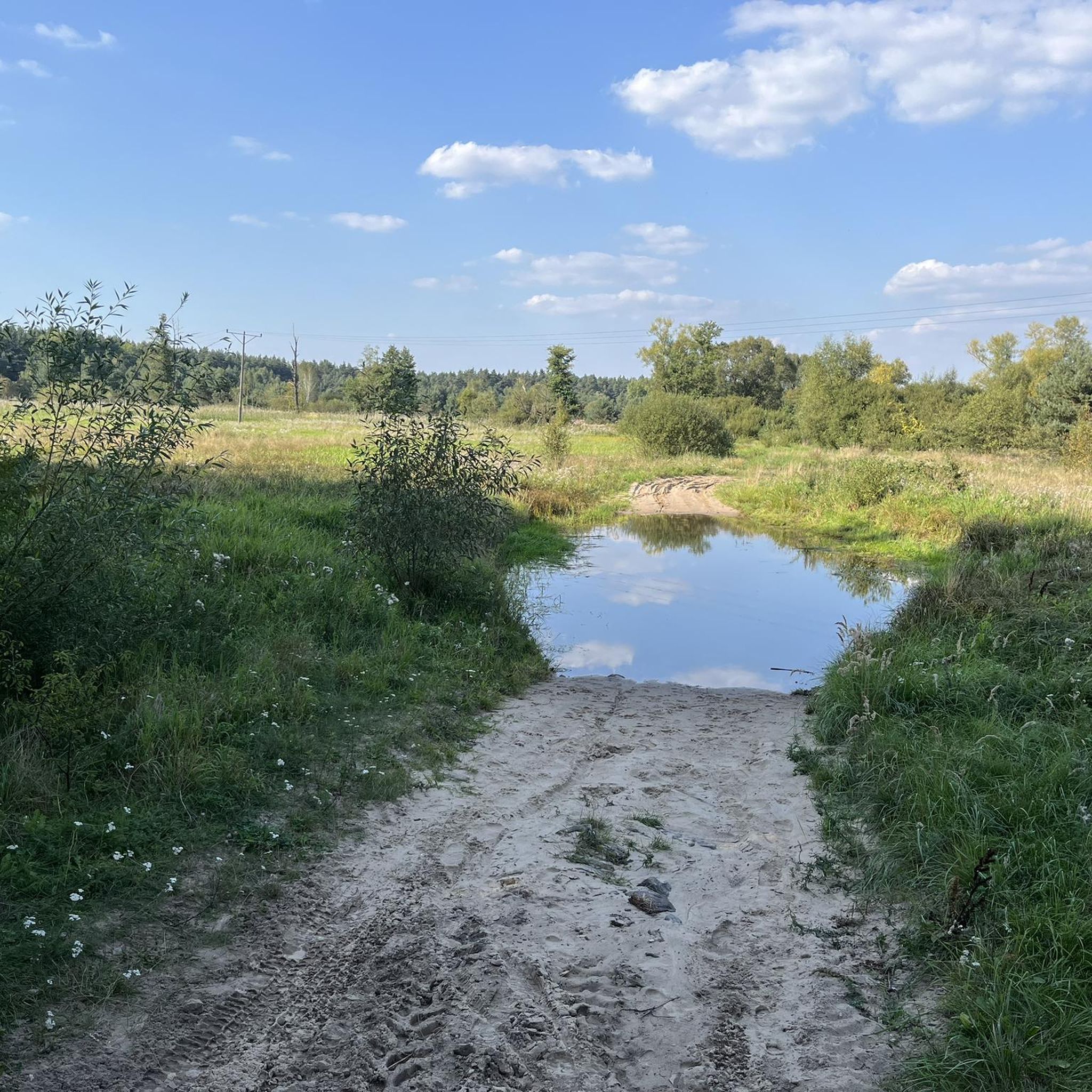
- Visitors also love Spring in Niekłań Wielki, a natural monument. This spring is located on the trail leading to the Skałki Piekło pod Niekłaniem Reserve and is a source of spring water.
- gmina Szydłowiec is known for ancient monumental trees, protected yew and larch stands, and distinctive rock formations. The area offers a variety of natural monuments to see and explore, including the 110-year-old Crooked Elm and the geological features of the Garb Gielniowski.
- The natural monuments around gmina Szydłowiec are appreciated by the komoot community, with 38 upvotes and 68 photos shared by visitors.
Last updated: July 13, 2026
Aga's Cave — Piekło pod Niekłaniem rock formations
Highlight • Cave
Translated by Google •
Tip by

Dinosaur Footprints at the Gagaty Sołtykowskie Reserve
Highlight • Natural Monument
A phenomenon on a global scale is the preservation of both adult and juvenile tracks walking side by side. They were left by herbivorous sauropods and this is evidence of their gregarious life.
One of the largest (60 centimeters) tracks of a predatory allosauropoid in Poland was also discovered in the reserve. As a curiosity, it should be noted that in the Gagaty Sołtykowskie reserve there is a site of an equally "predatory" sundew.
Translated by Google •
Tip by
Sign up now to discover places like this
Get recommendations on the best single tracks, peaks, & plenty of other exciting outdoor places.
Sign up for free
Teodor Zieliński Memorial Boulder
Highlight • Monument
Translated by Google •
Tip by

Piekło Dalejowskie Rock Formations
Highlight • Natural Monument
source: piekielnyszlak.pl/awodcje/gmina-blizyn/78-rezerwat-pieklo-dalejowskie
Translated by Google •
Tip by

Spring in Niekłań Wielki
Highlight • Natural Monument
Translated by Google •
Tip by
Sign up for free to discover even more natural monuments around gmina Szydłowiec.
Sign up for free
Already have an account?
Start today with a free account
Your next adventure awaits.
Login or Signup
Tips from the Community

Apparently this spring water will give you ability to over perform in bed and last 4 times longer. Legend says it will make you more fertile too. That's what old tales say here
0
0

An inanimate nature reserve in the Konecko-Łopuszniański Protected Landscape Area in the Stąporków commune, in the Konecki district, in the northern part of the Świętokrzyskie province, near the town of Niekłań Wielki. The rocks stretch for about 1 kilometre, their height reaches 8 metres. The Skałki Piekło nature reserve under Niekłaniem is the starting point of the black tourist trail of the black tourist trail leading to the town of Wólka Plebańska. The blue tourist trail from Skarżysko-Kamienna (Pogorzałe) to Kuźniaki passes through the reserve. It is also a point on the Piekielny Szlak.
0
0

The "Skałki Piekło pod Niekłaniem" nature reserve was established on April 1, 1959, in order to preserve, for scientific and didactic reasons, the peculiar forms of sandstone rocks formed by wind erosion and the northern parrot fern (Asplenium Septentrionale) living in rock crevices, on the initiative of Eng. Teodor Zielinski. It is the oldest nature reserve operating in the Stąporków Forest District.
2
0

A great place, a must to visit whenever you are nearby. The reserve was established in 1997. It covers an area of 13.33 hectares and is called "Gagaty Sołtykowskie". The middle-forest gravel road will lead us to the car park, from where the trail is quite well marked with boards and will lead us to the reserve. It is an old closed clay pit where in the mid-70s of the last century one of the major geological curiosities of the region was found - jet. The jet occurred as a fossil accompanying the basic mineral which was ceramic clays. There is a bit of a conflict here with the classification of the jet. One thing you have to admit - he's definitely a rock. And the term fossil probably comes from the fact that it perfectly reproduces the shape and structure of the wood from which it was made.
1
0

Footprints of dinosaurs imprinted on the bank of the prehistoric river. Access / access on the platforms above the swampy area.
1
0
The reserve was established in 1959 to preserve peculiar rock forms. The rocks in question were carved thanks to erosive processes in the Triassic and Lower Jurassic sandstones. Thanks to this, they stand out beautifully with yellow and orange, but also with a dark color against the green of the forest. At a length of several hundred meters, the rocks form two separate clusters. Following the blue trail from the parking lot, first we reach lower and darker rock formations, then we reach more colorful and magnificent, up to 8 m high inselbergs. These are rocks with extremely unusual shapes, such as mushrooms, chimneys, pulpits (pulpit), or… what your imagination will tell you.
4
0
This is an old, inactive clay pit where in the mid-1970s one of the greatest geological curiosities of the region was found - jet. The jet occurred as a fossil accompanying the basic mineral, which was ceramic clay. Here, the classification of jet is slightly at odds with each other. One thing must be admitted - it is definitely a rock. And the term fossil probably comes from the fact that the shape and structure of the wood from which it was made are perfectly reproduced. A phenomenon on a global scale is the preservation of both adult and juvenile tracks walking side by side. They were left by herbivorous sauropods and this is evidence of their gregarious life. One of the largest (60 centimeters) tracks of a predatory allosauropoid in Poland was also discovered in the reserve. As a curiosity, it should be noted that in the Gagaty Sołtykowskie reserve there is a site of an equally "predatory" sundew.
4
0

Inanimate nature monument (cluster 30 m wide and 130 m long). On site, we can admire numerous rock formations made of Triassic sandstones - including walls, thresholds, cliffs and rock blocks forming a rock gorge from 2 to 2.5 m high. Numerous small caves have been discovered and described here. The rocks of Hell's Nextowski are overgrown with beautiful ferns, creating spectacular hanging gardens. source: https://www.piekielnyszlak.pl/awodcje/gmina-blizyn/78-rezerwat-pieklo-dalejowskie
0
0
Frequently Asked Questions
What unique geological features can I explore in gmina Szydłowiec?
The region offers several distinctive geological formations. You can visit Aga's Cave — Piekło pod Niekłaniem rock formations, where erosive processes have carved peculiar shapes like mushrooms and chimneys into Triassic and Lower Jurassic sandstones. Another fascinating site is the Piekło Dalejowskie Rock Formations, featuring a cluster of Triassic sandstones with walls, cliffs, and small caves, creating a rock gorge.
Are there any natural monuments with historical significance in the area?
Yes, the region is rich in historical natural monuments. The ancient monumental trees, including beeches, oaks, and maples, are estimated to be between 250 and 350 years old, serving as living historical landmarks. Additionally, the Dinosaur Footprints at the Gagaty Sołtykowskie Reserve offers a glimpse into prehistoric times with well-preserved dinosaur tracks and jet deposits.
What kind of protected trees can I find in gmina Szydłowiec?
Gmina Szydłowiec is home to several protected tree species. You can find natural stands of rare yew trees, some reaching up to 9 meters in height, within designated nature reserves. The region also protects natural clusters of European larch, and a significant cluster of Polish larch is preserved in the Altana massif, the highest point in the area.
Is there a particularly famous or unique tree to visit?
Absolutely. The 'Crooked Elm' (Krzywa Wiąz) in Szydłowiec is a distinctive 110-year-old white elm. It leans dramatically over the moat of the Renaissance castle, with its branches extending almost parallel to the water. This picturesque tree has cultural significance and was even Poland's entry in the 2026 European Tree of the Year contest.
What outdoor activities can I do near these natural monuments?
The varied landscapes and extensive forests in the southern part of gmina Szydłowiec provide excellent conditions for active recreation. You can enjoy walking, cycling, and mountain biking. For specific routes, explore the MTB Trails around gmina Szydłowiec or the Gravel biking around gmina Szydłowiec guides. There are also dedicated Running Trails around gmina Szydłowiec.
Are there family-friendly natural monuments around gmina Szydłowiec?
Yes, several natural monuments are suitable for families. The Dinosaur Footprints at the Gagaty Sołtykowskie Reserve is particularly engaging for children, allowing them to see ancient tracks. The Spring in Niekłań Wielki, located on a trail, is also a pleasant stop for families.
Where can I find ancient monumental trees in the region?
Ancient monumental trees, including impressive beeches, oaks, and maples, can be found in various locations across the gmina. Notable areas include the surroundings of villages such as Sadek, Wola Korzeniowa, Rybianka, Ciechostowice, Łazy, Majdów, and Szydłowiec itself. These venerable trees contribute significantly to the local biodiversity.
What is the Garb Gielniowski and what does it offer?
The Garb Gielniowski is a prominent natural feature within the region, characterized by varied landscapes and significant elevation changes. It is part of the Przysusko-Szydłowiec Forest Complex, an area designated for landscape protection. The main watercourse of Szydłowiec, the Korzeniówka River, originates on its slopes, adding to the area's natural beauty and diverse flora.
What do visitors enjoy most about the natural monuments in gmina Szydłowiec?
Visitors appreciate the ecological significance of the area, which protects rare and ancient tree species and vital forest ecosystems. The historical connection offered by ancient trees, the aesthetic beauty of unique formations like the Crooked Elm, and the serene forest landscapes are also highly valued. Many also enjoy the recreational opportunities for walking and cycling in clean air.
Is there a memorial related to nature conservation in the area?
Yes, at the entrance to Skałki Piekło pod Niekłaniem, you can find the Teodor Zieliński Memorial Boulder. This stone commemorates Teodor Zieliński's significant contributions to forestry and nature conservation, including his role in organizing the Supreme Directorate of State Forests and developing national parks.
Are there any natural springs or water sources to visit?
Yes, the Spring in Niekłań Wielki is a notable natural monument. It is located directly on the trail leading to the Skałki Piekło pod Niekłaniem Reserve and is a popular spot for visitors to collect fresh spring water.
Most popular routes around gmina Szydłowiec
Most popular attractions around gmina Szydłowiec

Get inspired with the komoot mobile app


Explore more
Extend your search for the best caves by checking out these guides of the top ones around gmina Szydłowiec:
