Top 3 Natural Monuments around powiat zielonogórski
Best natural monuments around powiat zielonogórski offer opportunities to explore the region's natural beauty and geological heritage in western Poland's Lubusz Voivodeship. The area features a diverse landscape, including hills, valleys, and riverine forests. These sites provide locations for recreation and observation of unique flora and fauna. The Zielonogórski Rampart, a chain of hills, showcases evidence of ancient glaciation.
Best natural monuments around powiat zielonogórski
- The most popular natural monuments is Wilkanów Meteorite Memorial, a man-made monument commemorating a…
Last updated: July 12, 2026
Wilkanów Meteorite Memorial
Highlight • Monument
Translated by Google •
Tip by

Napoleon Oak
Highlight • Natural Monument
Translated by Google •
Tip by

Sign up now to discover places like this
Get recommendations on the best single tracks, peaks, & plenty of other exciting outdoor places.
Sign up for free
Otto Mülsch Memorial Stone
Highlight • Monument
An entrepreneur, trader and nature lover. For 20 years he was responsible for the Odra forest in which you are now.
Translated by Google •
Tip by
Oak Avenue in Nadleśnictwo Przytok
Highlight (Segment) • Natural Monument
Translated by Google •
Tip by
Scots Pine "Waligóra"
Highlight • Natural Monument
Showing Translation
Tip by

Start today with a free account
Your next adventure awaits.
Login or Signup

Tips from the Community

A specimen of Scots pine over 160 years old growing by national road no. 32 near Sulechów, in the area of Leśnictwo Klępsk. Access from the main road is well marked. There is a small parking lot next to the pine tree.
0
0

The Napoleon Oak (Dąb Napoleona) – a now-defunct natural monument, this English oak growing in Zabór was the thickest tree of its species in Poland. It burned down on November 15, 2010, most likely set on fire by vandals. Its circumference was 1,052 cm (at a height of 1.3 meters from the highest point of the tree's base). At 22 meters high, the oak is estimated to have been an acorn tree around 1300 (its age is 660-700 years). The tree had a large hollow inside that could accommodate a dozen people at once. The tree's habit was typical of trees growing in open spaces (a massive trunk and spreading crown) – different from, for example, the Białowieża oaks, such as the Car Oak or the Jagiełło Oak. Before the war, it was listed among 78 natural monuments in the Zielona Góra district. In 1920, the then Princess Hermine von Schönaich-Carolath of the Reuss family personally named the tree after Professor Theodor Schube (a German botanist and nature conservationist who studied Silesian natural monuments and authored, among other works, the Waldbuch von Schlesien). After her husband's death, the Princess became the second wife of former Emperor Wilhelm II in 1922, receiving the title of Empress. This brought the oak fame both locally and throughout Silesia. In 1936, the tree was listed in the "Book of Nature Conservation" kept by the starost of Zielona Góra. The tree's Polish name comes from a legend that Napoleon Bonaparte rested under its branches after crossing the Oder River during his expedition to Russia in 1812. Before it finally burned down, the oak was set on fire several times by vandals.
0
0
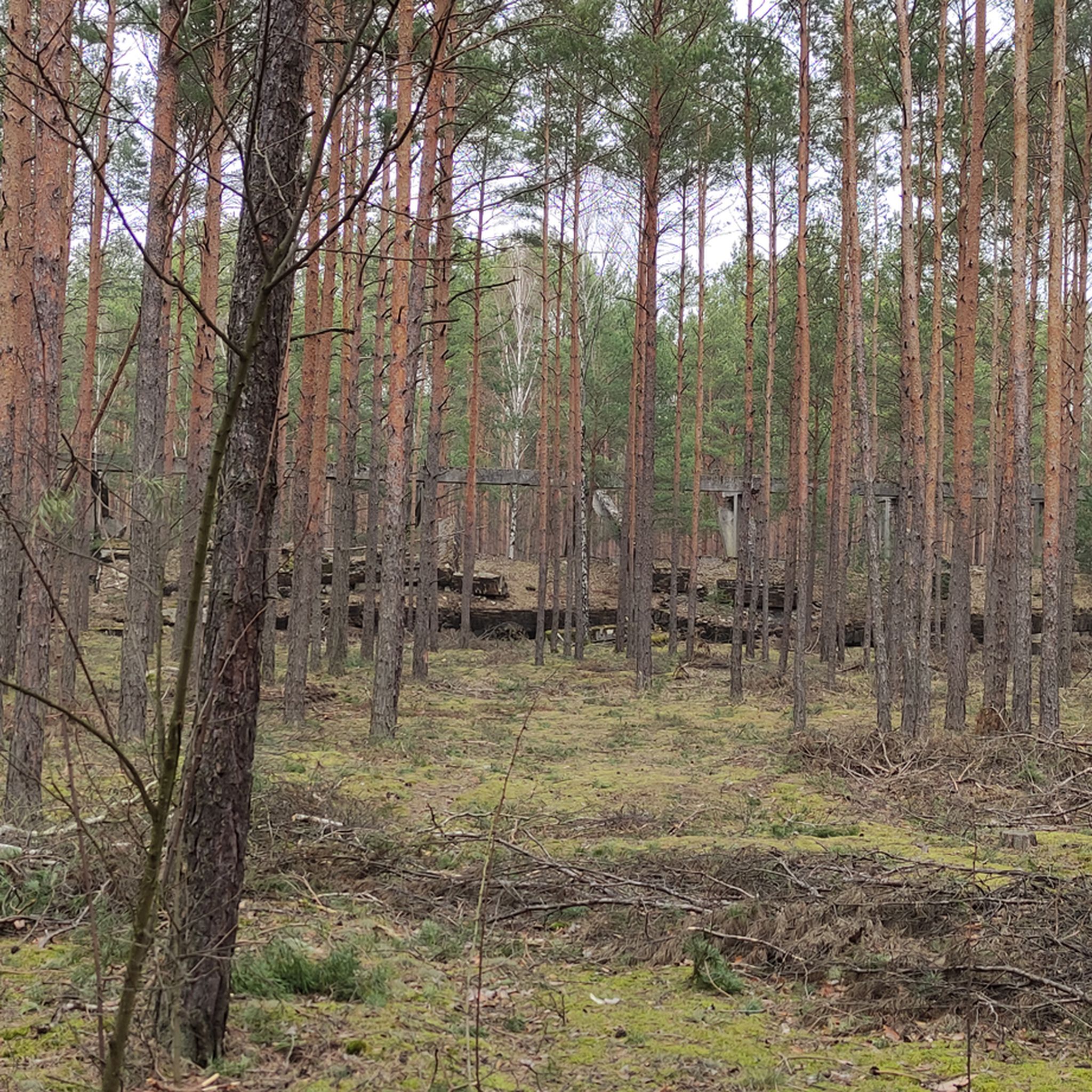
Oak Alley by the former summer gazebo, of which there is no trace today. At least two of the oaks in the alley were commemorated with their names. The stones buried under them with the names of the trees have been preserved. On the stone under one of the oaks, "Förster Eiche" was carved. The second stone under another oak has the inscription "Martini Eiche". These stones commemorate two entrepreneurs from Zielona Góra. In 2025, the alley was recreated by pouring a gravel surface. Unfortunately, during this work, both stones were damaged.
0
0
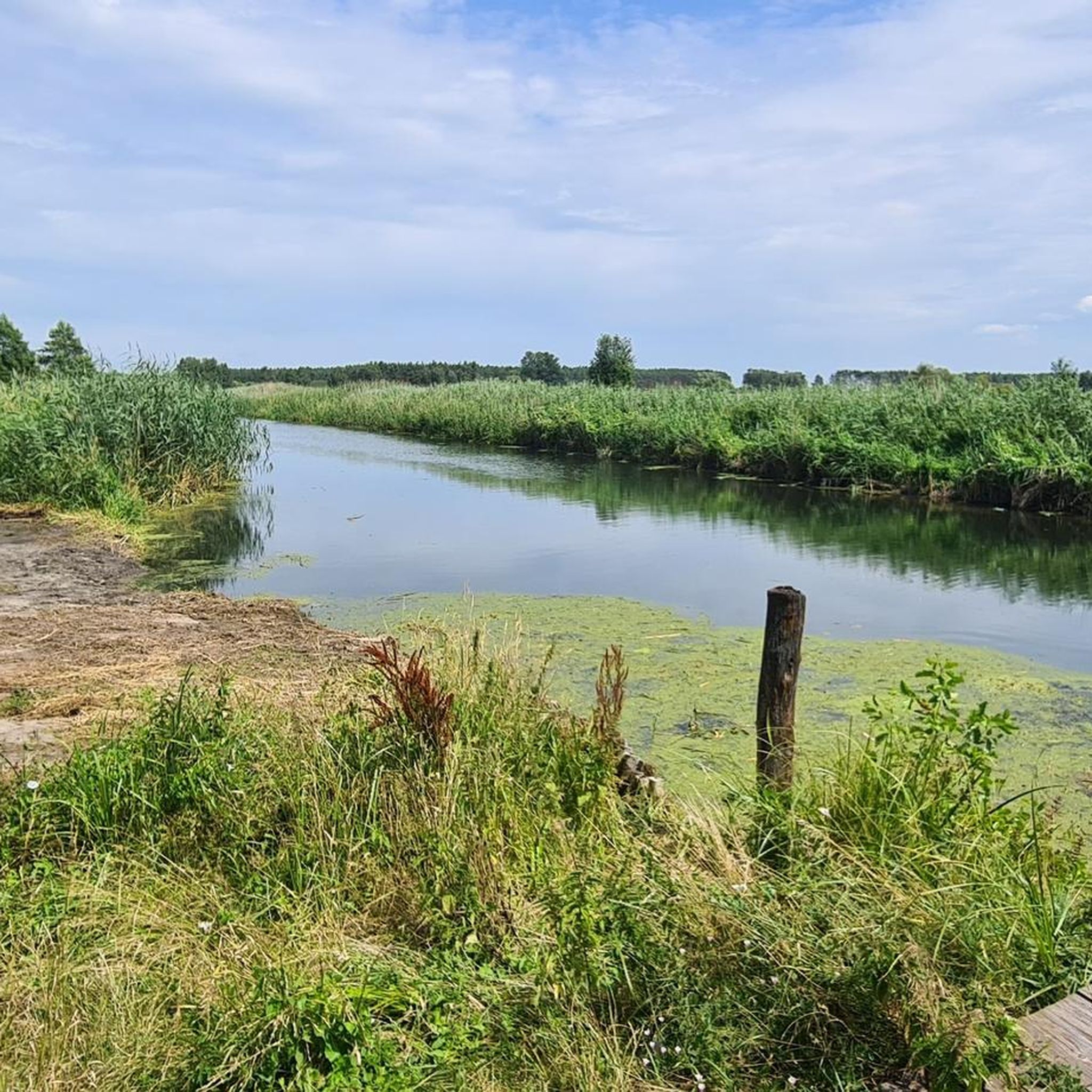
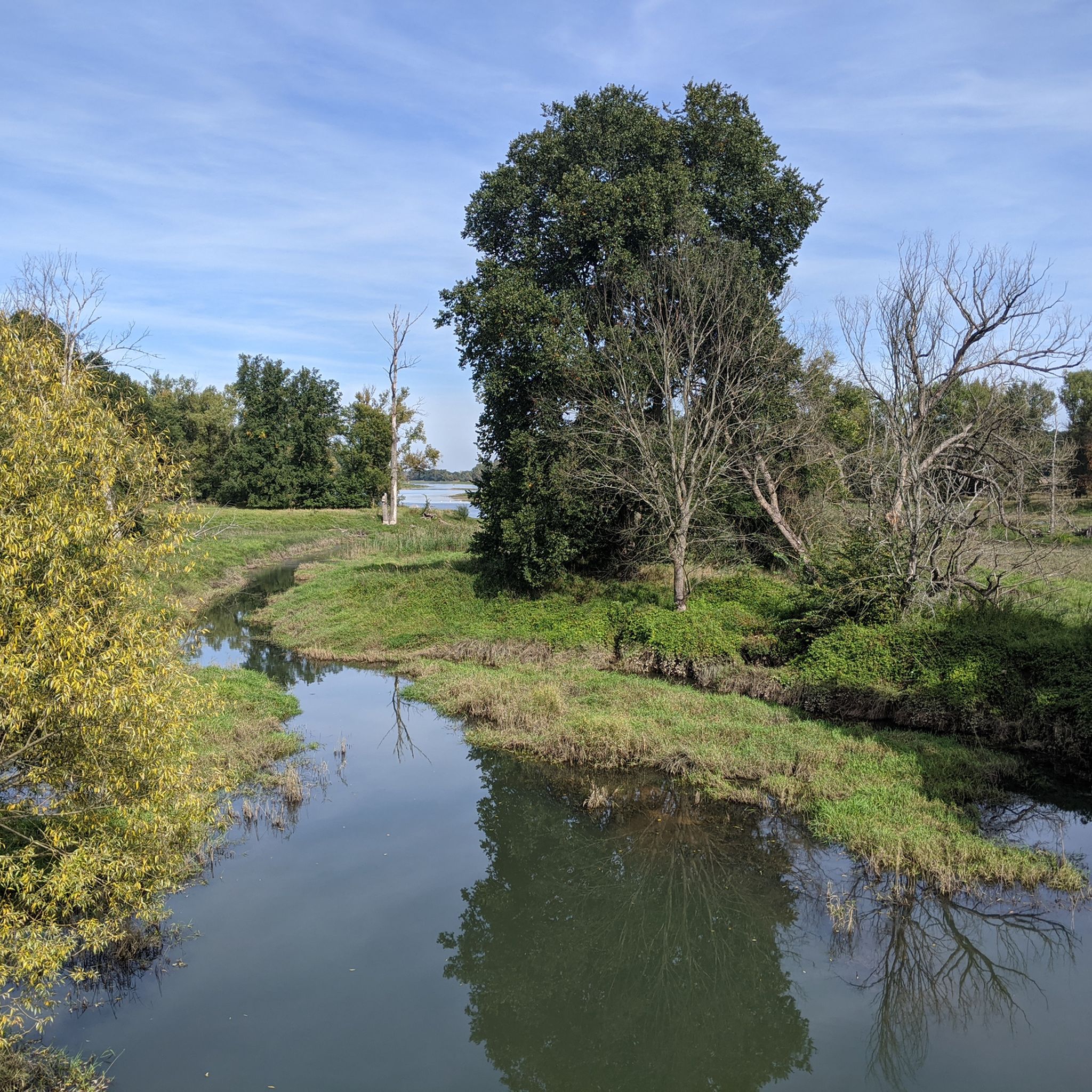
Otto Mulsch: An entrepreneur, trader and nature lover. For 20 years he was responsible for the Odra forest in which you are now. His work was appreciated by the people of Zielona Góra, who erected a commemorative stone in his honor in 1920.
0
0

On March 22, 1841, at 3:30 p.m., the residents of Wilkanów working in the surrounding fields heard three strong booms similar to cannon shots. The explosion could be heard for many kilometers. Immediately afterward, a loud whistle could be heard, growing from the west, and something heavy fell nearby. In a small depression, witnesses found a 30-ounce stone (about 930 g). A second, smaller specimen was found later between the villages of Heinrichau and Schloin. The Wilkanów meteorite is a geologically gray veined chondrite, currently located in the most important geological museums in the world. On the 161st anniversary of that event, a three-ton boulder with a plaque commemorating the meteorite's fall was placed on a bend in the county road in Wilkanów.
1
0
Frequently Asked Questions
What kind of natural monuments can I explore in Powiat Zielonogórski?
Powiat Zielonogórski offers a diverse range of natural monuments, from ancient trees to unique geological formations and protected valleys. You can discover historical trees like the former Napoleon Oak, impressive avenues of oaks such as the Oak Avenue in Nadleśnictwo Przytok, and even a majestic Scots Pine "Waligóra". The region also features significant natural areas like the Dolina Gęśnika (Goose Stream Valley) and the Oder Riverine Forest, showcasing the area's rich biodiversity and geological heritage.
Are there any natural monuments with historical significance in the region?
Yes, several natural monuments in Powiat Zielonogórski are steeped in history. The site of the former Napoleon Oak in Zabór, though no longer standing, is marked by an obelisk commemorating its legendary connection to Napoleon Bonaparte. Additionally, the Wilkanów Meteorite Memorial marks the spot where a meteorite fell in 1841, a significant geological and historical event. You can also find the Otto Mülsch Memorial Stone, dedicated to a nature lover who managed the Odra forest.
What outdoor activities can I do near these natural monuments?
The natural monuments in Powiat Zielonogórski are excellent starting points for various outdoor activities. You can enjoy hiking through picturesque landscapes, with trails like the easy "Zatonie Palace Ruins – Rose Temple loop" or the moderate "Wilkanowska Tower – Bismarck Tower loop." For cyclists, there are numerous routes, including traffic-free options and road cycling tours. Explore more options on the Hiking around powiat zielonogórski guide or the Traffic-free bike rides around powiat zielonogórski guide.
Are there family-friendly natural monuments suitable for children?
Absolutely! Many natural monuments in the region are great for families. The site of the Napoleon Oak offers a blend of nature and history that can spark children's imagination. The Oak Avenue in Nadleśnictwo Przytok and the Scots Pine "Waligóra" are also easily accessible and provide pleasant natural settings for family outings. The Dolina Gęśnika (Goose Stream Valley) is particularly popular for family picnics and gentle walks.
What unique geological features can be found among the natural monuments?
The region's geological history is evident in several natural monuments. The Dolina Gęśnika (Goose Stream Valley) is part of the Zielonogórski Rampart, a chain of hills that shows evidence of ancient glaciation. The Wilkanów Meteorite Memorial highlights a rare extraterrestrial geological event, commemorating the fall of a significant meteorite. These sites offer a glimpse into the natural forces that shaped the landscape.
Are there any natural reserves or protected areas to visit?
Yes, Powiat Zielonogórski is home to important natural reserves. The Nature Reserve "Bukowa Góra" and Nature Reserve "Zimna Woda" within the Przytok Forest District are recognized as natural monuments. These reserves protect diverse flora and fauna, including impressive trees and various protected species. They offer opportunities to experience relatively undisturbed natural ecosystems and appreciate the region's commitment to conservation. You can learn more about the forest districts at lasy.gov.pl.
Is there parking available near the natural monuments?
Yes, for some natural monuments, parking is conveniently available. For instance, the Scots Pine "Waligóra" has a small, well-marked parking lot right next to it, easily accessible from national road no. 32. For other locations, it's advisable to check local signage or maps for designated parking areas, especially near popular hiking or cycling trailheads.
What is the best time of year to visit the natural monuments?
The natural monuments in Powiat Zielonogórski can be enjoyed throughout the year, each season offering a different charm. Spring brings blooming flora and fresh greenery, while summer is ideal for hiking and cycling. Autumn showcases vibrant fall colors, particularly in forested areas like the Oder Riverine Forest. Even winter can be beautiful, with snow-covered landscapes offering a serene experience, though some trails might be less accessible.
Can I bring my dog to the natural monuments and trails?
Generally, dogs are welcome on trails and in many natural areas, provided they are kept on a leash and owners clean up after them. Specific rules may apply to designated nature reserves to protect wildlife. It's always a good practice to check local regulations or signage at the entrance of reserves like "Bukowa Góra" or "Zimna Woda" to ensure compliance.
Are there any natural monuments that are wheelchair accessible?
While many natural monuments involve natural terrain, the Wilkanów Meteorite Memorial is noted as wheelchair accessible. For other sites, accessibility may vary depending on the specific path or viewing area. The Dolina Gęśnika (Goose Stream Valley) offers some paved or well-maintained paths that might be suitable for wheelchairs, but it's best to verify conditions locally.
What kind of flora and fauna can I expect to see?
The region is rich in biodiversity. In areas like the Przytok Forest District and the Oder Riverine Forest, you can find impressive trees and a variety of plant species, including partially protected ones like cup lichen, Iceland moss, and lily of the valley, and fully protected species such as stag's-horn clubmoss and snowdrops. The forests are also home to protected mammal species like the European beaver and barbastelle, as well as various protected invertebrate species.
Most popular routes around powiat zielonogórski
Most popular attractions around powiat zielonogórski

Get inspired with the komoot mobile app


Didn’t find what you were looking for?
Find even more amazing natural monuments around powiat zielonogórski by checking out the top Highlights region by region:
Explore more
Extend your search for the best caves by checking out these guides of the top ones around powiat zielonogórski:
