Top 4 Natural Monuments around Hawaiian Ocean View
Natural monuments around Hawaiian Ocean View showcase the Big Island's unique geological formations and diverse ecosystems. This region, situated on the Big Island of Hawaiʻi, is known for its volcanic landscapes and significant cultural history. Visitors can explore rare colored-sand beaches, ancient volcanic terrain, and subterranean wonders. The area offers a range of experiences, from coastal environments to native dryland and rainforest flora.
Best natural monuments around Hawaiian Ocean View
- The most popular natural monuments is Pu'u o Lokuana Cinder…
Last updated: October 12, 2026
Pu'u o Lokuana Cinder Cone and Quarry
Highlight • Volcano
Tip by

Kamakapa'a
Highlight • Volcano
Tip by
Sign up now to discover places like this
Get recommendations on the best single tracks, peaks, & plenty of other exciting outdoor places.
Lower Kona Trail
Highlight (Segment) • Trail
Tip by
Pu’u o Lokuana Trail
Highlight (Segment) • Trail
Tip by
Start today with a free account
Your next adventure awaits.
Popular around Hawaiian Ocean View
Tips from the Community

Reaching Kamakapa‘a peak is a relatively easy run thanks to the flat terrain. At the summit, take in sweeping views encompassing the expansive breadth of lower Kaʻū, an exceptional panorama as your reward for the moderate ascent.
0
0

The Kona Trail takes hikers through pastures that used to be part of the Kahuku ranch. Before cowboy culture was popularized in the western U.S., Hawaiian cowboys called Paniolo wrangled cattle across Hawai'i. Cattle were introduced to Hawai'i in 1793 and rapidly grew out of hand, eating the thatch roofs off of villages and destroying fields of crops. From the mid-1800s through 2003 when the Kahuku Unit was annexed to the park, Kahuku ranch trained capable paniolo who battled the volcano and demands of the landscape to make a living.
0
0
The Pu’u o Lokuana Trail is one of the most diverse trails in the park. Hikers traverse barren lava flows from the 1800s, magma formations, a landing stip, and lush green pastures within a two mile walk.
0
0
The Kamakapa'a Trail crests a small grassy cinder cone in the lush Kahuku Unit. If you are looking to extend the distance of the Pu'u o Lokuana Trail, this is a great option.
0
0
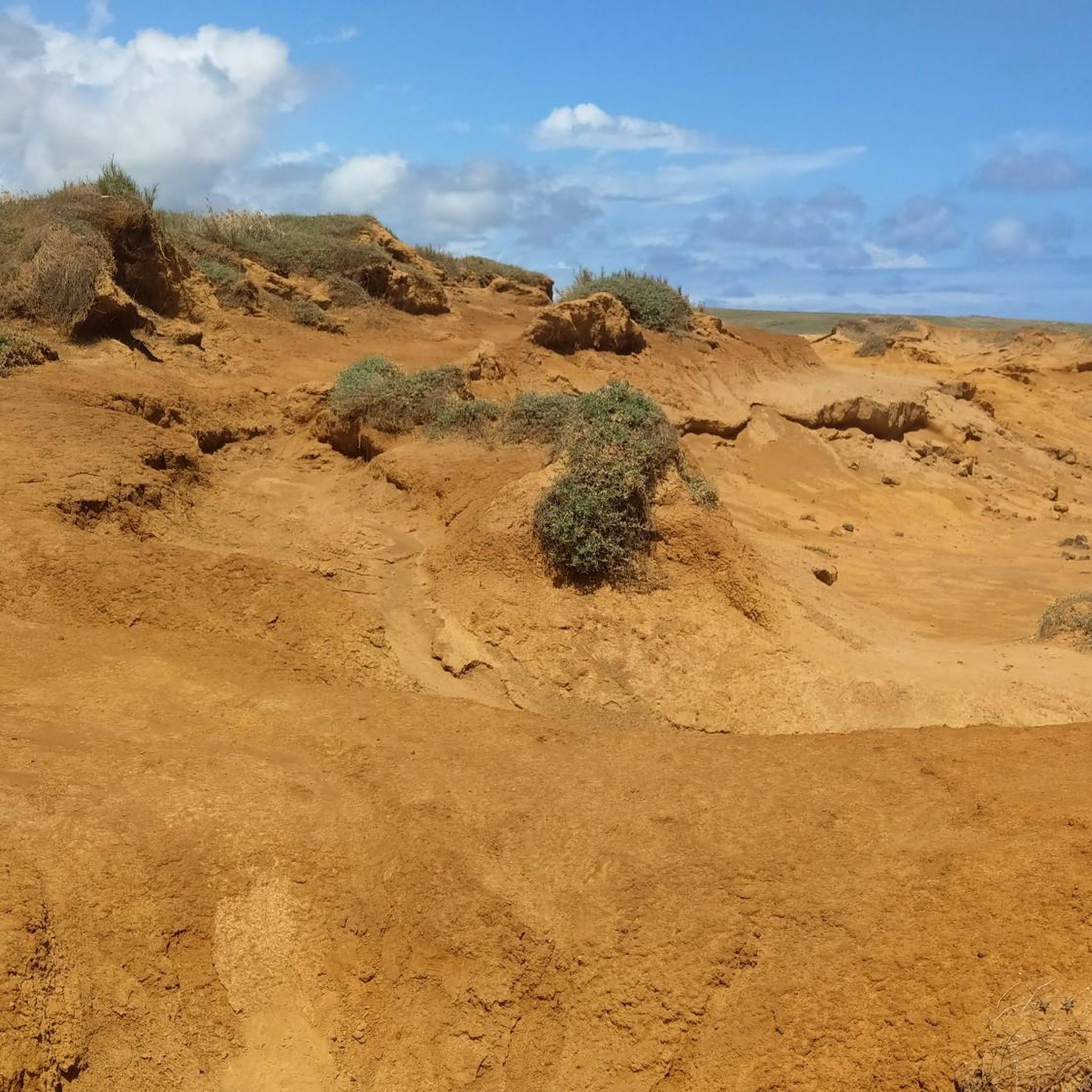
Pu'u o Lokuana is a striking red and orange walled cinder cone accessible via a short, steep hike from the parking lot. The cinder cone used to be 100 feet higher, but was mined as a cinder quarry before it was added to the park. The colorful cinder was used to decorate paths and roads on Hawai'i. During WWII, Pu'u o Lokuana was also the location of the secret Kahuku radio station, parts of which can still be seen to the left of the trail in places.
0
0
Frequently Asked Questions
What unique natural features can I explore around Hawaiian Ocean View?
The region boasts an incredible diversity of natural wonders. You can visit Pu'u o Lokuana Cinder Cone and Quarry, a striking red and orange cinder cone, or explore the rare Papakōlea Green Sand Beach, one of only four in the world, known for its olivine crystals. Punaluʻu Black Sand Beach offers a dramatic contrast with its jet-black sands and is a frequent basking spot for Hawaiian Green Sea Turtles. Further inland, the Kahuku Unit of Hawaiʻi Volcanoes National Park provides diverse volcanic landscapes and native forests, while Manuka State Park preserves unique dryland and rainforest flora. For a subterranean adventure, Kula Kai Caverns allows you to explore ancient lava tubes.
Are there family-friendly natural monuments or trails in the area?
Yes, several natural monuments and trails are suitable for families. The Lower Kona Trail in the Kahuku Unit is categorized as family-friendly, offering a walk through pastures with historical significance. Manuka State Park features the Manukā Nature Trail, an easy stroll through diverse botanical collections, perfect for all ages. Punaluʻu Black Sand Beach is also a great family spot, offering a chance to see Hawaiian Green Sea Turtles in a beautiful setting.
Where can I see wildlife near Hawaiian Ocean View's natural monuments?
Punaluʻu Black Sand Beach is renowned for being a frequent basking spot for the endangered Hawaiian Green Sea Turtles (Honu). You can often observe these magnificent creatures resting on the warm black sand. The Kahuku Unit of Hawaiʻi Volcanoes National Park and Manuka State Park also offer opportunities to spot native bird species and unique plant life within their diverse ecosystems.
What kind of hiking trails are available at these natural monuments?
You'll find a range of hiking experiences. The Kahuku Unit of Hawaiʻi Volcanoes National Park offers trails like the Pu’u o Lokuana Trail, which traverses barren lava flows, magma formations, and lush green pastures. The Kamakapa'a trail crests a small grassy cinder cone with sweeping ocean views. For an easier walk, the Manukā Nature Trail in Manuka State Park is a tranquil botanical stroll. You can find more hiking options in the Hiking around Hawaiian Ocean View guide.
Are there any historical or cultural sites among the natural monuments?
Yes, several sites hold significant historical and cultural value. Ka Lae (South Point), the southernmost point of the United States, is believed to be one of the earliest Hawaiian landing sites, with ancient canoe moorings carved into the rocks. The Pu'u o Lokuana Cinder Cone and Quarry was once a cinder quarry and also the location of a secret Kahuku radio station during WWII, with remnants still visible. The Lower Kona Trail passes through former Kahuku ranch lands, offering insight into the history of Hawaiian cowboys (Paniolo).
What should I wear when visiting the natural monuments?
Given the diverse environments, it's best to dress in layers. For hikes to places like Papakōlea Green Sand Beach or within the Kahuku Unit, wear sturdy closed-toe shoes suitable for uneven terrain, sun protection (hat, sunglasses, sunscreen), and bring plenty of water. For beach visits, swimwear and sandals are appropriate, but remember to bring a cover-up and sun protection. Even on sunny days, winds can make it feel cooler, especially at Ka Lae.
How long should I plan to spend at each natural monument?
The time needed varies greatly. A visit to Punaluʻu Black Sand Beach might take 1-2 hours, allowing time to relax and observe turtles. The hike to Papakōlea Green Sand Beach typically takes 2-3 hours round trip, plus time to enjoy the beach. Exploring the Kahuku Unit of Hawaiʻi Volcanoes National Park can range from a quick 1-hour walk on an easy trail like the Pu’u o Lokuana Trail to a half-day or full-day adventure on longer routes. Manuka State Park is ideal for a leisurely 1-2 hour stroll. Kula Kai Caverns tours usually last about an hour.
Are there any easy hiking trails near Hawaiian Ocean View's natural monuments?
Yes, there are several easy options. The Manukā Nature Trail loop in Manuka State Park is an easy 3.4 km walk. Within the Kahuku Unit, the Pu’u o Lokuana Trail is an easy 4.4 km loop, and the Lower Kona Trail is also considered easy. You can find more easy hikes in the Easy hikes around Hawaiian Ocean View guide.
What is the best season to visit the natural monuments around Hawaiian Ocean View?
The Big Island of Hawaiʻi enjoys a relatively consistent tropical climate year-round, making its natural monuments accessible in any season. However, the drier months from April to October generally offer more sunshine and less rain, which can be ideal for hiking and beach activities. The winter months (November to March) can bring more rain, but also offer lush landscapes and potentially dramatic ocean swells, especially at coastal sites like Ka Lae.
Are there any unique or 'hidden gem' natural monuments worth discovering?
While many sites are well-known, the Kahuku Unit of Hawaiʻi Volcanoes National Park is often less crowded than the main park entrance, offering a more serene experience of volcanic landscapes and native forests. Kula Kai Caverns provides a unique opportunity to explore the island's subterranean world, offering a different perspective on its geological formation. The hike to Papakōlea Green Sand Beach, while popular, still feels like an adventure to a remote, unique destination.
What are the parking and access arrangements for these natural monuments?
Parking is generally available at most sites. For Papakōlea Green Sand Beach, you'll typically park near Ka Lae (South Point) and hike to the beach. Punaluʻu Black Sand Beach has a designated parking lot. The Kahuku Unit of Hawaiʻi Volcanoes National Park has specific parking areas for its trailheads, such as the one for the Pu'u o Lokuana Cinder Cone and Quarry. Manuka State Park also provides parking. Kula Kai Caverns is privately owned and has its own parking facilities for visitors taking tours. Always check specific location details for the most current access information.
Can I find cafes or food options near the natural monuments?
Hawaiian Ocean View itself has some local eateries and grocery stores. However, many of the natural monuments, especially those in more remote areas like Papakōlea Green Sand Beach, Ka Lae, or within the Kahuku Unit, do not have on-site cafes or food vendors. It's highly recommended to pack your own snacks, meals, and plenty of water, especially for longer excursions. Punaluʻu Black Sand Beach may have some vendors or a small snack shop nearby, but it's always best to be prepared.
Most popular routes around Hawaiian Ocean View
Most popular attractions around Hawaiian Ocean View

Get inspired with the komoot mobile app


Explore more
Extend your search for the best caves by checking out these guides of the top ones around Hawaiian Ocean View:
