Top 20 Natural Monuments around Montemor-O-Novo
Best natural monuments around Montemor-O-Novo offer insights into the region's ecology, geology, and prehistory. Located in the heart of the Alentejo, the area is characterized by its Montado ecosystem, a globally significant cork and holm oak forest. The landscape also features ancient megalithic sites and unique geological formations, showcasing a rich natural and cultural heritage.
Best natural monuments around Montemor-O-Novo
- The most popular natural monuments is Almendres Cromlech, a historical site consisting of 3 stone circles. This megalithic monument…
Last updated: July 6, 2026
Almendres Cromlech
Highlight • Historical Site
Translated by Google •
Tip by

Almendres Menhir
Highlight • Monument
Translated by Google •
Tip by
Sign up now to discover places like this
Get recommendations on the best single tracks, peaks, & plenty of other exciting outdoor places.
Sign up for free
Giraldo Castle
Highlight • Castle
Tip by

Great Dolmen of Zambujeiro
Highlight • Historical Site
Source wikimedia
Translated by Google •
Tip by

Great Cork Oak
Highlight • Natural Monument
Tip by
Sign up for free to discover even more natural monuments around Montemor-O-Novo.
Sign up for free
Already have an account?
Start today with a free account
Your next adventure awaits.
Login or Signup
Tips from the Community

Cromeleque dos Almendres, located near Évora, is the largest and most important megalithic monument in the Iberian Peninsula. Built between the late 6th and 3rd millennium BC, it is about 2000 years older than Stonehenge. VisitEvora +3 This "Portuguese Stonehenge" is composed of about 95 granite monoliths (menhirs) arranged in circles and ellipses on a gentle slope in the Serra do Monfurado. VisitEvora +1
1
0
The Cromeleque dos Almendres, located in Nossa Senhora de Guadalupe, Évora, is the most important megalithic monument on the Iberian Peninsula and one of the largest in Europe. Composed of about 95 stone monoliths (menhirs) arranged in concentric circles, this enclosure is about 2,000 years older than the famous Stonehenge. 👍🥾
1
0

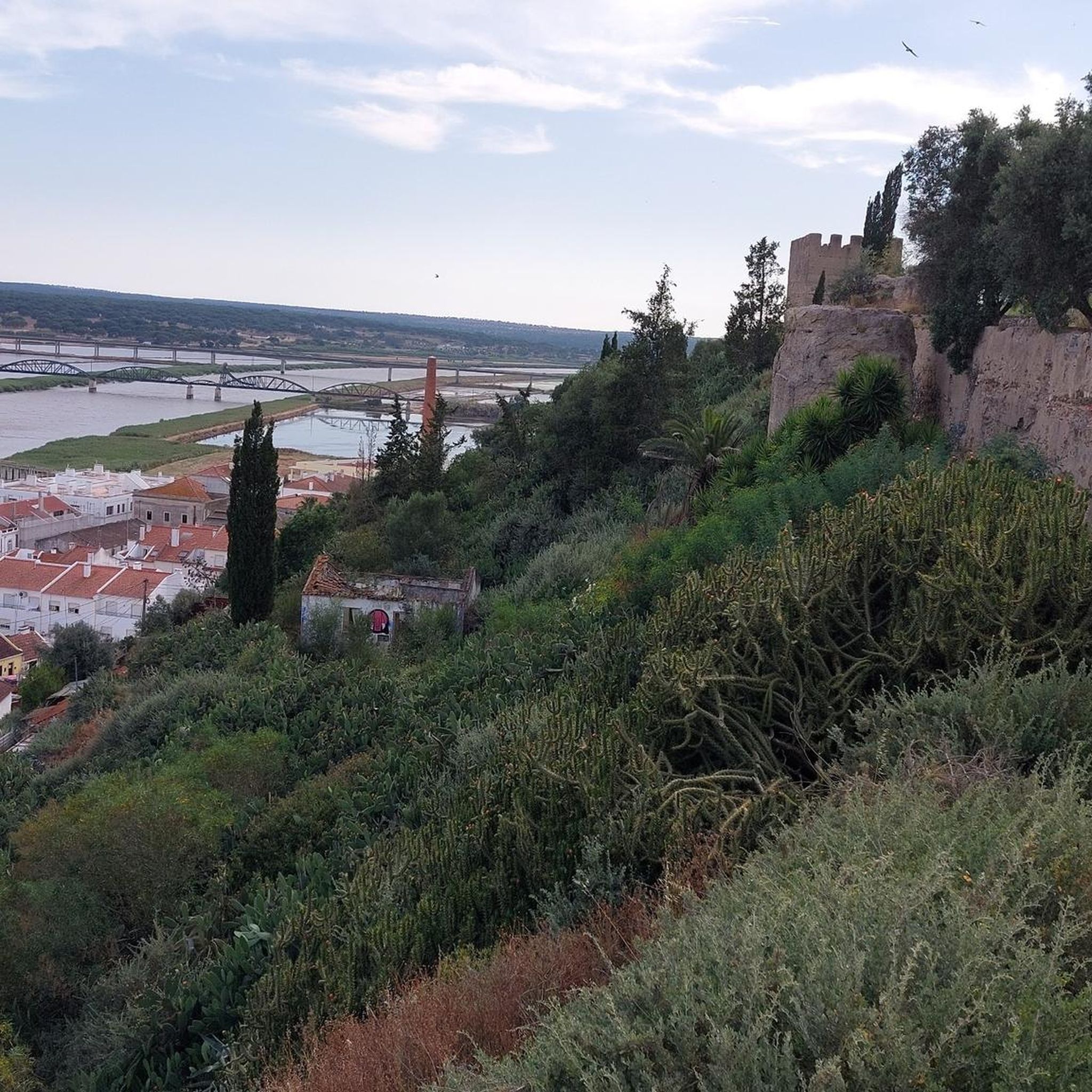
Giraldo Castle, or Geraldo Castle, is located in Nossa Senhora de Guadalupe, in the current parish of Nossa Senhora da Tourega and Nossa Senhora de Guadalupe, in the Municipality of Évora, District of Évora, in Portugal. It is a castro, a proto-historic fortified structure with origins in the Bronze Age or even the Chalcolithic, but with traces of later occupations. It has a subcircular plan and an outer perimeter of 114 meters. The wall that has survived to the present day probably belonged to a period of medieval occupation. Sources from the 15th century refer to the fortification, associating it with the presence of Geraldo Sem Pavor, a warrior who conquered Évora from the Muslims in 1165. It is currently in the process of being classified.
5
1
The site in Nossa Senhora da Tourega e Nossa Senhora de Guadalupe has been continuously occupied since 3000 B.C. and 1000 A.D. It was founded on a castro fortified proto-historic structure, with its origin in the Bronze Age, Chalcolithic, with vestiges from older settlements. During the Middle Ages it was sporadically re-occupied and reconstructed. Records from the 15th century indicate that the castle was associated with Giraldo Sem Pavor, a warrior who conquered Évora from the Muslims in 1165. Today the site is being analyzed for classification.
5
0
Great Dolmen of Zambujeiro (Portuguese: Anta Grande do Zambujeiro) is a megalithic monument located in Nossa Senhora da Tourega, near Valverde, in the municipality of Évora, considered one of the biggest such structures in the Iberian Peninsula.
5
1
Anta Grande do Zambujeiro, also known as Anta Grande do Zambujeiro de Valverde, is a megalithic dolmen-type monument near Valverde, Évora, Alentejo, Portugal, one of the largest in the Iberian Peninsula. A large number of archaeological finds found during the excavations are housed in the Évora Museum. Anta Grande do Zambujeiro was declared a National Monument in 1971 by decree law 516/71 of 22 November.
5
1
The Montado is an agrosilvopastoral system explored at several levels – trees, bushes and herbs – according to the potential of each region. On the tree level it can be made up of oaks like cork oak (Quercus suber), holm oak (Q. rotundifolia) and less frequently pyrene oak (Q. pyrenaica) and portuguese oak (Q. faginea), in pure or mixed populations with variable densities. The ground cover is occupied by pastures used by cattle or is used for dry land crops on a rotation system. The natural pastures can be occupied by shrubs, in variable proportions. Humans are an integral and fundamental part of this ecosystem. It was through our clearing action that the montados were created, ever since we started intervening on our natural surroundings. Human management is necessary, in a more or less intensive way, in order to maintain the montado. Without this intervention, the system evolves, naturally to form a dense forest, where people have more difficulty obtaining resources. The way this process of transformation of the Mediterranean forest developed influenced the structure of the system as it presents today. Some older practices still persist, now without context, making more difficult the adaptation of the system to the new ways of agrarian production. Other ways emerged, some well adapted to the system, other causing more or less serious disturbances. The montado is a system for using the soil developed on a physical background that involves climate, pedological and geomorphological factors with specific characteristics. It is why this ecosystem is restricted to such a limited area, when compared to other ecosystems in our planet.
5
0
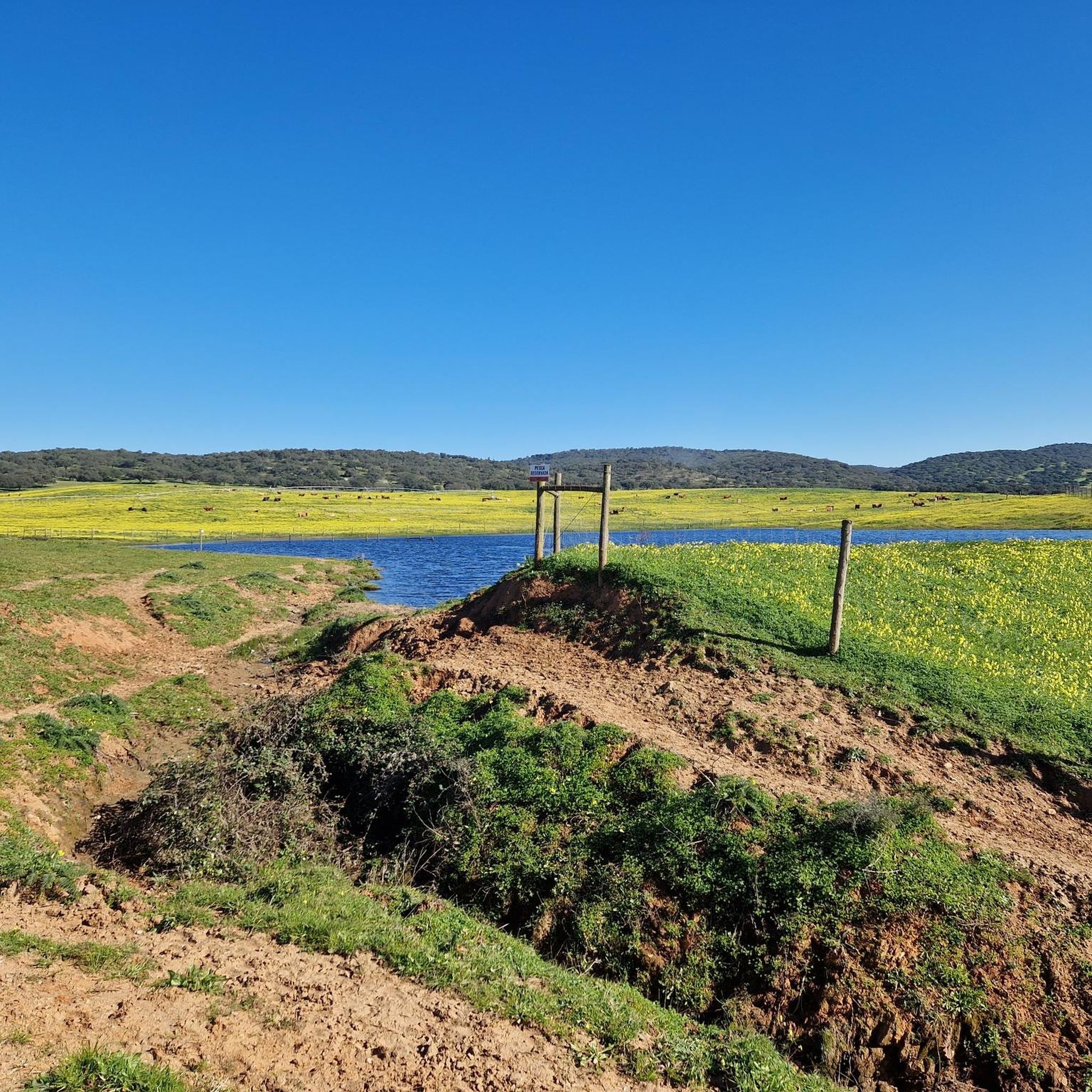
Typical Alentejo farm. Private property. Not open to visitors...
3
0
Frequently Asked Questions
What are some unique natural formations and historical sites to explore in Montemor-o-Novo?
Montemor-o-Novo offers a blend of unique natural formations and ancient historical sites. You can explore the Almendres Cromlech, a megalithic monument with approximately 100 stones dating back to 4000-2800 BC, or the impressive Almendres Menhir, a 3.5-meter-high monolith. Another significant site is the Great Dolmen of Zambujeiro, one of the largest dolmens on the Iberian Peninsula, used as a cemetery between 4000 B.C. and 3500 B.C. Beyond these, the region features the Rio Almansor Migmatites Geosite, offering insights into ancient geological processes.
What is the significance of the Montado ecosystem in Montemor-o-Novo?
The Montado is the predominant ecosystem in Montemor-o-Novo, a globally significant cork and holm oak forest. Portugal holds 33% of the world's cork oak forest area, making it vital for cork production, firewood, acorns, honey, and wild plants. This ecosystem is crucial for biodiversity, supporting a wide array of flora and fauna, and acts as an environmental regulator by releasing oxygen, storing carbon dioxide, and preventing soil erosion. It also represents a cultural landscape shaped by human intervention and rural traditions.
Are there any protected natural areas for wildlife observation in the region?
Yes, the Cabrela and Monfurado Sites are integral parts of the Montado ecosystem within the municipality and are designated under the European Natura 2000 Network. These areas are crucial for nature conservation, particularly for the Iberian lynx population in Cabrela and various bat species inhabiting the dens of Monfurado. They offer excellent opportunities for wildlife observation, especially birdwatching.
What historical or archaeological natural monuments can I visit in Montemor-o-Novo?
Montemor-o-Novo is rich in historical and archaeological natural monuments. The Almendres Cromlech and Almendres Menhir are prime examples of megalithic structures. The Great Dolmen of Zambujeiro is another impressive prehistoric burial site. Additionally, the Gruta do Escoural (Escoural Cave) is a national monument famous for its prehistoric rock paintings and engravings, dating back up to 10,000 years, offering a rare glimpse into ancient human activity.
When is the best time to visit the natural monuments in Montemor-o-Novo?
The best time to visit the natural monuments in Montemor-o-Novo is generally during the spring (March to May) and autumn (September to November). During these seasons, the weather is milder and more pleasant for outdoor exploration, hiking, and observing nature. Summers can be very hot in the Alentejo region, while winters are cooler and can be rainy.
Are there family-friendly natural monuments in Montemor-o-Novo?
Many natural monuments in Montemor-o-Novo can be enjoyed by families. The Montado ecosystem offers gentle walking paths, such as the 'Ecopista of the Alcornocal,' which are suitable for all ages. Exploring the megalithic sites like the Almendres Cromlech can be an educational and engaging experience for children, allowing them to connect with ancient history in an outdoor setting. The Great Cork Oak is also a natural monument that can be appreciated by families.
What outdoor activities can I do near these natural monuments?
The region around Montemor-o-Novo offers various outdoor activities. You can find numerous trails for hiking, mountain biking, and road cycling. For instance, there are hiking routes like the 'Almendres Menhir – Almendres Cromlech loop' or the 'Megalithic Circuit of Évora'. If you're into cycling, explore MTB trails or road cycling routes that pass through the scenic Montado landscape and near historical sites.
What geological features can I observe in the Montemor-o-Novo region?
The Montemor-o-Novo region is home to significant geological features, most notably the Rio Almansor Migmatites Geosite. Located along the Almansor River, this site showcases outstanding outcrops of heterogeneously deformed foliated diatexite with enclaves cut by granitic rocks. These formations provide crucial insights into the geodynamic evolution of the Variscan Orogeny in the southwest of the Iberian Peninsula, offering a tangible connection to millions of years of Earth's history.
What do visitors appreciate most about the natural monuments in Montemor-o-Novo?
Visitors to Montemor-o-Novo's natural monuments highly appreciate the historical depth and natural beauty. The Almendres Cromlech is often praised for its ancient mystery and being older than Stonehenge. The Almendres Menhir is considered impressive, and the Great Dolmen of Zambujeiro is recognized for its immense size and historical significance as a cemetery. The overall appeal lies in the unique combination of prehistoric archaeology, vital ecosystems like the Montado, and stunning natural landscapes.
Are there any lesser-known or 'hidden' natural monuments worth discovering?
While the major megalithic sites are well-known, the region also holds fascinating, perhaps less-trafficked, natural monuments. The Capela-Anta de São Brissos is a remarkable example, where a 17th-century chapel was ingeniously built into a 5,000-year-old dolmen. This fusion of ancient natural and man-made structures offers a unique historical and architectural experience, showcasing how the landscape has been adapted and integrated over millennia.
Can I find cafes or accommodation near the natural monuments?
Montemor-o-Novo, as a central town in the Alentejo, offers various accommodation options and cafes. While some natural monuments like the Almendres Cromlech are in more rural settings, the town itself provides amenities. For specific information on local services, you might find useful resources on the official tourism website for the region. For example, you can check visitevora.net for Montemor-o-Novo details.
What kind of flora and fauna can I expect to see in the Montado?
The Montado ecosystem is a biodiversity hotspot. You can expect to see cork oaks and holm oaks, along with various wild edible and medicinal plants, mushrooms, and diverse grasses. The fauna includes a wide array of bird species, making it excellent for birdwatching. The protected Natura 2000 sites of Cabrela and Monfurado are particularly important for the conservation of the elusive Iberian lynx and various bat species, offering a chance to observe these rare animals.
What are the parking options for visiting natural monuments in Montemor-o-Novo?
Parking availability varies by site. For popular locations like the Almendres Cromlech, there is typically designated parking nearby. However, some sites might require parking at a short distance and walking to the monument. It's advisable to check specific access information for each monument if you plan to drive, especially for more remote locations.
Most popular attractions around Montemor-O-Novo

Get inspired with the komoot mobile app


Explore more
Extend your search for the best caves by checking out these guides of the top ones around Montemor-O-Novo:
