Attractions and Places To See around Poupry - Top 3
Best attractions and places to see around Poupry are centered around this small rural commune in the Eure-et-Loir department of France. While Poupry itself offers a tranquil setting, its location provides access to historical, cultural, and natural sites within a reasonable distance. The area features a mix of historical landmarks, unique engineering structures, and traditional mills. Visitors can explore the rich heritage and diverse landscapes of the surrounding Centre-Loire Valley region.
Best attractions and places to see around Poupry
- The…
Last updated: July 5, 2026
Château de Cambray
Highlight • Castle
Translated by Google •
Tip by

Aerotrain test track
Highlight • Other
Translated by Google •
Tip by

Sign up now to discover places like this
Get recommendations on the best single tracks, peaks, & plenty of other exciting outdoor places.
Sign up for free
Lignerolles Mill
Highlight • Viewpoint
Translated by Google •
Tip by

Saint-André Church of Patay
Highlight • Religious Site
In the 7th century, the Benedictine abbey of Bonneval created a priory-curate. Its existence is confirmed by a bull from Pope Gregory second half of the 16th century.
Translated by Google •
Tip by

Artenay Mill
Highlight • Monument
Translated by Google •
Tip by
Start today with a free account
Your next adventure awaits.
Login or Signup
Popular around Poupry

Tips from the Community

We might believe it to be a classic viaduct when we pass under this construction but it is ultimately an 18km long track, built in 1968 to carry out experiments on monorail transport, the skytrain of the French engineer Jean Bertin. A prototype set a world speed record there in 1974, with 430.4 km/h on the clock. Due to a lack of investors or customers, the tests were stopped in 1977 and the track was decommissioned. Its dismantling being estimated at 13 million euros, the viaduct remained there, in the middle of the Beauceron countryside.
3
0

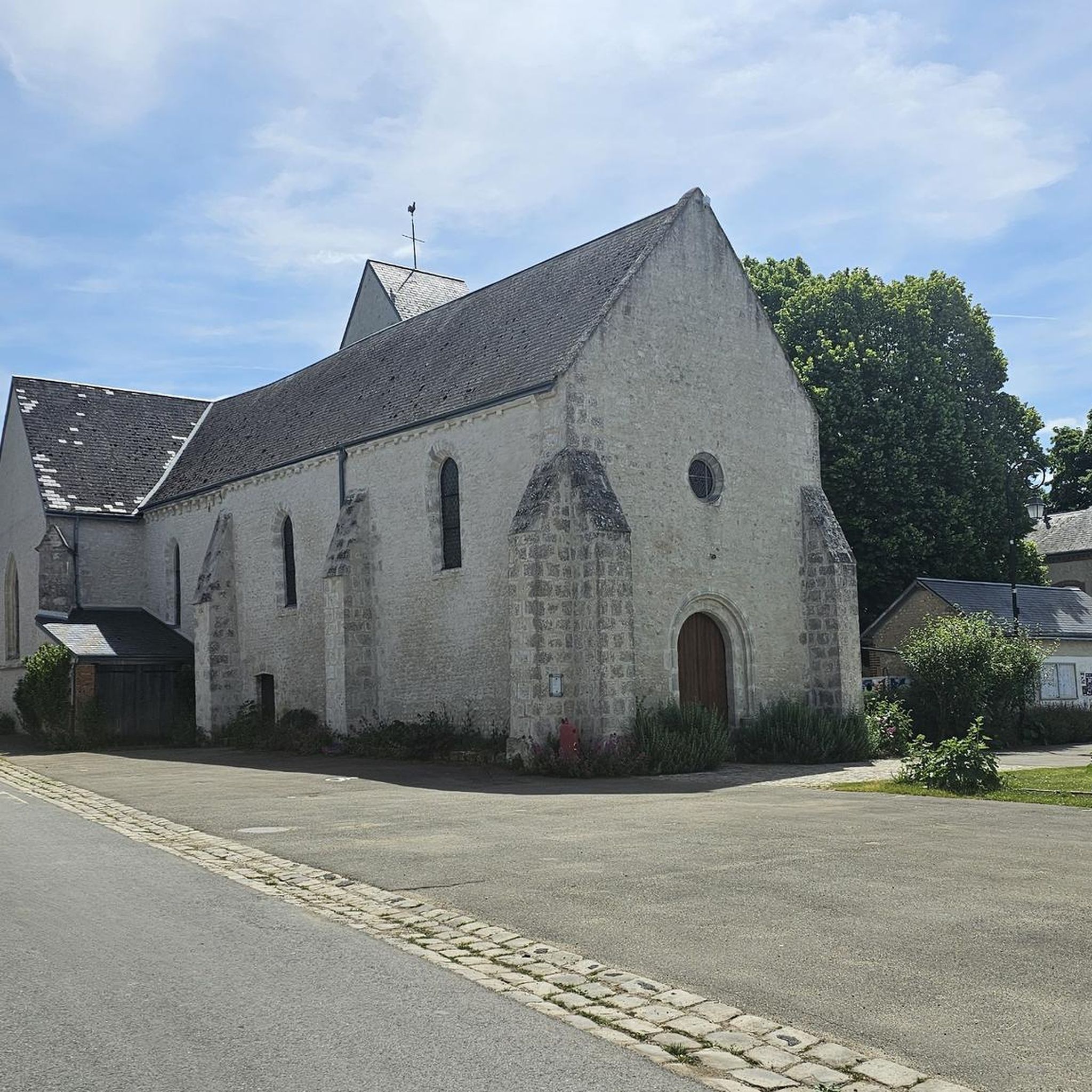
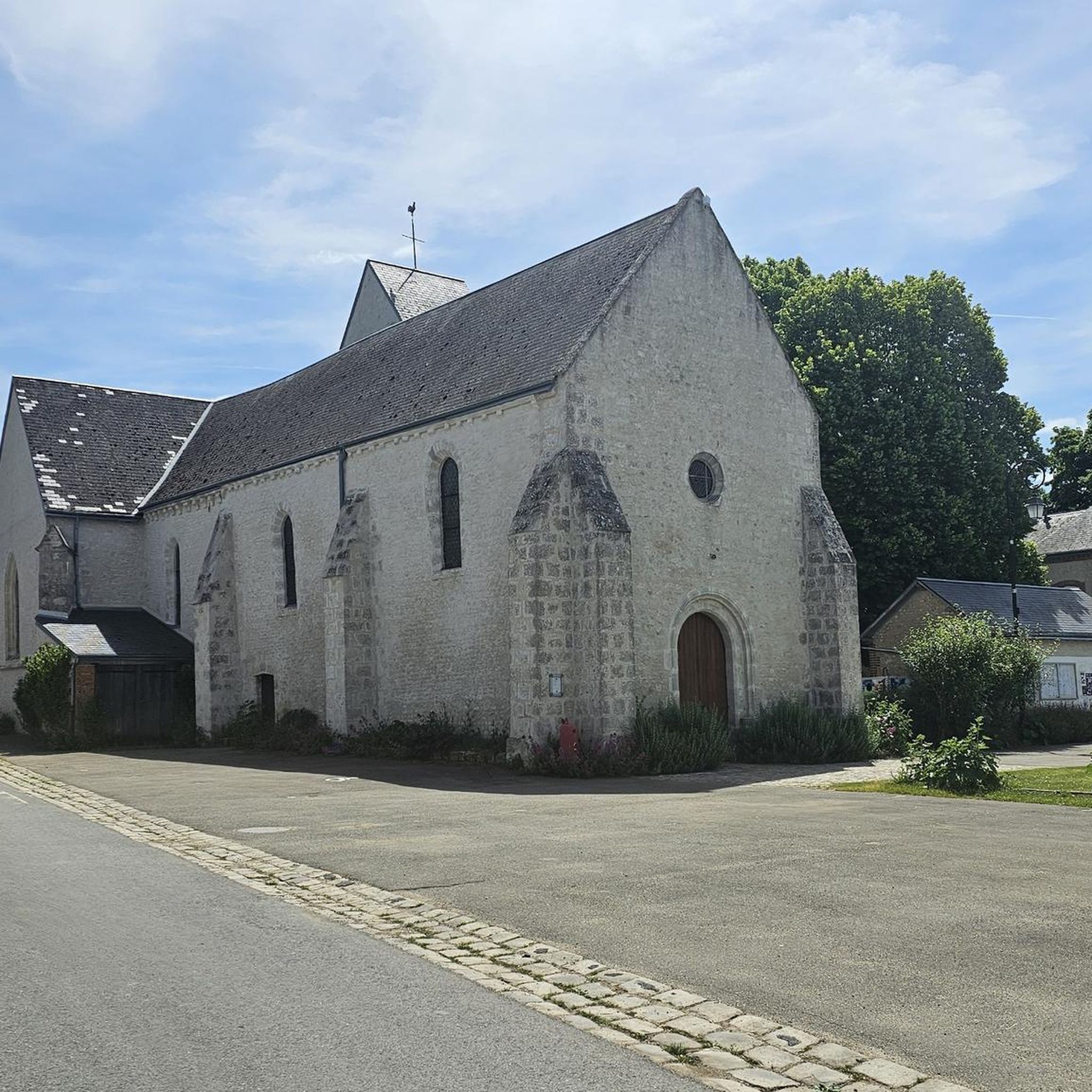
The Saint André church (13th-15th-16th centuries) In the 7th century, the Benedictine abbey of Bonneval created a priory-curate. Its existence is confirmed by a bull from Pope Gregory second half of the 16th century. In 1793 the church was desecrated and transformed into wine and spirits warehouses. In 1801, the church was returned to worship and changed diocese: from the diocese of Chartres, to which it belonged before the Revolution, it passed to the diocese of Orléans, notably for reasons of distance: Chartres is 48 km from Patay then that Orléans is only 27 km away. The church is 30 m long and 17 m wide. The oldest parts are located near the large porch (13th century). One of the pillars of the nave is decorated with a vestige of Danse Macabre from the mid-15th century. A small masonry door on the right communicated with the old priory, of which ruins remain to the south of the church. The choir dates from the 14th century; the apse wall was decorated with paintings at the end of the 19th century, the chapels were then redeveloped and equipped with new stained glass windows. The keystones of the large nave were made from casts taken from the figurines which adorn the Thesis Room of the University of Orléans, built in 1411. The bell tower, located to the north of the choir, would be an old watchtower. Its pinnacles and eight openings were made after the Wars of Religion. The four bells were melted in 1868. The largest was cracked by a Prussian shell in 1870 and was recast in 1871. Since that year, Ernestine (809 kg, 1 m 12 in diameter at the base, sounding the F), Gabrielle (550 kg, 0.981 m in diameter, sounding the ground), Anne (398 kg, 0.573 m in diameter) and Marie (222 kg, 0.724 m in diameter, sounding the C) give rhythm to the daily life of the small town of Patay, old Beauceron railway junction. On August 15, 1944, an ammunition train was blown up at Patay station. The station was blown up, except for the carriage shed, and all the windows in the town were shattered. Luckily, a providential storm limited the damage. The only two stained glass windows that survived the explosion are those on the right side aisle which date from 1930 and relate the communion of Joan of Arc in the Patay church in 1429. The church was listed as a Historic Monument in 1925 by decree of October 6, 1925.
0
0

If you are looking for a unique and historic hiking destination in the Loiret, you can visit the Moulin d'Artenay, a stone windmill dating from 1849. This impressive monument, which stands 16 meters high high and has wings 22 meters long, is one of the rare examples of this type in the Beauce region. You can visit the interior of the mill and discover its machinery, its production of fine flour and the life of the millers. You can also admire a collection of old agricultural equipment at the neighboring farm. The Moulin d'Artenay is open to the public every third Sunday of the month from April to September, from 2 p.m. to 6 p.m. Don't miss this opportunity to discover an element of local heritage.
2
0
The Moulin de Lignerolles is one of the last pivotal windmills in the Loiret department. Built in 1848, this wooden mill belonged to Louis-Joseph Soulas, famous painter and director of the Orléans School of Fine Arts. You can admire the restored mill and its ingenious mechanism, as well as the panoramic view of the plain. The mill is open to the public on Sundays from 2:30 p.m. to 6 p.m., and also hosts various events throughout the year, such as a flea market, concerts and exhibitions. Visiting the Moulin de Lignerolles is an excellent way to discover the heritage and charm of the Beauceron countryside.
2
0

The Cambray orangery is part of the Cambray estate acquired by François Lambert, squire and adviser to the king, auditor in his chamber of accounts, on March 28, 1575 from the nobleman of Oinville, lord of Puiset. The place called Cambray, Combarius under the Romans, was to be a camp. Combrée also means "bushy places", or Cambray is located along the Conie, bordered by reedbeds. The 2 wings of the rear facade were built at the end of the 17th century, beginning of the 18th century by Jacques Lambert, private master of water and forests of the Duchy of Orléans. We note that they were built after the other parts of the castle, with a different aspect of construction, stone on the one hand and bricks around the windows on the other.
0
0
Frequently Asked Questions
What historical sites can I explore near Poupry?
Beyond Poupry's own 12th-century Église Notre-Dame, the region offers a rich historical tapestry. You can visit the impressive Château de Cambray, known for its 17th-18th century additions. Further afield, explore the historic city of Orléans with its Cathédrale Sainte-Croix and Hôtel Groslot, or the magnificent Château de Châteaudun, a blend of medieval and Renaissance architecture overlooking the Loir River. The Saint-André Church of Patay, dating from the 13th century, is also a notable historical landmark.
Are there any unique or unusual attractions around Poupry?
Yes, Poupry is close to some truly unique sites. You can see the Aerotrain test track, an 18 km long monorail track where a prototype once set a world speed record of over 430 km/h. Another distinctive attraction is the Lignerolles Mill, one of the last pivotal windmills in the Loiret department, offering panoramic views. The Artenay Mill, a stone windmill from 1849, also provides a glimpse into local heritage.
What natural attractions or gardens are there to visit?
While Poupry itself is rural, nearby you can find beautiful natural spaces. The Parc Floral de la Source near Orléans is an extensive and highly recommended garden. Additionally, the Arboretum des Grandes Bruyères, located about 31 km east-southeast, is a well-regarded arboretum perfect for nature lovers.
What outdoor activities, like cycling or running, can I do near these attractions?
The area around Poupry is excellent for outdoor activities. For cycling, you can find routes like the 'Moulin d'Artenay loop from Artenay' or longer, more challenging rides such as 'Forêt domaniale d'Orléans par le moulin de Lignerolles'. Runners can enjoy trails like the 'Artenay Mill loop from Artenay' or the 'Running loop from Tivernon'. You can find more details and routes in the Cycling around Poupry and Running Trails around Poupry guides.
Are there family-friendly attractions around Poupry?
Yes, several attractions are suitable for families. The Aerotrain test track offers a fascinating look at engineering history. Both the Lignerolles Mill and the Artenay Mill are historical sites that can be engaging for all ages, often featuring events or open days. The Saint-André Church of Patay is also considered family-friendly.
What is the best time of year to visit Poupry and its surrounding attractions?
The best time to visit Poupry and the surrounding Centre-Loire Valley region is generally during the spring (April to June) and early autumn (September to October). During these months, the weather is pleasant for exploring historical sites, enjoying gardens like the Parc Floral de la Source, and engaging in outdoor activities like cycling or walking, without the intense heat of summer or the chill of winter.
Where can I see impressive religious architecture near Poupry?
Poupry's own Église Notre-Dame, dating back to the 12th century, is a local gem. For grander scale, the Cathédrale Sainte-Croix d'Orléans is a prominent landmark with impressive 17th-century carvings. A must-see is the Cathédrale Notre-Dame de Chartres, a UNESCO World Heritage site renowned for its High Gothic architecture and remarkably preserved 12th and 13th-century stained-glass windows. The Abbaye de Saint-Benoît-sur-Loire is another significant religious monument in the region.
Are there any picturesque villages or towns to visit nearby?
Yes, the region boasts charming villages. Yèvre-le-Châtel, recognized as one of France's 'Most Beautiful Villages,' offers traditional charm and a ruined castle. Meung-sur-Loire is a picturesque medieval village located near Orléans, and Beaugency is a small town along the Loire River with notable features, both offering delightful strolls and historical insights.
What do visitors enjoy most about the attractions around Poupry?
Visitors appreciate the blend of historical depth and unique engineering marvels. The Château de Cambray offers a glimpse into aristocratic history, while the Aerotrain test track provides a fascinating look at a bygone era of innovation. The traditional Lignerolles Mill is loved for its historical significance and the panoramic views it offers of the plain, making for a diverse and engaging experience.
Can I find easy walking trails suitable for beginners near Poupry?
Yes, there are several easy routes suitable for beginners. For instance, the 'Le Lac loop from Coinces' is an easy cycling route that can also be enjoyed as a walk, covering about 11 km. Another easy option is the 'Moulin d'Artenay loop from Artenay', which is around 5.7 km. These routes offer gentle terrain for a relaxed outdoor experience. You can explore more options in the Cycling around Poupry guide, which includes routes with varying difficulty levels.
Are there any châteaux with notable gardens in the vicinity?
Yes, the Château de Chamerolles, located about 25 km east of Poupry, is an attractive château that boasts a beautiful Renaissance garden, making it a delightful visit for those interested in historical architecture and landscape design.
Most popular routes around Poupry

Get inspired with the komoot mobile app


Explore more
Still not found the Highlight you’re looking for? See guides of the top attractions in other regions:
