Top 9 Natural Monuments around Cornier
Best natural monuments around Cornier showcase a diverse landscape characterized by significant geological formations and elevated viewpoints. The region features a mix of caves, summits, and natural water bodies, offering varied exploration opportunities. These natural features are often found within mountainous terrain, providing scenic vistas and insights into the area's geological history. The natural monuments here are well-suited for those interested in exploring the natural environment and its unique formations.
Best natural monuments around Cornier
- The most popular natural monuments…
Last updated: June 18, 2026
Orjobet Cave
Highlight • Cave
Translated by Google •
Tip by

The Trou de la Tine
Highlight • Cave
Translated by Google •
Tip by
Sign up now to discover places like this
Get recommendations on the best single tracks, peaks, & plenty of other exciting outdoor places.
Sign up for free
La Gouille aux Morts
Highlight • Lake
Gouille aux Morts: What an ugly name for this charming little pond. Beavers, mallards, herons, and especially frogs …
Translated by Google •
Tip by

Pointe d'Andey
Highlight • Summit
Translated by Google •
Tip by

Rochers de Faverges
Highlight • Natural Monument
Translated by Google •
Tip by

Sign up for free to discover even more natural monuments around Cornier.
Sign up for free
Already have an account?
Start today with a free account
Your next adventure awaits.
Login or Signup

Tips from the Community


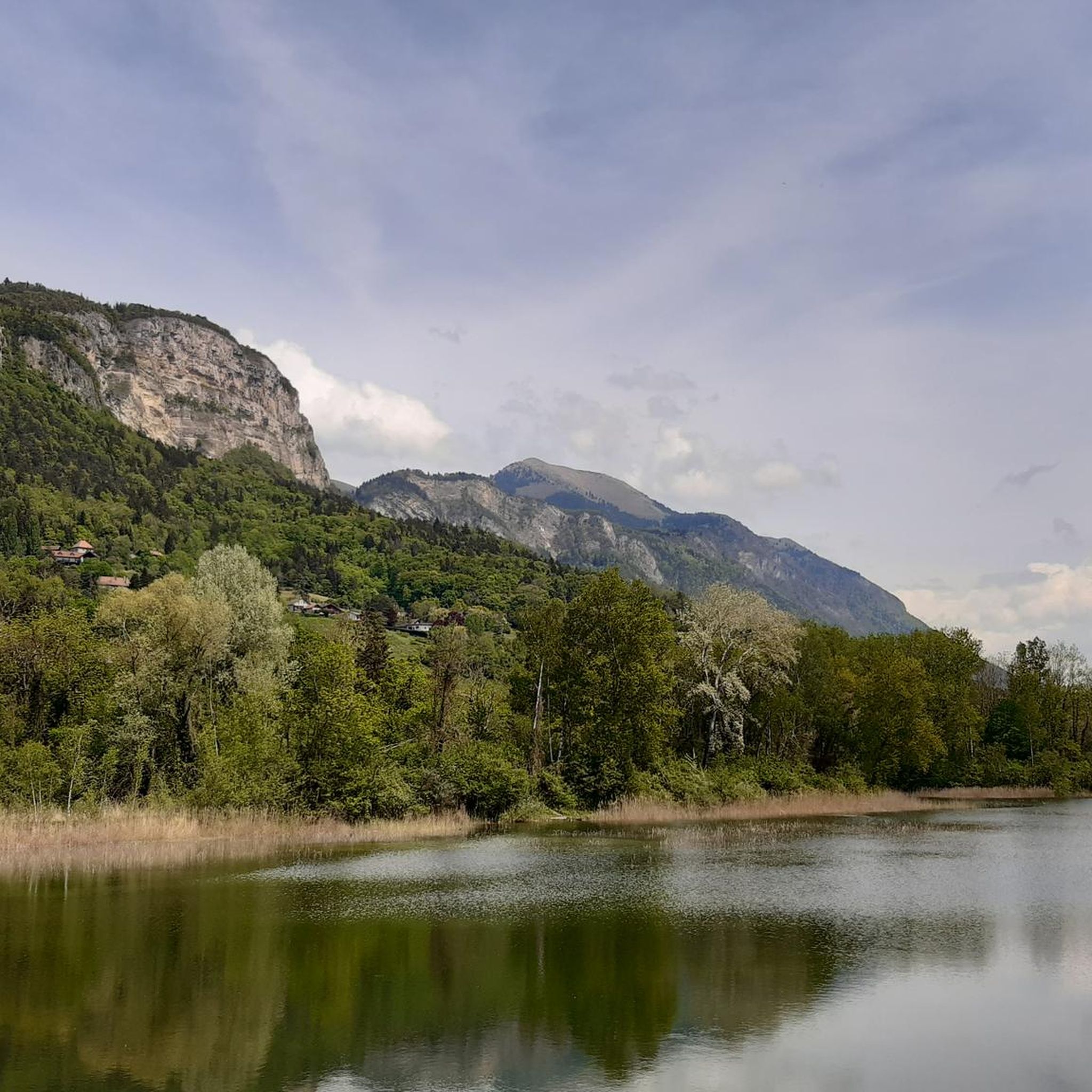
Intersection Point: La Gouille aux Morts (Pond of the Dead) Altitude 650m Gouille aux Morts: What an ugly name for this charming little pond. Beavers, mallards, herons, and especially frogs take shelter in its tall grass and breed there. The place is calm and peaceful, far from the road to the Vallée Verte (Green Valley), although you can still hear the sounds of traffic. Above it, the Molière à Vachat stream is mirrored in its waters. Its reflection blends with the water lilies scattered there, creating perfect harmony. A delight for the eye of the walker. It's impossible not to think of Monet's "Water Lilies." It is said that, long ago, two stonemasons working at the "Molière," located about fifty meters above, fell to their deaths there on a Sunday (yes, a Sunday...the Lord's Day). See: H. Savoie: Les Molières du Mont Vouan. Or perhaps the pond got its name because a peasant was swallowed up there with his cart...
1
0

Le Trou de la Tine (Trou of the Tine Cave) was formed by erosion on the flank of Mont Salève. It is a deep, sunken hole shaped like an open-topped barrel ("Tine" is an old dialect term for barrel, "trou" means hole). The cave's ceiling has collapsed due to erosion, revealing a natural "barrel" with a side opening. One can walk into the "barrel" through this side opening.
0
0


Cave with collapsed ceiling
1
0
A beautiful geological formation
0
2

To be done on snowshoes or in sneakers, from the solaison plateau for walkers or from Bonneville for hikers; )
0
0
Frequently Asked Questions
What types of natural monuments can I explore around Cornier?
The area around Cornier is rich in diverse natural monuments, primarily featuring caves, impressive summits, and serene natural water bodies. You can delve into geological formations or enjoy expansive views from elevated points.
Are there any notable caves to visit near Cornier?
Yes, two prominent caves are Orjobet Cave and The Trou de la Tine. Orjobet Cave, named after a local guide, has been equipped for exploration since 1905 and showcases typical limestone erosion. The Trou de la Tine is a unique erosion-formed cave with a distinctive barrel-like shape.
Where can I find panoramic views of the landscape around Cornier?
For breathtaking panoramic views, consider visiting Pointe d'Andey, a summit offering expansive vistas of the surrounding area. Another spot with great views is the Cross on the mountain, though it requires sure-footedness and a head for heights.
Are there family-friendly natural monuments in the Cornier area?
Absolutely! La Gouille aux Morts, a charming and peaceful pond, is considered family-friendly. It's a calm spot where you can observe beavers, mallards, and frogs. The ascent to Pointe d'Andey can also be an easy family walk, especially starting from the Solaison plateau.
What outdoor activities can I do near these natural monuments?
The region around Cornier offers a variety of outdoor activities. You can find numerous routes for mountain biking, cycling, and gravel biking. For detailed information and route options, explore the MTB Trails around Cornier, Cycling around Cornier, and Gravel biking around Cornier guides.
How difficult are the trails to reach the natural monuments?
The difficulty varies. Highlights like Orjobet Cave and Pointe d'Andey are generally considered intermediate. The Trou de la Tine is rated as challenging, while the Cross on the mountain also requires sure-footedness. La Gouille aux Morts is easily accessible and family-friendly.
What makes La Gouille aux Morts a unique natural monument?
La Gouille aux Morts, despite its unusual name ('Pond of the Dead'), is a charming and peaceful pond. It's a haven for local wildlife like beavers, mallards, and frogs. Its tranquil waters, reflecting the surrounding forest and water lilies, create a picturesque scene often compared to Monet's paintings. Local legends also add to its unique character.
Is there any historical context associated with the natural monuments?
Yes, for instance, Orjobet Cave was named after M. Orjobet, a local guide, following a visit by botanist Horace-Bénédict De Saussure in the late 17th century. The cave was also equipped for exploration by the Geneva section of the Swiss Alpine Club in 1905. Additionally, the region of Aumessas, which historically includes 'Château du Cornier,' is part of the Cévennes mountain range, an area with significant natural heritage and protected zones.
What do visitors particularly enjoy about the natural monuments around Cornier?
Visitors appreciate the diverse landscape, from the geological wonders of the caves to the expansive views from the summits. The peaceful atmosphere of spots like La Gouille aux Morts and the sense of accomplishment from reaching viewpoints like Pointe d'Andey are frequently highlighted. The community has shared over 87 photos and given more than 150 upvotes, reflecting a strong appreciation for the area's natural beauty.
Are there any natural monuments that are less known but worth discovering?
While the guide focuses on popular spots, the region's natural beauty extends beyond the main highlights. The broader area, particularly if 'Cornier' refers to the vicinity of Corneilla-la-Rivière, includes unique formations like the 'Organ Pipes of Ille-sur-Têt' (Les Orgues d'Ille-sur-Têt), known for their 'fairy chimney' structures, and 'Roc de Mallorca,' offering stunning panoramic views of the Eastern Pyrenees and Canigó.
Most popular routes around Cornier
Most popular attractions around Cornier

Get inspired with the komoot mobile app


Explore more
Extend your search for the best caves by checking out these guides of the top ones around Cornier:
