Top 14 Natural Monuments around Illkirch-Graffenstaden
Best natural monuments around Illkirch-Graffenstaden include significant natural areas such as the Réserve Naturelle Nationale de l'Île du Rohrschollen and the broader Massif forestier de Strasbourg-Neuhof/Illkirch-Graffenstaden. These areas feature alluvial forests, diverse aquatic environments, and extensive woodlands. The region's flat topography provides accessible hiking routes through varied natural landscapes. These natural features contribute to a rich biodiversity, supporting numerous plant and animal species.
Best natural monuments around Illkirch-Graffenstaden
- The most popular natural monuments is Kalbsgiessen Waterfall, a waterfall that…
Last updated: July 2, 2026
Kalbsgiessen Waterfall
Highlight • Waterfall
Translated by Google •
Tip by

War Memorial, Place de la République
Highlight • Monument
The Palais du Rhin: Former imperial palace and manifesto of political power
A special feature of Strasbourg is the former German imperial …
Translated by Google •
Tip by

Sign up now to discover places like this
Get recommendations on the best single tracks, peaks, & plenty of other exciting outdoor places.
Sign up for free
Birdhouse Art Tree on the Rhine
Highlight • Monument
Translated by Google •
Tip by

St. Ulrich's Fountain of Neuried Müllen
Highlight • Natural Monument
Translated by Google •
Tip by

Red Azolla Pond on the Old Rhine near Goldscheuer
Highlight • Lake
Of course I made …
Translated by Google •
Tip by

Sign up for free to discover even more natural monuments around Illkirch-Graffenstaden.
Sign up for free
Already have an account?
Start today with a free account
Your next adventure awaits.
Login or Signup
Tips from the Community

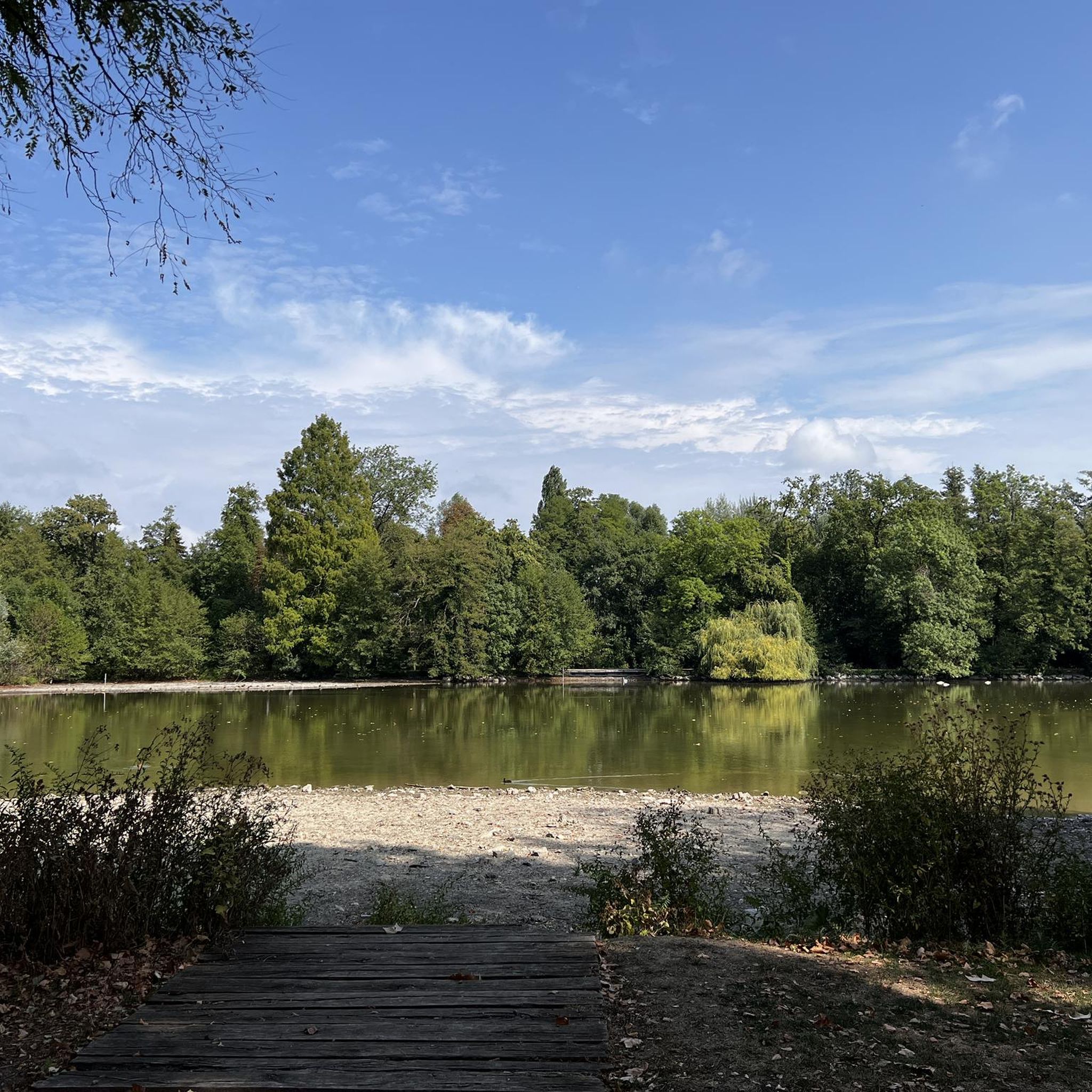
Beautiful park 🤩 👌🏼
1
0

According to legend, Saint Ulrich, Bishop of Augsburg from 923 to 973, plunged his crosier into the earth here on his way from Bishop of Strasbourg to Abbot of Schuttern Monastery in the summer heat, causing this spring to spring forth. The spring water was said to have healing properties for various children's illnesses and eye diseases. Today, only the well room remains. In 1981, the well room was restored to a clean condition and fitted with a gate. The memorial stone depicts a relief of Saint Ulrich plunging his crosier into the earth and the bubbling spring.
1
0

Really funny, it would be interesting to know how many of them are occupied
2
0

A beautiful and colorful collection of nesting boxes.
2
0
Beautifully done on the old tree 🌳 for 😉 new life 🐣
3
0

A very good idea. Nice to look at and very useful for the bird world.
9
0

Palais du Rhin / Rhine Palace, city tour The Palais du Rhin: Former imperial palace and manifesto of political power A special feature of Strasbourg is the former German imperial palace, which was built by the Hohenzollerns as a political manifesto for the permanent annexation of the state of Alsace-Lorraine to the German Empire. In the plan for the expansion of the city adopted in 1880, the former Imperial Square (now Place de la République) is dominated to the west by the eclectic architecture of the Imperial Palace, a masterpiece of measures in the middle of a garden with many trees. The palace commissioned by Wilhelm I of Hohenzollern is the work of the Prussian architect Hermann Eggert. It was built between 1884 and 1889 and inaugurated by his grandson Wilhelm II. It is more a testament to political power than an imperial residence; the three gentlemen of Hohenzollern only lived here occasionally. Text / Source: CITY AND EUROMETROPOLE STRASBOURG https://int.strasbourg.eu/de/place/-/entity/sig/985_CUL_136
13
0

In the heart of Strasbourg's "German Quarter" lies the Place de la République. The square, formerly known as "Kaiserplatz", was built between 1871 and 1918 in the style of a park. It was part of the transformation of Strasbourg into the capital of the new imperial state of Alsace-Lorraine, after the region had belonged to the German Empire since 1870. This transformation is reflected in the monumental buildings of the new town, which is connected to the old town by the Place de la République. These buildings include the Palais du Rhin (Rhine Palace), the university library and the National Theater. Source: https://www.elsass-geniessen.de/de/themenreisen/Place+de+la+R%E9publique
2
1
Frequently Asked Questions
What are the most notable natural areas to explore around Illkirch-Graffenstaden?
The region is home to significant natural areas, including the Réserve Naturelle Nationale de l'Île du Rohrschollen and the broader Massif forestier de Strasbourg-Neuhof/Illkirch-Graffenstaden. These areas feature unique alluvial forests, diverse aquatic environments, and extensive woodlands, offering rich biodiversity.
Are there family-friendly natural attractions in Illkirch-Graffenstaden?
Yes, several natural monuments are suitable for families. For instance, the Kalbsgiessen Waterfall offers a pleasant resting place with a clear stream. The Confluence of the Kinzig and Rhine is another family-friendly viewpoint where you can observe two rivers merging. Additionally, the St. Ulrich's Fountain of Neuried Müllen has historical significance and is accessible for families.
What kind of natural features can I expect to see in the region?
You can discover a variety of natural features, including rare alluvial forests, numerous waterways like the Vieux Rhin, Ill Tortu, and Schwarzwasser, and around 30 forest ponds. The region also features significant meadows such as the Heyssel meadow, and specific highlights like the Kalbsgiessen Waterfall and the Confluence of the Kinzig and Rhine.
What outdoor activities can I do near the natural monuments?
The flat topography of the region makes it ideal for various outdoor activities. You can find numerous hiking trails, such as the Napoleon Oak loop within the Massif forestier. For more options, explore the hiking routes around Illkirch-Graffenstaden. There are also running trails and gravel biking routes available.
Are there specific walking trails within the Réserve Naturelle Nationale de l'Île du Rohrschollen?
Yes, the Réserve Naturelle Nationale de l'Île du Rohrschollen offers several marked walking trails. These trails range from 45 minutes to 2.5 hours, allowing visitors to explore the alluvial forest, wetlands, and meadows. The "Sentier du Vieux Rhin" is particularly recommended for walks along the wild Rhine.
What is the significance of the Réserve Naturelle Nationale de l'Île du Rohrschollen?
The Île du Rohrschollen is a nationally and 유럽-wide rare alluvial forest ecosystem. It is a biodiversity hotspot, home to over 231 plant species and more than 200 bird species, as well as amphibians, fish, insects, and mammals. Its classification as a National Nature Reserve, Ramsar site, and Natura 2000 site highlights its crucial role in preserving unique ecosystems.
Can I spot wildlife in the natural areas around Illkirch-Graffenstaden?
Yes, the natural areas, especially the Réserve Naturelle Nationale de l'Île du Rohrschollen and the Massif forestier, are rich in biodiversity. You can spot numerous bird species (over 200 in Rohrschollen), amphibians, fish, insects, and mammals. The diverse Rhine environments and alluvial forests provide excellent habitats for wildlife.
Are there any historical natural monuments in the area?
Yes, the St. Ulrich's Fountain of Neuried Müllen is a natural monument with historical significance. Legend attributes healing properties to its water, said to have sprung forth when Saint Ulrich plunged his crosier into the earth. While not a natural monument, the War Memorial, Place de la République also features ancient ginkgo trees within its historical setting.
Is the Massif forestier de Strasbourg-Neuhof/Illkirch-Graffenstaden suitable for accessible hiking?
Yes, the Massif forestier has a flat topography, making it suitable for accessible hiking routes. Popular trails like the Napoleon Oak loop and various fitness trails offer varied experiences through its extensive woodlands and waterways.
What do visitors enjoy most about the natural monuments in this region?
Visitors appreciate the tranquility and natural beauty. For example, the Kalbsgiessen Waterfall is praised as a nice section for a break with a clear stream. The Confluence of the Kinzig and Rhine is noted as a worthwhile detour to observe the merging rivers. The region's natural monuments are highly regarded by the komoot community, with over 450 upvotes and 98 photos shared.
Are there any unique natural features or ecosystems in the Illkirch-Graffenstaden area?
The region is particularly known for its alluvial forests, which are rare ecosystems in Europe. These 'gallery forests' are characterized by dense shrub layers and numerous lianas, thriving due to the nutrient-rich water table from historical Rhine floods. The Réserve Naturelle Nationale de l'Île du Rohrschollen is a prime example of this unique environment.
Can I find places to relax and cool off near the natural monuments?
Yes, the Kalbsgiessen Waterfall is specifically mentioned as a very nice place to take a break with the possibility to cool off in its clear stream. The numerous waterways and forest ponds throughout the Massif forestier also offer peaceful spots for relaxation.
Most popular routes around Illkirch-Graffenstaden
Most popular attractions around Illkirch-Graffenstaden

Get inspired with the komoot mobile app


Explore more
Extend your search for the best caves by checking out these guides of the top ones around Illkirch-Graffenstaden:
