Top 14 Natural Monuments around Greßweiler
Natural monuments around Greßweiler offer a diverse range of geological features and historical sites within the Bas-Rhin department of Grand Est, northeastern France. While Greßweiler itself is a commune, the surrounding region provides numerous natural attractions for exploration. The landscape is characterized by its natural formations, including rock structures and forested areas. This area is ideal for those seeking to discover natural landmarks and enjoy outdoor activities.
Best natural monuments around Greßweiler
- The most popular natural monuments is Ruins of…
Last updated: June 18, 2026
Ruins of Nideck Castle
Highlight • Castle
Translated by Google •
Tip by

Saint Odile's Spring
Highlight • Natural Monument
Translated by Google •
Tip by

Sign up now to discover places like this
Get recommendations on the best single tracks, peaks, & plenty of other exciting outdoor places.
Sign up for free
Rocher des Géants
Highlight • Natural Monument
Translated by Google •
Tip by

Verlorenes Eck Stone Circle
Highlight • Natural Monument
Translated by Google •
Tip by

Sofa Rock
Highlight • Natural Monument
Translated by Google •
Tip by

Sign up for free to discover even more natural monuments around Greßweiler.
Sign up for free
Already have an account?
Start today with a free account
Your next adventure awaits.
Login or Signup

Tips from the Community

Beautiful tour with many small highlights and viewpoints.
0
0

This hut/shelter was perfect for us (2p) to spend the night. It has a little river next to it were you can wash your clothes (its not big enough to go bathing). Very open space. Around 8 in the morning, some people arrived. Until eleven, the place was full with some nice locals and a family of five. So if you stayll in the summer, dont stay too long it is a „popular“ spot. Accessible with which means anyone can go there fast.
0
0

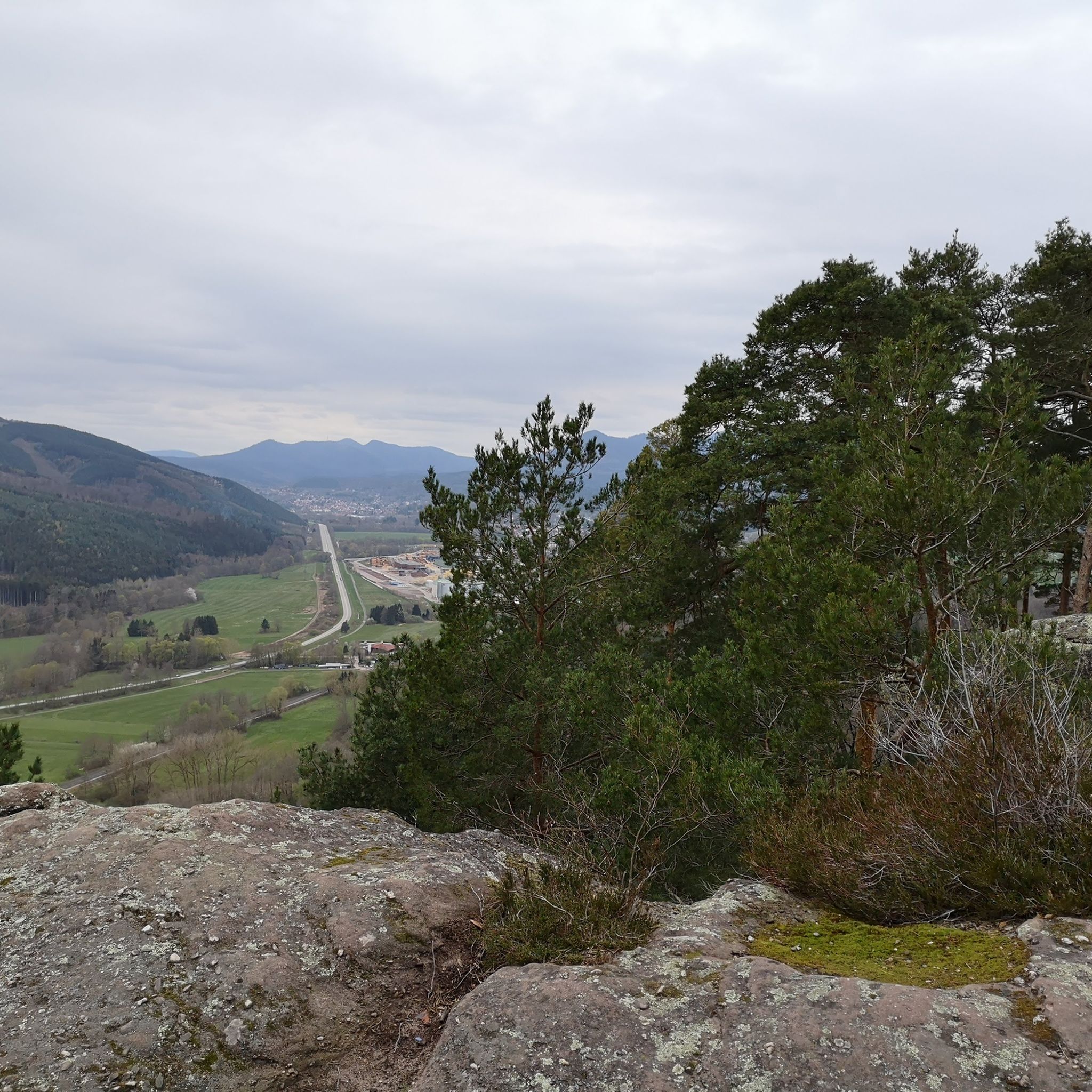
The Giants' Rock, perched on the foothills of Mont Sainte-Odile, offers a spectacular view of the forests and valleys of Alsace. This mystical site, surrounded by legends, is accessible after a beautiful mountain bike ride through the wooded trails. The panorama from the rock reveals grandiose landscapes, with steep cliffs, dense forests and, on a clear day, a clear view of the Alsatian plain.
0
0

It is worth climbing the steep steps of the ruins to the top of the remains of the tower... From the top you have a wonderful view over the wooded hills of the Vosges...
2
0
One of the many beautiful rock formations
1
0
The narrow path leads along numerous huge rocks... nice to walk
1
0

The castle ruins in the natural area, which have been listed as a historical monument since 1898, are not the remains of one but of two castles. The lower castle (Unternideck) was probably built in the first half of the 13th century. Today, the square keep and a fortified wall that separated the residential building can still be seen. The keep shows a change in the structure that indicates an interruption in construction (formats and unevenness of the stones, structure of the vaults...). The upper castle (Obernideck) was probably built in the 14th century. Its ruins are less well preserved, only a few heavily restored walls can still be seen. A castle on the Nideck was first mentioned in 1264. Sire Burckart lived here at that time. From 1336, the castle was a fief of the Diocese of Strasbourg and was then given to the citizens of Strasbourg. The inhabitants of both castles concluded several truces, especially in 1393 and 1422. These "peace treaties", which bear witness to the history of the place, laid down the rules for coexistence, supplies and armament of the fortress. From the 15th century onwards, the castle changed hands several times in successive attacks. The castle was finally destroyed in 1636 in the Thirty Years' War. Text of the information board
2
0

The hut is present (as in the photo). An impressive place.
0
0
Frequently Asked Questions
What types of natural monuments can I explore around Greßweiler?
The region around Greßweiler offers a diverse range of natural monuments, including impressive rock formations, historical sites, and natural springs. You can discover geological features like the colorful sandstone formations at Rocher des Géants, or visit historical natural sites such as the Ruins of Nideck Castle with its adjacent waterfall.
Are there family-friendly natural monuments to visit near Greßweiler?
Yes, several natural monuments are suitable for families. The Discovery Trail of the Demoiselles de Pierre is a beautifully laid out path where children can enjoy discovering figures in the rock. Another family-friendly option is the Verlorenes Eck Stone Circle, which features a large wooden hut and mystical stone circles, perfect for a leisurely visit.
What historical natural sites are there around Greßweiler?
The area boasts several sites where nature and history intertwine. The Ruins of Nideck Castle is a prominent example, a natural monument and historical site offering impressive views and steeped in local legend. Additionally, Saint Odile's Spring is a historical and religious site where visitors can collect fresh spring water.
What are some popular rock formations in the Greßweiler area?
One of the most popular rock formations is the Rocher des Géants, known for its exciting colorful sandstone formations, including Buntsandstein with white or gray pebbles. The Ruins of Nideck Castle also sits on a steep rhyolite rock, offering dramatic views.
Can I find natural springs or water features near Greßweiler?
Yes, you can visit Saint Odile's Spring, where you can fill up on fresh spring water for free. This spring is very popular, with visitors often bringing canisters to collect water.
What outdoor activities can I do near these natural monuments?
The region around Greßweiler is excellent for various outdoor activities. You can find numerous hiking trails, such as those mentioned in the Hiking around Greßweiler guide. There are also options for road cycling and gravel biking, with routes like the 'Molsheim – Former Romanswiller station loop' for road cyclists or the 'Relais du Geisweg – Molsheim Old Town loop' for gravel bikers. Explore more routes in the Road Cycling Routes around Greßweiler and Gravel biking around Greßweiler guides.
Are there hiking trails that lead to these natural monuments?
Absolutely. Many natural monuments are integrated into hiking routes. For instance, the Discovery Trail of the Demoiselles de Pierre is itself a natural monument trail. For other sites like the Ruins of Nideck Castle, you'll find trails leading to them, often offering impressive views along the way. You can find detailed hiking options in the Hiking around Greßweiler guide.
What do visitors enjoy most about the natural monuments around Greßweiler?
Visitors frequently praise the impressive views, especially from sites like the Ruins of Nideck Castle overlooking the Bruchetal forests. The unique geological formations, such as those at Rocher des Géants, are also highly appreciated. Many enjoy the well-maintained trails and the opportunity to discover historical and natural wonders, often with a sense of tranquility and connection to nature.
Are there any natural caves or unique geological features in the broader Alsace region near Greßweiler?
While Greßweiler itself may not have specific designated natural monuments, the broader Alsace region, where Greßweiler is located, does offer unique geological features. For example, the Brotsch Cave (Grotte du Brotsch) is known as the largest natural cave in the Northern Vosges and is also a popular spot for climbers.
Is there parking available near the natural monuments?
Parking availability varies by location. For instance, to reach the Rocher du Chalice (a fascinating rock formation in the broader region), you would typically park at the Luge du Plan Incliné car park and then walk about 1.2 km. For Saint Odile's Spring, parking can sometimes be found directly in front of the stairs leading to the source, though it can get busy.
What should I wear when visiting the natural monuments?
Given the varied terrain, which can include narrow paths and steep sections, it's recommended to wear sturdy footwear with good grip. Layers of clothing are advisable to adapt to changing weather conditions, especially if you plan to hike or spend extended time outdoors. For sites like the upper part of the Ruins of Nideck Castle, good grip is particularly important.
How long does it take to visit the natural monuments around Greßweiler?
The duration of your visit depends on the specific monument and your activity. A site like the Discovery Trail of the Demoiselles de Pierre can be a pleasant circuit taking a couple of hours. For more extensive exploration or combining multiple sites, you might plan for a half-day or full-day outing. Some highlights, like Saint Odile's Spring, can be a quick stop for water collection.
Most popular routes around Greßweiler
Most popular attractions around Greßweiler

Get inspired with the komoot mobile app


Explore more
Extend your search for the best caves by checking out these guides of the top ones around Greßweiler:
