Top 13 Natural Monuments around Alicún De Ortega
Natural monuments around Alicún De Ortega are situated within the Granada Geopark. This region is characterized by unique geological formations, including extensive badlands landscapes and thermal waters. The area offers a blend of natural features and historical significance, with evidence of ancient human settlements. It provides opportunities to explore diverse terrains and geological processes.
Best natural monuments around Alicún De Ortega
- The most popular natural monuments is Gorafe Desert Canyons, a canyon that features a unique landscape with conditions…
Last updated: July 1, 2026
Los Coloraos Badlands
Highlight • Canyon
Translated by Google •
Tip by

Gorafe Desert
Highlight • Canyon
Los Coloraos is one of its most popular areas, owing its …
Tip by

Sign up now to discover places like this
Get recommendations on the best single tracks, peaks, & plenty of other exciting outdoor places.
Sign up for free
Gorafe Desert Canyons
Highlight • Canyon
Translated by Google •
Tip by

Acequia del Toril
Highlight • Natural Monument
Translated by Google •
Tip by

Impressive gravel path in the canyon
Highlight • Canyon
Translated by Google •
Tip by

Sign up for free to discover even more natural monuments around Alicún De Ortega.
Sign up for free
Already have an account?
Start today with a free account
Your next adventure awaits.
Login or Signup
Popular around Alicún De Ortega
Tips from the Community

Double-check the trails! The river valley was completely overgrown and almost impossible to get through. It's a real ordeal to find your way back out! Not all of the trails on Komoot actually exist, and not all of the real trails are marked. Bring enough water!
0
0

The 47 km loop is breathtaking for about half of the tour: mind-blowing views as far as the eye can see over 360°. Then in the second part, lots of roads that climb constantly... you have to be in good shape for this loop. The little extra: the tapas bar in the city center after that.
1
0

The Troil Canal. According to scientists, they date back at least 3600 years ago. Due to the precipitation of calcium carbonate, these canals grew and continuously formed these amazing walls (some of them are 4 meters wide at the base, less than a meter wide at the top, 15 meters high and reach a length of almost 750 meters
6
0

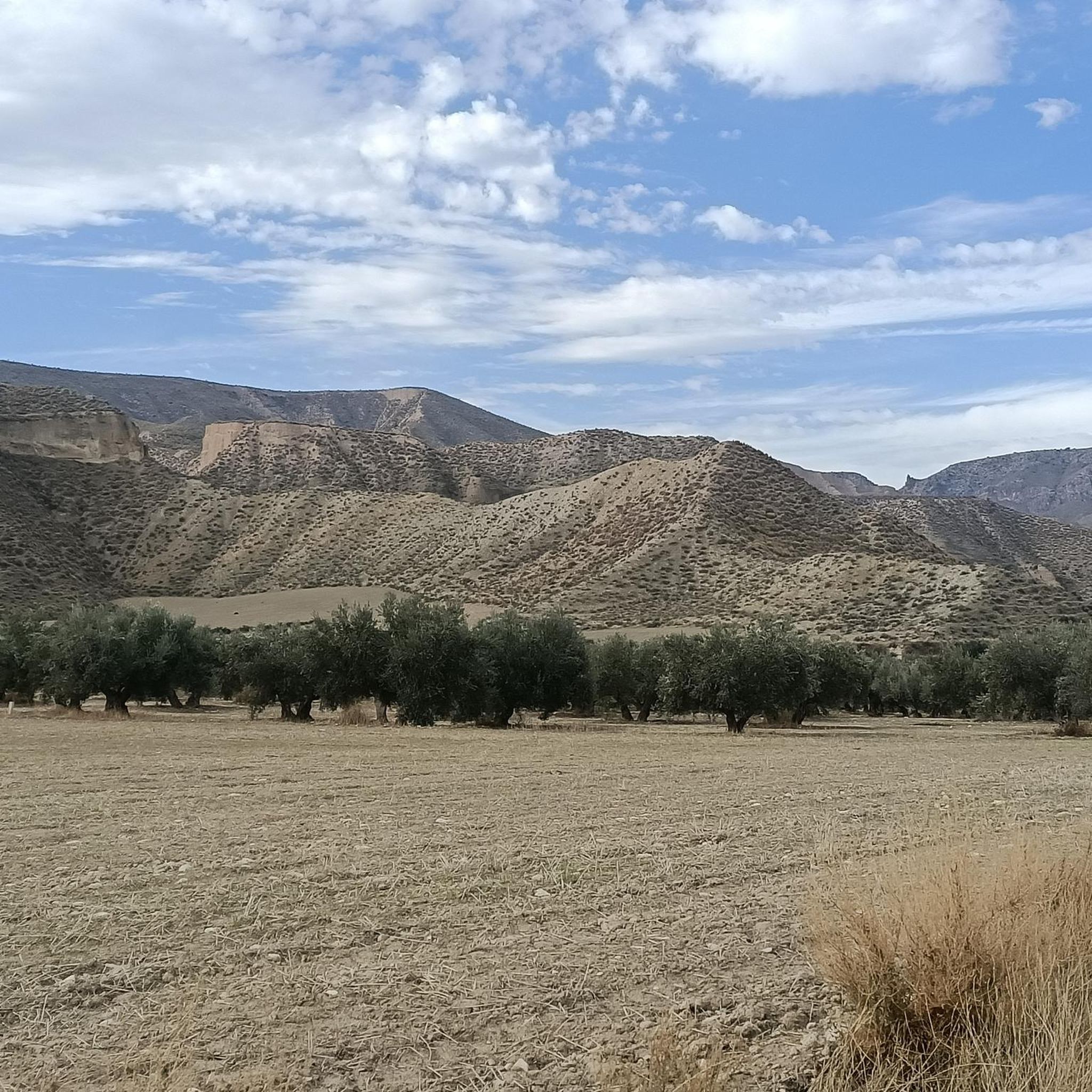
The Gorafe Desert is a natural gem located in the province of Granada. This desert is characterized by its impressive geological formations, known as “badlands”, which create a landscape of canyons, ravines and fairy chimneys. The desert is located in the Guadix-Baza Depression, a sedimentary basin that once housed a lake. Today, it is famous for its changing colors throughout the day, ranging from ochres and reds to yellows. In addition, the area is rich in paleontological and archaeological sites, including more than 240 dolmens in the Gorafe Megalithic Park.
1
0

A very interesting natural phenomenon that goes back to the first humans and beyond. An old calcareous water source that has been building itself for many thousands of years to the wall it has become today. At the top, the water still flows abundantly through the source. The water is still clearly visible on the road side, as the surrounding ground is even higher.
2
0

Wow, what an awesome gravel road in the middle of the canyon. If you didn't know better, you might think you're on the Colorado River in the USA. 🏜️
2
0
The view is just mind-blowing! This is truly gravel riding paradise.
2
0

Beautiful area of clayey soil located in Gorafe. It receives the name of Los Coloraos due to the color of the geological formations. Sunrise and sunset are especially ideal to enjoy this natural wonder in all its splendor.
4
0
Frequently Asked Questions
What unique geological features can I expect to see in the natural monuments around Alicún de Ortega?
The region, part of the UNESCO Global Granada Geopark, is renowned for its extraordinary geological formations. You'll encounter spectacular "badlands" landscapes with deep river valleys and "cárcavas" (gullies), especially prominent in areas like Los Coloraos Badlands and the wider Gorafe Desert. Another unique feature is the Acequia del Toril, a natural aqueduct formed by thermal waters depositing limestone over centuries.
Are there any historically significant natural monuments in the area?
Yes, the natural monuments around Alicún de Ortega are rich in history. The Acequia del Toril area has evidence of human settlements dating back to the Upper Paleolithic, Neolithic, Copper Age, and Argar Culture, along with nearby megalithic dolmens. The Granada Geopark also features one of the most extensive outdoor paleontological records of the European Quaternary, and the Gorafe desert hosts one of the largest concentrations of dolmens in Spain.
What is the best time to visit the natural monuments around Alicún de Ortega?
The best times to visit are generally during early morning or late evening. For instance, Los Coloraos Badlands are particularly stunning at these times, as the golden light enhances the red, magenta, and orange hues of the canyon walls. These cooler periods are also more comfortable for exploration, especially during warmer months.
Are there family-friendly natural monuments or activities in the region?
The Acequia del Toril offers a short, easy walking route that is suitable for families, allowing visitors to appreciate both its unique geological formation and nearby megalithic dolmens. The diverse landscapes of the Granada Geopark also provide opportunities for gentle walks and exploration, though some areas might be more challenging.
What kind of outdoor activities can I do near these natural monuments?
The varied terrain is excellent for outdoor activities. The Gorafe Desert Canyons and the "Impressive gravel path in the canyon" offer great conditions for gravel riders and mountain bikers. For road cycling enthusiasts, there are several routes nearby, such as the "Surrounding the Rio Guadahortuna" or the "Fardes River loop from Benalúa." You can find more details on these routes in the Road Cycling Routes around Alicún De Ortega guide.
Are there any natural hot springs in the area?
Yes, the Raja de Alicún Hot Springs, located within the broader "Gorafe desert" area, offer natural hot springs that emerge at temperatures around 25-28°C. These mineral-rich waters have been traditionally used for therapeutic and relaxing purposes, providing a surprising oasis within the arid environment.
What should I know about visiting the badlands landscapes?
The badlands, particularly in the Gorafe Desert and Los Coloraos, are characterized by clay soils. If it has recently rained, the terrain can become very muddy and difficult to traverse, especially for cycling. It's advisable to check weather conditions before planning your visit and bring enough water, as the environment can be arid.
Can I spot any wildlife in the natural monuments?
While not explicitly a wildlife spotting destination, the unique ecosystem of the Acequia del Toril supports specialized flora like water pajarilla and royal cañota. The narrow, shaded passages formed by the aqueduct also host small passerine birds. The broader Geopark environment, with its diverse habitats, may also offer opportunities to observe local fauna.
What makes the Acequia del Toril a unique natural monument?
The Acequia del Toril is a remarkable natural aqueduct formed by thermal waters rich in dissolved limestone. Over centuries, these waters have created a travertine formation resembling a wall, stretching for approximately 1.6 kilometers and reaching heights of over 15 meters. The continuous deposition of minerals causes the structure to grow, making it a living geological marvel.
Are there opportunities for stargazing in the region?
Yes, the nearby Desierto de Gorafe, which includes areas like Gorafe Desert and Los Coloraos Badlands, is known for its exceptional sky quality. It holds a "Starlight certification," making it an excellent location for stargazing and appreciating the night sky.
What should I bring when visiting the natural monuments?
Given the arid and exposed nature of many areas, it's essential to bring plenty of water, especially if you plan on hiking or cycling. Sun protection (hat, sunscreen) is also highly recommended. Appropriate footwear for varied terrain is crucial, and if visiting after rain, be prepared for muddy conditions in the badlands.
Most popular attractions around Alicún De Ortega

Get inspired with the komoot mobile app


Explore more
Extend your search for the best caves by checking out these guides of the top ones around Alicún De Ortega:
