Top 11 Natural Monuments around Orpí
Natural monuments around Orpí offer a diverse landscape of forests, cultivated fields, and river valleys in Catalonia, Spain. The area provides a tranquil environment for outdoor activities, characterized by its gentle topography. It features natural attractions such as river routes, springs, and unique geological formations. Orpí's proximity to the Montserrat Natural Park further enhances its appeal for nature enthusiasts.
Best natural monuments around Orpí
- The most popular natural monuments is Font-rubí Spring, a viewpoint that marks the highest point…
Last updated: July 1, 2026
Les Deus Fountains
Highlight • Natural Monument
Translated by Google •
Tip by

Ancosa Oak
Highlight • Natural Monument
Registration number: AM 06.104.01
Municipal term: Llacuna County: l´Anoia
Protection: Order 1990.02.08 (DOGC 1262, 1990.03.02)
Measurements: Total height (h) = 16.0 m Barrel vault (c) = 4.48 m Average head (C) = 24.8 m
Translated by Google •
Tip by

Sign up now to discover places like this
Get recommendations on the best single tracks, peaks, & plenty of other exciting outdoor places.
Sign up for free
Sanctuary of the Springs of Sant Magí de la Brufaganya
Highlight • Religious Site
Translated by Google •
Tip by

Prehistoric Park of Capellades
Highlight • Historical Site
Translated by Google •
Tip by

Capellades Waterfall
Highlight • Waterfall
Translated by Google •
Tip by

Sign up for free to discover even more natural monuments around Orpí.
Sign up for free
Already have an account?
Start today with a free account
Your next adventure awaits.
Login or Signup
Tips from the Community

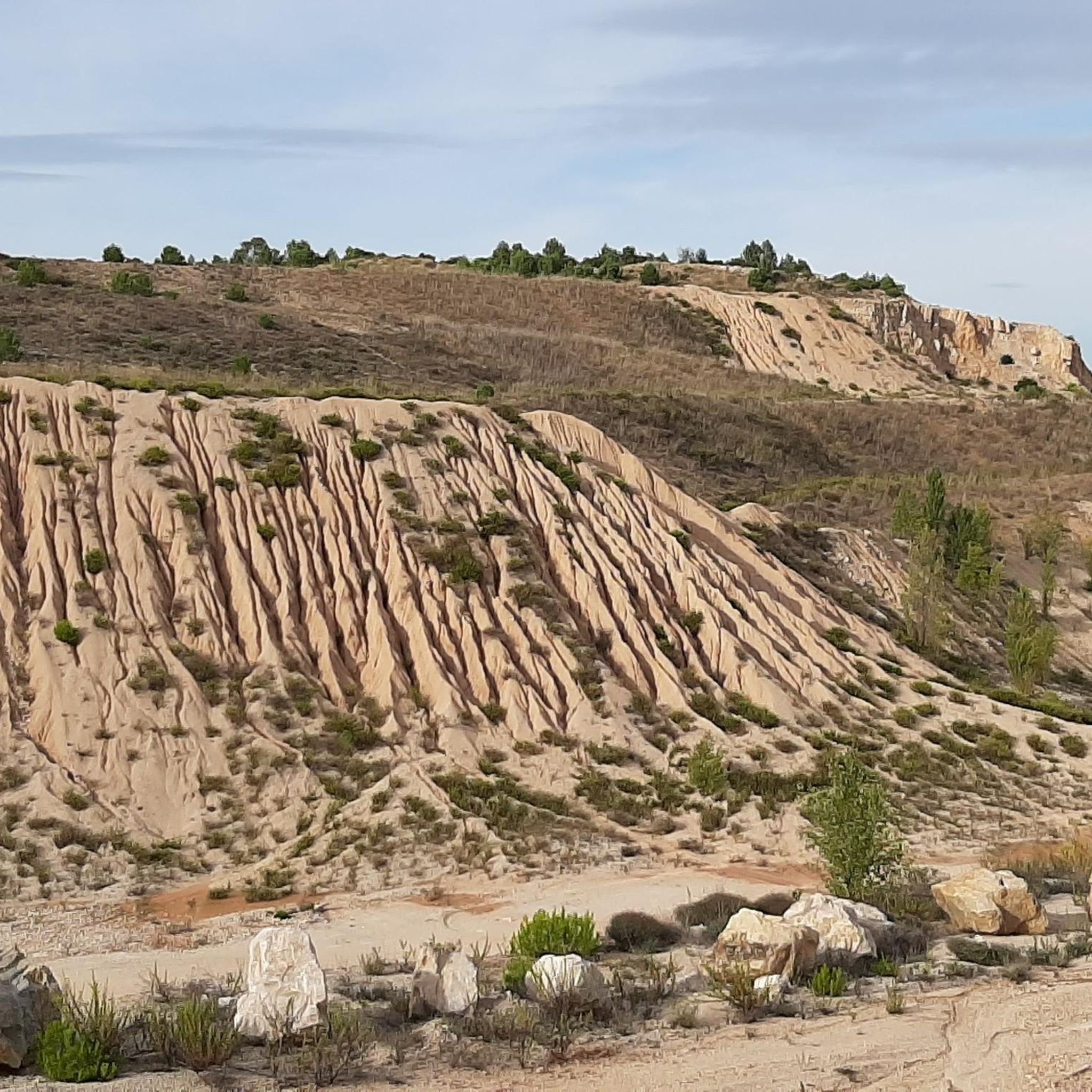
The Capellades prehistoric park is a cultural facility located in the Cinglera del Capelló, the cliff on which the town of Capellades sits, in the Catalan region of l'Anoia. This area, in addition to its geological and landscape value, has great archaeological value, due to the presence of around twenty sites from various periods. The cliff itself is one of the park's attractions. Its origin is in the action of carbonated waters that, by fossilizing plant colonies, form fall travertines, a type of fossil waterfall that is locally called "capellons". Its growth formed cornices, grottoes and caves that were used as shelter by groups of prehistoric settlers. One of these caves constitutes the best preserved Paleolithic archaeological site in the complex, known as "l'Abric Romaní", used as a refuge by groups of Neanderthals and which has been excavated since 1983.
0
0

Species: Quercus × cerrioides Registration number: AM 06.104.01 Municipal term: Llacuna County: l´Anoia Protection: Order 1990.02.08 (DOGC 1262, 1990.03.02) Measurements: Total height (h) = 16.0 m Barrel vault (c) = 4.48 m Average head (C) = 24.8 m Notes (NB): This tree was left in the middle of the Plana d'Ancosa because in the summer the herds of cattle went there to take the shade. In the fork it has a cup where the rainwater accumulates. It is located within the area of natural interest (EIN) of Ancosa-Montagut. From the Lagoon, take the Marimon road, passing by the Dorita farm. At the crossroads, continue along the Col del Corral route. After about 500 m take the path on the right in the direction of the Monastery of Ancosa and once there, follow 500 m to El Roure (section of Route 2 Blava de la Llacuna) Source: Medi Ambien GenCat website
1
0
Sant Magí de la Brufaganya is a sanctuary located at 760 m above sea level, above the beginning of the Torrent de Sant Magí, in the municipality of Pontils (Conca de Barberà). It is part of the nucleus of Sant Magí de Brufaganya. It is accessed by a detour on the Pontils a la Llacuna road. A gathering is held on the third Sunday of September. Under the sanctuary is the Chapel of the Fonts de Sant Magí, with water considered miraculous and object of pilgrimage; according to legend, the saint made it spring up by hitting the ground three times with his staff when the Roman soldiers were taking him down from the Brufaganya mountain, in Santa Perpètua de Gaià. For centuries, towns such as Barcelona, Tarragona, Lleida, Cervera or Igualada have gone to fetch water from the sources of Sant Magí de la Brufaganya, to then bring it solemnly into their municipality and distribute it among the neighbors. Near the Capella de les Fonts there is a stone dedicated to Sant Magí by the city of Igualada. It is a one and a half meter column with an inscription that attests to the devotion of the Igualadin. It was inaugurated on August 16, 1927 and was destroyed in 1936 during the Civil War. The people of Igualada returned in 1950 to restore it and for the second inauguration by priest Amadeu Amenós. On August 16, 2010, it was reopened by representatives of the Igualada City Council and the Friends of the Horses of Anoia, after a new restoration.
0
0
Sant Magí de la Brufaganya is a sanctuary located at 760 m above sea level, above the beginning of the Torrent de Sant Magí, in the municipality of Pontils (Conca de Barberà). It is part of the nucleus of Sant Magí de Brufaganya. It is accessed by a detour on the Pontils a la Llacuna road. A gathering is held on the third Sunday of September. Under the sanctuary is the Chapel of the Fonts de Sant Magí, with water considered miraculous and object of pilgrimage; according to legend, the saint made it spring up by hitting the ground three times with his staff when the Roman soldiers were taking him down from the Brufaganya mountain, in Santa Perpètua de Gaià. For centuries, towns such as Barcelona, Tarragona, Lleida, Cervera or Igualada have gone to fetch water from the sources of Sant Magí de la Brufaganya, to then bring it solemnly into their municipality and distribute it among the neighbors. Near the Capella de les Fonts there is a stone dedicated to Sant Magí by the city of Igualada. It is a one and a half meter column with an inscription that attests to the devotion of the Igualadin. It was inaugurated on August 16, 1927 and was destroyed in 1936 during the Civil War. The people of Igualada returned in 1950 to restore it and for the second inauguration by priest Amadeu Amenós. On August 16, 2010, it was reopened by representatives of the Igualada City Council and the Friends of the Horses of Anoia, after a new restoration. Source: Wikipedia
0
0

Les Deus is a natural site of Sant Quintí de Medionai is a space where there are 23 sources of water in a beautiful area to take a break.
0
0

A natural area where you can enjoy lakes, pools, caves and waterfalls. Les Deus are a series of 23 fountains in a row - the water comes from a main source of the Carme Capellades aquifer. In high season, people take advantage of the lakes as a bathing area. On the highest part there is a restaurant and a bar with views and below there is a picnic area. There is also an adventure park where there is via ferrata etc.
1
0

Nice little round to the waterfalls. We were lucky that it had rained a bit in the last few days and that the waterfalls were easy to see. Unfortunately, some places are very overgrown, so that it was sometimes a little tight. Sturdy shoes are definitely recommended.
1
0

The hermitage of the Fuentes de Sant Magí is built on a spring of water considered miraculous. It is an object of pilgrimage even today by people from Barcelona, Tarragona and Lleida. It is accessed via the paved road that is in perfect condition.
0
0
Frequently Asked Questions
What are some of the most popular natural monuments to visit around Orpí?
Visitors frequently enjoy the Font-rubí Spring, which is a strategic viewpoint popular with cyclists. Another favorite is Les Deus Fountains, known for its lakes, pools, caves, and waterfalls, offering a natural bathing area in high season. The Capellades Waterfall also draws visitors, especially after rainfall, for its scenic round trip.
Are there natural monuments suitable for families with children?
Yes, several natural monuments around Orpí are family-friendly. Font-rubí Spring and Les Deus Fountains are both great options. Les Deus also features a picnic area and an adventure park with a via ferrata, adding to the family appeal. The Ancosa Oak, an ancient tree, is another family-friendly natural spot.
What kind of natural features can I expect to see in the Orpí region?
The Orpí region offers a diverse landscape including holm oak forests, vineyards, and open fields. You'll find numerous springs, rivers like the Carme, and natural pools such as the Salt del Capellà. The area is also characterized by unique geological formations, including fossil waterfalls known as 'capellons' near Capellades, and ancient trees like the Ancosa Oak.
Are there any historical or cultural sites integrated with the natural monuments?
Yes, the Prehistoric Park of Capellades is a significant cultural facility located within the Cinglera del Capelló cliff. This area boasts geological and archaeological value, with around twenty sites from various periods, including 'l'Abric Romaní,' a well-preserved Neanderthal refuge.
What outdoor activities can I do near the natural monuments around Orpí?
The region is excellent for various outdoor activities. You can enjoy hiking and cycling along the Carme river routes, which lead to scenic spots and natural springs. For more structured routes, explore the Road Cycling Routes around Orpí, MTB Trails around Orpí, or Gravel biking around Orpí, which offer diverse terrain for all skill levels.
What is the best time of year to visit the natural monuments in Orpí?
Spring is an ideal time to visit, as the almond trees are in bloom, adding to the picturesque scenery along the river routes. The weather is generally pleasant for outdoor activities. While Les Deus Fountains offers a natural bathing area in high season (summer), some waterfalls like Capellades Waterfall are best seen after rainfall, which is more common in spring or autumn.
Are there any natural pools or bathing areas available?
Yes, the Carme river routes feature scenic spots with natural pools, such as the Salt del Capellà. Additionally, Les Deus Fountains is well-known for its series of 23 fountains that create lakes and pools, providing a popular natural bathing area during high season.
What makes the natural monuments around Orpí unique?
The natural monuments around Orpí are unique for their tranquil, unspoiled rural charm and the blend of diverse landscapes, from river valleys with natural springs and ancient bridges to holm oak forests and vineyards. The area's proximity to the dramatic Montserrat Natural Park also offers a gateway to exploring more iconic natural beauty in Catalonia.
What do visitors appreciate most about the natural monuments in Orpí?
Visitors particularly appreciate the tranquility and natural beauty, finding it a serene escape from urban life. The extensive network of trails for hiking and cycling, the picturesque scenery including blooming almond trees, and the opportunity to reconnect with nature are frequently highlighted. The accessibility to natural pools and waterfalls also adds to the appeal.
Is the Montserrat Natural Park easily accessible from Orpí?
While not directly within Orpí, the municipality's proximity to the Montserrat Natural Park makes it an excellent base for exploring this renowned area. Montserrat is famous for its dramatic, serrated peaks and unique rock formations, offering well-marked trails, hidden waterfalls, and panoramic viewpoints, expanding the opportunities for natural exploration.
Are there any specific tips for visiting the Capellades Waterfall?
When visiting the Capellades Waterfall, it's recommended to wear sturdy shoes, as some sections of the trail can be overgrown. The waterfalls are most impressive after a bit of rain, so consider this when planning your visit for the best experience.
Where can I find more information about the natural parks in Catalonia?
For broader information on natural parks across Catalonia, you can refer to resources like Wikivoyage's guide to Nature parks in Catalonia.
Most popular attractions around Orpí

Get inspired with the komoot mobile app


Explore more
Extend your search for the best caves by checking out these guides of the top ones around Orpí:
