Top 14 Natural Monuments around St. Michael'S Mount
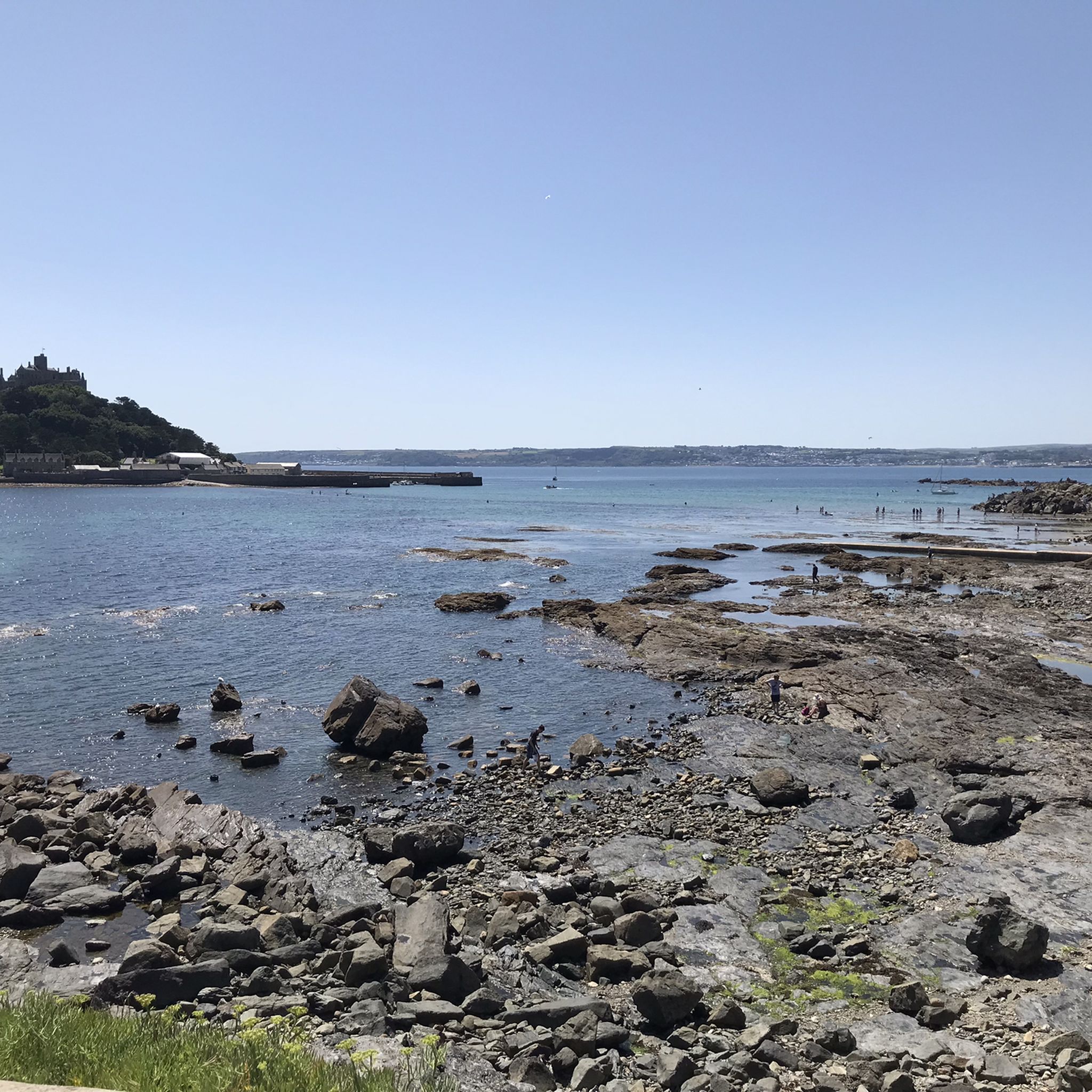
Natural monuments around St. Michael'S Mount include the tidal island itself, a significant geological formation in Mount's Bay, Cornwall. This area is characterized by its unique geology, a tidal causeway, and distinctive subtropical gardens. Designated a Site of Special Scientific Interest (SSSI) since 1995, the mount offers a blend of natural beauty and ecological significance. The island's formation, a granite outcrop, is a testament to immense natural forces over millions of years.
Best natural monuments around St. Michael'S Mount
- The…
Last updated: July 1, 2026
St Michael's Mount
Highlight • Castle
Tip by

Men-an-Tol Stone Circle
Highlight • Monument
Translated by Google •
Tip by

Sign up now to discover places like this
Get recommendations on the best single tracks, peaks, & plenty of other exciting outdoor places.
Sign up for free
Lanyon Quoit
Highlight • Natural Monument
Tip by

Mên-an-Tol
Highlight • Historical Site
Translated by Google •
Tip by

Trencrom Hill
Highlight • Natural Monument
Tip by

Sign up for free to discover even more natural monuments around St. Michael'S Mount.
Sign up for free
Already have an account?
Start today with a free account
Your next adventure awaits.
Login or Signup
Other adventures around St. Michael'S Mount

Tips from the Community

The "Hole Stone", granite blocks that were erected about 3,000 - 4,000 years ago.
0
0

Lanyon Quoit is a Neolithic dolmen. That said, it collapsed in a storm in 1815 and was re-erected nine years later, it is thought that it is now different from its original appearance. The granite capstone weighs more than 12 tons. The quoit stands at the north end of a long barrow, but the barrow has been damaged and is often overgrown and difficult to see.
0
0

The quoitiest quoit in quiotsville this beautiful quoit sits in a field adjacent to the road with a small stile to access. Great views all around
0
0

Lanyon Quoit is one of Cornwall's best known prehistoric monuments and stands just east of the road from Trevowhan to Madron. Originally built in the neolithic period (3500-2500 BCE), the quoit would have been made up of 4 upright stones. Sadly, due to storm damage, it had to be re-erected in the 19th century and now consists of three granite pillars (1.5m in height) which support a large slab capstone.
0
0

Mên-an-Tol is Cornish language and means hole stone. A special megalithic formation about 1 km of hiking trail off the road.
0
0

The age of this megalithic formation is estimated to be between 3,000 and 4,000 years. There are several legends surrounding this cultural site. For one thing, women can become pregnant if they crawl through the "Devil's Eye" - the hole stone - seven times during a full moon. On the other hand, children are protected from illnesses when they are passed through the hole. Well, no matter what faith you follow, the site is a fascinating place. This site can be visited at any time of the day or night - but one should not be disappointed by the "size" of the site. Although the megaliths appear huge in photos, in reality they are only between 1 m and 1.5 m high.
0
0

A visit to St Michael's Mount is well worth it, even if the entrance fee is a hefty £26.00 for the castle and gardens (2023). You have to make the necessary time for it. Avoid the weekends because then it is very busy!
10
1
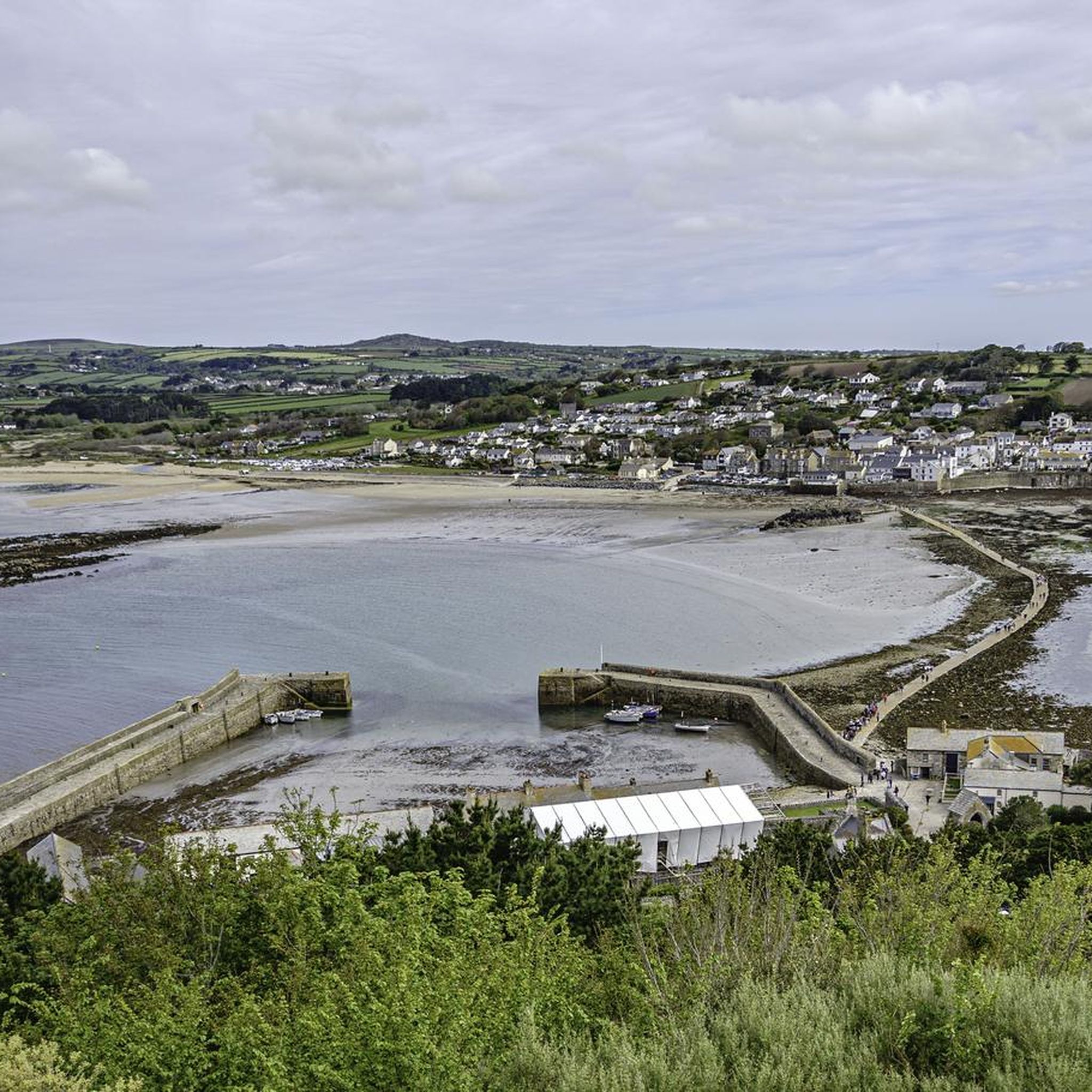
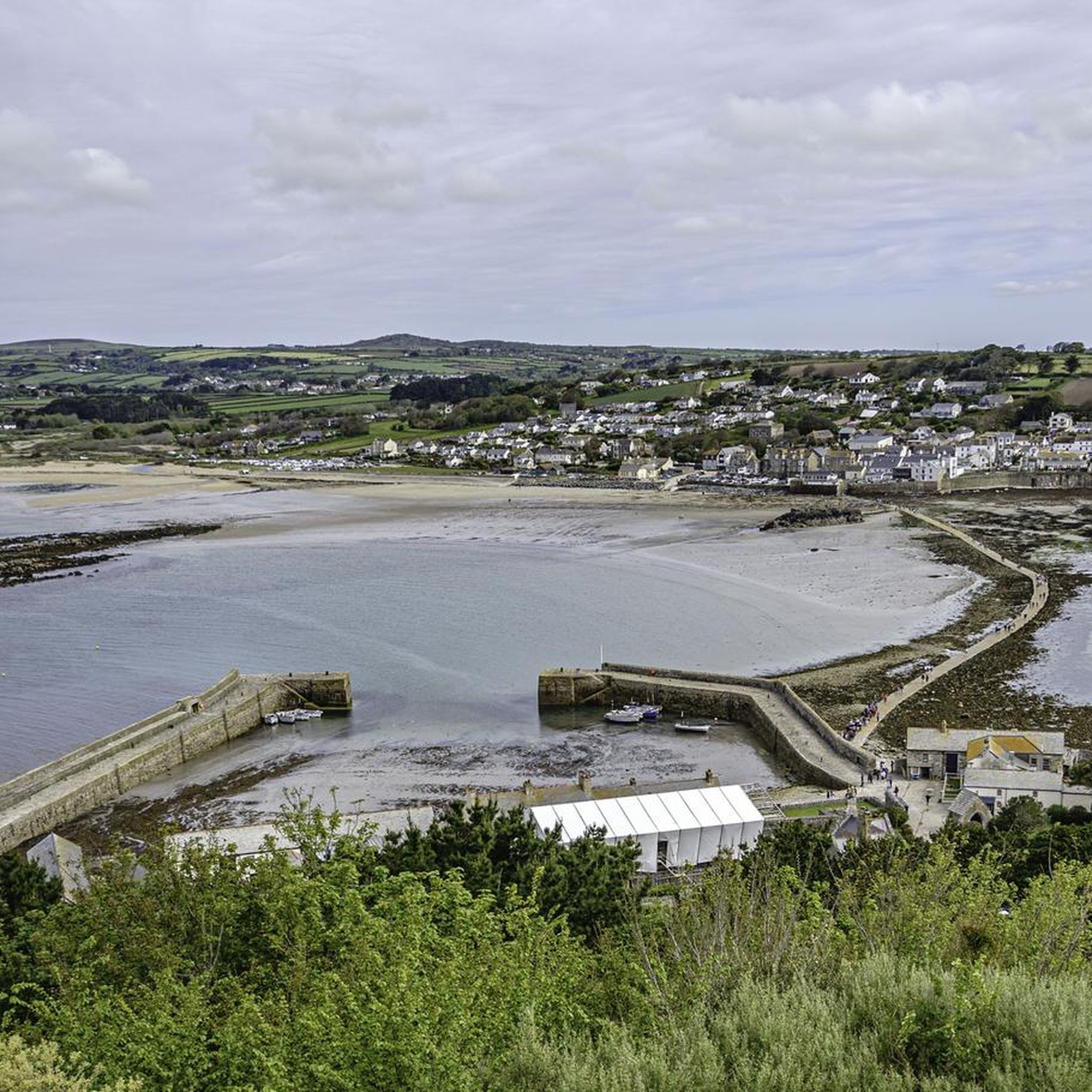
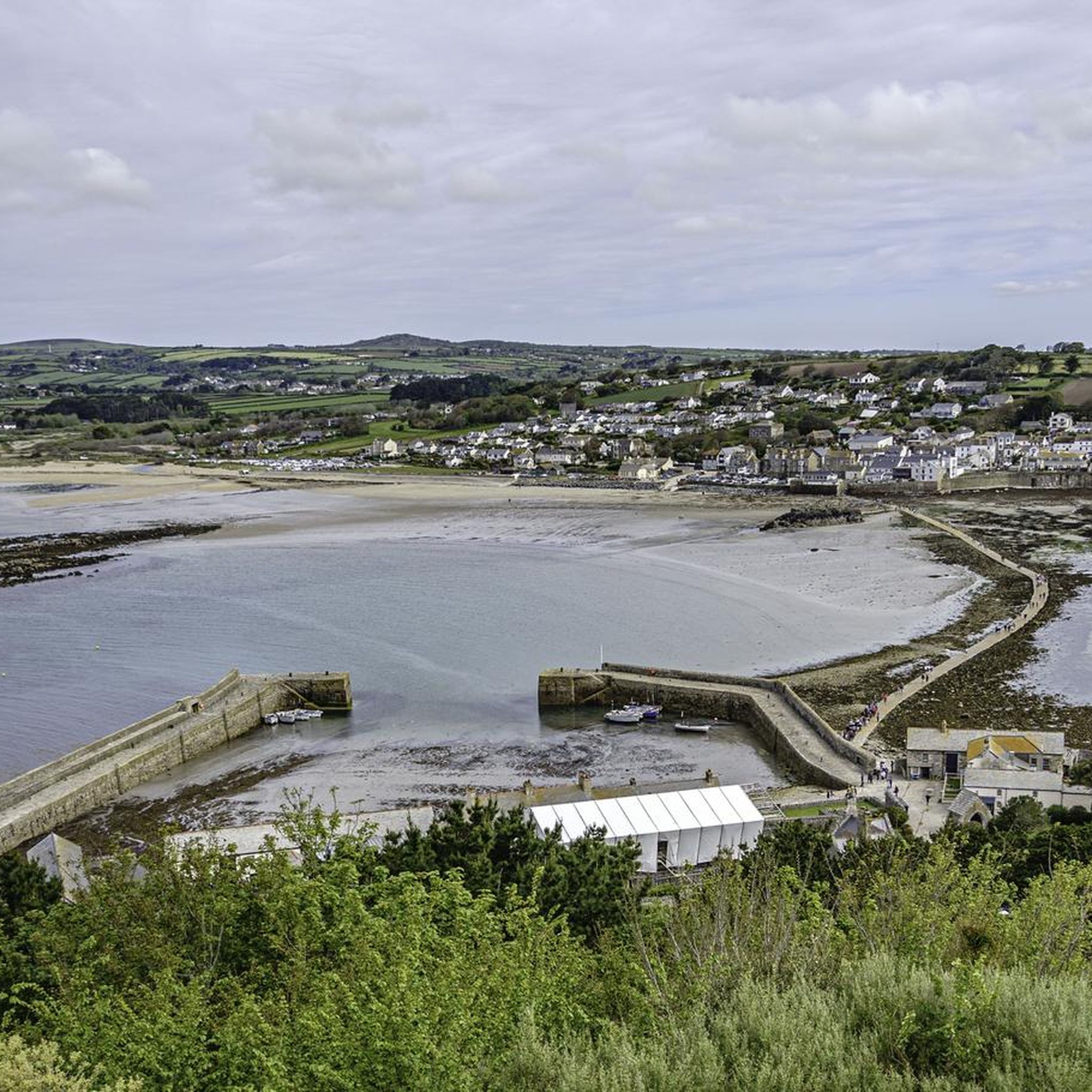
The harbor at St Michael's Mount can only be used at high tide.
7
0
Frequently Asked Questions
What unique natural features define St. Michael's Mount itself?
St. Michael's Mount is a remarkable tidal island, one of 43 unbridged tidal islands in Britain. Its most distinctive feature is the man-made causeway of granite setts that connects it to Marazion, only passable at mid-tide and low water. The island is also known for its unique geological formations, being the uppermost part of a granite intrusion, and its exotic subtropical terraced gardens clinging to the cliff face.
Are there any ancient megalithic natural monuments nearby?
Yes, you can visit Mên-an-Tol, a fascinating megalithic formation estimated to be between 3,000 and 4,000 years old. It's known as the 'hole stone' in Cornish and has several legends associated with it. Another significant ancient monument is Lanyon Quoit, a Neolithic structure consisting of three granite pillars supporting a large capstone.
Where can I find dramatic coastal views near St. Michael's Mount?
For dramatic views of the rugged coastline, head to Cudden Point. This spit of land protrudes far out to sea between Perranuthnoe and Prussia Cove, offering excellent panoramic vistas and serving as an ideal picnic spot, especially at sunset over St. Michael's Mount.
What kind of geological features can be observed around St. Michael's Mount?
The mount itself is a significant geological site, composed of a granite intrusion intermingled with metamorphosed Devonian mudstones. It features a well-developed sheeted greisen vein system and a vein of cassiterite (tin ore) extending out to sea. The rock exposures around the island provide an excellent opportunity to observe various features of Cornwall's geology, making it an exceptional outdoor classroom for geology enthusiasts.
Are there any natural monuments that offer good viewpoints?
Absolutely. Trencrom Hill, though not exceptionally high, offers magnificent views. From its summit, you can see white sand beaches, glistening water, and ships along England's Atlantic coast. It's also the site of an Iron Age hillfort with a jumble of granite rocks that can be scrambled for even better perspectives.
What outdoor activities can I do near these natural monuments?
The area around St. Michael's Mount offers a variety of outdoor activities. You can find numerous routes for hiking, cycling, and mountain biking. For example, there are several hiking routes like the 'Marazion to Praa Sands Beach and back on the South West Coast Path' or easier loops around the St. Michael's Mount Causeway. You can explore more options on the Hiking around St. Michael's Mount guide, Cycling around St. Michael's Mount guide, or MTB Trails around St. Michael's Mount guide.
Is St. Michael's Mount a good place for nature and wildlife observation?
Yes, St. Michael's Mount and the surrounding Mount's Bay are rich in diverse habitats. The island's gardens and woodlands are managed to encourage biodiversity, attracting various bird species, including ravens. Mount's Bay itself is home to marine life such as seals, dolphins, whales, and basking sharks. Nearby Marazion Marsh, an RSPB reserve, is also a crucial stop-off point for migratory birds.
Are there family-friendly natural monuments or activities in the area?
Many of the natural monuments, including the walk across the tidal causeway to St. Michael's Mount, can be enjoyed by families. Lanyon Quoit is also categorized as family-friendly, offering an accessible historical site. The unique experience of the tidal island and the subtropical gardens can be particularly engaging for children.
What is the best time to visit St. Michael's Mount to experience its natural features?
The best time to visit depends on what you want to experience. To walk across the tidal causeway, you'll need to check tide times, as it's only accessible at mid-tide and low water. The subtropical gardens are vibrant during warmer months, typically spring and summer. For wildlife observation, different seasons may offer unique sightings, but marine life can often be spotted throughout the year in Mount's Bay.
What makes the subtropical gardens on St. Michael's Mount unique?
The subtropical terraced gardens are unique because they cling precariously to the steep granite cliff face of the island, some hanging up to 50 meters above the sea. They thrive in Cornwall's mild climate, hosting a diverse array of plants from around the world. Gardeners even use abseiling gear to maintain these vertical gardens, which are managed with organic practices to support biodiversity, including insect and butterfly-friendly plants.
Can I explore the geology of St. Michael's Mount on my own?
Yes, the island's status as a Site of Special Scientific Interest (SSSI) since 1995 highlights its importance for geological study. The rock exposures around the island provide an excellent opportunity to observe various features of Cornwall's geology, including the granite intrusion and mineralisation, making it accessible for self-guided exploration for those interested in earth sciences.
Most popular routes around St. Michael'S Mount
Most popular attractions around St. Michael'S Mount

Get inspired with the komoot mobile app


Explore more
Extend your search for the best caves by checking out these guides of the top ones around St. Michael'S Mount:
