Top 20 Natural Monuments around Whitehill
Best natural monuments around Whitehill include diverse landscapes and rich biodiversity, making it an appealing destination for nature enthusiasts. The area, particularly in Hampshire, UK, is known for its ecologically significant areas like Woolmer Forest, featuring lowland heath, woodlands, and important wildlife habitats. Visitors can explore a range of natural attractions, from expansive forests to tranquil valleys and unique geological formations.
Best natural monuments around Whitehill
- The most popular natural monuments is View of the Devil's Punchbowl, a natural…
Last updated: June 29, 2026
Devil's Punch Bowl Picnic Site
Highlight • Viewpoint
Tip by

Surrey Hills National Landscape Trail
Highlight • Natural Monument
Tip by

Sign up now to discover places like this
Get recommendations on the best single tracks, peaks, & plenty of other exciting outdoor places.
Sign up for free
Top of Highcombe Copse
Highlight • Natural Monument
Tip by

Torberry Hill Iron Age Hillfort
Highlight • Historical Site
Tip by

View of the Devil's Punchbowl
Highlight • Natural Monument
Tip by
Sign up for free to discover even more natural monuments around Whitehill.
Sign up for free
Already have an account?
Start today with a free account
Your next adventure awaits.
Login or Signup
Tips from the Community

Hindhead Commons is a sprawling, 282-hectare nature reserve in Surrey, managed by the National Trust. Designated as a Site of Special Scientific Interest (SSSI) and part of the Surrey Hills National Landscape, it represents one of the region's most ecologically valuable and historically dramatic landscapes. The Landscape: Sitting roughly 250 meters above sea level, it features a rare, cooler microclimate that supports a rich mosaic of ancient woodland, valleys, and vibrant lowland heath. This habitat is a lifeline for threatened wildlife, including Exmoor ponies, adders, and rare ground-nesting birds like the nightjar. The Devil's Punch Bowl: This massive, spring-eroded sandstone amphitheater dominates the eastern side of the commons, offering sweeping views that stretch all the way to the London skyline on clear days. The Great Transformation: For decades, Hindhead Commons was physically severed in two by the roar of the old A3 highway. Following the construction of the Hindhead Tunnel directly beneath the common in 2011, the old road surface was completely removed, allowing nature to heal and creating peaceful, car-free trails for walkers and cyclists.
0
0
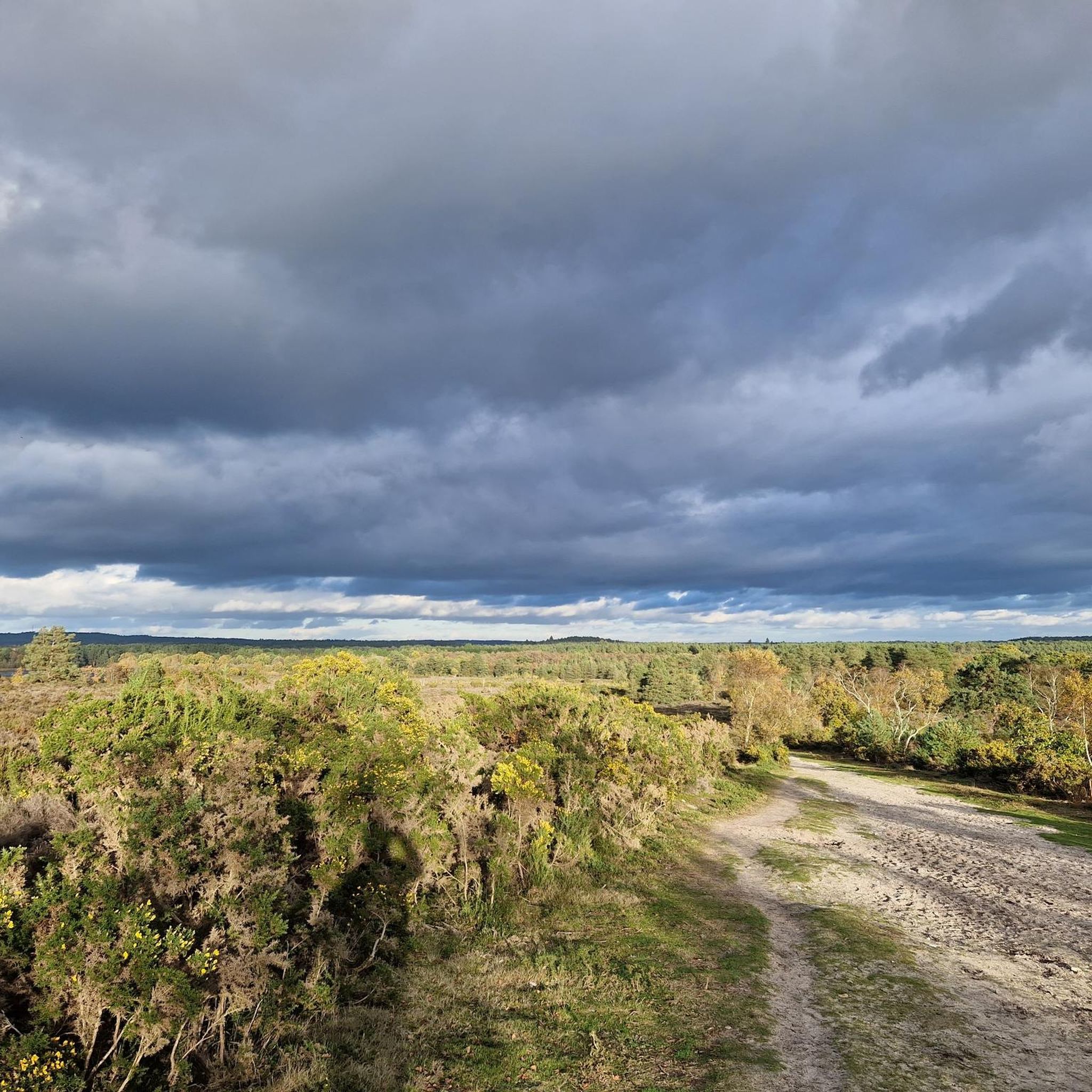
At the top of Highcombe Copse, along Highcombe Edge, the ancient woodland gives way to a breezy ridge. Here stands the granite Robertson Memorial obelisk, overlooking a sweeping, panoramic view of the Devil’s Punch Bowl. It marks a peaceful resting point before trails descend steeply into the valley.
0
0
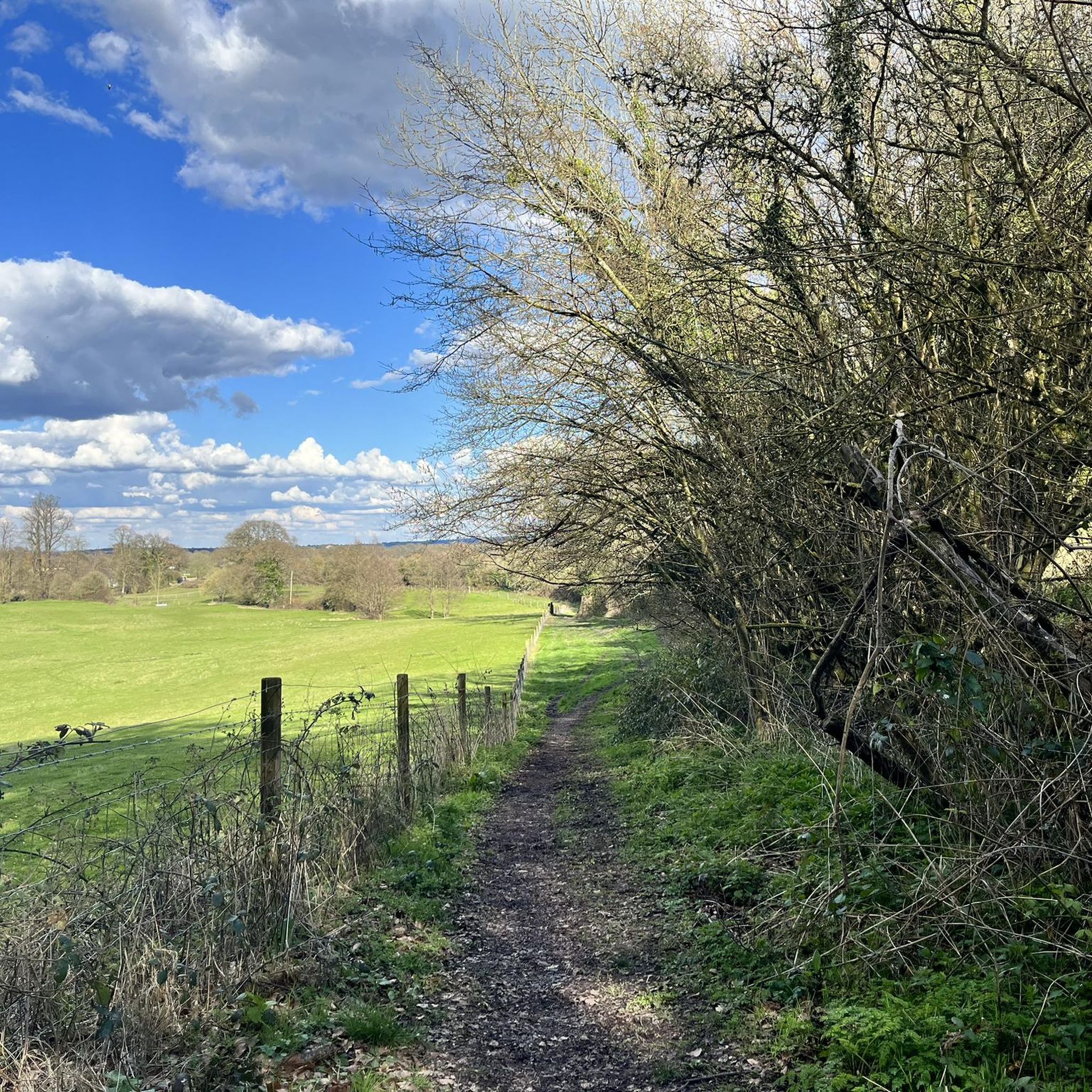
The picnic area at the Devil's Punch Bowl provides an ideal outdoor setting to relax and dine before or after exploring the Surrey Hills. Located right next to the main Devil's Punchbowl Car Park, this family-friendly zone serves as the central hub for visitors preparing to take on the nearby walking trails. The area is beautifully integrated into the surrounding landscape, featuring open, grassy spots sheltered by mature trees.
0
0
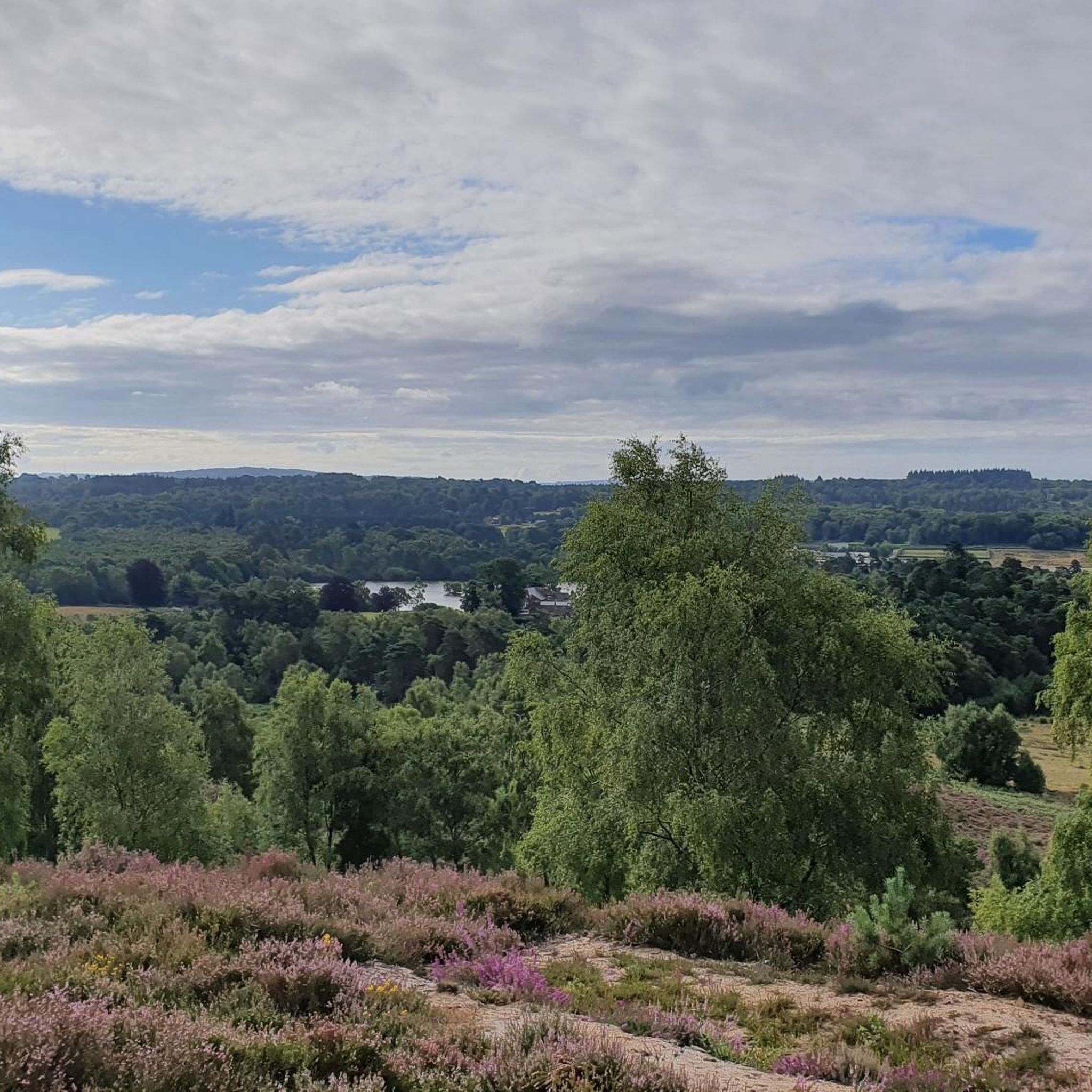
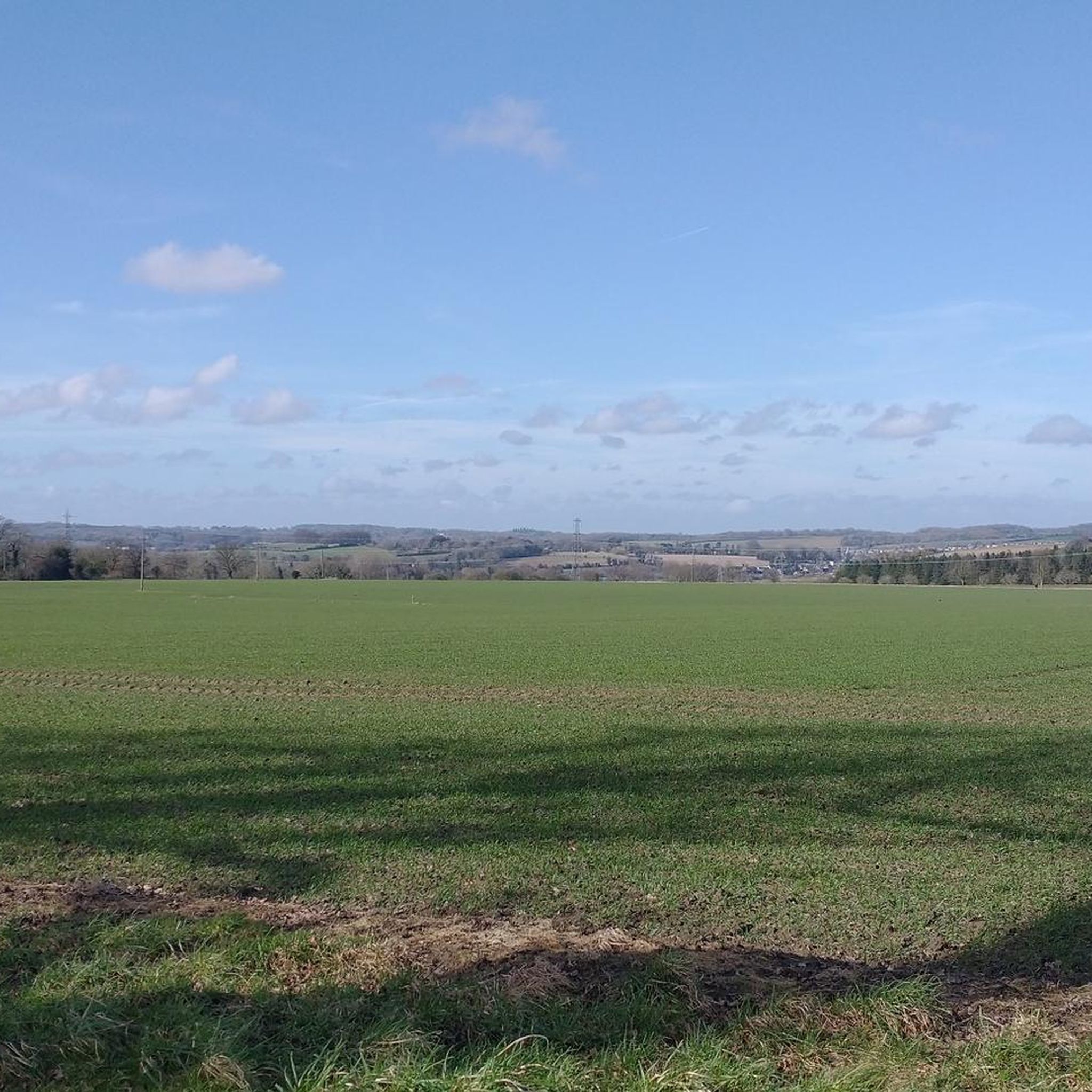
Looking out from the rim of the Devil’s Punch Bowl, you’re treated to a spectacular vista of a massive, natural hollow carved into the Surrey Hills. The sweeping valley below is alive with a colorful patchwork of purple heather, bright gorse, and thick woods, while sharp eyes might catch the London skyline far in the distance on a clear day.
0
0

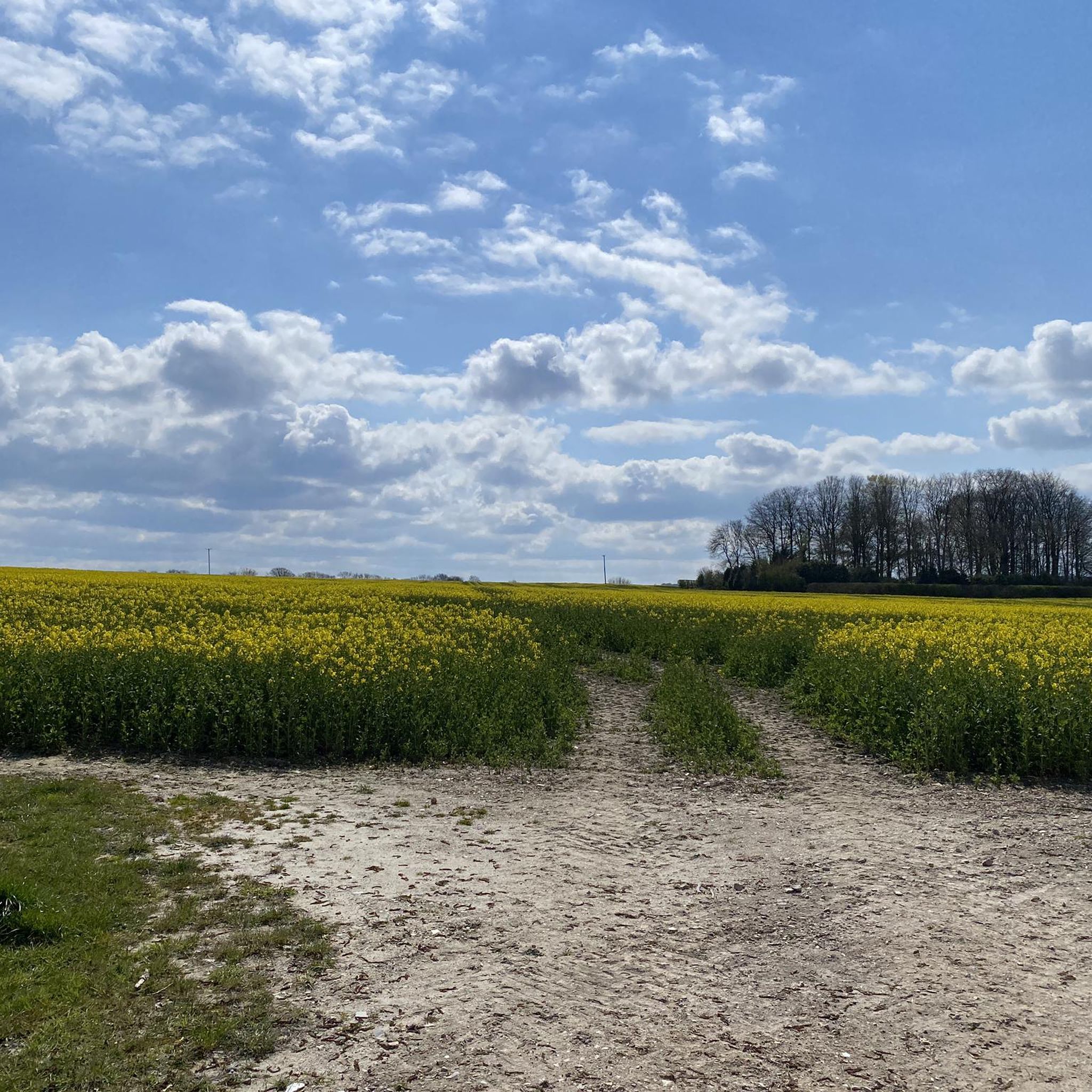
amazing scenery once you get to the national trust park. the. the path follows some good downhill and uphill areas where you are also met with a view of London in the far far distance. truly recommend!
0
0


No trip to the Punchbowl is complete without taking in the view from the dedicated viewpoint just beyond the National Trust cafe. A relief on a large stone on the viewing platform gives more information about what you can see.
1
0
The Devil's Punchbowl has a network of paths criss crossing through it. It's wonderful to visit any time of the year but on a crisp autumn day when the trees glow with a golden hue, you're in for a treat. Legend has it that it was created when the Devil scooped up a rock from here and threw it at Thor. The village to the north, Thursley, does indeed mean 'Thor's place'.
0
0
Frequently Asked Questions
What are some of the most notable natural monuments to visit around Whitehill?
The Whitehill area offers a variety of natural monuments. In Hampshire, you can explore the expansive Woolmer Forest, known for its lowland heath and diverse wildlife. Other significant spots include the View of the Devil's Punchbowl, offering panoramic views, and the Mill Lane Waterfall, a unique feature in a residential area. For a historical natural monument, consider Torberry Hill Iron Age Hillfort.
Are there family-friendly natural monuments around Whitehill?
Yes, several natural monuments in the Whitehill area are suitable for families. The Devil's Punch Bowl Picnic Site is ideal, offering picnic benches, a National Trust cafe, toilets, and activities for children. Hollywater Meadows provides accessible paths and natural play areas, while the Deadwater Valley Local Nature Reserve offers trails and opportunities for pond dipping.
What kind of wildlife can I expect to see at Whitehill's natural monuments?
Woolmer Forest is particularly rich in wildlife, being the only place in England known to support all twelve native species of reptiles and amphibians, including rare sand lizards and smooth snakes. It's also a vital habitat for bird species like the European nightjar, wood lark, and Dartford warbler. Deadwater Valley Local Nature Reserve also hosts many species, some rare and endangered, within its diverse habitats.
What outdoor activities can I do near these natural monuments?
The Whitehill area is excellent for outdoor activities. You can find numerous running trails, such as the 'Woolmer Range Perimeter Loop' or 'Woolmer Forest loop from Bordon'. For cycling, options range from easy routes like the 'Pump Track – Wooden Arch loop' to more challenging ones like the 'Devil's Punch Bowl Bike Trail'. You can explore more options on the running trails guide or the cycling guide for Whitehill.
Are there historical natural monuments in the Whitehill area?
Yes, the Torberry Hill Iron Age Hillfort is a significant historical natural monument. This Scheduled Ancient Monument features a pear-shaped layout with a rampart and ditch, and its interior contains several Iron Age storage pits. It also offers views from its 156-meter summit.
Where can I find parking when visiting natural monuments near Whitehill?
For the Devil's Punch Bowl area, there is a pay car park owned by the National Trust at the Devil's Punch Bowl Picnic Site. You will need the PaybyPhone app to pay. Other natural areas like Woolmer Forest and Deadwater Valley Local Nature Reserve often have smaller, informal parking areas nearby, but it's advisable to check local signage.
What makes Woolmer Forest a significant natural monument?
Woolmer Forest is an ecologically significant area, designated as a Site of Special Scientific Interest (SSSI), Special Area of Conservation (SAC), and Special Protection Area (SPA). It's renowned for its lowland heath habitat, diverse flora including heather and sphagnum moss, and its importance as a habitat for rare reptiles, amphibians, and bird species. It also features water bodies like Cranmer Pond and Woolmer Pond.
Are there accessible natural monuments for visitors with mobility considerations?
Bordon Inclosure and Hollywater Meadows have undergone improvements to enhance accessibility. Bordon Inclosure features new footpaths and a boardwalk along the River Wey, while Hollywater Meadows offers accessible paths designed for community use. These areas provide opportunities to enjoy nature with easier access.
What is the best time to visit the natural monuments around Whitehill?
The best time to visit depends on your interests. Summer offers vibrant flora like wild foxgloves and ferns, particularly around Byres Hill in East Lothian, and is excellent for wildlife observation in Woolmer Forest. Autumn provides beautiful foliage, especially at the Top of Highcombe Copse. Spring is also lovely for new growth and birdwatching. Winter can offer tranquil walks, though some paths might be muddy.
Are there cafes or facilities near the natural monuments?
Yes, the Devil's Punch Bowl Picnic Site has a National Trust cafe and toilets, along with a shop. This is a convenient spot for refreshments and facilities while exploring the Devil's Punch Bowl area.
What can I expect to see at Deadwater Valley Local Nature Reserve?
Deadwater Valley Local Nature Reserve offers a wild and atmospheric experience. It follows the River Deadwater and encompasses a pond, meadows, wet and dry heathland, alder carr, and both broadleaved and coniferous woodland. It's an important wildlife corridor, providing a rich diversity of habitats within a relatively small area, perfect for trails and wildlife spotting.
Are there natural monuments outside of Hampshire in the Whitehill area?
Yes, in East Lothian, Scotland, Byres Hill is associated with the name Whitehill. While it features the man-made Hopetoun Monument, the natural monument aspect is the hill itself, offering breathtaking 360-degree panoramic views across the Firth of Forth, Edinburgh, the Pentland Hills, and the Lammermuir Hills on a clear day.
Most popular routes around Whitehill
Most popular attractions around Whitehill

Get inspired with the komoot mobile app


Explore more
Extend your search for the best caves by checking out these guides of the top ones around Whitehill:
