Top 13 Natural Monuments around Lambourne
Best natural monuments around Lambourne are situated within the North Wessex Downs Area of Outstanding Natural Beauty. This region features a landscape defined by its underlying Upper Chalk geology, which influences local hydrology and equestrian heritage. The area offers insights into ancient history through its prehistoric sites and provides expansive, open landscapes for exploration.
Best natural monuments around Lambourne
- The most popular natural monuments is Hollow Pond, a trail that was built in the 18th century as a reservoir…
Last updated: June 15, 2026
Hollow Pond
Highlight • Trail
Tip by

Grimston's Oak (The Monarch of the Forest)
Highlight • Natural Monument
Tip by

Sign up now to discover places like this
Get recommendations on the best single tracks, peaks, & plenty of other exciting outdoor places.
Sign up for free
The Deer Sanctuary, Epping Forest
Highlight • Forest
Tip by
Epping Forest
Highlight • Viewpoint
Tip by
Ambresbury Banks — Iron Age hillfort
Highlight • Forest
Tip by

Sign up for free to discover even more natural monuments around Lambourne.
Sign up for free
Already have an account?
Start today with a free account
Your next adventure awaits.
Login or Signup
Other adventures around Lambourne

Tips from the Community

Added to the collection: komoot.com/de-de/collection/3600632/-naturdenkmaeler-besondere-baeume-und-weitere-schaetze-der-natur
0
0

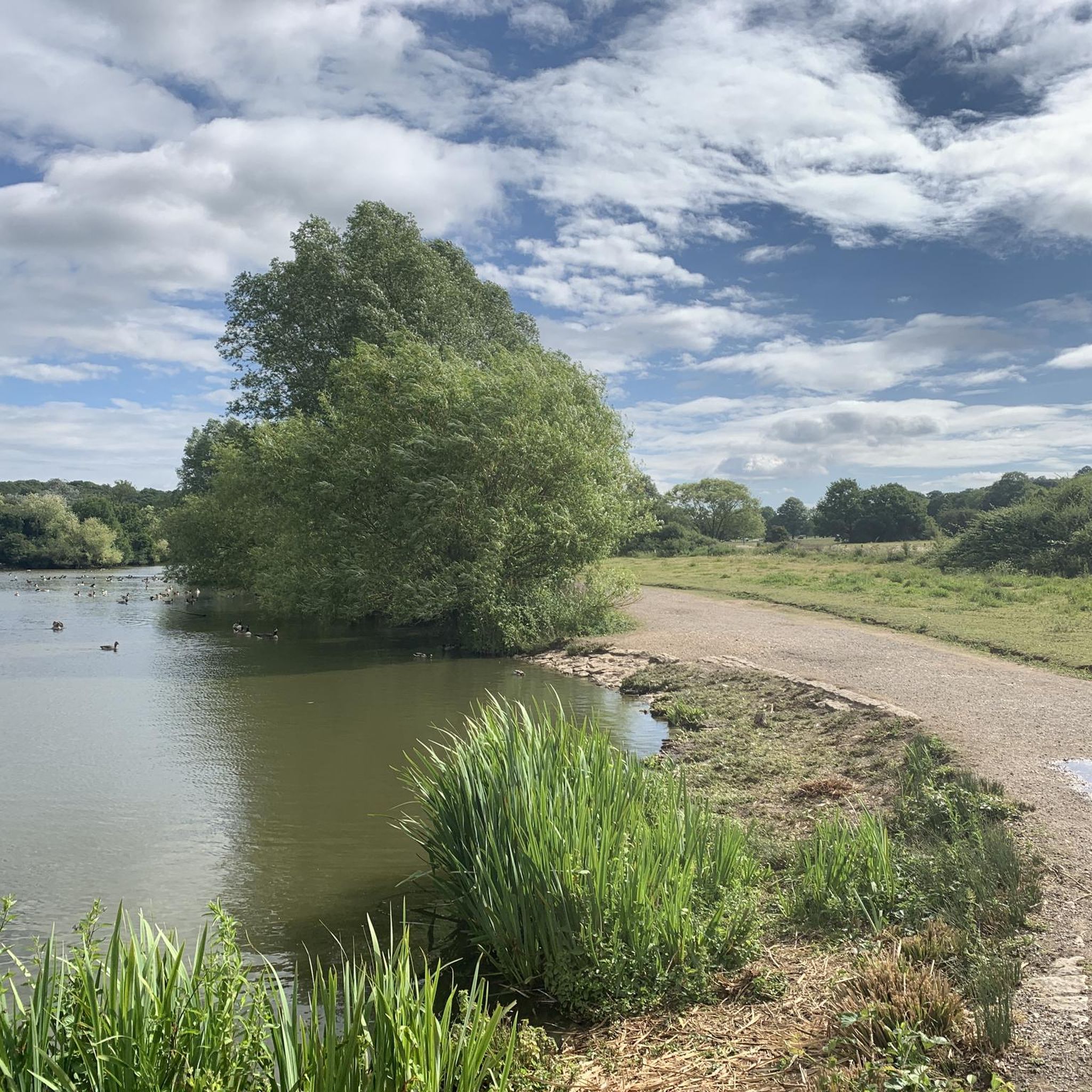
Leyton Flats and Hollow Pond are great places to explore by bike. On warm summer days, it's an ideal place to bring a picnic and watch the local wildlife. There's even the option of hiring a rowing boat and getting out onto the lake.
0
0

This deer sanctuary is home to a population of fallow deer and is located on the edge of Epping Forest. The sanctuary is part of Epping Forest's long history of deer conservation, dating back to medieval times when the forest was a royal hunting ground.
1
0
Hollow Pond is on the southern tip of Epping Forest in London. It was built in the 18th century as a reservoir for water supply. Today it's a lovely recreational area ideal for walking, picnics and activities. It's easily accessible by transport and a real escape into nature right in the heart of the city.
2
0
Epping Forest, straddling the border between Greater London and Essex, is renowned as one of England's most notable forests. Its ancient woodland harbours approximately 55,000 species of ancient trees, representing some of Europe's oldest living plants. Historically, it served as a hunting forest, reserved for the exclusive pursuit of the royal family and their guests. Today, it stands as a biodiversity hotspot, boasting a diverse array of wildlife including deer, foxes, rabbits, and badgers. Notable landmarks within its expanse include Queen Elizabeth's Hunting Lodge, Chingford Plain, and the village of High Beach.
2
0

The tree is estimated to be about 350 years old
0
0
It's often possible to spot the Deer Sanctuary's fallow deer inhabitants from the trails in this part of Epping Forest. Once a Royal hunting forest, Epping has had a long association with deer. The increase in road traffic through the forest in the 1950s meant deer were often getting hit by cars. The sanctuary was set up in 1959 to protect them.
0
0
An Iron Age hillfort once stood here, in the northern reaches of Epping Forest. The earthworks are still clearly visible and would have protected an area of 11 acres (4.5 hectares). The legend goes that Boudica's last stand against the Romans occurred here, though there's no actual evidence that this is the case.
0
0
Frequently Asked Questions
What unique natural features can I explore around Lambourn?
The region is defined by its underlying Upper Chalk geology, forming the rolling Lambourn Downs which offer stunning panoramic views. A significant natural feature is the River Lambourn, a rare chalk stream recognized as a Special Area of Conservation (SAC) for its unique ecological importance. You can appreciate how these formations influence the local landscape and hydrology.
Are there any ancient historical sites among the natural monuments near Lambourn?
Yes, the area is rich in ancient history. You can visit the Seven Barrows, a prehistoric cemetery with over thirty Bronze Age burial mounds and a much older Long Barrow. Approximately 15 minutes from Lambourn, you'll find the iconic Uffington White Horse, a 3,000-year-old hill figure, along with Dragon Hill and Wayland's Smithy, a Neolithic chambered long barrow. Closer to Lambourn, Ambresbury Banks is an Iron Age hillfort with clearly visible earthworks.
Which natural monuments around Lambourn are suitable for families?
Several natural monuments are family-friendly. Hollow Pond is a lovely recreational area ideal for walking, picnics, and even hiring a rowing boat. Grimston's Oak, also known as 'The Monarch of the Forest,' is an impressive 350-year-old tree that sparks imagination. For wildlife spotting, The Deer Sanctuary, Epping Forest, offers a chance to see fallow deer from the trails.
What kind of wildlife can I expect to see in the natural monuments around Lambourn?
The River Lambourn, as a chalk stream, supports unique aquatic ecosystems. At The Deer Sanctuary, Epping Forest, you have a good chance of spotting fallow deer. Additionally, Gernon Bushes Nature Reserve is an ancient woodland home to many rare marsh plants and flowers, including marsh fern, lady fern, and marsh marigold.
Are there easy walking trails near the natural monuments in Lambourn?
Yes, there are several easy walking trails. For instance, the area around Hollow Pond offers pleasant, accessible paths. You can find more easy hiking options in the region, such as the 'Ape's Grove – Soapley's Wood loop from Lambourne' or the 'Hainault Country Park and Chigwell Row Wood loop'. For a comprehensive list of easy routes, you can explore the Easy hikes around Lambourne guide.
What outdoor activities can I do near these natural monuments?
Beyond exploring the monuments themselves, the area offers various outdoor activities. You can find numerous running trails, such as the 'Fairlop Waters Lake – Gardens of Peace loop'. For mountain biking, options like the 'Epping Forest Loop from Loughton' are available. For detailed routes and guides, check out the Running Trails around Lambourne and MTB Trails around Lambourne guides.
What is the best time of year to visit the natural monuments around Lambourn?
The rolling chalk downs and ancient sites like the Uffington White Horse are beautiful year-round, offering different experiences with each season. Spring and summer are ideal for enjoying the lush greenery and longer daylight hours for walking. Autumn brings vibrant colors to the woodlands, while winter offers crisp air and a sense of solitude, especially on the expansive downs.
Are there any natural monuments that offer good viewpoints?
The Lambourn Downs themselves provide stunning panoramic views across the landscape due to their elevated position and open nature. The Uffington White Horse area also offers spectacular vistas from the surrounding hills, allowing you to appreciate the iconic hill figure from a distance.
Can I find ancient woodlands or forests among the natural monuments?
Yes, the region features significant ancient woodlands. Gernon Bushes Nature Reserve is a remnant of ancient woodland known for its rare marsh plants. Epping Forest, which hosts sites like Grimston's Oak, The Deer Sanctuary, and Ambresbury Banks, is a vast ancient woodland with a rich history and diverse ecology.
What do visitors enjoy most about the natural monuments in the Lambourn area?
Visitors frequently appreciate the blend of natural beauty and historical significance. The tranquil beauty of the River Lambourn, the expansive views from the Lambourn Downs, and the profound connection to ancient history at sites like Seven Barrows and the Uffington White Horse are often highlighted. The opportunity for peaceful walks and wildlife spotting, particularly at The Deer Sanctuary, also receives positive feedback.
Is there public transport available to reach natural monuments near Lambourn?
While some natural monuments, particularly those closer to larger towns or villages, might be accessible by local bus services, many of the more remote sites like the Seven Barrows or parts of the Lambourn Downs are best reached by car. It's advisable to check local bus routes and schedules for specific destinations in advance. For detailed information on public transport in the area, you might consult local council websites or transport planners.
Are there any permits required to visit the natural monuments or walk the trails?
Generally, no specific permits are required for visiting the natural monuments or walking on public footpaths and bridleways in the Lambourn area. Most natural monuments and trails are freely accessible. However, always respect private land and follow any posted signs regarding access or conservation efforts, especially in nature reserves like Gernon Bushes Nature Reserve.
Most popular routes around Lambourne
Most popular attractions around Lambourne

Get inspired with the komoot mobile app


Explore more
Extend your search for the best caves by checking out these guides of the top ones around Lambourne:
