Top 5 Natural Monuments around Marcham
Best natural monuments around Marcham include a range of unique ecological sites and historical features. This Oxfordshire village is notable for its rare inland salt spring and diverse fen habitats along Sandford Brook. These areas provide insight into specific ecosystems and local biodiversity. The region offers opportunities to explore natural phenomena and conservation efforts.
Best natural monuments around Marcham
- The most popular natural monuments is J. R. R. Tolkien Memorial Bench and Trees, a natural monument that commemorates the…
Last updated: October 16, 2026
J. R. R. Tolkien Memorial Bench and Trees
Highlight • Natural Monument
Tip by

Jarn's Mound and Wild Garden
Highlight • Natural Monument
Tip by
Sign up now to discover places like this
Get recommendations on the best single tracks, peaks, & plenty of other exciting outdoor places.
Rhododendron in Bagley Woods
Highlight • Natural Monument
Tip by

Devil's Quoits Stone Circle
Highlight • Natural Monument
Tip by
Ancient Yew at All Saints' Church, Didcot
Highlight • Religious Site
Tip by
Sign up for free to discover even more natural monuments around Marcham.
Already have an account?
Start today with a free account
Your next adventure awaits.

Tips from the Community

In 2012, Lisa Kuppler (Frankfurter Allgemeine Sonntagszeitung) paid tribute to the writer J.R.R. TOLKIEN (1892 to 1973), who invented a fictional world called Middle Earth inhabited by 'hobbits', with the words: "It is this complex creation of an entire world that makes 'The Lord of the Rings' the original text of the fantasy genre." Two decades earlier - on the occasion of his 100th birthday - a bench and two trees were dedicated to him here, in Oxford's university park. Tolkien's most popular work to date includes the volumes: "The Fellowship of the Ring" (Volume 1); "The Two Towers" (Volume 2); "The Return of the King" (Volume 3). Many people may not have read his books, but they know the film version of this great myth.
0
0

The rugged yew tree is a survivor, having been badly damaged in several recent arson attacks. The yew likely predates the All Saints church built in the 12th century. There is evidence of Roman and Saxon settlement in this area, and so it is likely a wooden church once existed on the present site. Baxter wrote about the yew in his 1992 book 'The Eternal Yew' and called it 'a survivor whatever the circumstances - a typical eternal yew'.
3
0
In 1992, to commemorate the centenary of Tolkien’s birth, the Tolkien Society and the Mythopoeic Society organised held a special collection for the installation of a memorial bench and planting of two trees in University Parks. The trees represent Laurelin (a false acacia) and Telperion (a silver maple) from The Silmarillion.
6
0
Neolithic stone circle from around 2900-2600BC - a remarkable site to visit.
6
0
Neolithic stone circle from around 2900-2600BC - a remarkable site to visit. You can learn more here: https://www.youtube.com/watch?v=npAxEvruu9M
5
0
Jarn's Mound and Wild Garden was constructed by British archaeologist Sir Arthur Evans (1851-1941) who is best known for his excavation and reconstruction of the Bronze Age palace of Knossos on Crete. He lived on Boars Hill from 1894 until his death and was passionate about protecting the area and maintaining its beauty for others to enjoy. He constructed an artificial mound which is 15 metres high to bring out the magnificent views over to the city of Oxford in one direction, and the Vale of the White Horse in the other.
4
0
The Devil's Quoits is a reconstructed stone circle henge, originally dating from the late Neolithic period, probably around 2900-2600BC. The large site with a 115m diameter earth bank, internal 2m deep ditch and 75m diameter stone circle is likely to have been of great significance and will have been visible from the Ridgeway, Britain's oldest road. The stone circle consisted of 28 conglomerate stones, with one additional stone standing slightly offset to the south. It is a truly remarkable site; transporting you back to a time where people travelled along the Windrush Valley from its headwaters to its confluence with the Thames at Devil's Quoits and further downstream to the Big Rings at Dorchester on the Thames. Many hundreds of people would have gathered within the site, observing from the banks and participating in rituals in the centre.
3
0

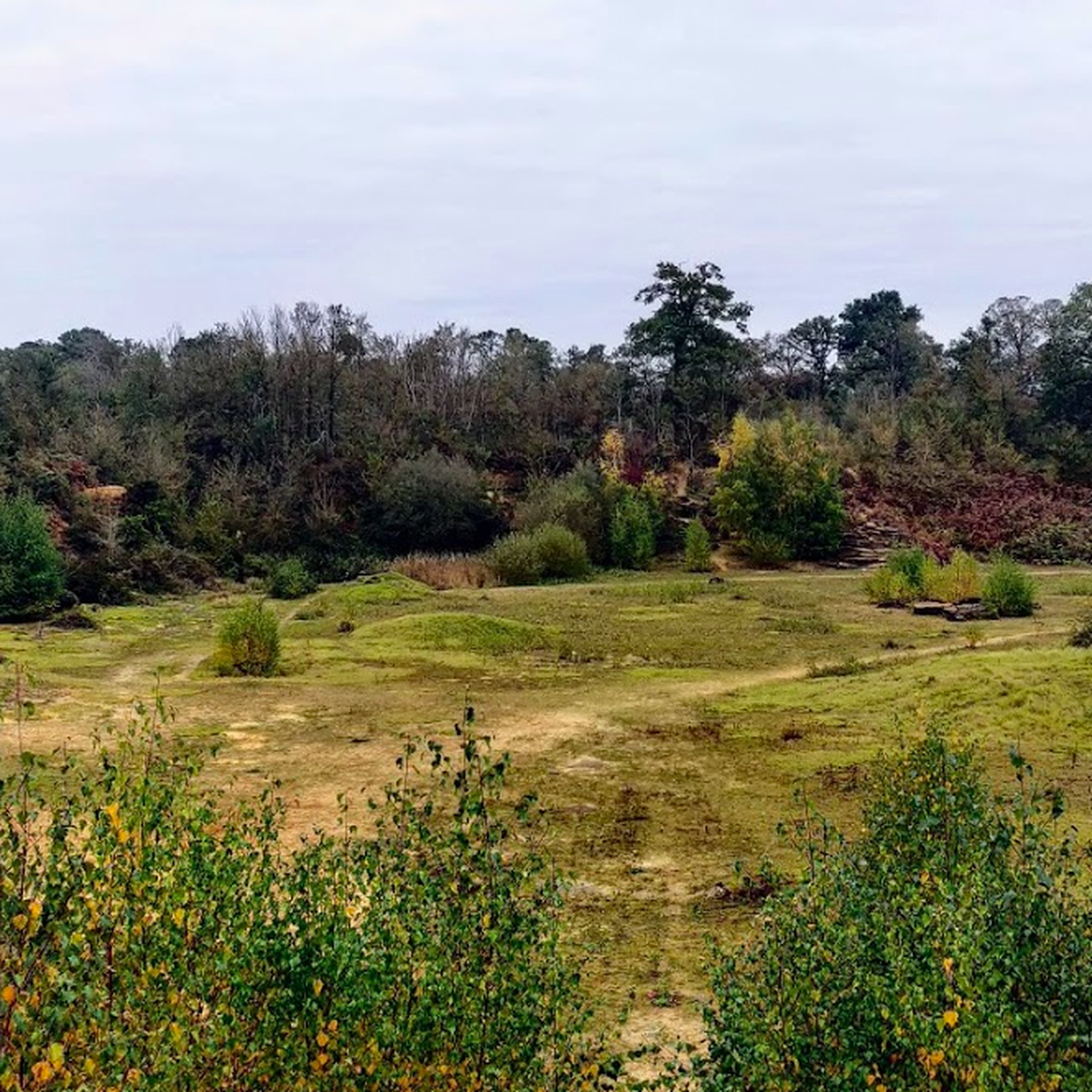
This beautiful Blossom tree can be found in the middle of Bagley Woods, an excellent stop off on your walk or ride.
1
0
Frequently Asked Questions
What unique natural features can I explore around Marcham?
Marcham is notable for its rare inland salt spring, which supports unique plant life like wild celery, typically found only along coastlines. Additionally, the area boasts diverse fen habitats along Sandford Brook, including Barrow Farm Fen SSSI and Dry Sandford Pit, which are crucial biodiversity hotspots.
Are there hiking trails near the natural monuments around Marcham?
Yes, there are several hiking opportunities. For example, you can explore routes like The Merry Miller Pub loop from Dry Sandford Pit or the Bluebell Woodland Trails – Hitchcopse Pit Nature Reserve loop. These trails offer easy to moderate walks through the local natural landscapes.
What kind of wildlife can I expect to see in the fen habitats near Marcham?
The fen habitats, such as those around Sandford Brook, are rich in biodiversity. You might spot rare wildflowers like marsh pennywort, parsley water-dropwort, bladderwort, and fen pondweed. These areas are also home to uncommon species such as Desmoulin's whorl snail, water shrews, and nesting sedge warblers.
Where can I find the best panoramic views of the area?
For magnificent views, visit Jarn's Mound and Wild Garden. This artificial mound, 15 meters high, was specifically constructed to offer sweeping vistas over Oxford and the Vale of the White Horse.
Are there family-friendly natural monuments suitable for children?
Absolutely. Several sites are suitable for families, including J. R. R. Tolkien Memorial Bench and Trees, which commemorates the author with two trees representing Laurelin and Telperion. Another family-friendly option is Devil's Quoits Stone Circle, a reconstructed Neolithic site that offers a glimpse into ancient history.
What is the best time of year to visit the natural monuments around Marcham?
The fen habitats and woodlands are particularly vibrant during spring and summer when wildflowers are in bloom and migratory birds are active. However, the unique salt spring and historical sites can be visited year-round, offering different perspectives with each season.
Can I bring my dog to the natural monuments around Marcham?
Many natural areas and trails around Marcham are dog-friendly, especially if dogs are kept on a lead to protect local wildlife and livestock. Specific rules may apply in nature reserves like Dry Sandford Pit, so it's always best to check local signage.
Are there opportunities for cycling near these natural monuments?
Yes, the area offers various cycling routes. You can find options for gravel biking and mountain biking, with trails ranging from easy to moderate difficulty. These routes often pass through scenic countryside and near some of the natural sites.
What historical natural monuments can I visit?
Beyond the Neolithic Devil's Quoits Stone Circle, you can also visit the Ancient Yew at All Saints' Church, Didcot. This rugged yew tree likely predates the 12th-century church and has survived for centuries, offering a living link to the region's past.
Are there places to eat or stay near the natural monuments in Marcham?
Marcham village and the surrounding towns offer various amenities, including pubs and cafes where you can refresh yourself. For accommodation, there are options ranging from guesthouses to hotels in the wider Oxfordshire area, providing convenient bases for exploring the natural monuments.
What unique flora can be found at Marcham's natural sites?
The Marcham Salt Spring is the only known location in Oxfordshire where wild celery (Apium graveolens) thrives due to the rare saline conditions. The fen habitats also host a variety of rare wildflowers, including marsh pennywort, parsley water-dropwort, bladderwort, and fen pondweed, alongside uncommon rushes and sedges.
Is public transport available to reach natural monuments near Marcham?
While Marcham is a village, local bus services connect it to larger towns like Abingdon and Oxford. From these hubs, you may find further connections or need to walk or cycle to reach specific natural monument sites. Checking local bus schedules is recommended for planning your visit.
What is the significance of the fen habitats in the Marcham area?
The fen habitats along Sandford Brook, including sites like Dry Sandford Pit and Lashford Lane Fen, are considered a national priority for nature conservation. They are celebrated as the most diverse wildlife areas in Oxfordshire, supporting rich wetland vegetation and rare species due to their deep peaty soils fed by the brook and springs.
Most popular routes around Marcham
Most popular attractions around Marcham

Get inspired with the komoot mobile app


Explore more
Extend your search for the best caves by checking out these guides of the top ones around Marcham:
