Top 7 Natural Monuments around Sarpsborg
Best natural monuments around Sarpsborg include a variety of sites showcasing the region's powerful natural phenomena and ancient history. Located on the Glomma River, Sarpsborg features significant natural landmarks alongside archaeological treasures. The area offers a blend of impressive waterfalls, serene parklands, and ancient rock carvings. These locations provide insights into both the natural landscape and early human interaction with the environment.
Best natural monuments around Sarpsborg
- The most popular natural monuments is Sarpsfossen Waterfall, a waterfall known as…
Last updated: June 28, 2026
Hunn Stone Circles
Highlight • Historical Site
no.wikipedia.org/wiki/Hunnfeltene
Translated by Google •
Tip by

Begby Rock Carvings
Highlight • Historical Site
Translated by Google •
Tip by

Sign up now to discover places like this
Get recommendations on the best single tracks, peaks, & plenty of other exciting outdoor places.
Sign up for free
Solberg Petroglyphs
Highlight • Historical Site
Translated by Google •
Tip by

Kråkerøy Church – Glufsa Hike
Highlight • Trail
Showing Translation
Tip by

Sarpsfossen Waterfall
Highlight (Segment) • Waterfall
Translated by Google •
Tip by

Sign up for free to discover even more natural monuments around Sarpsborg.
Sign up for free
Already have an account?
Start today with a free account
Your next adventure awaits.
Login or Signup
Other adventures around Sarpsborg

Tips from the Community

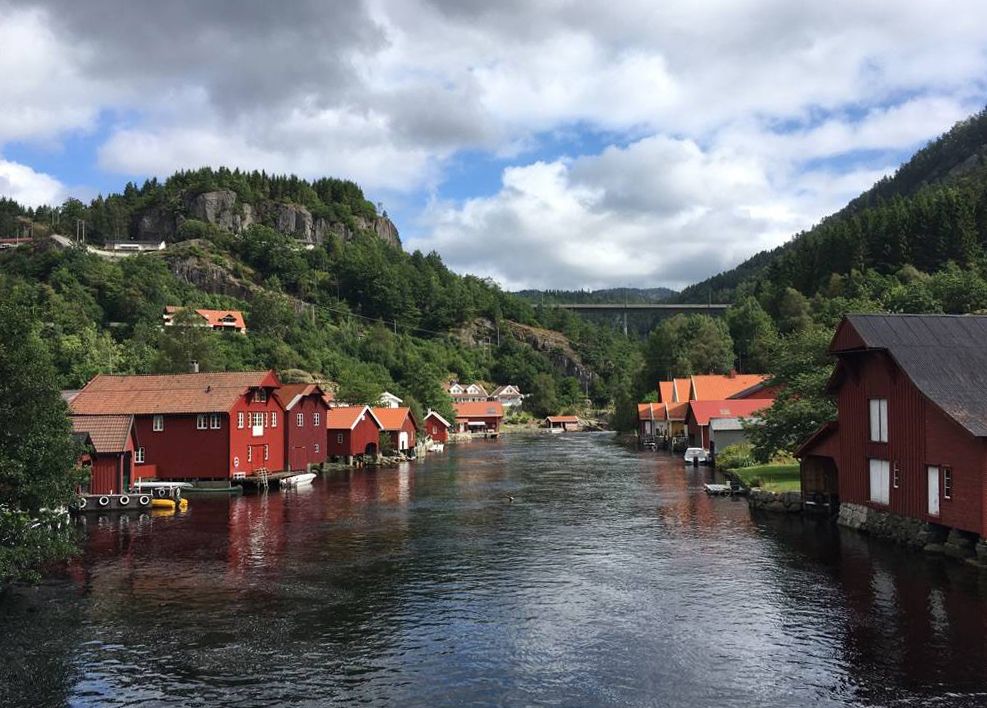
Here you can experience the wild coastal landscape of Eastern Norway, far from any hustle and bustle. The loop starts at the distinctive Kråkerøy church and leads over solid wooden bridges and smoothly polished Svaberg rocks out to the outermost islets of Glufsa. A name that is no coincidence: „Glufs* means «gust of wind» in Old Norse, and that is exactly what you feel here when the southwest wind meets the currents of the Oslo Fjord. Along the way, it is worth taking a look into the rock pools and gorges. An impressive Jettegryte awaits in a rocky bay. A giant's kettlehole formed by water as a silent testament to the forces of nature. The tour is accessible all year round and, thanks to its moderate altitude profile, is also suitable for families.
0
0

Other sites of this type in Europe do not necessarily refer to graves but rather to cult sites where ritual gatherings took place. Sacrifices were often made for these purposes, which sometimes explains the finds of charcoal and bone. In this respect, the title of the highlight should rather be called "Stone Circles in Hunn". It is also sometimes not clear whether - if they are human bones - they were not later buried here. The cairns served as graves, of which there are two here, which are not even mentioned in the description.
0
0
Rock carvings that are difficult to reach, since you can only can park in the parking lot and has to climb over guard rails to get to the other side of the street. Still worth it.
0
0
Easy to walk circular route, partly marked.
1
0
More exposed rock carvings that were no longer painted but are clearly visible.
0
0

West of the E6, at the exit of the marked "Oldtidsveien", is Solbergfeltet with two outcrop fields with scratches. The field near the road has about 60 different images, including ships, people, and bowls. The second field is special in that it contains, among other things, a tree motif that is rare in Norway. According to the Norwegian archaeologist Erling Johansen (1919–2000), the Solberg field may have been a Bronze Age cult center.
0
0

The Hunn stone circle field is one of the largest in Norway. There are nine stone circles in total. Archaeological investigations have proven that these are tombs that have often been found within the circles. Nothing was found in the graves except pieces of charcoal and burned bones.
0
1

A short stop at the roadside leads to an extensive burial ground from the Bronze Age. https://no.wikipedia.org/wiki/Hunnfeltene
1
2
Frequently Asked Questions
What natural features can I expect to see among Sarpsborg's natural monuments?
Sarpsborg's natural monuments showcase a blend of powerful natural phenomena and serene landscapes. You can witness the immense power of Sarpsfossen Waterfall, one of Europe's most powerful waterfalls, with its impressive flow on the Glomma River. The region also features riverine ecosystems like the Ågårdselva Natural Reserve, and coastal environments at Sandvika Badeplass, Høysand, which offers a sandy beach bordered by granite boulders.
What historical natural monuments can I visit in Sarpsborg?
Sarpsborg is rich in historical natural monuments, particularly ancient rock carvings and stone circles. You can explore the Hunn Stone Circles, an extensive Bronze Age burial ground with nine stone circles. Another significant site is the Solberg Petroglyphs, featuring over 60 different images including ships and people. Don't miss the Bjørnstad Ship Rock Carving, likely the largest vertical rock carving in the Nordic countries, depicting a 4.4-meter-long ship.
Are there family-friendly natural monuments in Sarpsborg?
Yes, several natural monuments in Sarpsborg are suitable for families. The Hunn Stone Circles, Solberg Petroglyphs, and Bjørnstad Ship Rock Carving are all categorized as family-friendly, offering an engaging way to explore ancient history. Additionally, Kulåsparken provides a vast green space with footpaths, perfect for leisurely family strolls.
When is the best time of year to visit Sarpsborg's natural monuments?
The best time to visit Sarpsborg's natural monuments largely depends on what you wish to experience. Spring and summer offer lush greenery and warmer weather, ideal for exploring rock carvings and enjoying outdoor activities. Sarpsfossen Waterfall is particularly impressive during snowmelt in spring due to its increased water volume. Coastal spots like Sandvika Badeplass are best enjoyed in summer.
What outdoor activities can I do near Sarpsborg's natural monuments?
Sarpsborg offers a variety of outdoor activities near its natural monuments. You can find numerous trails for running, gravel biking, and mountain biking. For example, there are running loops like the Landemyra loop, gravel biking routes such as the Sølvstufossrittet Trail, and MTB trails like the Flytstistur tour via Borredalsdammen. You can explore more options on the Running Trails around Sarpsborg, Gravel biking around Sarpsborg, and MTB Trails around Sarpsborg guide pages.
Are there any natural monuments in Sarpsborg that are particularly easy to access?
Yes, Sarpsfossen Waterfall is very easy to access, located just a short walk from the city center with viewing platforms. Kulåsparken, a large public park, also offers accessible footpaths and green spaces within the city. Many of the rock carving sites, while requiring a short walk, are generally considered easy to reach.
Where can I find ancient rock carvings in Sarpsborg?
Sarpsborg municipality is renowned for its ancient rock carvings. Key sites include the Solberg Petroglyphs, which feature over 60 images, and the impressive Bjørnstad Ship Rock Carving, a large vertical carving depicting a ship. You can also find the Begby Rock Carvings, which offer an easy circular route, though some parts may require careful navigation.
What kind of wildlife might I encounter near Sarpsborg's natural monuments?
While specific wildlife sightings can vary, areas like the Ågårdselva Natural Reserve offer a glimpse into an untouched riverine ecosystem, where you might observe various bird species and aquatic life. Kulåsparken, with its forested areas, also provides a habitat for local flora and fauna, including common birds and small mammals.
Are there any natural monuments in Sarpsborg suitable for swimming or relaxation?
Yes, Sandvika Badeplass at Høysand is an excellent spot for enjoying the coastal natural environment. Located on the Skjebergkilen fjord, it features an alluring sandy beach, granite boulders, and grassy areas, perfect for swimming and relaxation, approximately 15 minutes south of Sarpsborg.
What do visitors enjoy most about the natural monuments in Sarpsborg?
Visitors frequently appreciate the raw power of Sarpsfossen Waterfall, often described as a spectacular natural phenomenon. The ancient rock carvings, such as those at Solberg Petroglyphs and Bjørnstad Ship Rock Carving, are highly valued for their unique connection to prehistoric culture and the distant past. The Hunn Stone Circles are also noted for their historical significance as one of Norway's largest stone circle fields.
Are there any natural monuments that offer a blend of nature and cultural events?
Kulåsparken, a vast public park in the heart of Sarpsborg, offers a significant green space with natural elements like forested areas and footpaths. Beyond its natural beauty, it also hosts cultural events in its outdoor amphitheater, providing a unique blend of nature and local culture.
Most popular attractions around Sarpsborg

Get inspired with the komoot mobile app


Explore more
Extend your search for the best caves by checking out these guides of the top ones around Sarpsborg:
