Top 20 Natural Monuments around Putte
Best natural monuments around Putte include a diverse landscape of heathlands, forests, and waterways. The region features varied ecosystems, such as sand dunes, fens, and polders, providing habitats for diverse flora and fauna. These natural areas offer opportunities for outdoor activities and exploration.
Best natural monuments around Putte
- The most popular natural monuments is Kesselse Heath, a diverse natural area that features a mix of scrub heather, coniferous and deciduous forest, sandy plains, and fens. Sheep grazing helps maintain…
Last updated: June 28, 2026
Kesselse Heath
Highlight • Forest
Translated by Google •
Tip by

Antitank Canal Haacht
Highlight • Structure
Translated by Google •
Tip by

Sign up now to discover places like this
Get recommendations on the best single tracks, peaks, & plenty of other exciting outdoor places.
Sign up for free
Mispeldonk Nature Reserve
Highlight • Natural
Translated by Google •
Tip by

Kruiskensberg Pilgrimage Site
Highlight • Religious Site
Translated by Google •
Tip by

Confluence of the Demer and the Dijle
Highlight • River
Translated by Google •
Tip by

Sign up for free to discover even more natural monuments around Putte.
Sign up for free
Already have an account?
Start today with a free account
Your next adventure awaits.
Login or Signup

Tips from the Community

The Kesselse Heide is a provincial green space covering 79 hectares, 61 of which are open to the public. The initial acquisition took place in 1978, and it has been expanded since then. The entrance is located in Nijlen, at Vaerestraat 4. The space is freely accessible daily from sunrise to sunset. There are two ponds in the area. These old wells not only provide a pleasant change of scenery but are also a boon for the many plants and animals. Since 1996, the Kesselse Heide has been a protected landscape. It is one of the few remaining remnants of the once vast Kempen heathlands. The heath is a living community created in our region by humans. Historical agricultural practices created a landscape that has been preserved through human intervention: grazing by sheep, burning the heath, and sod cutting. Sod cutting is the removal of the topsoil and vegetation. A dug-out sod of plants and their roots is a sod. If heathland is left untreated, it will evolve into oak and birch forests, and the typical species associated with a heathland habitat will disappear. In the mid-19th century, the Kesselse Heide—like many other parts of the Kempen region—was afforested with Scots pine, a valuable timber for mining. However, during both World Wars, these sod-covered forests were felled, and from then on, the heathland was able to expand again. Current management consists of removing trees and mechanically cutting sods to give the open heathland every chance to thrive. https://youtu.be/NoPf0HSeFz8
6
0

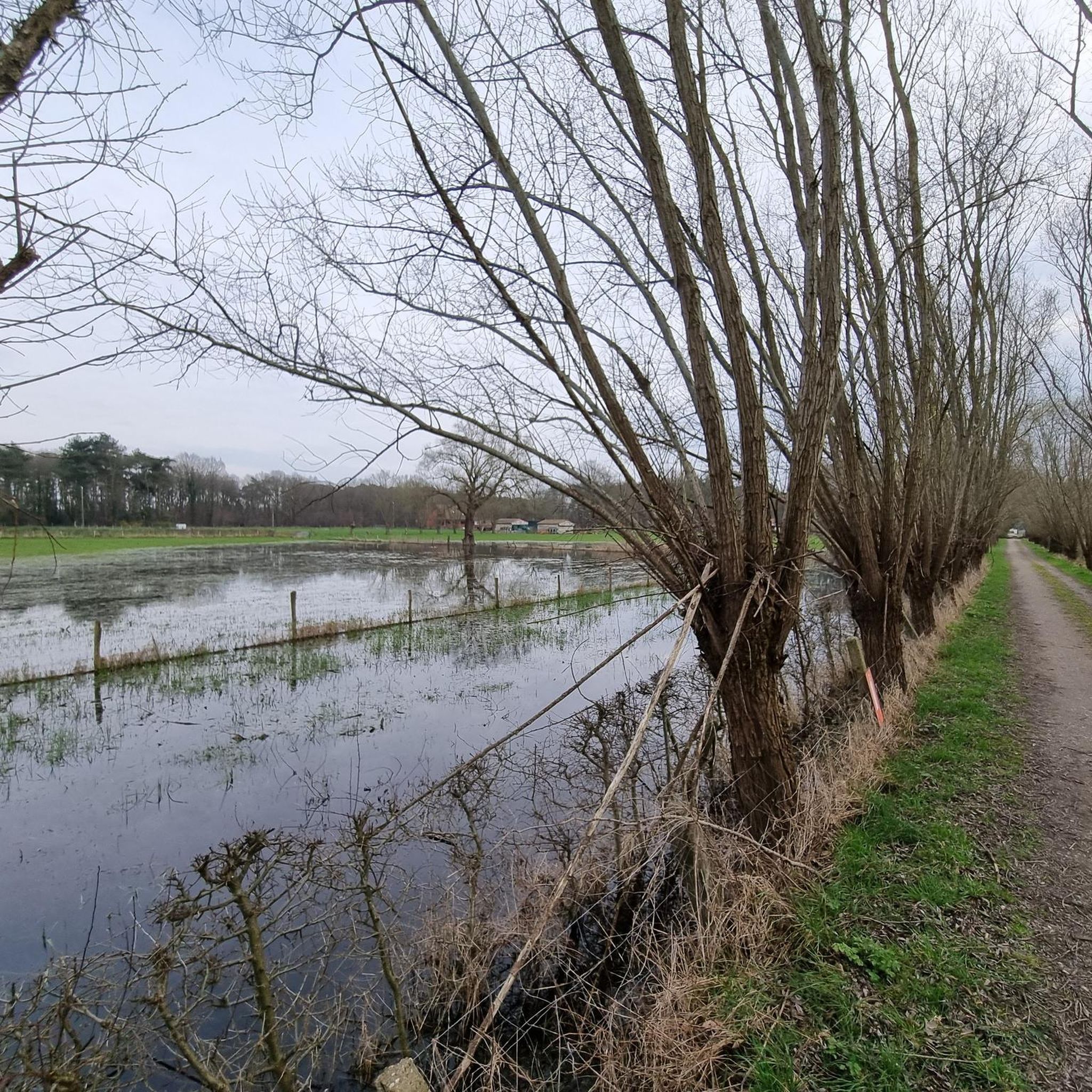
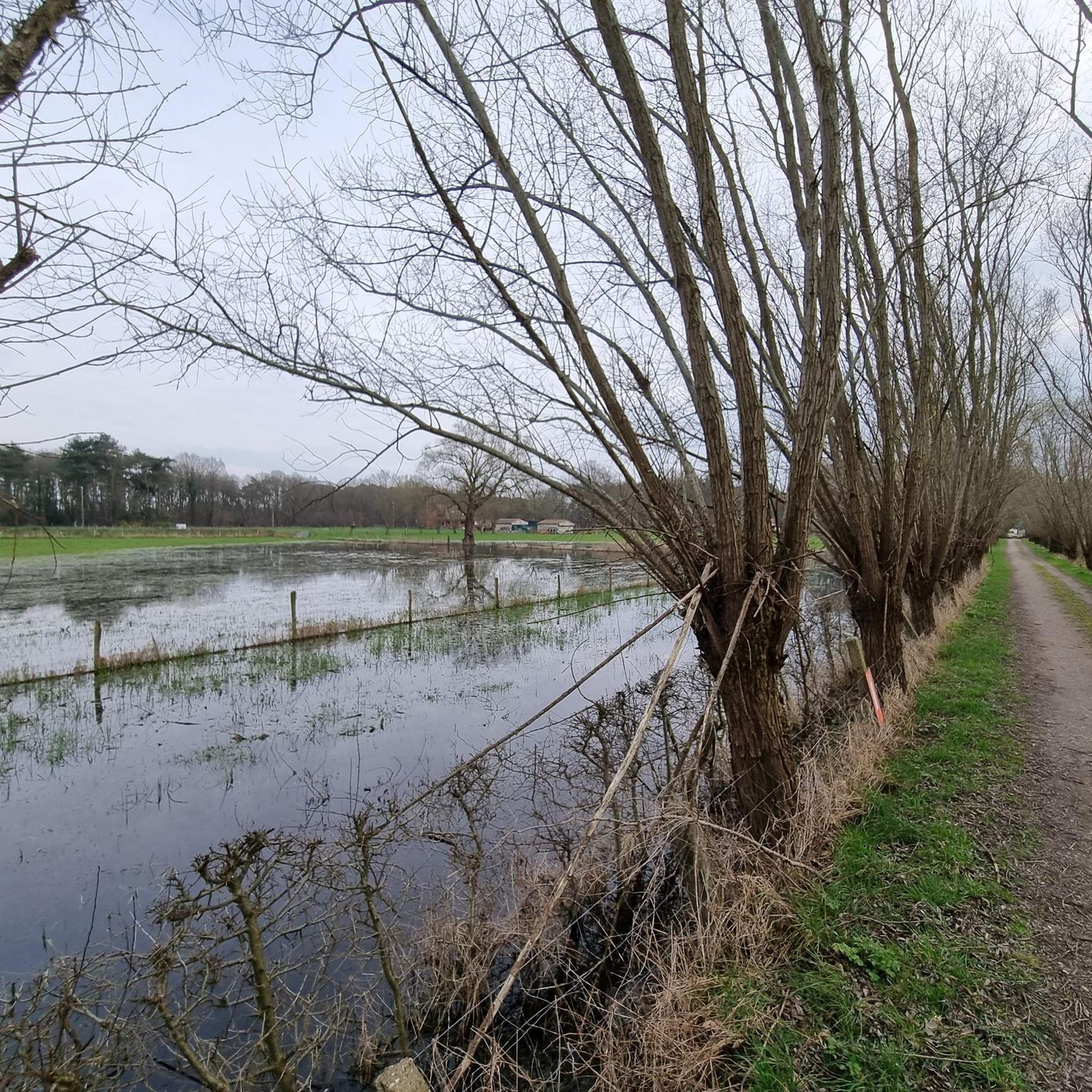
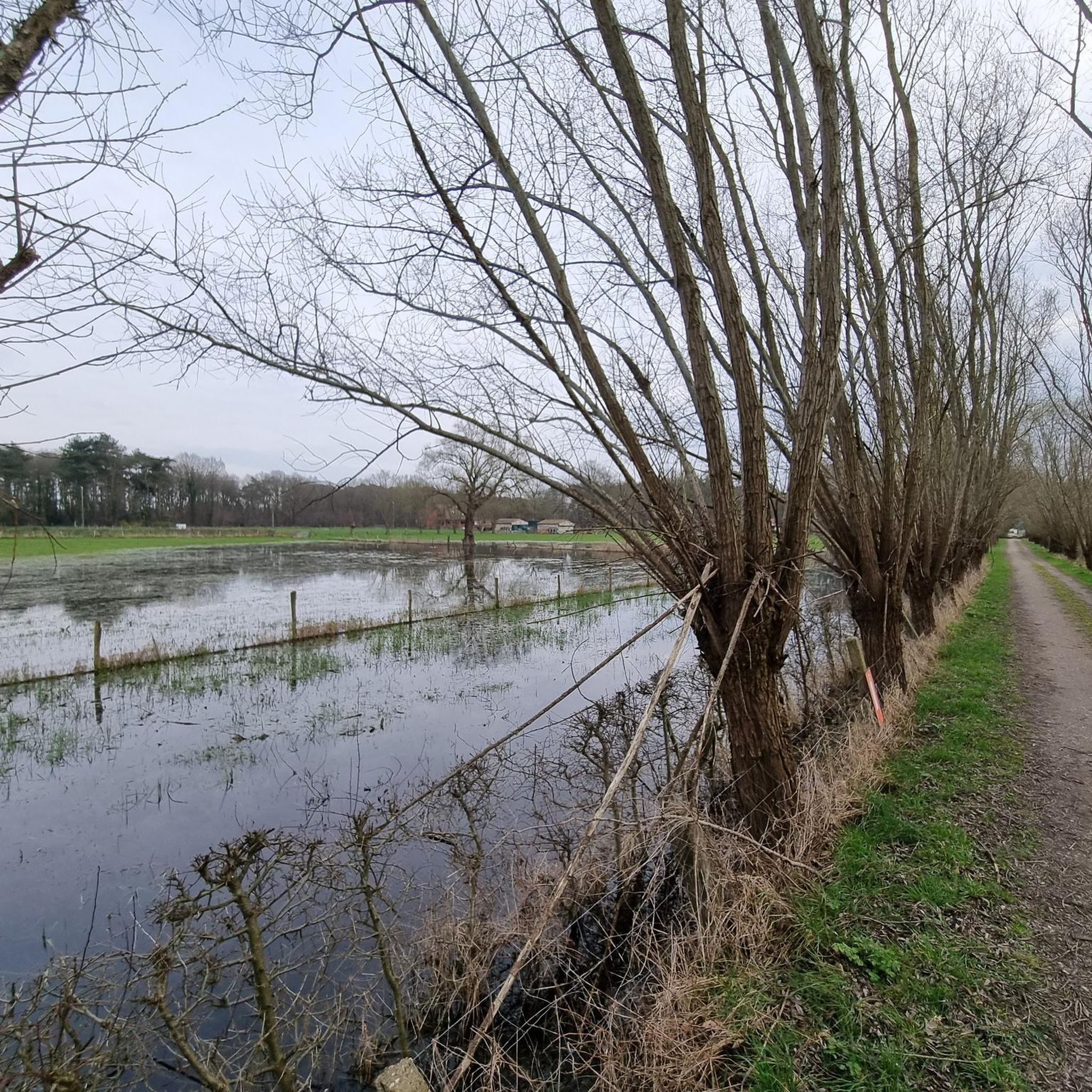
The Kesselse Heide-Het Goor area consists of a variety of nutrient-poor meadows, pastures, marshes, and ponds, bordered and crisscrossed by enclosed landscape types, and contains numerous landscape elements. The area is characterized by a richly varied and sometimes rare flora. Several historic farm buildings can be found within the area. The Kesselse Heide-Het Goor area, with an area of approximately 2,620 hectares, is located between the villages of Nijlen and Kessel, north of the Lier-Herentals road. The northern border of this area is along Vogelzangstraat, the eastern border along Achterbist, Kannaertsstraat, and Goorstraat. The Grote Steenweg forms the southern border, and the western border is formed by Heidestraat and Vaerestraat. The landscape includes the following topographical areas: "Kannaerdsche Heyde," "Kesselse Heide," "Mol Heide," "Achterbiest," "Het Hoog Bosch," "De Hooge Heide," "Het Armveld," "De Schommers" or "Vissen Eynde," "Het Goor," "Het Goorkasteel," and "Hoge Heyde." Several streams traverse the area, specifically the Goorkantloop, the Elstbeek, the Paddenloop, Blauwe Hoekloop, and the Visbeek. The elevation within the area varies from approximately 5 meters +TAW to approximately 10 meters +TAW. Inventory of Immovable Heritage: Kesselse Heide-Het Goor, https://id.erfgoed.net/erfgoedobjecten/302886
7
0

You see the mouth of the Demer
1
0

From one river to another...
9
0

Mispeldonk Nature Reserve is a beautiful and valuable nature reserve in Bonheiden, located in the province of Antwerp. The area is known for its unique ecosystems, rich biodiversity and the natural beauty of the landscape. Here are some key points about Mispeldonk: Location and Size Mispeldonk is located between Bonheiden and the nearby municipality of Rijmenam, along the banks of the Dijle. The area is part of the larger Dijle landscape, which is known for its wet meadows, meandering waterways and rich flora and fauna. Mispeldonk covers approximately 50 hectares and consists of a mix of marshlands, meadows, forests and ponds. Ecological Importance Mispeldonk is a protected nature reserve because of its special ecological value. The area has a typical structure of a flood plain of the Dijle, which makes it an important habitat for many plant and animal species: • Flora: Various rare and protected plant species grow in the area, such as marsh marigolds, cuckoo flowers and water violets. The wet grasslands and marshes provide unique vegetation that is less common elsewhere in the region. • Fauna: Mispeldonk is an important habitat for birds such as the bluethroat, water rail and reed warbler. Amphibians such as the crested newt and the green frog can also be found there. Furthermore, the area is rich in insects, including butterflies and dragonflies, that thrive in the moist environment. Water management The nature reserve plays an important role in local water management. It is located in a flood-prone area along the Dijle and functions as a natural buffer against flooding. In the event of high water levels, the area can collect water and thus help prevent flooding in nearby villages. The nature reserve contributes to the preservation of water quality by filtering and purifying the water through natural processes. Recreation and Experience Mispeldonk is a popular place for nature lovers and hikers. The area is accessible via various hiking trails that lead through the meadows and forests. There are signposted routes that give walkers the chance to explore the diversity of the landscape and enjoy the peace and quiet of nature. Birdwatchers enjoy visiting the area because of the variety of bird species that can be seen, especially during the breeding season and the migratory bird periods. Management and Protection The nature reserve is managed by Natuurpunt, a Belgian organisation that is committed to nature conservation. Natuurpunt carries out management work to protect biodiversity and maintain the landscape. This includes mowing grasslands, removing invasive plant species and maintaining the walking paths. There is collaboration with local farmers for nature-friendly agriculture, whereby meadows are extensively grazed or mowed, so that they remain suitable for meadow birds and rare plants.
7
1


Very nice walk with a lot of variety in landscapes and terrain.
3
0
Frequently Asked Questions
What are the most popular natural monuments around Putte?
The komoot community highly rates several natural monuments. Among the most popular are Kesselse Heath, known for its diverse landscape of heath, forests, and sandy plains, and Mispeldonk Nature Reserve, a varied area with grasslands, forests, and restored heathland. Another unique spot is the Antitank Canal Haacht, which combines historical significance with natural beauty.
Are there family-friendly natural monuments in the Putte area?
Yes, several natural monuments around Putte are suitable for families. Kesselse Heath is particularly family-friendly, with expansive sands that are described as the 'ultimate sandbox' for children. Mispeldonk Nature Reserve and the Confluence of the Demer and the Dijle also offer pleasant environments for family outings.
What kind of wildlife can I expect to see at the natural monuments near Putte?
The natural monuments around Putte are rich in biodiversity. At Mispeldonk Nature Reserve, you might spot kingfishers along the Boeimeerbeek, as well as various butterflies and grasshoppers in the grasslands. The Antitank Canal Haacht is known to be home to wildlife, including beavers. The broader region, including the Grenspark Kalmthoutse Heide, supports rare plant and animal species like woodlarks, nightjars, and black woodpeckers.
Are there hiking trails available at these natural monuments?
Yes, the natural monuments offer various hiking opportunities. Kesselse Heath features the Heidepad, which guides you through its most beautiful spots. The Grenspark Kalmthoutse Heide, a significant natural area near Putte, boasts more than 25 signposted hiking routes ranging from 1.7 km to 24 km. For more hiking options, you can explore the Hiking around Putte guide.
What is the best time of year to visit the natural monuments around Putte?
The natural monuments around Putte offer unique beauty throughout the year. The diverse landscapes of heathlands, forests, and fens, such as those found at Kesselse Heath, display a different and breathtaking color palette every season. Heathlands are particularly vibrant in late summer when the heather blooms. Spring and autumn are generally pleasant for outdoor activities due to milder temperatures and beautiful foliage.
Can I bring my dog to the natural monuments?
Some natural monuments around Putte are dog-friendly. The Antitank Canal Haacht is noted as dog-friendly. It's always recommended to check specific rules for each location, as some nature reserves may require dogs to be on a leash to protect wildlife.
Are there any historical or cultural sites integrated with the natural monuments?
Yes, some natural monuments around Putte have historical or cultural significance. The Antitank Canal Haacht is a historical defense line from World War II that has now become a natural habitat. The Kruiskensberg Pilgrimage Site combines a forest setting with a historical chapel, wells, and Stations of the Cross, dating back to the 13th century. The Ravenhof entry gate to Grenspark Kalmthoutse Heide also features cultural-historical elements and old trees.
What kind of cycling opportunities are there near Putte's natural monuments?
The region around Putte offers excellent cycling opportunities. The Grenspark Kalmthoutse Heide features a modern node-to-node cycle system and 48 kilometers of mountain bike trails. You can also cycle along the rivers from the Confluence of the Demer and the Dijle. For more cycling routes, check out the Road Cycling Routes around Putte guide.
What are the unique geological features of the natural monuments in the area?
The natural monuments near Putte, particularly the Grenspark Kalmthoutse Heide, are known for unique geological formations. These include ancient dunes that originated during the Preboreal and Boreal epochs, with some larger dune systems remaining active. You can find parabolic and longitudinal dunes, interspersed with deflation plains and numerous moorland pools. The sandy soils and naturally acidic, low-mineral water contribute to the distinct character of the area.
Are there observation points or viewpoints to enjoy panoramic views?
Yes, the Grenspark Kalmthoutse Heide, a significant natural monument near Putte, offers excellent observation points. There are two observation towers within the park, one over 40 meters tall providing a 360-degree panorama, and another 10-meter tower, 'De Stapper,' offering exceptional views over one of Flanders' largest fenlands, ideal for birdwatching. Mispeldonk Nature Reserve and the Confluence of the Demer and the Dijle also offer pleasant viewpoints.
Where can I find information about conservation efforts in the natural monuments?
Conservation efforts are actively undertaken in the region. For instance, Kesselse Heath is maintained through sheep grazing to preserve its authentic landscape. Mispeldonk Nature Reserve is managed by Natuurpunt, a Belgian organization dedicated to nature conservation, which carries out work to protect biodiversity and maintain the landscape. The unique landscape of Kalmthoutse Heide is also maintained through active conservation strategies like sheep grazing and ploughing.
Are there facilities like parking or visitor centers near the natural monuments?
Yes, for the Grenspark Kalmthoutse Heide, official entry gates like Ravenhof offer essential facilities such as parking and detailed park information. The 'De Vroente' visitor center in Kalmthout serves as a key knowledge and training hub for nature and environmental education within the cross-border park. For specific parking information at other natural monuments, it's advisable to check local signage or resources before your visit.
Most popular attractions around Putte

Get inspired with the komoot mobile app


Explore more
Extend your search for the best caves by checking out these guides of the top ones around Putte:
