Top 6 Natural Monuments around Ponza
Best natural monuments around Ponza are characterized by dramatic cliffs, clear waters, and unique geological formations. Ponza, a volcanic island in the Pontine Archipelago, features a landscape shaped by volcanic activity and erosion. These sites offer a blend of natural features and historical elements. The island's natural monuments provide insights into its geological origins and coastal processes.
Best natural monuments around Ponza
- The most popular natural monuments is Chiaia di Luna viewpoint, a viewpoint offering views of a crescent-shaped…
Last updated: October 15, 2026
Chiaia di Luna viewpoint
Highlight • Viewpoint
Translated by Google •
Tip by

Natural Pools
Highlight • Natural Monument
Translated by Google •
Tip by
Sign up now to discover places like this
Get recommendations on the best single tracks, peaks, & plenty of other exciting outdoor places.
Lucia Rosa Beach and Capo Bianco Point
Highlight • Beach
Translated by Google •
Tip by

Bagno Vecchio (La Parata) Beach
Highlight • Beach
Translated by Google •
Tip by

Faraglioni di Lucia Rosa
Highlight • Natural Monument
Translated by Google •
Tip by
Sign up for free to discover even more natural monuments around Ponza.
Already have an account?
Start today with a free account
Your next adventure awaits.
Other adventures around Ponza

Tips from the Community

The Panoramica route is very beautiful, but you cannot complete the loop. Once you reach the beach “frontone” you can not go any longer as the road is closed due to it being private and rocks have fallen on the road so it is very dangerous (and many snakes). Nevertheless, there is a small boat that goes from the beach back to pier, which you can take.
0
1

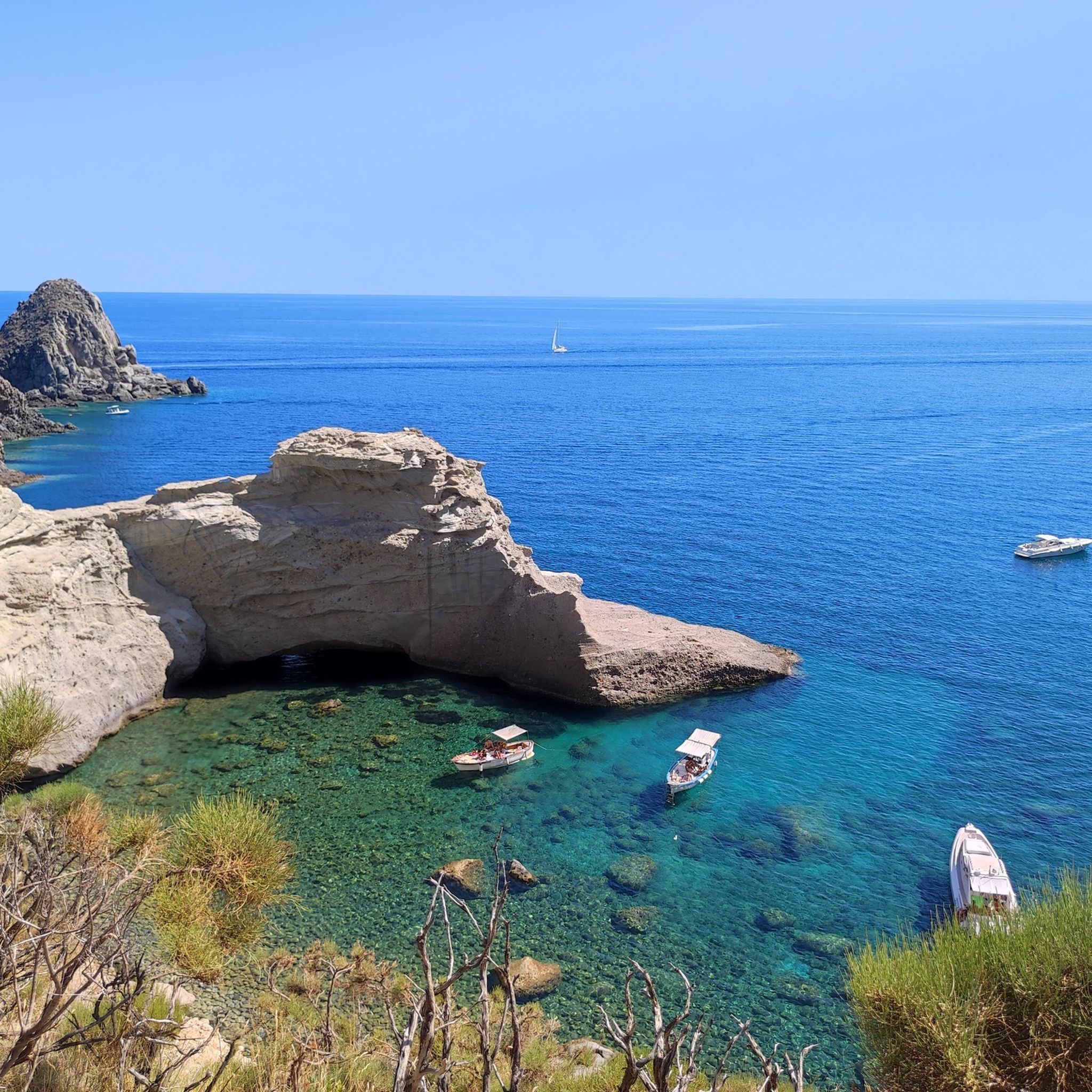
The Faraglioni di Lucia Rosa are one of the most suggestive natural wonders of the island of Ponza, located along the western coast in the area of Le Forna. These imposing stacks, sculpted by the sea and the wind, emerge from a cliff of variegated colors and are surrounded by clear waters and seabeds rich in tunnels and small caves. Some caves host tiny pebble beaches, accessible only from the sea.
0
0
The name comes from a tragic 19th-century love story: Lucia Rosa, a young local girl, threw herself off the cliff after her father forbade her to marry the boy she loved, a simple farmer. The stacks in front of the cove bear her name in memory of this legend. Lucia Rosa Beach, located on the western coast of the island of Ponza, is one of the most evocative and fascinating coves of the Pontine archipelago. It is an inlet characterized by spectacular cliffs with multi-colored colors, imposing stacks and numerous caves with small pebble beaches inside them. Off shore is the “Secca dei Mattoni”, where in 1985 a Roman wreck was found with amphorae dating back to the 1st century BC. Punta di Capo Bianco is located between the beach of Chiaia di Luna and the Faraglioni di Lucia Rosa, also on the western side of the island. It is a spectacular rock face of a surreal white that plunges sheer into a turquoise sea. The area is famous for the purity of the cliff color and for the presence of numerous caves, which can only be visited by small boats. The peregrine falcon nests on the rocks, which can be observed during canoe or rowboat excursions.
0
0

Two basins of salt water, fed by the sea, which were formed by the volcanic activity of the island. The most direct path from the provincial road consists of about 300 steps carved into the rock. The water is crystal clear and the landscape is enchanting.
1
0
View of one of the most renowned and suggestive beaches of the island of Ponza, crescent-shaped, surrounded by yellow and white tuff cliffs. It is accessed through a Roman tunnel that crosses the mountain.
0
0

Bagno Vecchio, also known as La Parata, is a white pebble beach. Here you can see the remains of a Roman necropolis, reachable via a path with steps. Due to landslides, the beach may not be accessible in some periods.
1
1
Frequently Asked Questions
What unique natural features can I explore in Ponza?
Ponza, a volcanic island, offers a variety of unique natural features shaped by erosion and volcanic activity. You can explore the Natural Pools, which are two basins of salt water ideal for swimming and snorkeling. Another impressive site is the Arco Naturale, a 30-meter high natural arch near the coastline, best experienced by boat. The island also features numerous sea caves, such as Grotta Azzurra and Grotta di Ulisse, which reveal unique rock formations and light play on the water.
Are there any historical natural monuments in Ponza?
Yes, Ponza has natural monuments with significant historical elements. The Grotte di Pilato, located near Ponza Harbour, are a network of artificial tunnels carved into the tuff rock by the Romans in the 1st century BCE, believed to have been Roman fish farms. Additionally, at Bagno Vecchio (La Parata) Beach, you can find remains of a Roman necropolis, adding a historical layer to its natural beauty.
What are the best natural swimming spots in Ponza?
For natural swimming, the Natural Pools in Le Forna are highly recommended. These two large natural swimming pools, formed by volcanic activity, offer calm, transparent waters perfect for swimming and snorkeling, even when the sea is rough. They are easily accessible via a well-marked path and steps.
Can I find dramatic coastal formations in Ponza?
Ponza is renowned for its dramatic coastal formations. The island features towering cliffs, such as those at Chiaia di Luna viewpoint, which showcases a crescent-shaped beach surrounded by yellow and white tuff cliffs. You can also marvel at the impressive sea stacks, including the Faraglioni di Lucia Rosa, which rise majestically from the sea along the western coast.
Are there family-friendly natural monuments to visit in Ponza?
Many of Ponza's natural monuments can be enjoyed by families. The Natural Pools are particularly family-friendly due to their calm, clear waters, making them safe for swimming and snorkeling. Access to these pools is via a well-marked path and steps, and amenities like sunbed rentals are often available nearby.
What is the best time of year to visit Ponza's natural monuments?
The best time to visit Ponza's natural monuments is generally during the warmer months, from late spring to early autumn (May to September). During this period, the weather is ideal for swimming, snorkeling, and boat tours, allowing full enjoyment of the island's coastal and aquatic natural sites. The sea is calmest, and all services are typically operational.
Are there hiking trails near Ponza's natural monuments?
Yes, Ponza offers several hiking opportunities that allow you to explore its natural monuments. You can find various trails, such as the Punta Incenso Loop Trail or the panoramic loop tour of the Island of Ponza. These routes often provide stunning views of the coastline and access to natural sites. For more details on hiking routes, you can explore the Hiking around Ponza guide.
How can I explore the sea caves around Ponza?
Exploring Ponza's sea caves, such as Grotta Azzurra and Grotta di Ulisse, is best done by boat. Many local boat tours are available that take visitors to these unique formations, allowing you to enter and admire the intricate rock structures and the play of light on the water. The Grotte di Pilato are also best explored by boat, offering a glimpse into ancient Roman engineering.
What geological features are prominent among Ponza's natural monuments?
Ponza's natural monuments prominently display its volcanic origins and the effects of millennia of erosion. Key geological features include the tuff rock formations, which are visible in the dramatic cliffs of Chiaia di Luna viewpoint and the carved Grotte di Pilato. The Natural Pools are direct results of the island's volcanic activity, while the Arco Naturale and various sea stacks like the Faraglioni di Lucia Rosa showcase the powerful forces of marine erosion.
Are there running trails near Ponza's natural monuments?
Yes, for those who enjoy running, there are trails that pass by or offer views of Ponza's natural monuments. Routes like the 'Natural Pools – Beach at the Cliffs loop from Isola di Ponza' or the 'Piscine naturali – Grotta del serpente loop from Isola di Ponza' provide opportunities for scenic runs. You can find more information on these and other running routes in the Running Trails around Ponza guide.
Are there any natural monuments accessible by land?
While many of Ponza's natural monuments are best accessed by boat, some are reachable by land. The Natural Pools are accessible via a path with about 300 steps from Le Forna. The Chiaia di Luna viewpoint offers stunning views from land, though direct beach access via the tunnel is currently closed. Bagno Vecchio (La Parata) Beach is also accessible via a path with steps, though its accessibility can vary due to landslides.
Most popular routes around Ponza
Most popular attractions around Ponza

Get inspired with the komoot mobile app


Explore more
Extend your search for the best caves by checking out these guides of the top ones around Ponza:
