Top 12 Natural Monuments around Santa Lucia Di Piave
Best natural monuments around Santa Lucia di Piave offer a diverse landscape for exploration, situated near the Piave River and Montello. This region features a variety of natural attractions, including karst caves, river springs, and nature trails. The area is characterized by its geological formations and ecological importance, providing insights into local natural history. Visitors can explore sites that combine natural beauty with historical significance.
Best natural monuments around Santa Lucia Di Piave
- The most popular natural monuments is Tavaran Grando Cave, a cave of karst origin that is approximately 400 meters long. It is easily accessible via the World War I Bunker Route, starting from the church of Santa Croce in Nervesa della Battaglia.
- Another must-see spot is Oasi Fontane Bianche Nature Reserve, a natural monument and nature reserve. Visitors can expect a restored route with a new bridge, offering a natural setting immersed in water.
- Visitors also love Le Volpere Nature Trail, a trail that winds along the left bank of the Piave River. It features a suggestive conglomerate wall and holds historical importance with evidence of Mesolithic settlements.
- Santa Lucia Di Piave is known for its caves, nature trails, and river sources. The region offers a variety of natural monuments to see and explore, from geological formations to protected nature reserves.
- The natural monuments around Santa Lucia Di Piave are appreciated by the komoot community, with 47 upvotes and 9 photos shared across various highlights.
Last updated: July 12, 2026
Oasi Fontane Bianche Nature Reserve
Highlight • Natural Monument
Translated by Google •
Tip by

Le Volpere Nature Trail
Highlight • Trail
The importance of the site is also due to the presence of settlements dating back to the Mesolithic age, evidenced by the discovery of lithic artefacts of the time. The area has maintained its historical value even in more recent times, thanks to the presence of the "Passo Barca" (connection point between the right and left banks of the river) active until the 1970s, and the "Porto delle Zattere" , where the crew changes of the raftsmen took place.
Along the route you will encounter mythological personifications of natural phenomena: the Matharol, forest elf, and the Anguane, female creatures with zoomorphic characteristics linked to water.
Translated by Google •
Tip by

Sign up now to discover places like this
Get recommendations on the best single tracks, peaks, & plenty of other exciting outdoor places.
Sign up for free
Source of the Meolo River
Highlight • River
At the town of the same name, the river bifurcates: the new main axis, maintaining the name of the Meolo river, heads south and flows shortly afterwards into the Vallio; the historic course, called the Meolo flowway, moves towards the south-east and its waters flow partly into the Colatore Principale reclamation canal and partly, by means of a structure that bypasses the previous watercourse, into the Fossetta canal. This situation is the result of the reclamation that affected the Lower Piave and was completed in the 1930s.
Along its course there are country residences built by Venetian families between the 15th and the 19th centuries as well as the former Abbey of Santa Maria di Pero
Translated by Google •
Tip by

Tavaran Grando Cave
Highlight • Cave
The karst in Montello has given rise to countless natural cavities and caves which make the hill a true paradise for speleologists and beyond, given the growing interest in this type of geological conformation. The caves here are really many, about 90 of different sizes
Translated by Google •
Tip by

San Girolamo Cave
Highlight • Cave
The Grotta di San Girolamo is a karst cave, therefore with a typical conformation of the Montello area. Along the walls of the cave you can see hand-dug niches, now empty of content. It is located near Via Luigi Lama (intake IV), in the area called Valle delle Tre Fonti, a particularly humid and verdant place.
Translated by Google •
Tip by
Sign up for free to discover even more natural monuments around Santa Lucia Di Piave.
Sign up for free
Already have an account?
Start today with a free account
Your next adventure awaits.
Login or Signup

Tips from the Community

The table well illustrates the history of the Falzè pontoon bridge on the Piave
1
0
in Falzè, along the route, a stop at the rebuilt raft in the recreational area is recommended, where there are comprehensive illustrative tables
1
0

The old name of the Meolo river is Pero. This is why, in these parts, river and place names blend together
0
0

The sources of the Meolo river are about 200 m away. from the bridge, unfortunately it was not possible to approach them because they were fenced off. It originates east of Breda di Piave, in the Campagne area, and flows for about twenty kilometers in the provinces of Treviso and Venice, crossing, among others, San Biagio di Callalta and Monastery of Treviso. At the town of the same name, the river bifurcates: the new main axis, maintaining the name of the Meolo river, heads south and flows shortly afterwards into the Vallio; the historic course, called the Meolo flowway, moves towards the south-east and its waters flow partly into the Colatore Principale reclamation canal and partly, by means of a structure that bypasses the previous watercourse, into the Fossetta canal. This situation is the result of the reclamation that affected the Lower Piave and was completed in the 1930s. Along its course there are country residences built by Venetian families between the 15th and the 19th centuries as well as the former Abbey of Santa Maria di Pero
11
0

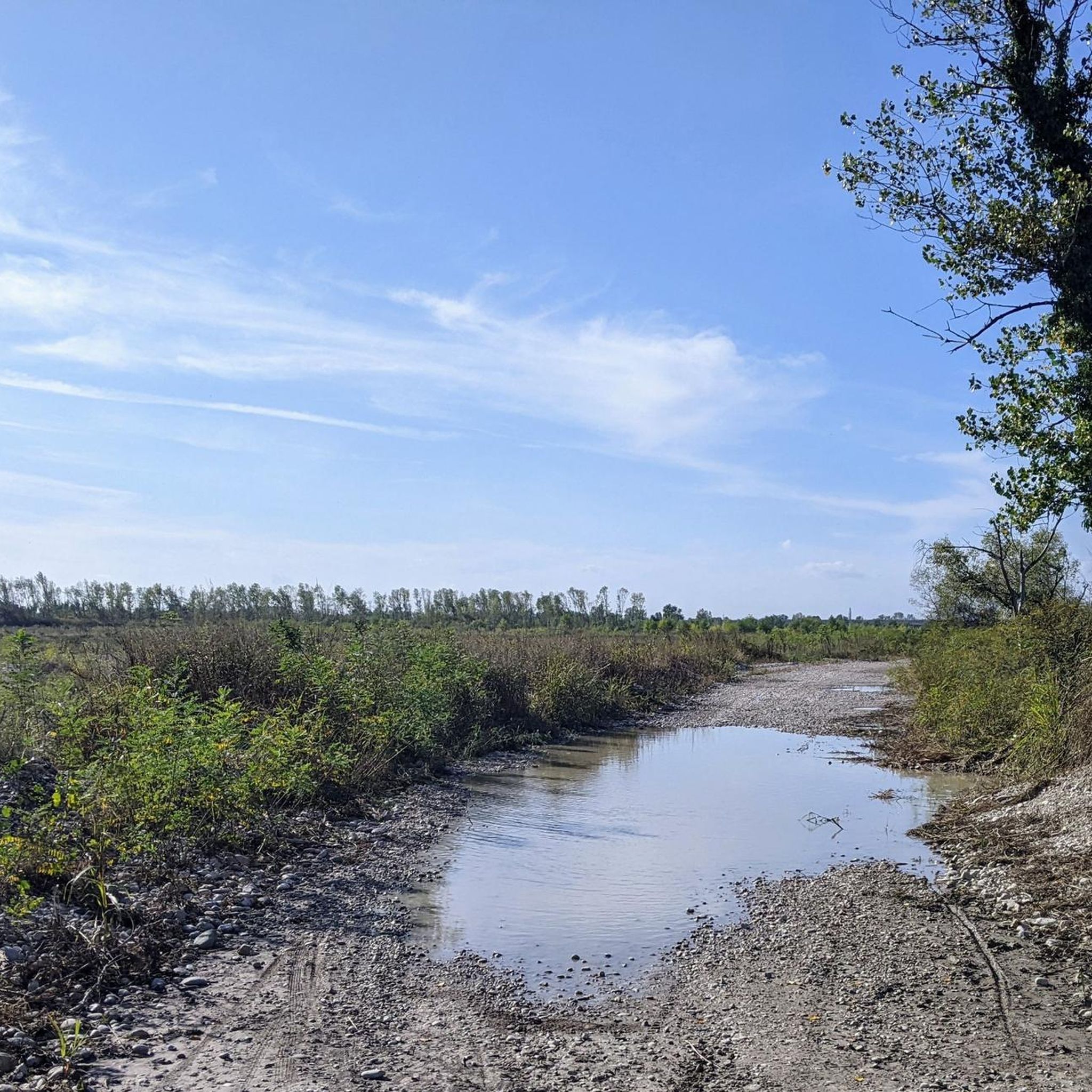
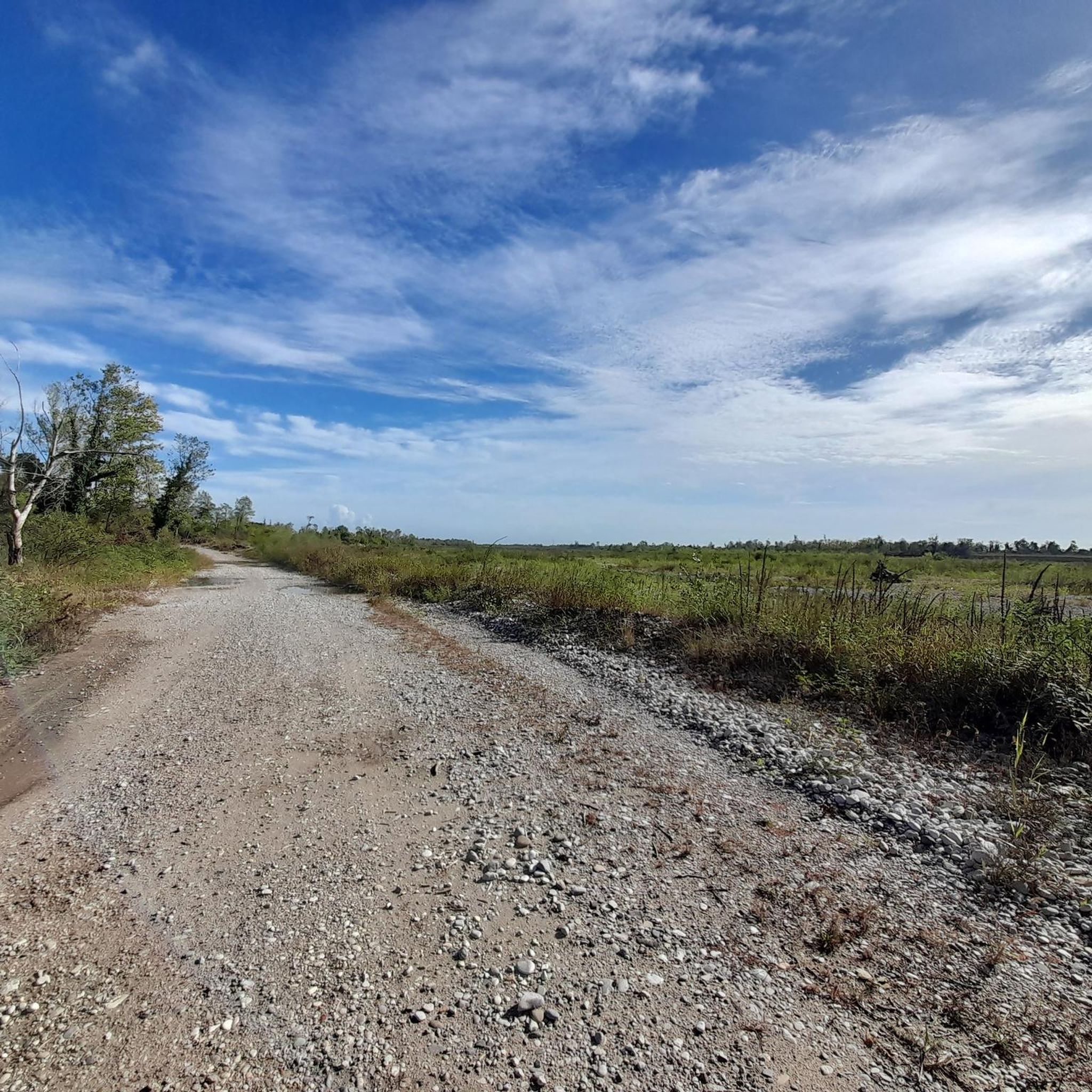
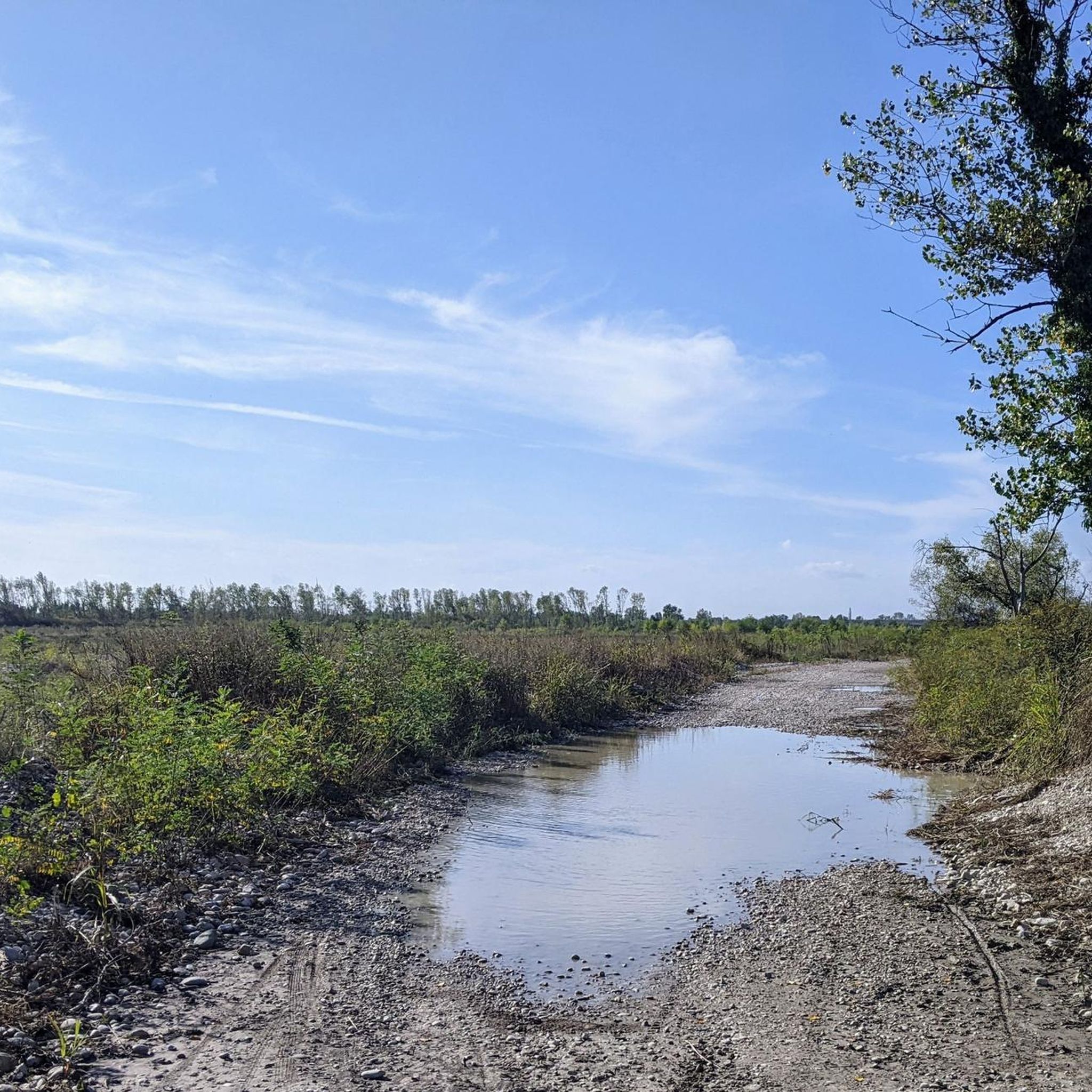
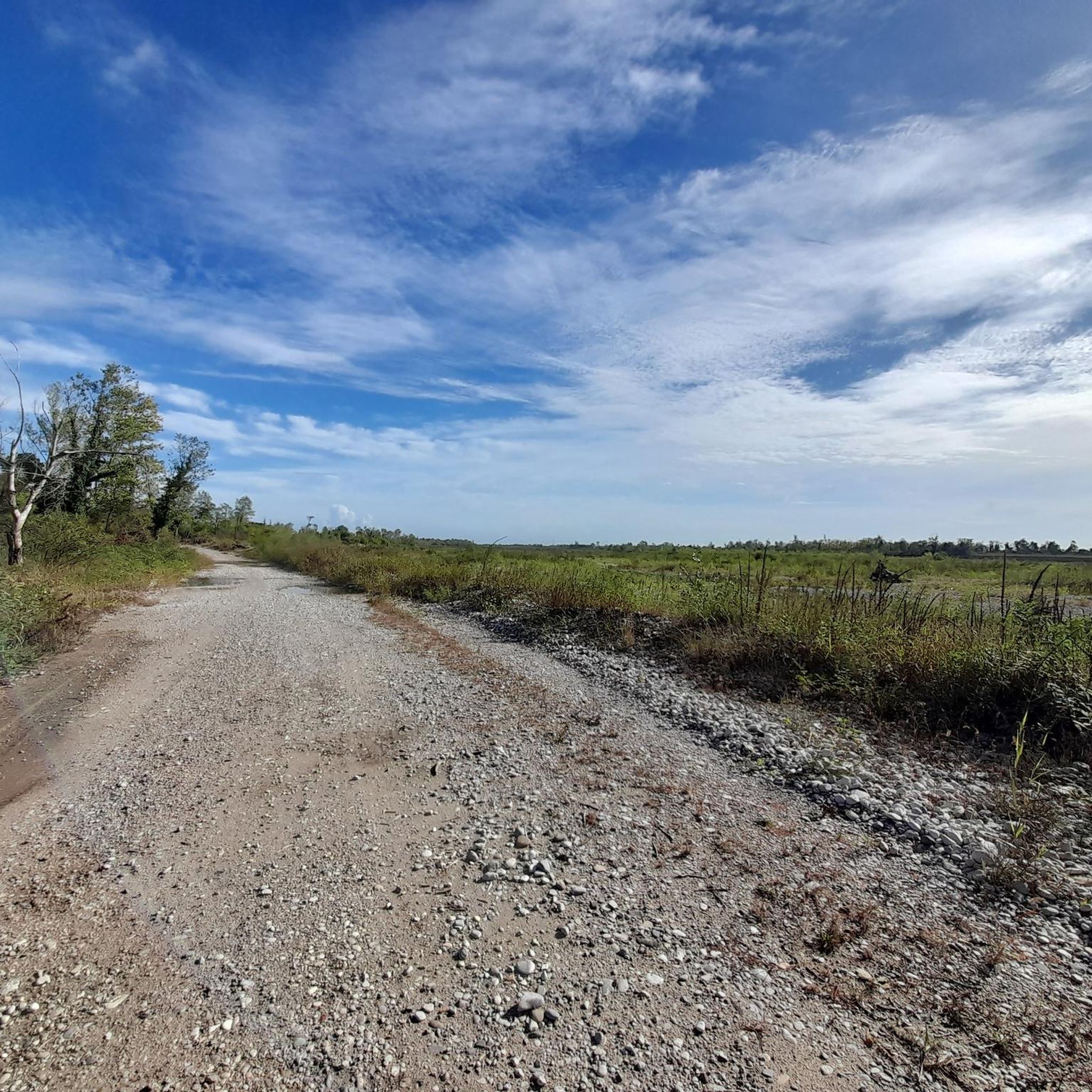
The cycle path junction takes you onto a road among the plants, unfortunately we passed after a storm, with many plants downed and the road/path not very recognisable. This part of the path always keeps you close to the Piave, bypassing the area of the white fountains, the peculiarity however is the presence of a couple of fords to overcome, suitable for MTB, at the limit for Gravel
0
0


The Grotta di San Girolamo is one of over 60 caves found on Montello, which have always been used as a shelter. According to tradition, during the dominion of the Serenissima in the Middle Ages, this natural shelter was used by the hermit Giovanni da Fassa who dedicated himself in solitude to the cult of St. Jerome. Regardless of the legends, it seems that the settlement in the cave of San Girolamo was already registered in the XIII century. The Grotta di San Girolamo is a karst cave, therefore with a typical conformation of the Montello area. Along the walls of the cave you can see hand-dug niches, now empty of content. It is located near Via Luigi Lama (intake IV), in the area called Valle delle Tre Fonti, a particularly humid and verdant place.
2
0

Nice trip out of town. Quick execution. Easy path for everyone.
0
0
Frequently Asked Questions
What are some unique natural features to explore around Santa Lucia Di Piave?
Beyond the well-known sites, the region offers diverse natural features. You can explore karst caves like the Tavaran Grando Cave, which is approximately 400 meters long and easily accessible. Another interesting feature is the "suggestive conglomerate wall" along the Le Volpere Nature Trail, a rock formation eroded by water to create natural ravines.
Are there any natural monuments with historical significance in the area?
Yes, several natural monuments also hold historical importance. The Le Volpere Nature Trail has evidence of Mesolithic settlements and was historically a river crossing point. Additionally, the San Girolamo Cave, one of over 60 caves in Montello, was used as a shelter and, according to tradition, by a hermit for the cult of Saint Jerome during the Middle Ages.
What kind of trails can I find near the natural monuments?
The area offers a variety of trails. The Le Volpere Nature Trail winds along the left bank of the Piave River, offering a naturalistic and historical experience. The Oasi Fontane Bianche Nature Reserve also features a restored route immersed in water. Many natural monuments, like the Tavaran Grando Cave, are accessible via established routes, such as the World War I Bunker Route.
Are there family-friendly natural monuments around Santa Lucia Di Piave?
Yes, several natural monuments are suitable for families. The Le Volpere Nature Trail, Oasi Fontane Bianche Nature Reserve, Source of the Meolo River, and Tavaran Grando Cave are all categorized as family-friendly, offering accessible exploration opportunities for all ages.
What is the best time of year to visit the natural monuments?
While specific seasonal recommendations aren't detailed for each site, generally, spring and autumn offer pleasant weather for exploring outdoor natural monuments and trails in the region. These seasons typically provide comfortable temperatures for hiking and enjoying the natural beauty without the extreme heat of summer or the chill of winter.
Can I find opportunities for cycling or mountain biking near these natural monuments?
Yes, the area around Santa Lucia Di Piave is well-suited for cycling and mountain biking. You can find various routes, including those for cycling, gravel biking, and MTB trails. These routes often pass through scenic natural areas, allowing you to combine your visit with an active outdoor experience.
Are there any river sources or significant water features to see?
Yes, the Source of the Meolo River is a notable water feature in the area, located near Breda di Piave. While access might be restricted due to fencing, it highlights the local hydrological characteristics. The Meolo River flows for about twenty kilometers through the provinces of Treviso and Venice.
What kind of wildlife might I encounter?
The natural ravines along the Le Volpere Nature Trail provide shelter for various animals, including foxes, as suggested by the area's name. The region's diverse natural habitats, including forests and riverbanks, support local flora and fauna, offering opportunities for wildlife observation.
What are the difficulty levels of the trails around the natural monuments?
The difficulty levels vary. For example, the Oasi Fontane Bianche Nature Reserve is rated as intermediate, as is the Tavaran Grando Cave. The Le Volpere Nature Trail is generally considered accessible. It's always recommended to check specific trail details for the most accurate difficulty ratings.
Are there any natural reserves or protected areas nearby?
Yes, the Oasi Fontane Bianche Nature Reserve is a significant protected area in the vicinity. Additionally, the broader Regional Natural Park of the Sile River is also mentioned as being in the area, indicating a wider network of natural interest surrounding Santa Lucia di Piave.
Where can I park when visiting these natural monuments?
Specific parking information varies by location. For instance, the Tavaran Grando Cave is accessible via the World War I Bunker Route, which starts from the church of Santa Croce in Nervesa della Battaglia, suggesting parking might be available near the starting point of such routes. It's advisable to check local signage or specific highlight details for precise parking instructions.
What do visitors particularly enjoy about the natural monuments in this region?
Visitors appreciate the diverse landscape, from karst caves to river springs and nature trails. The combination of natural beauty with historical significance, such as Mesolithic settlements along the Le Volpere Nature Trail, is a highlight. The komoot community has shown appreciation with numerous upvotes and shared photos, indicating a positive experience exploring these geological formations and protected reserves.
Most popular routes around Santa Lucia Di Piave
Most popular attractions around Santa Lucia Di Piave

Get inspired with the komoot mobile app


Explore more
Extend your search for the best caves by checking out these guides of the top ones around Santa Lucia Di Piave:
