Top 6 Natural Monuments around Trino
Best natural monuments around Trino include diverse landscapes in Italy's Piedmont region. The area features picturesque vineyards, rolling hills, and significant biodiversity, particularly near the Po River. Visitors can explore protected natural reserves and unique agricultural ecosystems. Trino offers a range of natural features for outdoor exploration.
Best natural monuments around Trino
- The most popular natural monuments is Sanctuary of the Madonna di Crea, a religious building located on a hill. This site, founded in 1589, is part of…
Last updated: June 28, 2026
Sanctuary of the Madonna di Crea
Highlight • Religious Site
Translated by Google •
Tip by

Vineyard Landscapes of Langhe, Monferrato and Roero
Highlight (Segment) • Viewpoint
Translated by Google •
Tip by

Sign up now to discover places like this
Get recommendations on the best single tracks, peaks, & plenty of other exciting outdoor places.
Sign up for free
Ancient Oak 'Rolassa'
Highlight • Natural Monument
Translated by Google •
Tip by

San Genuario Marsh
Highlight • Natural
Translated by Google •
Tip by

Saint James
Highlight • Natural Monument
Translated by Google •
Tip by

Sign up for free to discover even more natural monuments around Trino.
Sign up for free
Already have an account?
Start today with a free account
Your next adventure awaits.
Login or Signup

Tips from the Community

The German-language television series "Treasures of the World - Heritage of Humanity" - which I highly recommend - is dedicated to short film clips featuring UNESCO World Heritage sites from all continents and eras. This includes the "Sacri Monti" in northern Italy (there are eight of these "Sacred Mountains" in Piedmont, and a ninth in Lombardy), which are presented to culture-loving viewers in a 15-minute segment. This can be accessed in the ARD Media Library at the following link =>> https://www.ardmediathek.de/video/schaetze-der-welt/heilige-berge-in-piemont-italien-folge-396/3sat/Y3JpZDovL3N3ci5kZS84ODgxMzc2
2
0

On the top of a hill immersed in a splendid landscape of vineyards, stands the Sacro Monte di Crea, founded in 1589. Inspired by the Sacro Monte di Varallo, it was born as a pilgrimage destination and today it is an enchanting place, perfect for walking among the greenery of the protected nature reserve. Along the route you will encounter 23 chapels and 5 hermitages, among which the evocative chapel of Paradise, dedicated to the Coronation of Mary, stands out. From here, your gaze is lost in a breathtaking panorama that embraces the Alpine chain and the surrounding rolling hills.
5
1

In the heart of Monferrato, on the top of a hill surrounded by a wonderful wine-growing landscape, stands the Sacro Monte di Crea, founded in 1589 on the initiative of Costantino Massino, Lateran prior of the Sanctuary of the Madonna Assunta. Costantino Massino proposed building a religious itinerary inspired by the Sacro Monte di Varallo, to encourage prayer and meditation and to renew the Marian devotion linked to the Sanctuary, a pilgrimage destination of considerable importance since the 11th century. The strong bond between the sanctuary and the ruling dynasty in Monferrato made the duke, the nobility, the high clergy and the local communities participate in the enterprise. In the first phase of the history of the Sacro Monte, which ended around 1657, important artists also active in the Sacri Monti of Orta, Varallo and Varese worked there, including Moncalvo, the Prestinari and the de Wespin, authors of the spectacular sculptural complex of the Chapel of Paradise (c. 23), created in the years between 1604 and 1612. During the 18th century, the Sacro Monte gradually fell into a state of abandonment and, between 1796 and 1801, the incursions of the French revolutionary troops contributed to the ruin of many structures, statues and frescoes. For several decades, the Sacro Monte was abandoned and only in 1820 a community of Franciscan friars, who had become responsible for the Sanctuary, began to restore some buildings. In 1885, a systematic restoration campaign began, supported by the bishop of Milan Nazari di Calabiana and destined to last until the 1920s. During this phase, in which some buildings were built from scratch, the famous symbolist sculptor Leonardo Bistolfi intervened in chapel 16, modeling the statues of the Ascent to Calvary. (c) https://www.sacrimonti.org/it/sacro-monte-di-crea
3
0

In front of the small church of the village - dedicated to St. James the Apostle... yes... exactly the one in Compostela (stained glass window inside, behind the altar) - there is a now centenary plane tree: it was "planted" in 1922
0
0

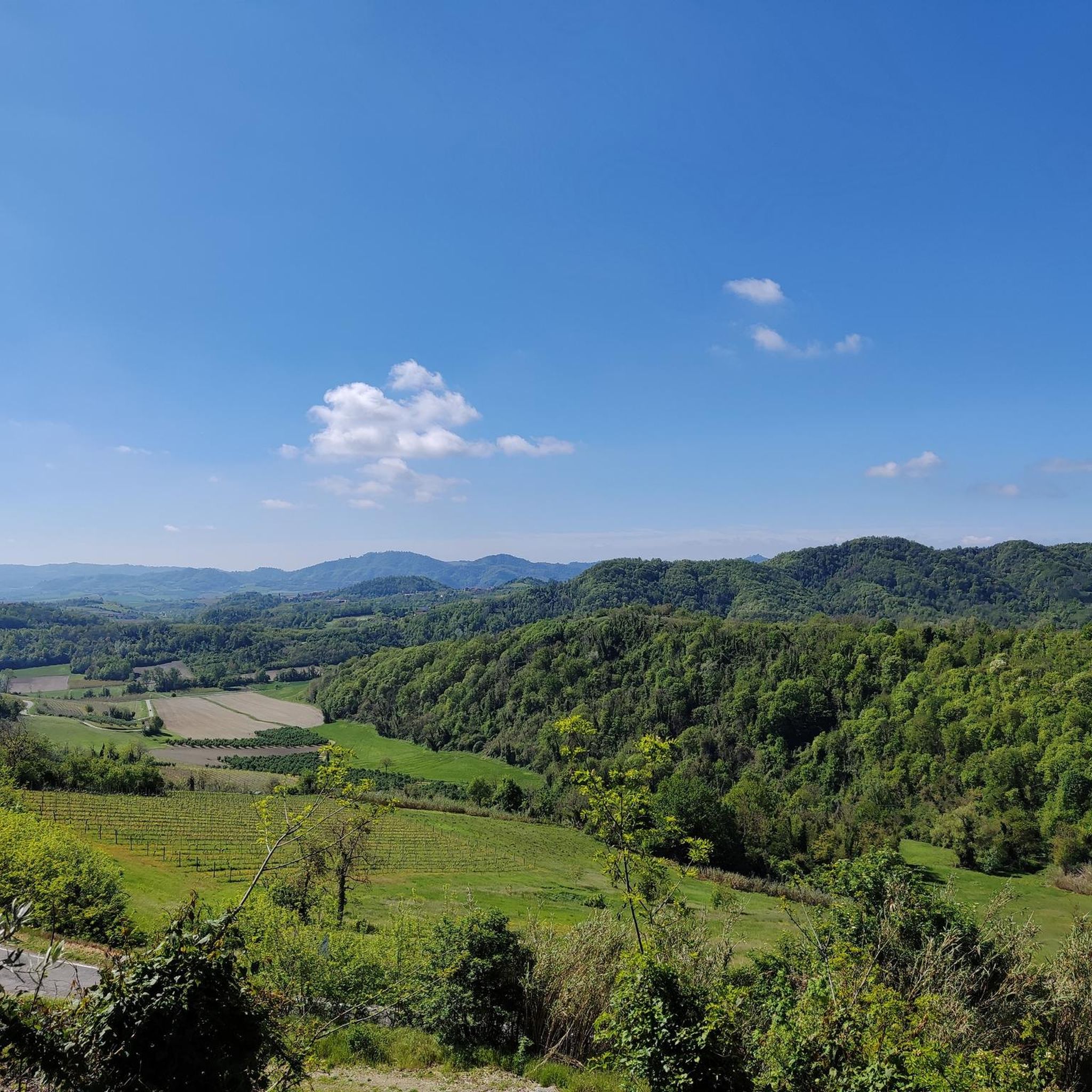
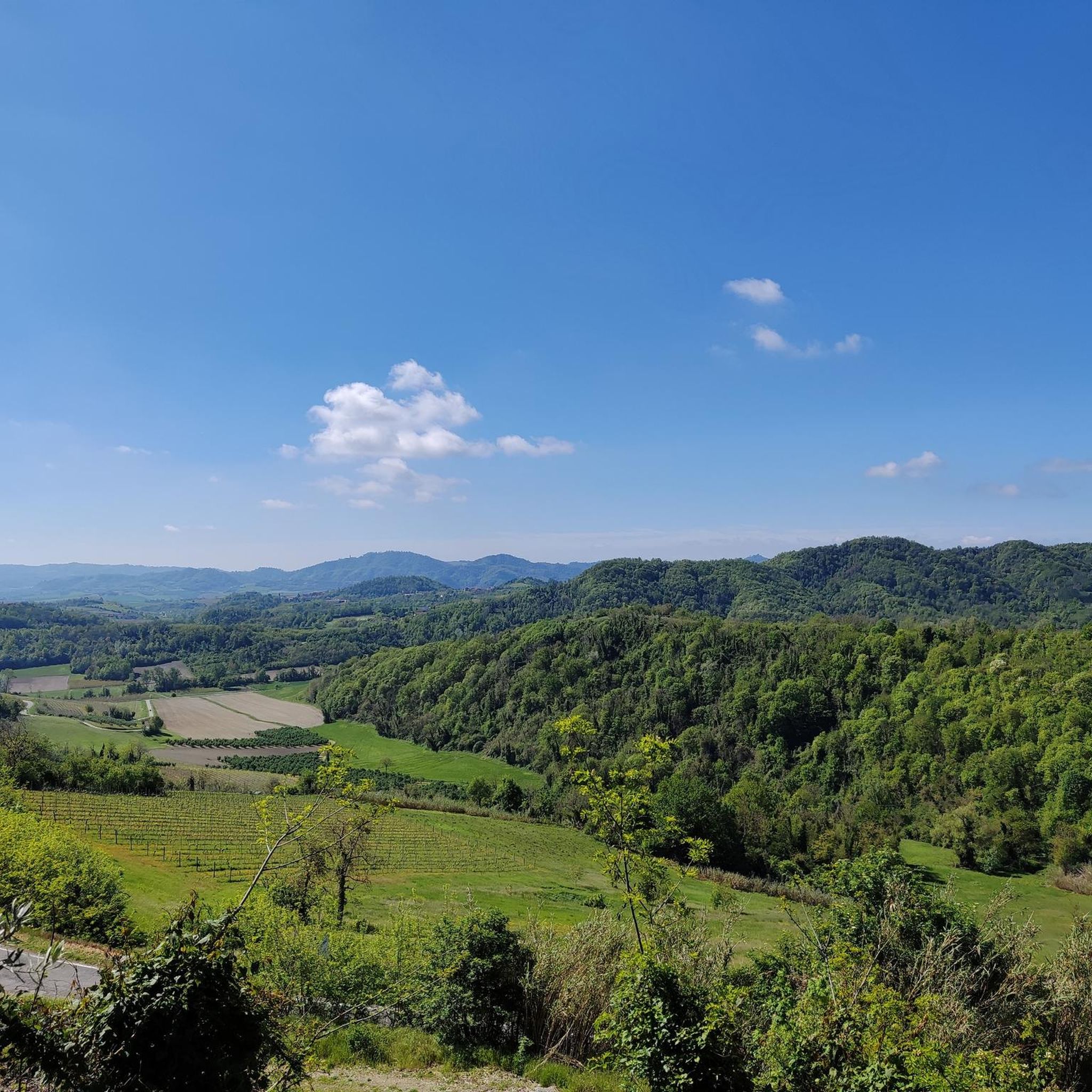
The UNESCO site of the wine-growing landscapes of Langhe, Monferrato and Roero is made up of six areas in the provinces of Alessandria, Asti and Cuneo and twenty-nine municipalities. The areas represent the exceptional quality of the Piedmontese wine-growing landscape and its profound and lively wine culture. The site is characterized by a rich and diversified system of farmhouses, wineries, wine industries, cooperative wineries, public and private wine shops, which in some cases constitute symbolic places for the history and development of national and international viticulture and enology.
1
0

The interior of the Sanctuary/basilica is stupendous and this altar confirms it. Inside there are also some relics.
0
0

At the crossroads of several roads, we find a green space and a stone table where we can take a break
0
0

The origin of the place is probably due to Sant'Eusebio: according to tradition, it was Arduino, the King of Italy, who at the beginning of the 11th century wanted a church, probably built on a fairly small scale, supplemented by a monastery where the Augustinian canons of Vezzolano (Asti) settled. They were succeeded in 1483, after a brief intermezzo of the Servites, by the monks of the Lateran. It is to the presence of these men of great cultural and artistic sensitivity, as well as a solid religious education, that we owe the development of Crea, also favoured by the Lords of Monferrato, the Paleologi. After the Palaeologus dynasty had disappeared, Monferrato passed to the Gonzagas in 1536 and the most radical restructuring was carried out that gave the monumental complex its definitive Baroque architectural stamp. The "Holy Mount", sought by Costantino Massimo in 1589, it was built near the sanctuary. Originally it must have had forty-three chapels and seventeen hermitages: the whole was reduced to twenty-three chapels and five hermitages, decorated with frescoes and works by artists of the time, including Moncalvo. The chapel dedicated to the Coronation of the Virgin Mary, or of Paradise, has a round shape and stands on the top of the mountain, on the site of a fourteenth-century castle called "Castrum Cretae", from which the name Crea. After being plundered during military raids, in 1801 the sanctuary was destroyed, in 1809 the church and the monastery were auctioned. In 1820 the sanctuary was entrusted to the Franciscan Friars Minor who guarded it for 170 years, gradually restoring it to its original splendor. Since 1992 it has been entrusted to the priests of the diocese of Casale Monferrato. More info at https://archeocarta.org/serralunga-di-crea-al-santuario-madonna-di-crea/
2
0
Frequently Asked Questions
What natural features can I expect to see around Trino?
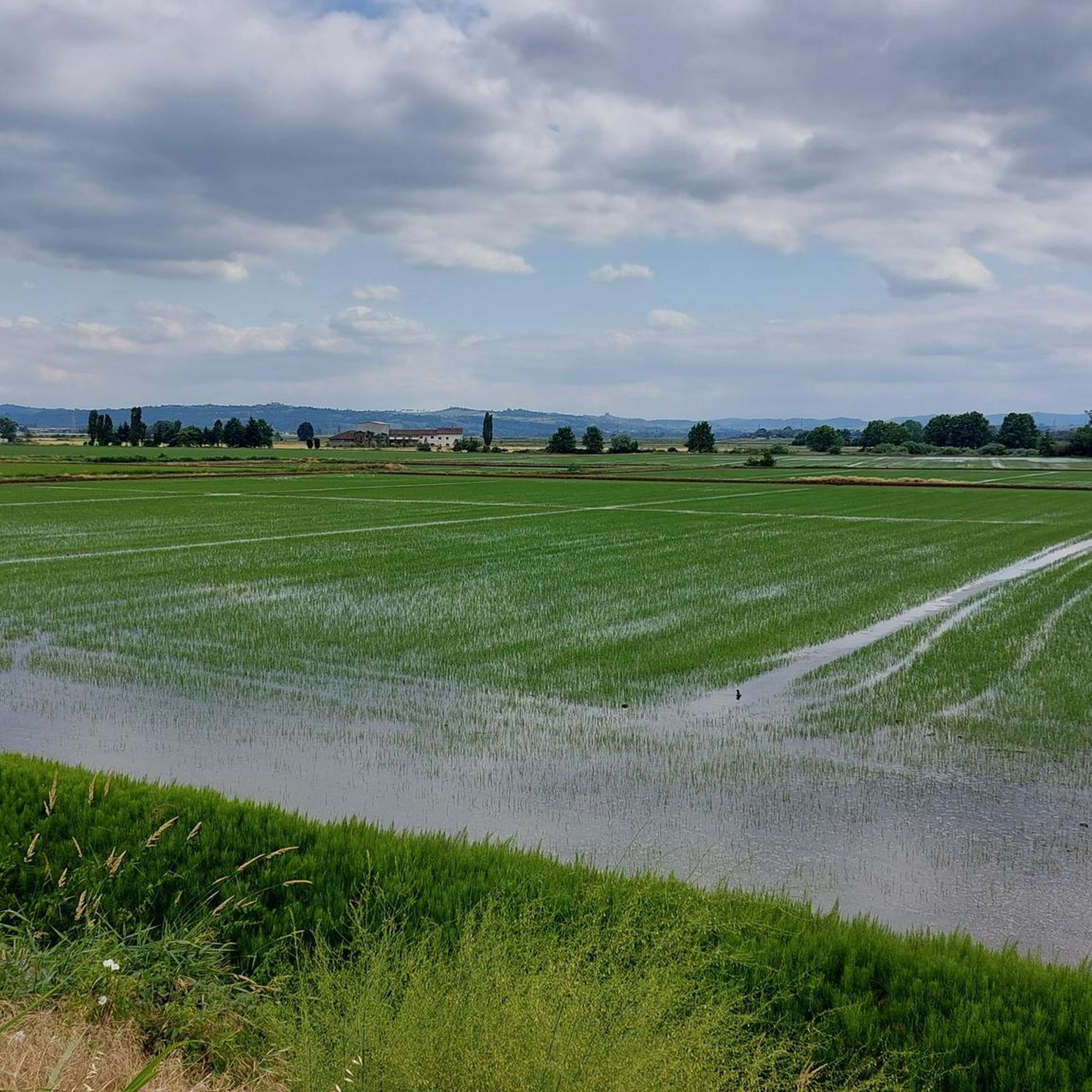
The area around Trino is rich in diverse natural features. You can explore the protected environment of the San Genuario Marsh, characterized by extensive rice fields and marsh-type habitats, which are crucial for various bird species. The landscape also includes picturesque vineyards, rolling hills, and ancient trees like the Ancient Oak 'Rolassa', offering serene spots for relaxation.
Where can I experience panoramic views of the region?
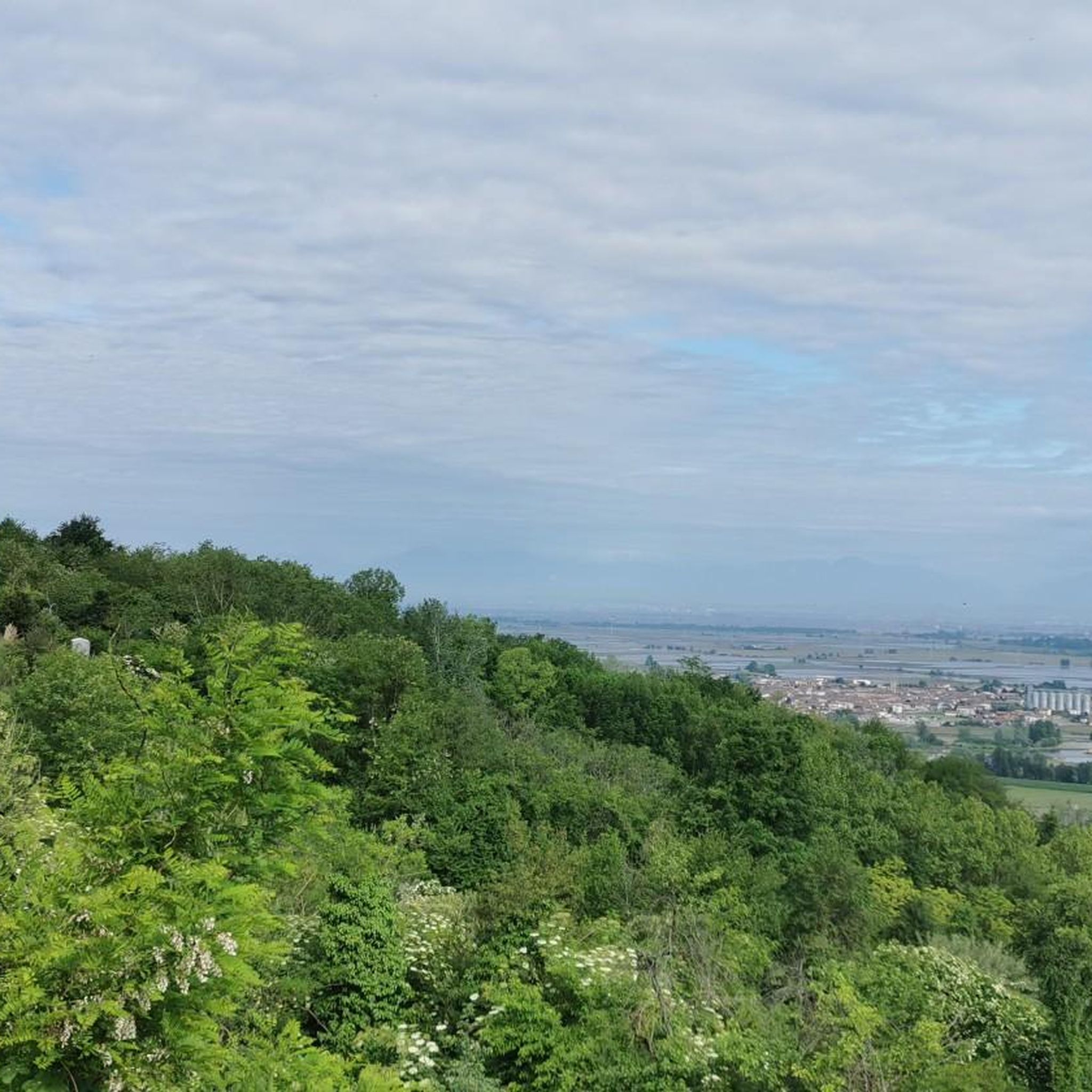
For breathtaking panoramic views, visit the Sanctuary of the Madonna di Crea. Located on a hill, it offers expansive vistas that encompass the Alpine chain and the surrounding rolling hills of Monferrato. Another excellent spot is the Vineyard Landscapes of Langhe, Monferrato and Roero, a UNESCO site known for its exceptional wine-growing scenery and panoramic views.
Are there specific areas for birdwatching near Trino?
Yes, Trino's proximity to the Po River makes it an ideal location for birdwatching. The wetlands, including the San Genuario Marsh, are crucial habitats for various bird species. This special conservation area, with its artificial basins and extensive rice fields, attracts numerous rare and interesting avifauna, making it a prime spot for bird enthusiasts.
What is the significance of the Risaie Vercellesi (Vercelli Rice Fields)?
The Risaie Vercellesi, or Vercelli Rice Fields, are an integral part of the unique ecosystem in the Vercellese area. While primarily agricultural, these fields contribute significantly to the landscape and are considered key areas for breeding and migrating wading birds. They form a distinctive and important natural and cultural landscape around Trino.
Are there any historical or cultural natural monuments to visit?
Absolutely. The Sanctuary of the Madonna di Crea is a significant attraction, blending natural beauty with historical and religious heritage. Founded in 1589, it's part of a protected nature reserve featuring 23 chapels and 5 hermitages. Another site with historical context is the Vineyard Landscapes of Langhe, Monferrato and Roero, a UNESCO site that showcases centuries of wine-growing culture.
What kind of outdoor activities can I do near Trino's natural monuments?
The area around Trino offers a variety of outdoor activities. You can explore numerous hiking trails, go gravel biking, or enjoy running. For example, there are several hiking routes, including easy loops through the Bosco della Partecipanza di Trino. If you prefer cycling, you'll find gravel biking routes that take you through scenic landscapes. There are also running trails for those looking to jog amidst nature.
Are there family-friendly natural monuments around Trino?
Yes, several natural monuments around Trino are suitable for families. The Sanctuary of the Madonna di Crea offers pleasant walks through a nature reserve. The San Genuario Marsh provides an opportunity to observe diverse avifauna, which can be engaging for children. Additionally, the area around the Ancient Oak 'Rolassa' features an equipped area perfect for a family break.
What is the best time of year to visit the natural monuments around Trino?
The best time to visit the natural monuments around Trino largely depends on your preferred activities. Spring and autumn generally offer pleasant temperatures for hiking and exploring, with vibrant flora in spring and beautiful foliage in autumn. Birdwatching is particularly rewarding during migration seasons in spring and fall. Summer can be warm, but still enjoyable, especially for early morning or late afternoon visits.
Are there easy hikes for beginners near Trino's natural monuments?
Yes, there are several easy hiking options suitable for beginners. For instance, the "Bosco della Partecipanza di Trino Loop" is an easy 7.5 km hike. Another easy route is the "Ancient Oak 'Rolassa' – Ancient Oak Tree loop from Parco Naturale del Bosco delle Sorti della Partecipanza di Trino," which is about 7.7 km. You can find more details and other easy trails in the hiking guide for Trino.
What is the Bosco delle Sorti della Partecipanza di Trino?
The Bosco delle Sorti della Partecipanza di Trino is recognized as a regional national park. This significant natural environment implies protected flora and fauna, offering excellent opportunities for nature immersion. It's a place where you can find serene walks and experience the local biodiversity, as highlighted by routes like the "Bosco della Partecipanza di Trino Loop".
Are there dog-friendly walks or areas near Trino's natural monuments?
Many natural areas around Trino are suitable for walks with dogs, provided they are kept on a leash and you follow local regulations. The trails within the Bosco delle Sorti della Partecipanza di Trino, such as the "Bosco della Partecipanza di Trino Loop," are generally good options for dog-friendly outings. Always ensure to clean up after your pet to maintain the natural environment.
Where can I find accommodation or places to eat near these natural monuments?
While Trino itself offers local amenities, for specific natural monuments like the Sacro Monte di Crea, you might find cafes or restaurants in nearby towns such as Serralunga di Crea. For areas closer to the Po River wetlands or the Bosco delle Sorti della Partecipanza di Trino, options might be more spread out, often found in the main town of Trino or smaller villages in the surrounding countryside. It's advisable to check in advance for specific locations.
Most popular attractions around Trino

Get inspired with the komoot mobile app


Explore more
Extend your search for the best caves by checking out these guides of the top ones around Trino:
