Top 20 Natural Monuments around Marigliano
Best natural monuments around Marigliano include diverse landscapes shaped by volcanic activity and mountainous terrain. The region serves as a gateway to significant natural attractions within the wider Campania area. Visitors can explore iconic active volcanoes, protected parks, and unique ecosystems. These sites offer opportunities to experience distinct flora and fauna adapted to varied geological conditions.
Best natural monuments around Marigliano
- The most popular natural monuments is Crater of Mount Vesuvius, a volcano that is still active, with its…
Last updated: June 28, 2026
Crater of Mount Vesuvius
Highlight • Volcano
Translated by Google •
Tip by

Sanctuary of Sant'Angelo a Palombara
Highlight • Religious Site
Translated by Google •
Tip by
Sign up now to discover places like this
Get recommendations on the best single tracks, peaks, & plenty of other exciting outdoor places.
Sign up for free
Cognoli Summit and Valle dell'Inferno
Highlight • Summit
Translated by Google •
Tip by

Grotta Fissure
Highlight (Segment) • Cave
Translated by Google •
Tip by

Largo Angelo Prisco Memorial
Highlight • Monument
Translated by Google •
Tip by
Sign up for free to discover even more natural monuments around Marigliano.
Sign up for free
Already have an account?
Start today with a free account
Your next adventure awaits.
Login or Signup

Tips from the Community

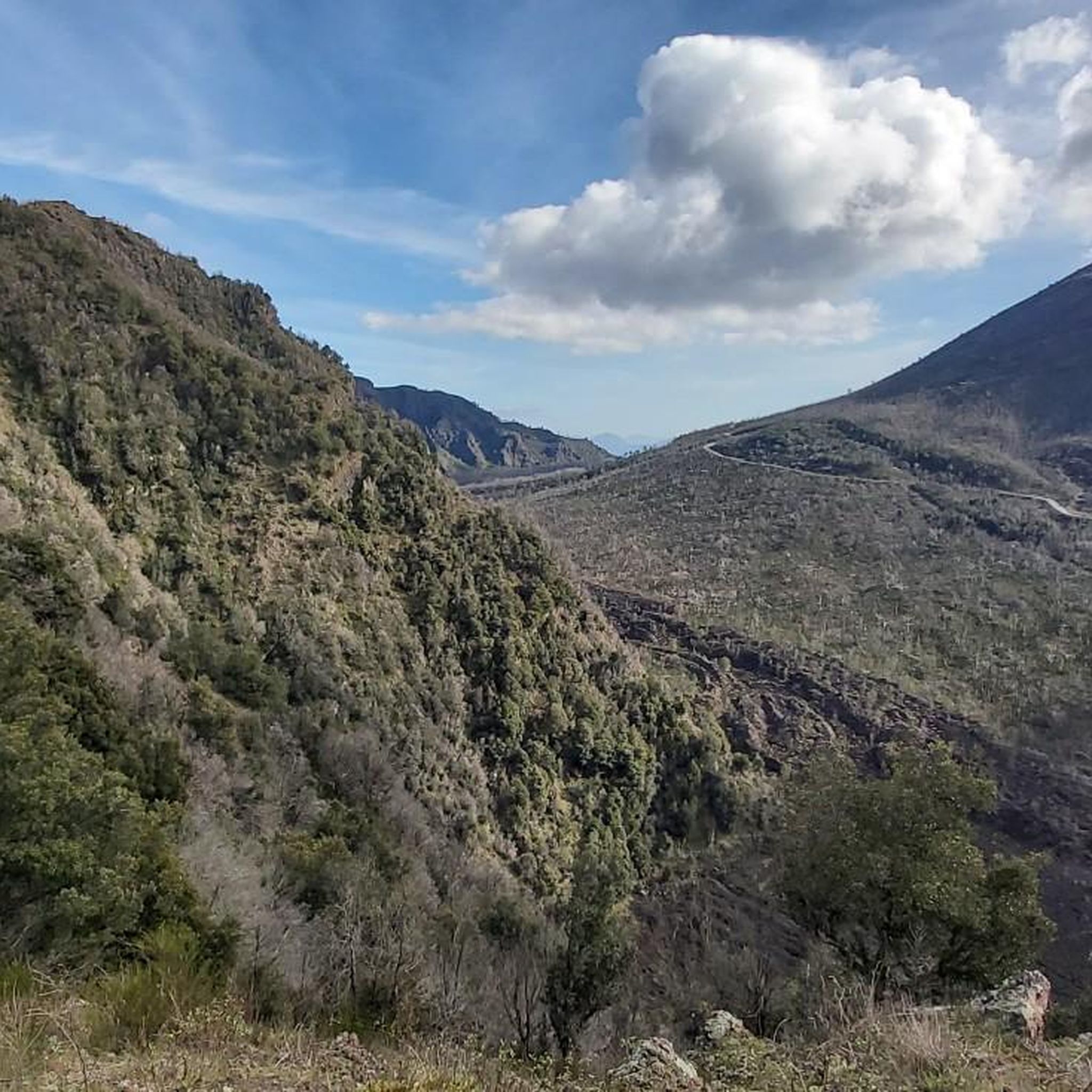
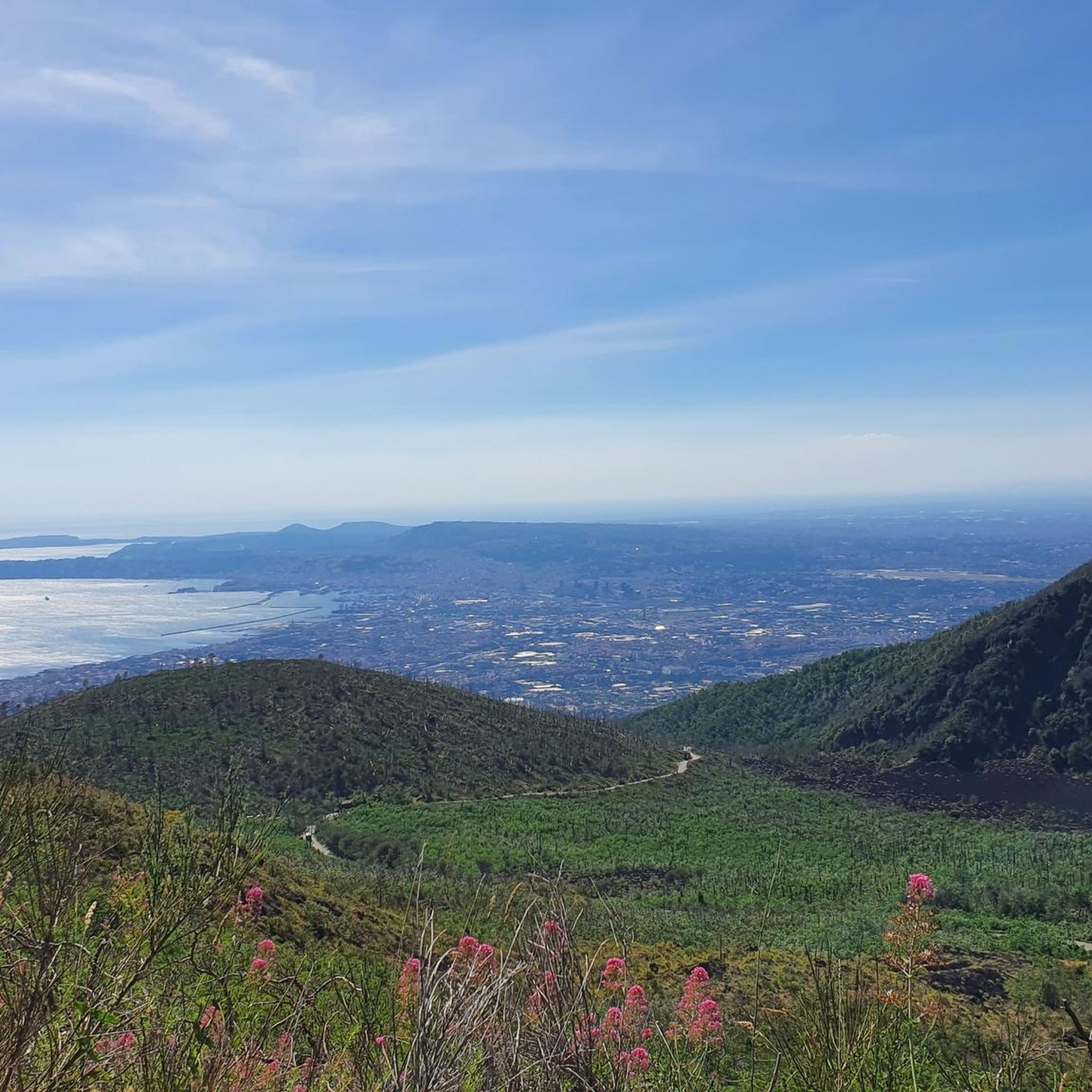
The very panoramic itinerary allows you to enjoy the most suggestive and wild scenery of Somma-Vesuvius, crossing forest environments, scrubland up to bare lava rock. The starting point is located along the road that from the Medici Palace of Ottaviano continues towards the volcanic complex. A barrier prohibiting vehicular traffic marks the beginning of the route, the first stretch of the path, common with path no. 1, winds along asphalted hairpin bends, and then turns into a dirt path. The plant landscape consists initially of a thick pine forest of stone pine and then in a mesophilous forest, with essences such as chestnut, Neapolitan alder, Neapolitan maple, holm oak, black locust. Among the nesting birds, the minute lesser spotted woodpecker, rare and localized in Campania, has only recently colonized the Vesuvius Park. After more than 1 km of walking on a steep climb you reach Largo Angelo Prisco dedicated to the young financier murdered by poachers in 1995 which represents the closest destination. From the Largo, path no. 1 branches off to the left, while the itinerary continues on the right on a slight climb, entering, between twists and turns, into a shady chestnut grove where the numerous species of mushrooms present give off an intense and pleasant fragrance.
0
0

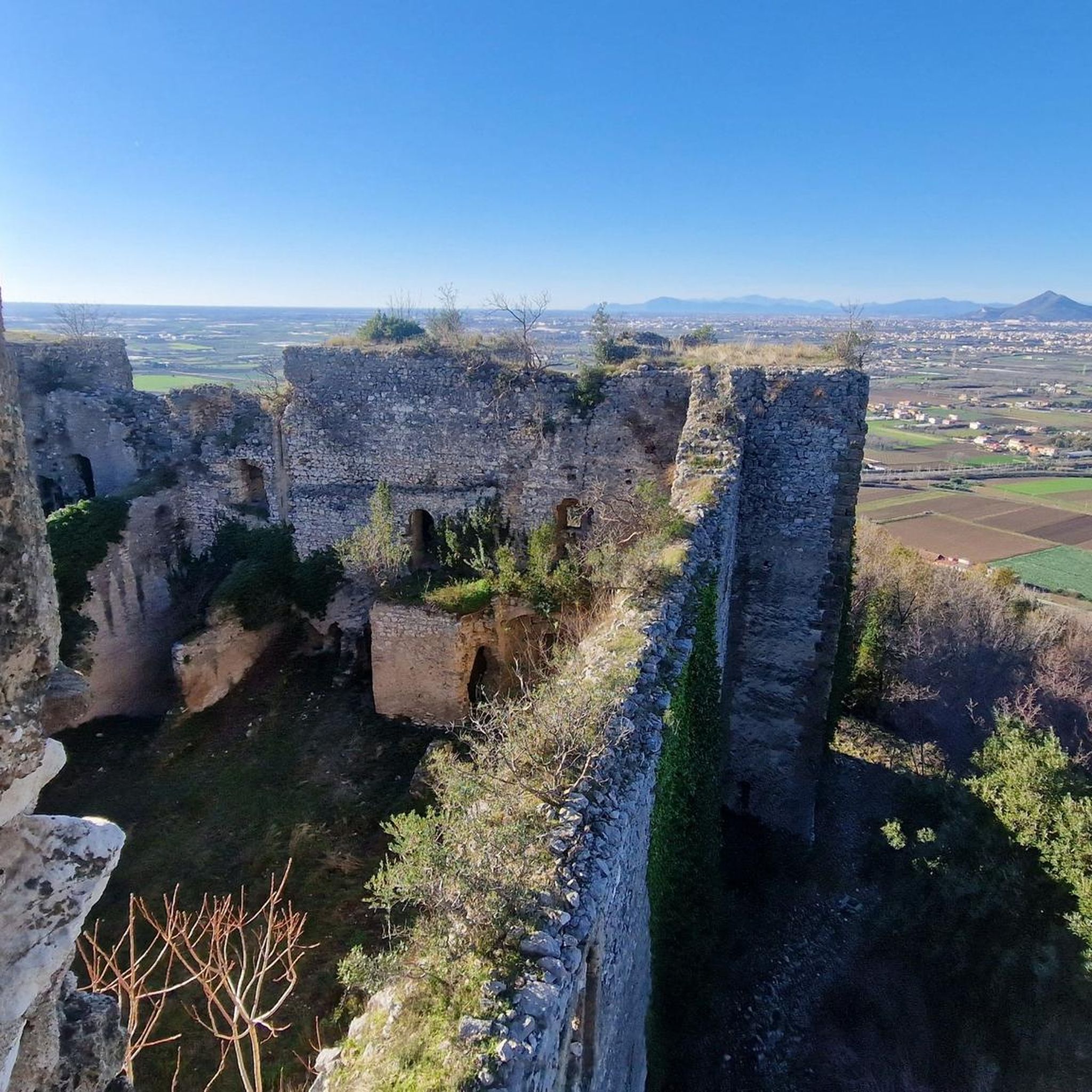
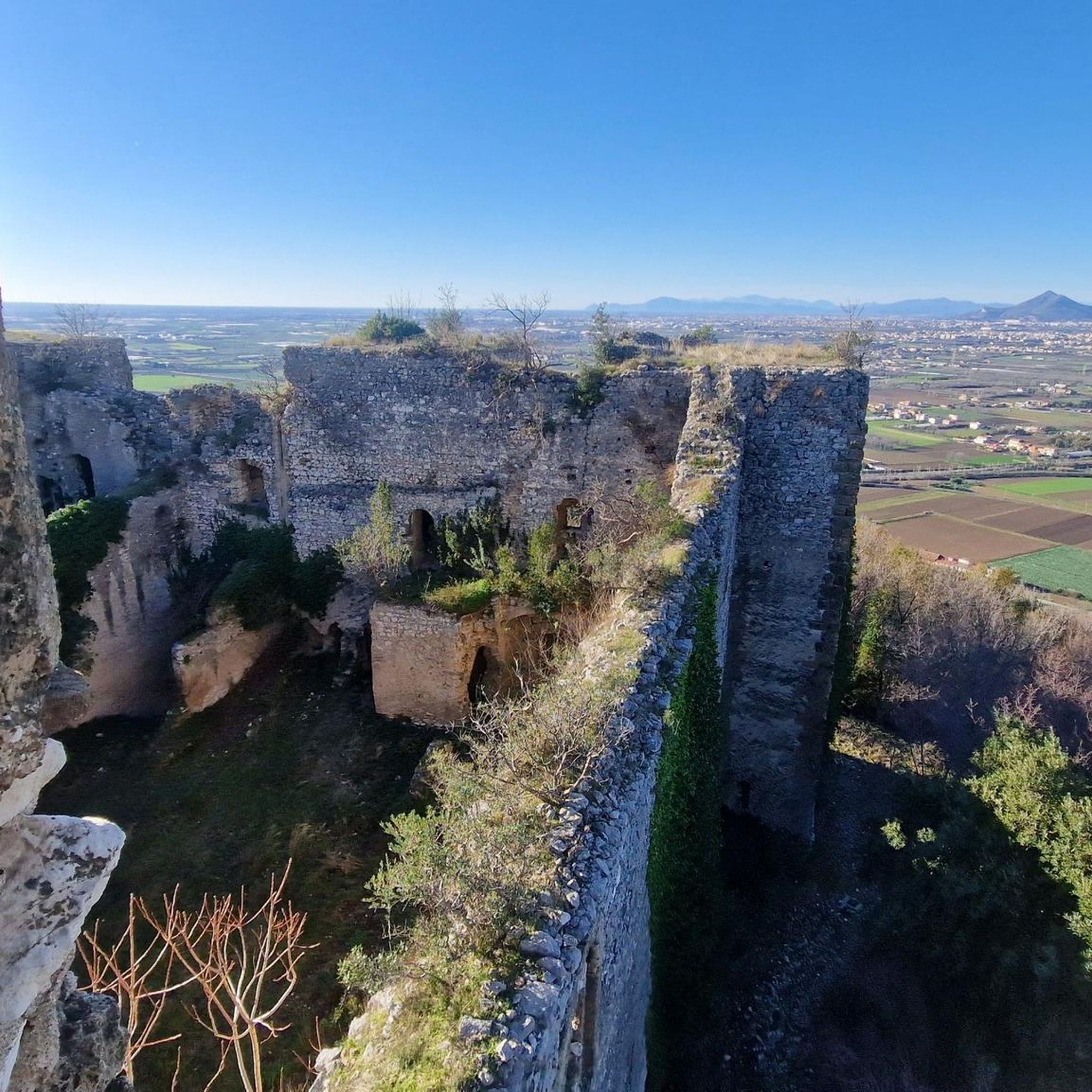
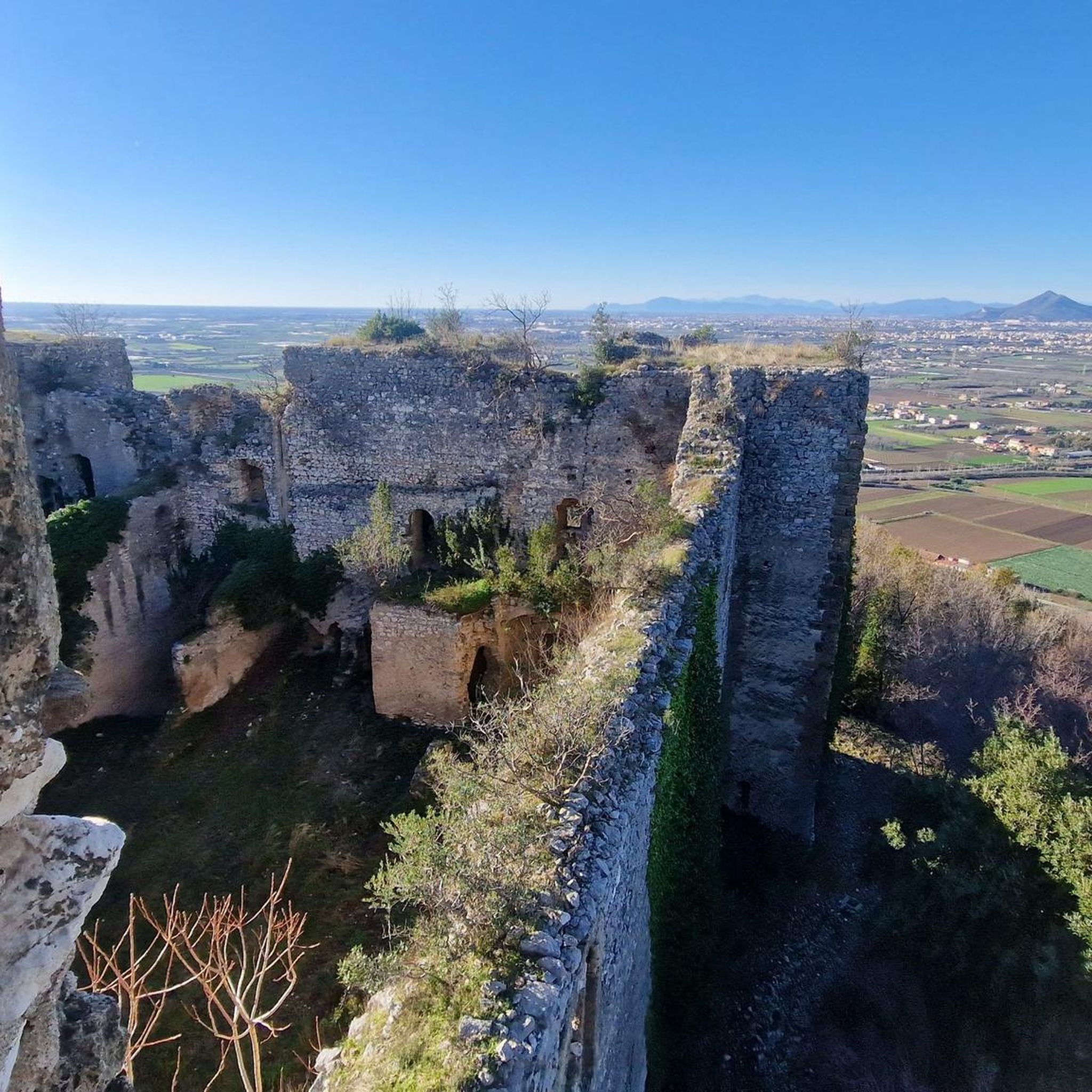
Sanctuary of S. Angelo in Palombara. Spectacular Panorama
1
0

There is also a water source going down the stairs.
0
0

Sanctuary with wonderful fall over the entire Caudina valley
0
0
Clearance with Sant'Angelo Sanctuary in Palombara, with adjoining panoramic view of the Caudina valley.
0
0

A wonderful place from which you can admire a sensational view of the whole area below.
1
0
The volcano symbol of the city of Naples, is still active, its last eruption dates back to 79 years ago.
0
0

S. Angelo in Palombara seems, more than a sacred place, a solitary and massive fortress. News of the locality and the Abbey can be found in documents of less than one thousand. The Diploma of Landolfo, Archbishop of Benevento, which contains the act of reconstruction or foundation of the Diocese of Sant 'Agata dei Goti, dated 14 December 970, speaks of the summit of the mountain called Palombara, as the boundary of the new Diocese. Even if there is no express mention of the church, the recall of the territory suggests that there must have been something there that could give rise to conflicts of jurisdiction in the future. The first act in which S. Angelo a Palombara is explicitly named is the diploma of Henry II dated 6 March 1022; those of Corrado follow, 8 June 1038; William, 1070; Pope Gregory VII, December 3, 1084; Pope Anacleto, 1130 and 1139. These are acts in which the possession and dependence of numerous abbeys with their respective appurtenances and endowments as well as other real rights over people and things is recognized at the Monastery of Santa Sofia in Benevento.
23
0
Frequently Asked Questions
What are the most iconic natural monuments to visit near Marigliano?
The most iconic natural monuments near Marigliano include the active Crater of Mount Vesuvius, offering panoramic views of the Gulf of Naples, and the vast Parco Regionale del Partenio, known for its diverse ecosystems and extensive trekking opportunities. The Oasi WWF Bosco di San Silvestro near Caserta also provides a remarkable ancient woodland experience.
Are there hiking trails available at Mount Vesuvius National Park?
Yes, Mount Vesuvius National Park offers 54 km of paths, including the popular "Gran Cono" trail that leads directly to the crater's edge. For more detailed hiking options, you can explore the hiking guide around Marigliano, which includes routes like 'Trail 3: Monte Somma'.
What unique geological features can I explore in the natural monuments around Marigliano?
You can explore several unique geological features. The Grotta Fissure offers a chance to enter a lava gap and view the "Hell's Valley." The Parco Regionale del Partenio is characterized by its calcareous geology, leading to numerous caves and karst phenomena. Of course, Mount Vesuvius itself is a prominent somma-stratovolcano with ancient lava flows.
What is the best time of year to visit the natural monuments near Marigliano?
The best time to visit is generally during spring (April-May) and autumn (September-October) when the weather is mild and pleasant for hiking and outdoor activities. Summers can be hot, especially on Vesuvius, while winters might bring colder temperatures and occasional snow to higher elevations like the Partenio mountains.
Are there any family-friendly natural monuments or activities near Marigliano?
Yes, the Vesuvius National Park offers accessible paths, and the Oasi WWF Bosco di San Silvestro is designed with thematic routes for discovering local flora and fauna, making it an ideal destination for families and environmental education. Many trails in the Parco Regionale del Partenio also offer moderate loops suitable for families.
What kind of wildlife and plant life can I expect to see?
The region is rich in biodiversity. Vesuvius National Park boasts 612 plant species and 227 animal species, adapted to volcanic soil. The Parco Regionale del Partenio is a biodiversity hotspot with dense forests, including chestnut and oak, and is home to rare amphibian species like the spectacled salamander. The Oasi WWF Bosco di San Silvestro protects ancient holm oak forests and is a haven for migratory birds and typical Central Italian mammals.
How can I reach Mount Vesuvius National Park using public transport?
Mount Vesuvius National Park is easily accessible by public transport. You can take trains from Naples to Ercolano Scavi or Pompei Villa dei Misteri, with connecting shuttle buses available to the park entrance. Remember to purchase tickets for the "Gran Cono" online in advance.
What historical significance do these natural monuments hold?
Mount Vesuvius is infamous for its 79 AD eruption that buried Pompeii and Herculaneum, making it a site of immense historical and archaeological importance. The trails within the Parco Regionale del Partenio also have historical significance, having served as vital communication routes for ancient communities. The Oasi WWF Bosco di San Silvestro was once a royal hunting reserve linked to the Royal Palace of Caserta.
Are there opportunities for cycling or gravel biking near these natural monuments?
Yes, the area around Marigliano offers various cycling opportunities. You can find routes for gravel biking in the gravel biking guide, with options like the 'Singletrack to Strada Matrone' loop. For general cycling, the cycling guide around Marigliano provides routes such as the 'Bakery of Roccabascerana – Medieval Tower of Summonte loop'.
What kind of panoramic views can I expect from the natural monuments?
From the summit of Mount Vesuvius, you'll be treated to breathtaking panoramic views of the entire Gulf of Naples, including the Sorrento Peninsula and the islands of Capri, Procida, and Ischia. The Cognoli Summit and Valle dell'Inferno also offer spectacular views of the Vesuvian hinterland.
What do visitors particularly enjoy about the natural monuments around Marigliano?
Visitors frequently highlight the impressive scale and mystical atmosphere of Mount Vesuvius, especially the rewarding hike to the crater. The panoramic views from various summits, such as Sanctuary of Sant'Angelo a Palombara and Cognoli Summit, are also highly appreciated. Many enjoy the diverse landscapes, from forests to lava rock, and the tranquility offered by these natural spaces.
Are there any lesser-known natural monuments worth exploring near Marigliano?
While Vesuvius and Partenio are prominent, the Grotta Fissure offers a unique, albeit challenging, exploration into a lava gap with a view of the "Hell's Valley." The Cognoli Summit and Valle dell'Inferno provides a panoramic itinerary through diverse forest environments and scrubland, offering a wilder side of the Somma-Vesuvius area.
Most popular routes around Marigliano
Most popular attractions around Marigliano

Get inspired with the komoot mobile app


Explore more
Extend your search for the best caves by checking out these guides of the top ones around Marigliano:
