Top 9 Natural Monuments in the Ou Mountains
Natural monuments in the Ou Mountains, Japan's longest mountain range on Honshu island, showcase diverse geological features and natural landscapes. This region is characterized by its volcanic origins and includes areas protected within national parks. The Ou Mountains offer a variety of natural sites, from unique rock formations to crater lakes. There are 9 natural monuments to explore in this area.
Best natural monuments in the Ou Mountains
- The most popular natural monuments is Goshikinuma Ponds, a lake that…
Last updated: June 26, 2026
Goshikinuma Ponds
Highlight (Segment) • Lake
Translated by Google •
Tip by

Mt. Bandai's summit
Highlight • Summit
Tip by

Sign up now to discover places like this
Get recommendations on the best single tracks, peaks, & plenty of other exciting outdoor places.
Sign up for free
Mt. Kushigamine
Highlight • Summit
Tip by
Akanuma Pond
Highlight • Lake
Tip by
Remains of Bandai Onsen Nakanoyu
Highlight • Historical Site
Tip by
Mount Adatara — Crater and Trails
Highlight (Segment) • Volcano
Tip by
Goshiki-numa marshes (the Witch's Eye)
Highlight • Lake
Tip by
Mt. Higashi-Daiten
Highlight • Summit
Tip by
Goshikinuma (the "Witch's Eye")
Highlight • Lake
Tip by
Start today with a free account
Your next adventure awaits.
Login or Signup

Other adventures in the Ou Mountains

Tips from the Community

There used to be three onsens (hot spring) sites on Mt. Bandai's northern side. But the phreatic explosion in 1888 led to heavy debris avalanches that destroyed the upper and lower spring sites and caused human casualties. Nakanoyu was the only remaining site in activity, but the last bath establishment closed its doors in the late 1990s.
0
0
Mt. Bandai (or Bandaisan), is registered as a UNESCO Japanese Geopark since 2011. Mt. Bandai has known two major sector collapses and debris avalanches: one 50,000 years ago and the latest in 1888. The first sector collapse is said to have led to the formation of the famous Inawashiro lake. The second one in 1888 was a phreatic eruption. Unlike the destructive magmatic eruptions in most volcanoes, the explosion in Mt. Bandai consisted of high-temperature steam, preserving a large part of the surrounding flora.
0
0
Mt. Bandai is crossed by three peaks: Mt. Bandai's central peak, Kushigamine's peak, and Mt. Akahani's peak. Kushigamine can be recognized by its reddish/brownish rocky paths. The northeast side suffered a big phreatic explosion in 1888, leaving its landscapes marked by the consequences of landslides and debris avalanches. The mountain's name: "the comb peak," was given for the sharp shape of its southern side that looks like a comb's teeth.
0
0
This marsh's (which is actually Mt. Bandai's caldera lake) reddish color is due to the erosion of the surrounding rocks after the many eruptions in Mt. Bandai, leaving extensive deposits of iron hydroxide in the pond's bed. The pond's water is very acidic and rich in sulfur, iron, manganese, and aluminum.
1
0
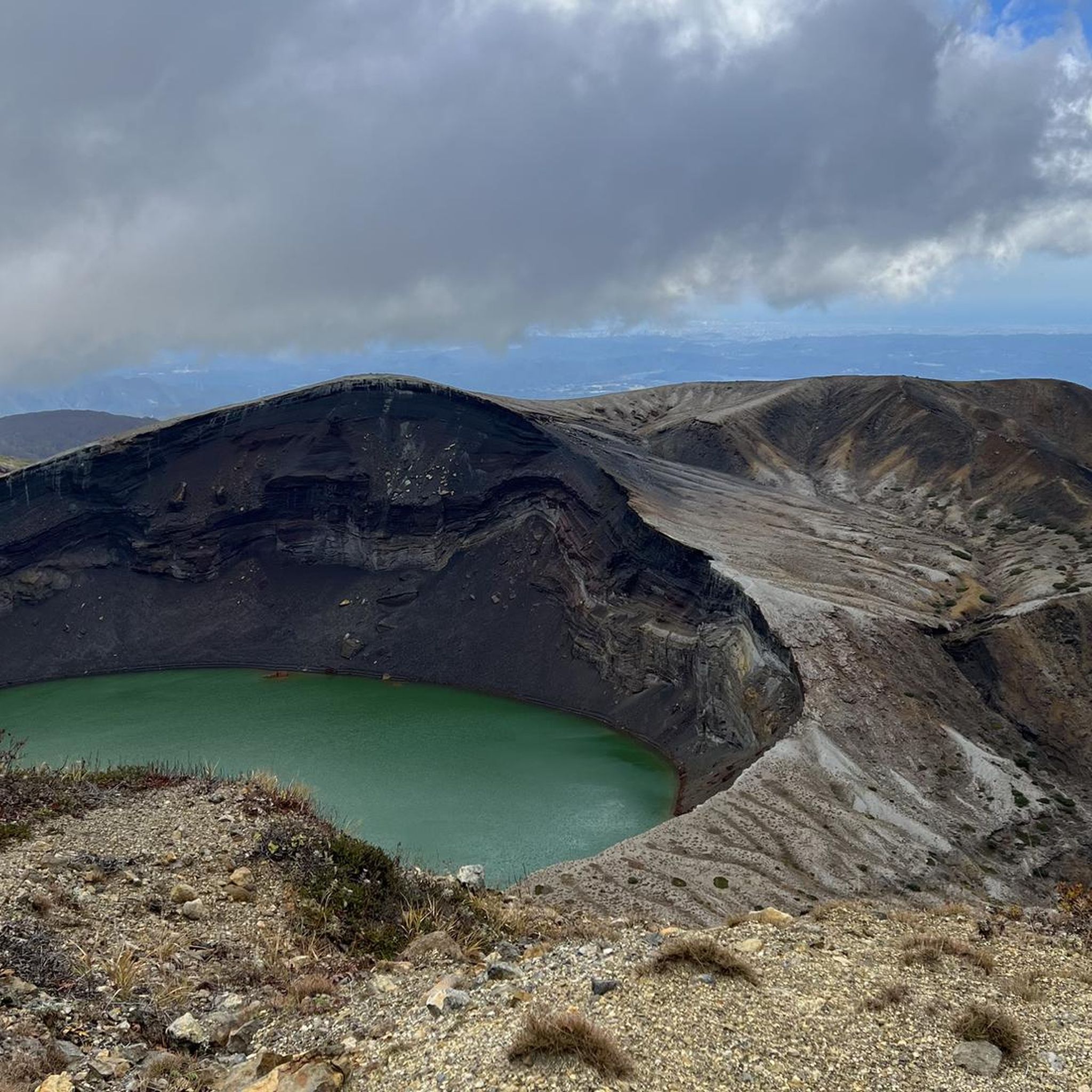
Mt. Adatara is a fabulous mountain, one of Japan's 100 most famous mountains, located near Dake Onsen, with a ropeway station at the top, a beautiful orange crater and magnificent red leaves in autumn.
0
0
One of the many volcanoes / peaks that are a part of the Bandai-Asahi National Park and that is located between Yonezawa City (Yamagata Prefecture) and Fukushima Prefecture, culminating at 1928m high. A place where to find the native fir : Abies mariesii.
0
0
This beautiful caldera is also known under the name Majo no Hitomi (the "Witch's Eye"), famous for its flower species sprinkled around the marsh (example of flowers you may encounter: Rhododendron brachycarpum f. nemotoanum, Veratrum stamineum, Rhododendron brachycarpum...)
1
0
The Goshikinuma lake is also known under the name "majo no hitomi" 魔女の瞳 because of its round shape and dark blue color.
1
0
Frequently Asked Questions
What are some of the most unique natural monuments to visit in the Ou Mountains?
The Ou Mountains are home to several unique natural monuments. Don't miss the Goshikinuma Ponds, known for their distinct colors that change with the season and light. Another fascinating spot is Akanuma Pond, which gets its reddish hue from extensive iron hydroxide deposits. For a geological marvel, the Yakehashiri Lava Flow on Mount Iwate offers a striking landscape of black lava chunks, a designated National Natural Monument.
Are there family-friendly natural monuments in the Ou Mountains?
Yes, the Ou Mountains offer several family-friendly natural monuments. The Goshikinuma Ponds are a great option, featuring an easy trail along various colorful ponds. The Oirase Gorge is also highly recommended for families, with a well-marked hiking trail running parallel to the river and numerous waterfalls, making for an immersive and accessible nature experience.
What kind of hiking trails can I find near the natural monuments?
You'll find a variety of hiking trails. For instance, near the Goshikinuma Ponds, there are easy loops like the Goshikinuma Ponds loop from 磐梯高原駅. For more challenging routes, consider the trails around Mt. Bandai's summit or Mount Adatara — Crater and Trails. You can explore more options for hiking in the region on our guide to Hiking in the Ou Mountains.
What is the best time of year to visit the natural monuments in the Ou Mountains?
The best time to visit largely depends on what you want to see. Autumn (late September to November) is spectacular for vibrant foliage, especially at Oirase Gorge and around Lake Towada. Late spring (late May to early June) is ideal for witnessing the unique 'Dragon Eye' phenomenon at Kagaminuma Pond. Summer offers lush greenery and pleasant hiking conditions, while winter transforms areas like the Hakkōda Mountains into a wonderland with 'snow monsters' (juhyo) and powder skiing.
Are there any natural monuments with significant historical or cultural importance?
Yes, the Dewa Sanzan mountains (Mount Haguro, Mount Gassan, and Mount Yudono) are deeply sacred and central to Shugendo, a folk religion blending Buddhist and Shinto traditions. The cedar trees of Mount Haguro are a Special National Natural Monument, and the area offers a profound cultural and natural experience. Additionally, the Remains of Bandai Onsen Nakanoyu also hold historical significance as a natural monument.
Can I see volcanic features among the natural monuments?
Absolutely. The Ou Mountains are known for their volcanic origins. Mt. Bandai's summit is a UNESCO Japanese Geopark, showcasing a volcano with a history of major sector collapses. The Yakehashiri Lava Flow on Mount Iwate is another prime example, offering a well-preserved glimpse into volcanic activity. You can also find volcanic landscapes around Kagaminuma Pond and the Hakkōda Mountains.
What should I wear when hiking to natural monuments in the Ou Mountains?
Given the diverse terrain and weather conditions, it's best to dress in layers. Sturdy hiking boots are essential, especially for volcanic or mountainous areas like Mt. Kushigamine. Waterproof and windproof outer layers are advisable, as weather can change quickly. Don't forget sun protection, a hat, and plenty of water. For winter visits, specialized cold-weather gear is necessary.
Are there opportunities for wildlife spotting near the natural monuments?
The protected areas within the Ou Mountains, such as Towada-Hachimantai National Park, offer good opportunities for wildlife observation. While specific sightings can't be guaranteed, the lush forests of Oirase Gorge and the alpine environments of Mount Gassan and the Hakkōda Mountains are home to diverse flora and fauna. Keep an eye out for various bird species and smaller mammals.
How accessible are the natural monuments by public transport?
Accessibility varies by location. Some popular sites like Oirase Gorge are well-served by buses, especially during peak seasons like autumn, with stops at various attractions. Lake Towada also has good access. However, more remote volcanic peaks or hidden ponds might require a combination of public transport and a longer hike, or personal vehicle access. It's recommended to check local bus schedules for specific destinations.
Are there any hidden gems among the natural monuments that are less crowded?
While popular spots can draw crowds, some natural monuments offer a more serene experience. Akanuma Pond in Urabandai is often described as a hidden gem, providing a tranquil setting with its unique reddish water and reflective surface. The Goshiki-numa marshes (the Witch's Eye), a caldera lake known for its flower species, can also offer a quieter experience compared to the more famous Goshikinuma Ponds.
What kind of views can I expect from the summits in the Ou Mountains?
The summits in the Ou Mountains offer breathtaking panoramic views. From Mt. Bandai's summit, you can see the Urabandai lakes and Lake Inawashiro. Mount Adatara — Crater and Trails also provides expansive vistas of the surrounding volcanic landscape. The Hakkōda Mountains, accessible via ropeway, offer views of marshlands and alpine forests, transforming into 'tree tunnels' in winter.
Are there any natural monuments that are particularly beautiful during winter?
Yes, the Hakkōda Mountains are renowned for their winter beauty, especially the 'snow monsters' (juhyo) – trees covered in frozen fog and snow. This area is also a prime destination for powder skiing. While some areas might be less accessible, the stark, snow-covered landscapes around volcanic features can be incredibly striking during the colder months.
Most popular attractions in the Ou Mountains

Get inspired with the komoot mobile app


Explore more
Extend your search for the best caves by checking out these guides of the top ones in the Ou Mountains:
