Top 20 Natural Monuments in the Peloponnese Mountains
Natural monuments in the Peloponnese Mountains feature diverse landscapes, unique geological formations, and rich biodiversity. The region is characterized by limestone massifs, deep gorges, and extensive cave systems. These natural areas offer varied ecosystems, from Mediterranean scrub to coniferous forests and subalpine zones. The Peloponnese Mountains provide opportunities to explore significant natural attractions and observe local flora and fauna.
Best natural monuments in the Peloponnese Mountains
- The most popular natural monuments is Great Waterfall, a waterfall that requires sure-footedness…
Last updated: October 13, 2026
Upper Peirene Spring
Highlight • Historical Site
Translated by Google •
Tip by

Kayafa Thermal Springs ♨️🏊 Spa
Highlight • Natural Monument
Tip by

Sign up now to discover places like this
Get recommendations on the best single tracks, peaks, & plenty of other exciting outdoor places.
Rock Wall of Agios Nikolaos-Gourna
Highlight • Natural Monument
The rock here consists mainly of two types:
Showing Translation
Tip by

Neda Stone Bridge
Highlight • Bridge
Translated by Google •
Tip by

Great Waterfall
Highlight (Segment) • Waterfall
Translated by Google •
Tip by

Pausanias Baths
Highlight • Natural Monument
Translated by Google •
Tip by

Kameni Chora Volcano
Highlight • Volcano
Translated by Google •
Tip by

Volcanic Cave
Highlight • Cave
Translated by Google •
Tip by

N-Entrance Mount Parnon & Moustos Wetlands Protected Area ⛰️
Highlight • Natural Monument
Tip by
Didyma Sinkhole and Chapel
Highlight • Natural Monument
Translated by Google •
Tip by
Sign up for free to discover even more natural monuments in the Peloponnese Mountains.
Already have an account?
Start today with a free account
Your next adventure awaits.
Popular around Peloponnese Mountains
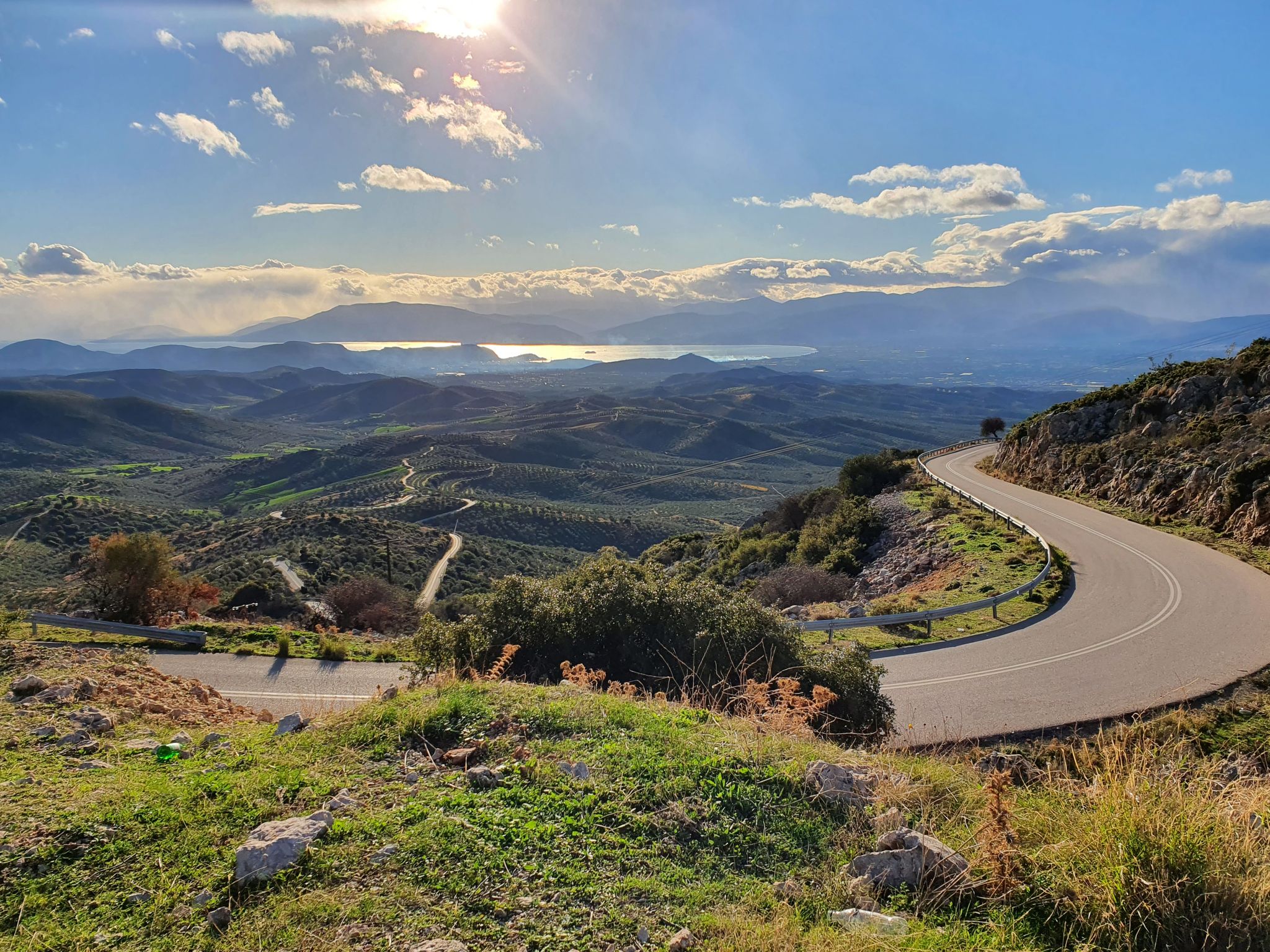
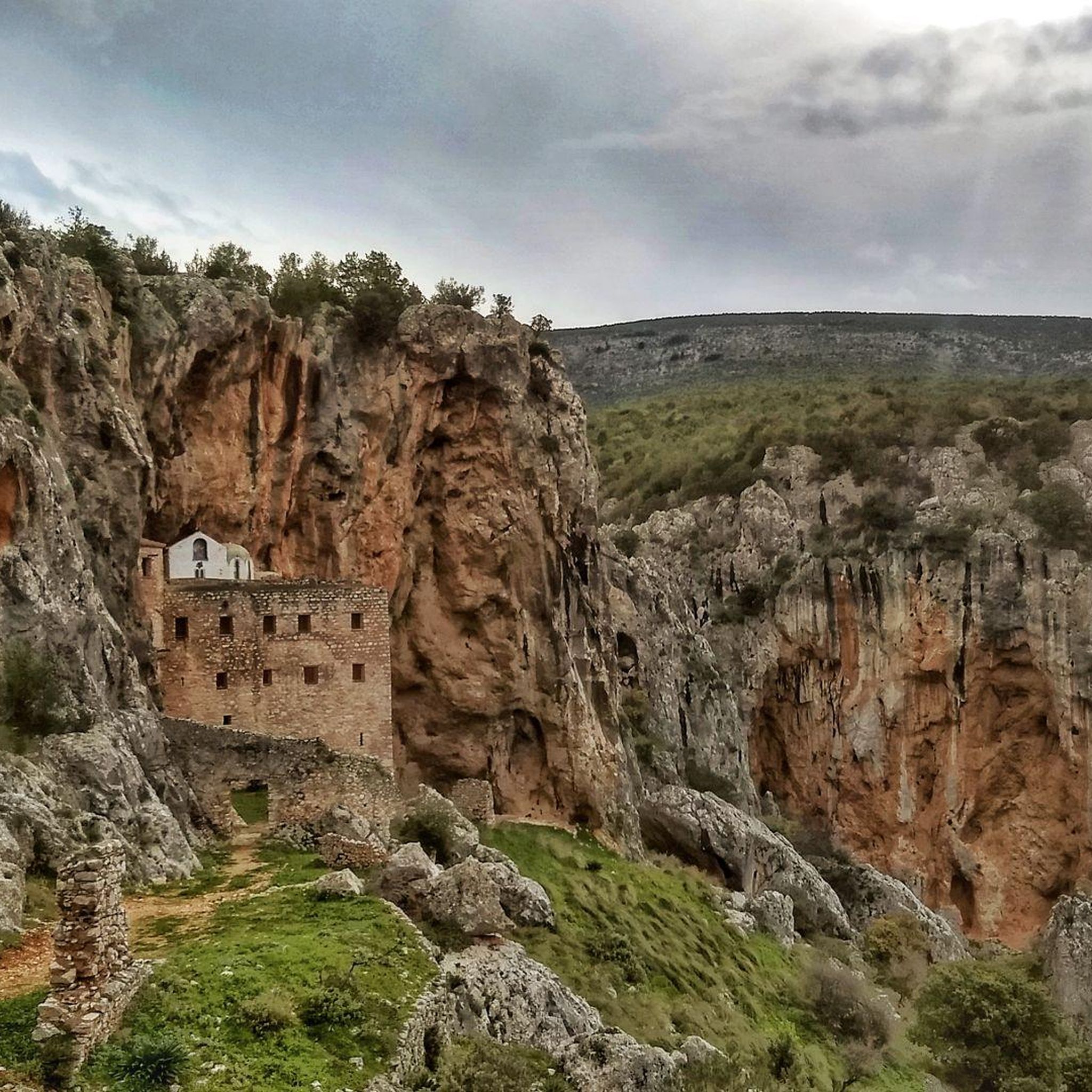
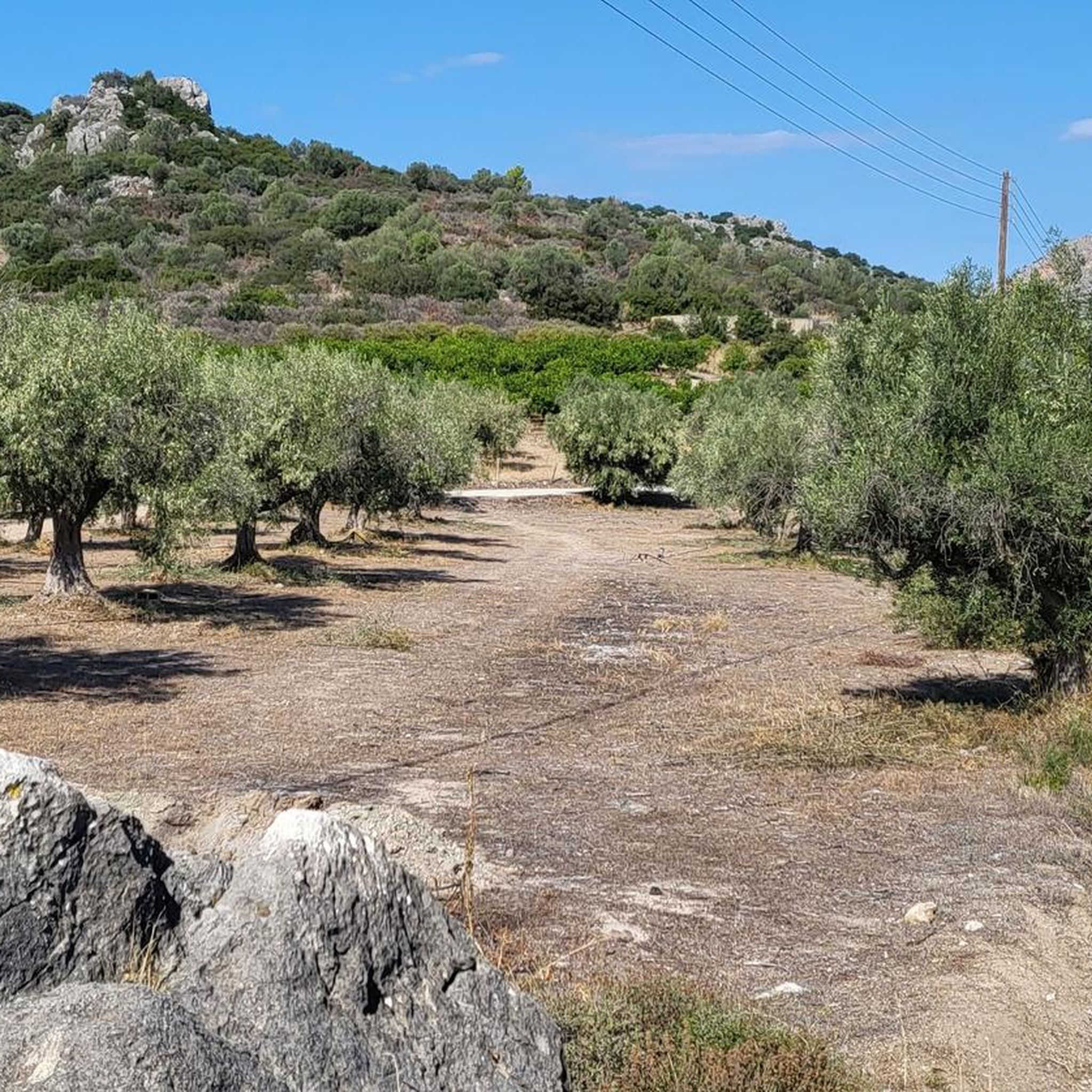
Other adventures in the Peloponnese Mountains


Tips from the Community

(2) - Pegasus and Bellerophon: According to one legend, the spring originated where the winged horse Pegasus touched the ground with its hoof. It is said that the hero Bellerophon captured and tamed the steed here. - Tears of Pirene: According to another tradition, the spring (or its lower counterpart) originated from the incessant tears of the nymph Pirene, who mourned her son Kenchrias, killed by Artemis. The spring is located about 85 meters below the summit (where the temple of Aphrodite once stood) in a hollow between the fortress walls. It is an underground well house, accessible via a staircase carved into the rock.
1
0
The Upper Peirene Spring (also Ano Peirene) is located on the summit of Akrokorinth, the table mountain of the ancient city of Corinth. It is considered one of the most important water sources in Greek mythology and was crucial for the defensive capability of the Akrokorinth fortress, as it never dried up, even during sieges. The spring is deeply rooted in the world of Greek myths: - Sisyphus, the king of Corinth, revealed to the river god Asopos the whereabouts of his daughter Aegina, who had been abducted by Zeus. As a reward, Asopos gifted him the Peirene spring on Akrokorinth.
1
0
The rock faces in the Agios Nikolaos-Gourna region and the adjacent Vouraikos Gorge are geologically very distinctive. The rock here consists mainly of two types: Red conglomerates: These are particularly striking and give many rock faces their characteristic, coarse structure and reddish color. Conglomerates are sedimentary rocks consisting of rounded rock fragments (such as pebbles) that have been "cemented" together by a fine matrix. Limestone: Large parts of the Chelmos-Vouraikos UNESCO Global Geopark, to which this area belongs, consist of limestone. This is often heavily karstified, which has contributed to the formation of the many caves and distinctive rock formations in the gorge.
0
0

Very interesting, much more interesting to show us electric bikes than to show us the crater. When will people start giving real information?
0
0

Methana Peninsula The Methana Peninsula was formed from the seabed by successive volcanic eruptions that began about 1,000,000 years ago and ended about 250,000 years ago. Then everything was quiet here for thousands of years and the landscape we see today was already formed. However, around 250 BC there was another small eruption. This eruption is mentioned by Pausanias, among others, in his writings. He says that there was a fertile plain that stretched from the present village of Kammeni Chora to the sea in the west. The whole area was covered by lava that accumulated over months and formed the steep mountain that you can see right behind your back. The height of the mountain is about 400 m. It was not a violent eruption. During the last phase, the viscous lava flow died out in the sea in the west. The volcanoes of Methana do not have the typical caldera shape. The lava here was so viscous that it accumulated vertically, forming high, steep mountains. The eruptions here were usually not violent and lasted a long time. In general, every mountain you see in the area is a single eruption. About 30 individual volcanic eruptions are visible on the Methana peninsula. On the summit of Kammeni Chora volcano you will find a crack that probably appeared during the last phase of the eruption, when the rich lava flow reached the sea. From the summit you can follow the lava flow with your eyes all the way to the sea. The sunset here is more beautiful than on Santorini. The lava glows red again in the last light of the setting sun. Methana volcano is active, however we cannot yet predict where and when the next eruption will be. The hike to the summit takes about 25 minutes. Text and pictures: Elias Rizos - www.volcanotrails.gr Read about the Kammeni Chora volcano on www.volcanotrails.gr SCAN ME A travel guide to Methana-topia www.volcanotrails.gr SCAN ME Map of Methe Background from 2002 Methana Peninsula The Methana peninsula was formed from the seabed by successive volcanic eruptions that began about 1,000,000 years ago and ended about 250,000 years ago. Then everything was quiet here for thousands of years and the landscape we see today was already formed. However, around 250 BC there was another small eruption. This eruption is mentioned by Pausanias, among others, in his writings. He says that there was a fertile plain that stretched from the present village of Kammeni Chora to the sea in the west. The whole area was covered by lava, which accumulated for months and formed the steep mountain that you can see right behind your back. The height of the mountain is about 400 m. It was not a violent eruption. During the last phase, the viscous lava flow died out in the sea to the west. Methana's volcanoes do not have the typical caldera shape. The lava here was so viscous that it accumulated vertically and formed high, steep mountains. The eruptions here were usually not violent and lasted a long time. In general, every mountain you see in the area is a single eruption. About 30 individual volcanic eruptions are visible on the Methana peninsula. On the summit of the Kammeni Chora volcano you will find a crack that probably appeared during the last phase of the eruption, when the rich lava flow reached the sea. From the summit you can follow the lava flow with your eyes all the way to the sea. The sunset here is more beautiful than on Santorini. The lava glows red again in the last light of the setting sun. Methana volcano is active, however we cannot yet predict where and when the next eruption will be. The hike to the top takes about 25 minutes. Text and pictures: Elias Rizos – www.volcanotrails.gr Read about Kammeni Chora volcano on www.volcanotrails.gr SCAN ME A travel guide to Methana-topia www.volcanotrails.gr SCAN ME Map of Methe Background from 2002 Με χρώματα στp
0
0

Next to the old stone bridge is the exit point from the Neda Gorge to reach the waterfalls.
0
3

The waterfall directly at the stone bridge is not the highlight; the more beautiful ones come later on the tour.
0
0

The bathroom has been completely renovated and now has an outdoor pool - the bathhouse itself has been closed since a suffocation accident. All you have to do is press a green button and a pump starts filling the pool for 15 minutes. If you want to bathe longer, simply press the button again. In January 2024 the water had a temperature of around 30 degrees.
2
0
Frequently Asked Questions
What unique geological features can I explore in the Peloponnese Mountains?
The Peloponnese Mountains offer a variety of unique geological formations. You can visit the Volcanic Cave, which provides a good view and a nice, short tour. Another notable site is the Didyma Sinkhole and Chapel, a fascinating sinkhole that can be entered through a tunnel, though caution is advised due to slippery steps. The region also features the Kameni Chora Volcano, offering insights into the area's volcanic past.
Are there any natural thermal springs or spas in the Peloponnese Mountains?
Yes, the Peloponnese Mountains are home to natural thermal springs. The Kayafa Thermal Springs ♨️🏊 Spa is a well-known spot for relaxation. Additionally, the Pausanias Baths offer sulfur baths, with water available at the push of a button to fill an outdoor pool, providing a unique bathing experience.
What are some of the most impressive waterfalls in the Peloponnese Mountains?
The Peloponnese Mountains boast several impressive waterfalls. The Great Waterfall is a popular choice, known for its challenging terrain requiring sure-footedness and sturdy shoes, and features small caves. Beyond this, the Polylimnio Waterfalls in Messinia are a series of cascading falls and natural pools set amidst lush forests, offering a picturesque setting for swimming and exploration.
What kind of wildlife and flora can I expect to see in the Peloponnese Mountains?
The Peloponnese Mountains are rich in biodiversity. Mount Taygetus, for instance, is part of the Natura 2000 network and an Important Bird Area, hosting 87 recorded bird species and over 1,000 plant species, with 33 endemic to the region. Its varied vegetation zones range from Mediterranean scrub to coniferous forests. The Lousios Gorge also features rich vegetation, including olive trees, cypress groves, and various herbs.
Are there family-friendly natural monuments or areas suitable for children?
While many natural monuments involve hiking, some areas are more accessible or offer features enjoyable for families. The N-Entrance Mount Parnon & Moustos Wetlands Protected Area ⛰️ is categorized as family-friendly and includes a beach and lake. The Polylimnio Waterfalls, with their natural pools, can also be a fun destination for families, offering scenic trails and opportunities for swimming in cool, fresh water.
What hiking opportunities are available near the natural monuments?
The Peloponnese Mountains offer extensive hiking opportunities. You can find various trails, including challenging routes like those leading to the Great Waterfall. For more specific hiking routes, you can explore options like the Neda Waterfall trails or other routes listed in the Waterfall hikes in the Peloponnese Mountains guide, which includes routes of varying difficulty.
Can I combine natural monument visits with cultural or historical exploration?
Absolutely. The Peloponnese Mountains are rich in both natural beauty and history. The Lousios Gorge is particularly notable for its numerous ancient monasteries and hermitages built into the cliffsides, earning it the nickname 'Mount Athos of the Peloponnese.' You can combine natural exploration with visits to archaeological sites like ancient Gortys. The Neda Stone Bridge is also considered a historical site within a gorge.
What are some notable gorges or river systems to explore?
The region features several impressive gorges and river systems. The Lousios Gorge, carved by the Lousios River, is a deep, narrow gorge with towering cliffs and lush forests, popular for hiking and rafting. The Vouraikos Gorge, located in Kalavrita, is another stunning geological masterpiece, through which the historic Diakofto-Kalavryta Railway runs, offering panoramic views. You can also visit the Vouraikos River itself.
Are there any unique cave systems to visit in the Peloponnese Mountains?
Yes, the Peloponnese Mountains are home to extraordinary cave systems. The Diros Caves (Glyfada Cave) on the western shores of Mani are a world-renowned sea cave complex. Visitors can explore a significant portion of the cave by boat, marveling at stunning multi-colored stalactites and stalagmites. Excavations have also revealed fossilized bones and evidence of early human presence, adding to their historical significance.
What other outdoor activities, besides hiking, are available near these natural monuments?
Beyond hiking, the Peloponnese Mountains offer a range of outdoor activities. You can find MTB Trails and Road Cycling Routes throughout the region. For water-based adventures, the Lousios Gorge offers rafting opportunities, and the Polylimnio Waterfalls area provides options for canyoning and ziplining for thrill-seekers.
What is the best time of year to visit the natural monuments in the Peloponnese Mountains?
The best time to visit depends on your preferred activities. Spring (April-May) and autumn (September-October) generally offer pleasant temperatures for hiking and exploring, with lush landscapes in spring and vibrant colors in autumn. Summer (June-August) is ideal for water activities like swimming in natural pools or visiting waterfalls, though some areas can be quite warm. Winter offers a different, often snow-covered, landscape, especially in higher elevations like Mount Taygetus, suitable for more challenging winter sports.
Most popular routes in the Peloponnese Mountains
Most popular attractions in the Peloponnese Mountains

Get inspired with the komoot mobile app


Explore more
Extend your search for the best caves by checking out these guides of the top ones in the Peloponnese Mountains:
