Top 14 Natural Monuments in Vladimir
Natural monuments in Vladimir and its surrounding region feature diverse landscapes and ecological importance. The area is characterized by extensive wetlands, rivers, and woodlands, shaped by ancient glaciers. Significant waterways like the Klyazma River flow through the region, contributing to its natural scenery. These sites offer opportunities to explore varied terrain, from historical archaeological features to unique geological formations.
Best natural monuments in Vladimir
- The most popular natural monuments is Glacial Stones Open-Air Museum, a man-made monument featuring various…
Last updated: June 26, 2026
Glacial Stones Open-Air Museum
Highlight • Monument
Translated by Google •
Tip by

Mokeeva Gora Archaeological Site
Highlight • Historical Site
Translated by Google •
Tip by
Sign up now to discover places like this
Get recommendations on the best single tracks, peaks, & plenty of other exciting outdoor places.
Sign up for free
Dyukinsky Quarry
Highlight • Structure
Translated by Google •
Tip by
Patakinskaya Grove Nature Reserve
Highlight • Forest
Translated by Google •
Tip by
Bald Mountain
Highlight • Viewpoint
Translated by Google •
Tip by
Lake Suekhra
Highlight • Lake
Translated by Google •
Tip by
Lake Senga
Highlight • Lake
Translated by Google •
Tip by
Kizhanovsky Spring
Highlight • Natural Monument
Translated by Google •
Tip by
Ignatkovo Lake
Highlight • Lake
Translated by Google •
Tip by
Zernyovo Spring
Highlight • Natural Monument
Translated by Google •
Tip by
Sign up for free to discover even more natural monuments in Vladimir.
Sign up for free
Already have an account?
Start today with a free account
Your next adventure awaits.
Login or Signup

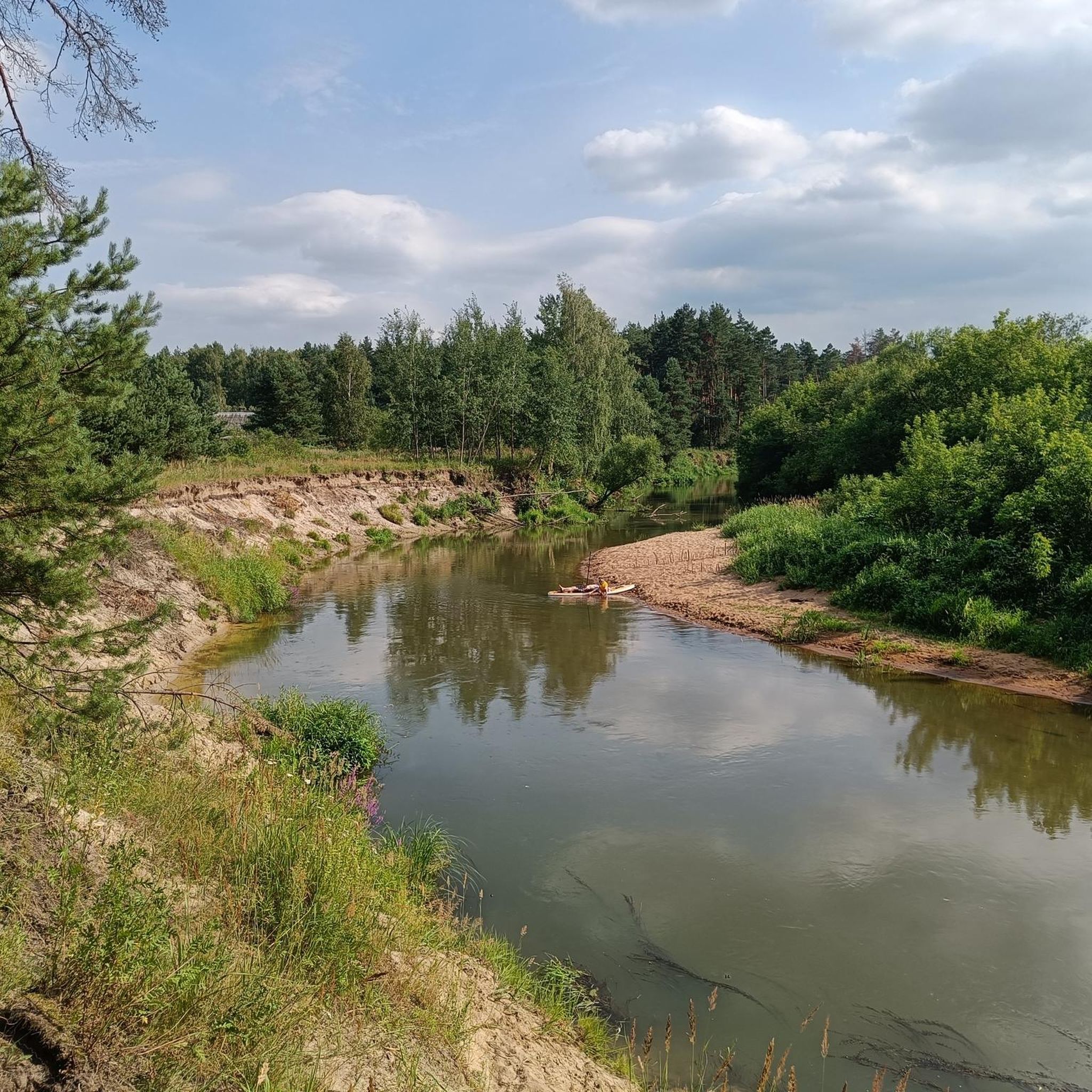
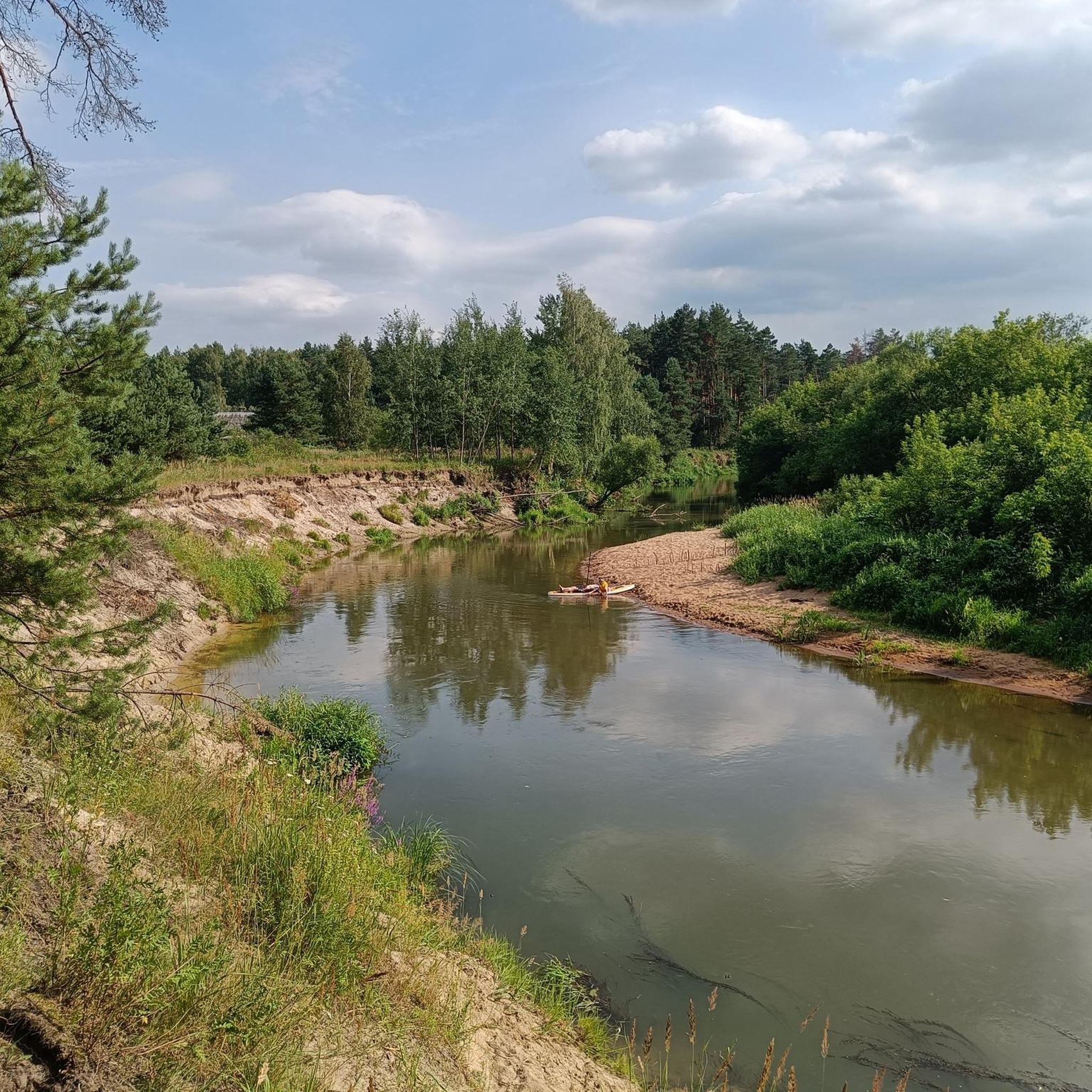
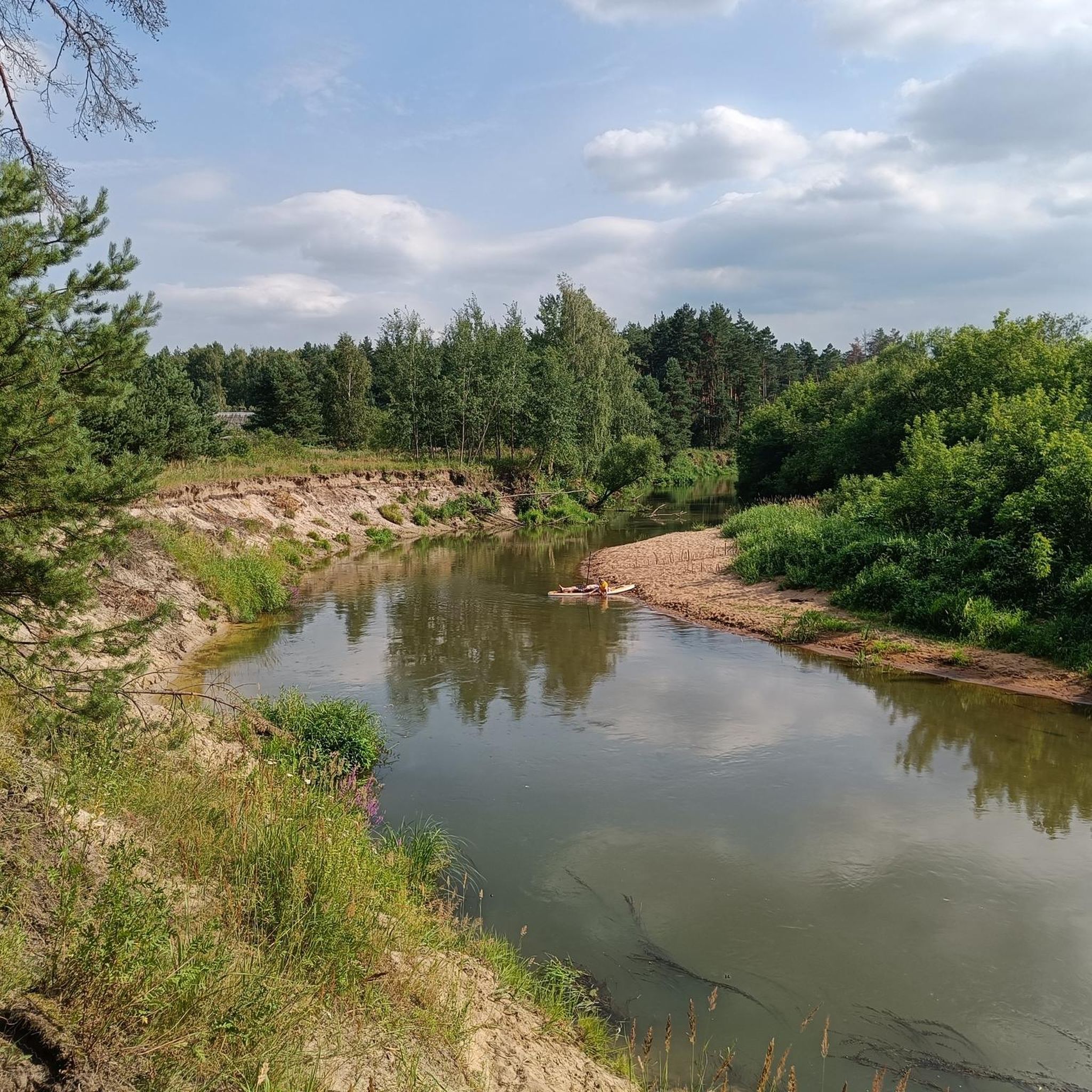
Other adventures in Vladimir

Tips from the Community

But they could have come here to Vladimir.
0
0

Bald Mountain is one of the most mysterious and beautiful places near Gorokhovets. It rises almost 100 meters above the Klyazma River. It offers a stunning view of the endless forests and the wide floodplain through which the river meanders, along with floodplain meadows and mirror-like lakes. Bald Mountain received its name from the almost complete absence of vegetation, unlike the neighboring hills, where forests flourish. This unusual natural phenomenon has yet to be scientifically explained, but it has given rise to legends. In 1545, the army of the Kazan Khan Amanak, who had been plundering the Nizhny Novgorod lands for several years, was defeated near Gorokhovets. According to legend, the Khan himself died here. He was buried on the banks of the Klyazma River; each soldier brought a handful of earth to his grave, forming a mound. Since then, not a single tree has grown on it. However, the mountain's artificial origin was not confirmed by archaeological excavations conducted in the late 1920s by the renowned scholar Professor O.N. Bader. Research revealed that Lysaya Gora is a natural hill, inhabited as early as the 6th-5th centuries BC by people who did not know metal and used stone and wooden tools. Pottery and bone artifacts (hairpins, awls, and amulets) found in the settlement indicate that settlement continued in this area as early as the first millennium AD. This settlement was fortified on three sides by the steep banks of the Klyazma River and on the fourth by earthen ramparts, the remains of which survive to this day. The Lysaya Gora settlement is currently designated an archaeological site of federal significance.
0
0
Mokeeva Gora is an archaeological site of the 12th century. It is located 500 m northeast of the village. The hill is oriented to the southeast, its length is 80-100 meters, and the width at the base is 12-15 meters, the height is about 8-10 meters. According to the official version, it is part of an ancient defensive structure. The name of the object varies. In addition to the official Mokeeva Gora, listed in the directory of Historical and Cultural Monuments of the Vladimir Region, local residents call it Tatar Mountain, Simeonova Gora. Purpose of the object: 1. One of the legends says that there was an outpost on the Mokeev Kurgan, where the Tivuns collected duties from merchant boats sailing along the Klyazma. 2. Another legend says that the body of some prince with all his property is buried inside the rampart. The water in the spring that has broken through from under the shaft has an increased content of silver ions, as it washes silver cups, bowls, swords and other utensils that the mountain keeps in itself. Or the warriors who died in the battle with the Tatar-Mongol invaders are buried in the mound. And all their weapons and wealth are buried with the warriors. And the water that beats out from under the ground, washing the silver handles of the blades, is considered holy. 3. The shaft is designed to transmit signals (in the form of fires) to the capital Vladimir. An interesting feature of the earthen structure is the unusually wide panorama of the surrounding area. Along the direction of its ridge, Mokeeva Mountain looks strictly beyond the Klyazma River to the village of Spas-Kupalishche (5 km) with a monastery located in it (in the 12th century, there were several large settlements in the area of the village of Spas-Kupalishche). If you turn around, you can see the Assumption Cathedral in Vladimir (23 km) from the mountain. In the 12th century, there were very few roads, so the main routes of movement were riverbeds. One fire could be lit on the rampart, or several could be lit along the entire rampart, which were visible in Vladimir, i.e. information about movements along the Sudogda and Klyazma rivers towards Vladimir could be transmitted from this hill.
0
0
The Patakinskaya grove is a highly productive old-growth (110–130 years) mixed forest with a predominance of small-leaved species (birch, aspen) and broad-leaved species (oak, linden, maple, elm) in the stand; pine and spruce are also present. The undergrowth includes warty euonymus, common hazel, common rowan, and forest honeysuckle. Area of the territory: 40 hectares. Two-fifths (39.4%) of all flora in the Kamenskovsky district is concentrated on the territory of the natural monument. The landscape of the reserve has high aesthetic value. The original bank of the Klyazma forms a natural observation deck with a magnificent view of the river, floodplain meadows and oak groves. There are interesting historical and cultural sites. On the outskirts of the village. In Patakino there is the Church of the Life-Giving Trinity (1824), which is currently undergoing reconstruction. Next to it there is a functioning tuberculosis dispensary, which occupies part of the buildings of the old manor house of Count S. D. Bezobrazov (first half of the 19th century). In addition, in the vicinity of the village of Patakino and the village of Kunitsyno, archaeologists have discovered several ancient Russian settlements of the 11th-13th centuries and an early Iron Age settlement. Near the village of Patakino, a fragment of an old manor park from the 19th century has been preserved. On the eastern edge of the reserve, there is a pine forest (the average age of the pines is about 120 years) with an admixture of oak and linden on a picturesque slope near the river. The vast ravines near the village of Kunitsyno are covered with broad-leaved (oak and linden) forest with an admixture of birch and aspen. In the western and northern parts of the reserve. To the southeast of the village of Kunitsyno there is a section of pure birch forest aged 50–60 years, unique in its landscape and aesthetic appeal. Closer to the river, the age of the birches reaches 100 years.
0
0
In 1986, by the decision of the executive committee of the Vladimir regional Council of People's Deputies, the natural monument of regional significance "Kizhanovskie Klyuchi" was created in order to preserve unique natural objects of great scientific, practical, economic, aesthetic, recreational, health value, rare and endangered species of plants and animals of the region. Near the spring, a channel from the Klyazma River to Lake Plavucheye meanders through the meadows. Two springs. Located on the shore of the lake. Both are sources of clean drinking water. Situated in the lower third of the sloping slope of the first floodplain terrace of the left bank of the Klyazma River. Located 30 m from the path leading from the village of Kizhan to the summer health camp. Now it is a specially protected natural area (SPNA) "Kizhanovskie Klyuchi". People regularly come to the spring for clean and tasty water. Near the spring, in the summer, the annual bard song festival “Kizhanskie Klyuchi” takes place.
0
0
The spring in the village of Zernevo is the largest surface water source in the Vladimir region by flow rate, here you can drink mineral water "Silver Falcon" and "Suzdalskaya" for free. Its uniqueness is that it is located in a protected state reserve created to preserve the local landscape, the purity of rivers and groundwater. The spring has been famous since the 17th century. During its passage through geological rocks, the water is saturated with oxygen and enriched with minerals. Contains calcium, magnesium and silver ions.
1
0
The name of the reservoir is of Finno-Ugric origin, but the local population knows this lake better under the name Kazennoye. Lake Suekhra is a forest, picturesque, quite clean and the most important lake in the recreational sense of the Sobinsky district. The lake is of ancient valley origin, originally formed as an oxbow lake of the Klyazma River, but has long lost contact with it. The length is about 1 km, the width is 300 m, the maximum depth is 2.5 m, the average is 1.5 m. The water is clean, transparent, odorless. The banks are gentle, sandy, in places swampy. The bottom is covered with a thick layer of sapropel. In the coastal zone, black alder and birch forests with an admixture of spruce, aspen, pine predominate. On the shores of the lake, several fire pits and permanent rest areas are arranged.
2
0
The open-air museum of glacial stones is a new attraction of Kirzhach. It was fully opened only in April 2020 - on Geologist's Day. The stones were brought in gradually - initially they just lay on the territory of the future museum, so many residents of Kirzhach looked at them in advance. By spring, the glacial stones were collected into a full-fledged object with a circular structure. In terms of content, the museum departs from the usual framework: there is open space around, and a pedestrian path runs right through its territory. Advantages of the museum: - Many types of glacial stones are presented: granite, basalt, diabase, quartzite, gabbro and others. - Why the stones are glacial: 800 million years ago, a glacier stopped near Kirzhach. - The museum has a labyrinth of stones. Information stands provide information about the ice age and the history of the Vladimir land, about the worship of stones. - Lake "Heart" is another symbol in the Museum's concept, which complements the overall picture. - The museum's collection will continue to gradually fill with stones brought from different parts of Russia. In the future, the territory will also expand. The author of the idea to create the museum is philanthropist Evgeny Fedorov. He dedicated the museum to geology, which for Kirzhach is also connected with history. The city of Kirzhach used to be the center of geology in the entire region - a geological exploration party was stationed here. The actual location of the museum in the city is also important: next to it is a furniture factory, and right behind it is the "Geologorazvedka" microdistrict. Stones for the museum were provided by activists and geological explorers.
1
0
Frequently Asked Questions
What unique geological formations can I explore in the Vladimir region?
The Vladimir region offers several unique geological formations. You can visit the Glacial Stones Open-Air Museum, which features a collection of glacial stones like granite, basalt, and quartzite, along with a labyrinth. Another remarkable site is Dyukinsky Quarry, a former limestone quarry now part of a nature reserve, known for its rocky relief and sheer walls up to 40 meters deep.
Are there natural monuments with significant historical or archaeological importance?
Yes, several natural monuments in the Vladimir region have historical and archaeological significance. Mokeeva Gora Archaeological Site, also known as Tatar Mountain, is a 12th-century archaeological site offering panoramic views and steeped in local legends. Bald Mountain, near Gorokhovets, is an archaeological site of federal significance with evidence of human habitation dating back to the 6th-5th centuries BC. Additionally, Meshchyora National Park contains archaeological finds from ancient human habitations (3rd-2nd millennium BC).
What kind of wildlife can I observe in the natural areas of Vladimir?
Meshchyora National Park is particularly rich in biodiversity, providing a habitat for a wide array of plants and animals. You might spot mammals such as hare, fox, wild boar, moose, and ermine, and the park records 208 bird species. The wetlands are crucial for fish and aquatic species. Along the Klyazma River, you can observe various local wildlife, including birds and frogs.
Which natural monuments are suitable for families with children?
For families, the Glacial Stones Open-Air Museum is a great option with its interactive labyrinth. Kizhanovsky Spring and Zernyovo Spring are also noted as family-friendly. Lake Suekhra is another good choice for family outings. Zagorodnyy Park within Vladimir city offers vast green spaces, walking paths, and play equipment for children.
What outdoor activities can I enjoy near the natural monuments in Vladimir?
The region offers diverse outdoor activities. The Klyazma River is popular for leisurely walks along its banks, and its strong currents in some sections make it suitable for kayaking from May to September. Meshchyora National Park provides well-equipped environmental paths for walking, cycling, and even car travel. For more structured routes, you can explore cycling, mountain biking, and running trails. For example, there are numerous cycling routes like the 'Ford Across the Semiga River' loop, MTB trails such as the 'Озеро Плотовецкое' loop, and running trails like the 'Сквер имени В. И. Ленина' loop. You can find more details on these activities in the Cycling in Vladimir, MTB Trails in Vladimir, and Running Trails in Vladimir guides.
What is the best time of year to visit the natural monuments in Vladimir?
The best time to visit largely depends on the activities you plan. For kayaking on the Klyazma River, May to September is ideal. Generally, the warmer months from late spring through early autumn (May to September) offer pleasant weather for exploring forests, lakes, and archaeological sites. Winter activities are also possible, though specific details for each monument would need to be checked locally.
Are there any natural monuments that offer scenic viewpoints?
Yes, several sites provide excellent panoramic views. Mokeeva Gora Archaeological Site offers a wide panorama of the surrounding area, including the Klyazma River and distant landmarks. Bald Mountain provides stunning views of endless forests and the meandering Klyazma River floodplain. The original bank of the Klyazma within Patakinskaya Grove Nature Reserve also forms a natural observation deck with magnificent river views. Lake Suekhra is also noted for its viewpoints.
What are the main natural features of Meshchyora National Park?
Meshchyora National Park is characterized by its vast wetlands, including swamps, peat bogs, numerous rivers, and lakes, as well as extensive pine and birch woodlands. The landscape is relatively flat, shaped by ancient glaciers, and features a rich diversity of flora, including magnificent oak forests, pine forests, birch groves, and various shrubs.
Can I find serene lakes or springs among the natural monuments?
Absolutely. The region is home to several tranquil lakes and springs. You can visit Lake Senga, Ignatkovo Lake, and Lake Suekhra for peaceful natural settings. Additionally, Kizhanovsky Spring and Zernyovo Spring offer refreshing natural water sources.
What kind of forests can I explore in the Vladimir region?
The Vladimir region features diverse forest types. Meshchyora National Park boasts extensive pine and birch woodlands, as well as magnificent oak forests. Patakinskaya Grove Nature Reserve is a highly productive old-growth mixed forest with a predominance of small-leaved species like birch and aspen, and broad-leaved species such as oak, linden, maple, and elm. It also includes sections of pure birch forest and pine forest.
What do visitors particularly enjoy about the natural monuments in Vladimir?
Visitors appreciate the diverse landscapes, from the unique geological formations of the Glacial Stones Open-Air Museum to the rocky relief of Dyukinsky Quarry. The historical depth of sites like Mokeeva Gora and Bald Mountain, combined with their scenic views, is also highly valued. The komoot community has upvoted these sites and shared numerous photos, highlighting their compelling outdoor experiences and natural beauty.
Most popular routes in Vladimir
Most popular attractions in Vladimir

Get inspired with the komoot mobile app


Explore more
Extend your search for the best caves by checking out these guides of the top ones in Vladimir:
