Top 3 Castles around Breesen
Best castles around Breesen primarily refers to historical manor houses, known as Gutshaus, rather than traditional fortified castles. This region in Mecklenburg-Vorpommern features estates that reflect centuries of architectural evolution and aristocratic history. Visitors can explore structures ranging from 18th-century constructions to neo-Gothic designs, often set within landscaped parks. Many of these sites are undergoing preservation or renovation, providing insight into the area's past.
Best castles around Breesen
- The most popular castles is Ravensburg Slavic Fortification, a historical site…
Last updated: June 26, 2026
Puchow Manor (The Manor House)
Highlight • Castle
Translated by Google •
Tip by

Manor House Pinnow (Breesen)
Highlight • Historical Site
Translated by Google •
Tip by

Sign up now to discover places like this
Get recommendations on the best single tracks, peaks, & plenty of other exciting outdoor places.
Sign up for free
Wrodow Castle
Highlight • Castle
Translated by Google •
Tip by

Ravensburg Slavic Fortification
Highlight • Historical Site
Translated by Google •
Tip by
Gützkow Manor House
Highlight • Historical Site
Translated by Google •
Tip by
Sign up for free to discover even more castles around Breesen.
Sign up for free
Already have an account?
Start today with a free account
Your next adventure awaits.
Login or Signup

Tips from the Community

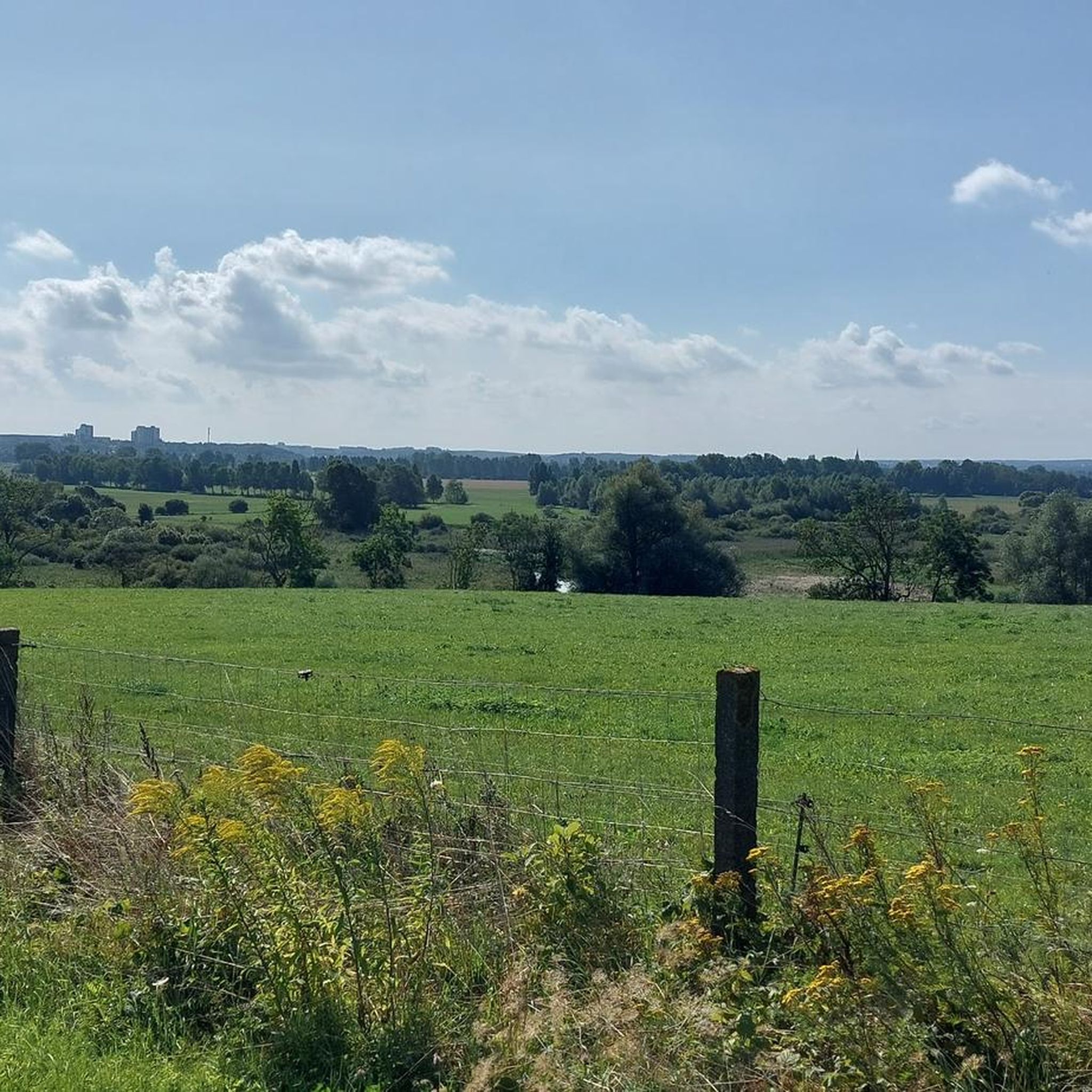
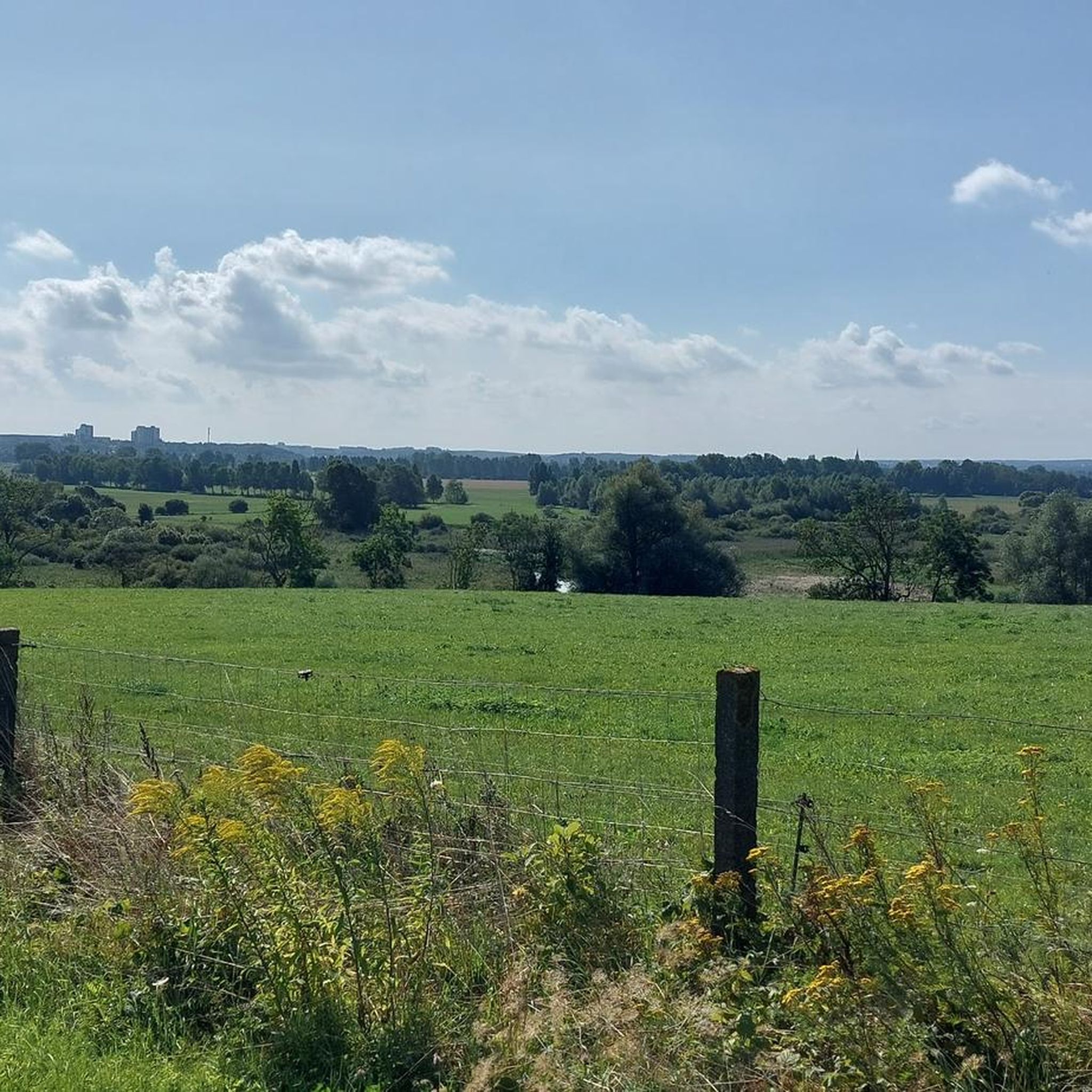
The three-part Slavic hillfort offers several tables and seating areas in its center for visitors to linger.
1
0

The Wrodow estate existed as early as the 16th century and was for a long time a subsidiary estate without its own manor house. At the beginning of the 16th century, it belonged to the von Maltzahn family. After the Thirty Years' War, it was pledged to Colonel Joachim Engel in 1656. In the following centuries, ownership changed hands frequently, including families such as von Kamptz (from 1707), von Engel, and von Peccatel. In the 18th century, the core of the present building was constructed: a nine-bay central section, which was later expanded. Today, Wrodow Castle is a vibrant cultural monument in the idyllic Mecklenburg countryside, combining art, history, and community.
0
0
The striking neo-Gothic manor house in Pinnow was built between 1862 and 1869, commissioned by Friedrich von Klinggräff (1825–1887). Constructed incorporating an older tenant farmer's house, it is considered one of the most original manor houses in Mecklenburg (a brick building in a square layout with an inner courtyard, towers, wooden galleries, and rich furnishings). Friedrich von Klinggräff, a Mecklenburg landowner, parliamentarian (a member of parliament in the 1848 Revolution), and founder of the Kösener Senioren-Convents-Verband (KSCV), was a devout Lutheran and patriot. He had the house built as a "truly German, simple, pious house" intended to educate the youth. The architects were initially Conrad Wilhelm Hase and Carl Schäfer, and later Heinrich Wiethase. After 1945, the expropriated house served as living quarters, the administration of an agricultural production cooperative (LPG), a post office, and the town hall. It fell into severe disrepair, but from 2012 onwards it was renovated in accordance with historic preservation standards by private owners.
0
0

It was built between 1862 and 1869 on behalf of the von Klinggräff family. The building is a brick structure, laid out in a square, with a small courtyard at its center. The courtyard front of the manor house, which features numerous extensions, wooden galleries, and decorative elements, features a tower-like central section with a wooden porch. The estate was owned by the von Aschersleben family in 1612, by Reimar Ernst von Voß in 1668, and by the von Klinggräff family from around 1700 until 1945. After expropriation, the manor house served as residential property, the community, as a post office, and the headquarters of the LPG administration. In the 1970s, it began to be gradually vacated, and by the 1980s it had stood empty. In 1996, the "Arbeitskreis Denkmalpflege e. V." (Working Group for the Preservation of Historical Monuments) took over. The dilapidated building was leased on a long-term lease and began documentation, cleanup, and preservation work, but these efforts stalled. The manor house is surrounded by a landscaped park, laid out in the 19th century, with a magnificent tree population. A barn and a few outbuildings remain from the former large farmyard. In 2012, new owners were found for the dilapidated manor house. Since then, it has been renovated in accordance with historic preservation regulations. We feature this site in the book "Manor Houses and Castles in Mecklenburg," Volume 5. Source: https://gutshaeuser.de/de/guts_herrenhaeuser/gutshaeuser_p/gutshaus_pinnow_bei_neubrandenburg
0
0
In 1908, Dr. Adolf von Buenger acquired the estate. Between 1905 and 1914, he had almost the entire village demolished, subsequently rebuilding the manor house, the estate, and the village. The manor house is a two-story, plastered building with a colonnade and a gazebo, built on a fieldstone base. The entrance hall, with its original wood paneling, extends over two floors, and a wide staircase leads to a gallery. Between 1945 and 1990, the manor house was used as a training center by the Neubrandenburg District Cultural Academy, after which it stood empty for many years. The manor house is privately owned. Adjacent to the stately home is a small park with a meadow as its centerpiece. The entire estate, including the inspector's house, stables, and barns, is truly worth seeing, but is in a state of disrepair. Source https://gutshaeuser.de/de/guts_herrenhaeuser/gutshaeuser_p/gutshaus_puchow
0
0

The manor house, completed in 1869 in the neo-Gothic style, has been completely renovated. Fenced in, but easily visible.
0
0
Can only be admired as a "spectator".
0
0

In 1777, Adam von Blücher had the castle built. The magnificent three-axis central projections extend over two floors and end with a high lunette gable, each of which has a coat of arms cartouche. The von Blücher and von Maltzahn families took turns in owning Gützkow. Inside there is a very beautiful, restored, two-wing staircase with restored Rococo decoration on the ceilings. Behind the house is a baroque garden. After a period of vacancy, Helmuth von Maltzahn, a descendant of the former lord of the castle, is now the owner. He wants to have the entire complex and the five-hectare park restored to its original state. The former cowshed was turned into a concert hall. On August 18, 2001, the first concert took place in the castle park as part of the Mecklenburg-Vorpommern Festival. Avenues, ponds and old fieldstone walls have already been renovated.
1
0
Frequently Asked Questions
What kind of historical sites are referred to as 'castles' around Breesen?
Around Breesen, the term 'castles' primarily refers to historical manor houses, known as Gutshaus, and ancient fortifications. These include structures like the Ravensburg Slavic Fortification, a former hillfort, and various manor houses such as Puchow Manor and Manor House Pinnow, which showcase centuries of architectural evolution and aristocratic history.
Are there any family-friendly historical sites to visit near Breesen?
Yes, the Ravensburg Slavic Fortification is considered family-friendly. It features a three-part Slavic hillfort with seating areas, offering a historical outdoor experience suitable for all ages.
Which manor houses around Breesen have been renovated or are undergoing restoration?
The Manor House Pinnow (Breesen), completed in 1869 in the neo-Gothic style, has been completely renovated. Wrodow Castle is also lovingly restored. Additionally, Gützkow Manor House, built between 1770 and 1777, is privately owned and has been restored, serving as a venue for outdoor events.
Can I explore the grounds or parks of these historical sites?
Many of the manor houses are set within landscaped parks. For instance, Manor House Pinnow is surrounded by a landscaped park from the 19th century. Puchow Manor also includes a manor park. The Gützkow Manor House features a baroque garden, and its five-hectare park is being restored.
What outdoor activities can I do near the castles and manor houses around Breesen?
The region offers various outdoor activities. You can find numerous routes for hiking, mountain biking, and gravel biking. These routes often pass by or are close to historical sites, allowing you to combine nature exploration with cultural visits.
Are there any historical sites near Breesen that offer guided tours or special events?
Wrodow Castle is open to the public during its Midsummer Festival and offers guided tours at that time. Gützkow Manor House is also a venue for outdoor events, particularly as part of the Festspiele Mecklenburg-Vorpommern.
What is the historical significance of the manor houses in the Breesen area?
The manor houses in the Breesen area, such as those in Breesen near Neubrandenburg and Lindholz, reflect centuries of aristocratic and agricultural history in Mecklenburg-Vorpommern. They were often owned by prominent families like the von Engel, von Woltke, and von Behr families, and their architectural evolution from moated castles to grand manor houses tells the story of the region's social and economic past.
Are there any easy walking trails to historical sites near Breesen?
While specific 'easy walking trails to castles' aren't detailed, the region offers many hiking routes, including easy ones like the 'Footbridge Over the Tollense – Viewpoint Mörderberg loop from Woggersin' (7.1 km) or the 'Woggersin Speicher loop from Woggersin' (3.3 km). You can often combine these with visits to nearby historical sites.
What do visitors particularly enjoy about the historical sites around Breesen?
Visitors appreciate the historical depth and the potential for exploration. For example, the Ravensburg Slavic Fortification is noted for its seating areas, offering a place to linger. The manor houses, even those undergoing renovation like Puchow Manor, are valued for their historical atmosphere and architectural potential.
Is there parking available for visitors at these historical sites?
Information on specific parking access for each site is not always detailed, but generally, historical sites and manor houses in rural areas like Breesen often have some form of parking available, either directly on-site or nearby. It's advisable to check local signage upon arrival.
Can I find any hidden or less-known historical sites off the beaten path?
Many of the manor houses, particularly those undergoing renovation or with long histories like the Gutshaus Breesen near Neubrandenburg, offer a glimpse into less-traveled historical paths. These sites provide a more intimate experience of the region's past away from major tourist crowds.
What is the best season to visit the castles and manor houses around Breesen?
The best season to visit is generally spring through early autumn (May to September). During these months, the weather is pleasant for exploring the grounds and parks, and special events like the Midsummer Festival at Wrodow Castle are more likely to occur.
Most popular attractions around Breesen

Get inspired with the komoot mobile app


Explore more
Looking for the best castles somewhere else? Discover other guides around Breesen:
