Top 3 Caves around Milly-La-Forêt
Caves around Milly-La-Forêt are primarily found within the nearby Fontainebleau Forest, a region known for its distinctive sandstone formations. While traditional speleological caves are limited, the area features significant natural cavities and historical rock shelters. It is also a world-renowned destination for bouldering, with many formations climbers refer to as "caves" due to their overhangs and sheltered spaces. This unique geology offers diverse exploration opportunities for visitors.
Best caves around Milly-La-Forêt
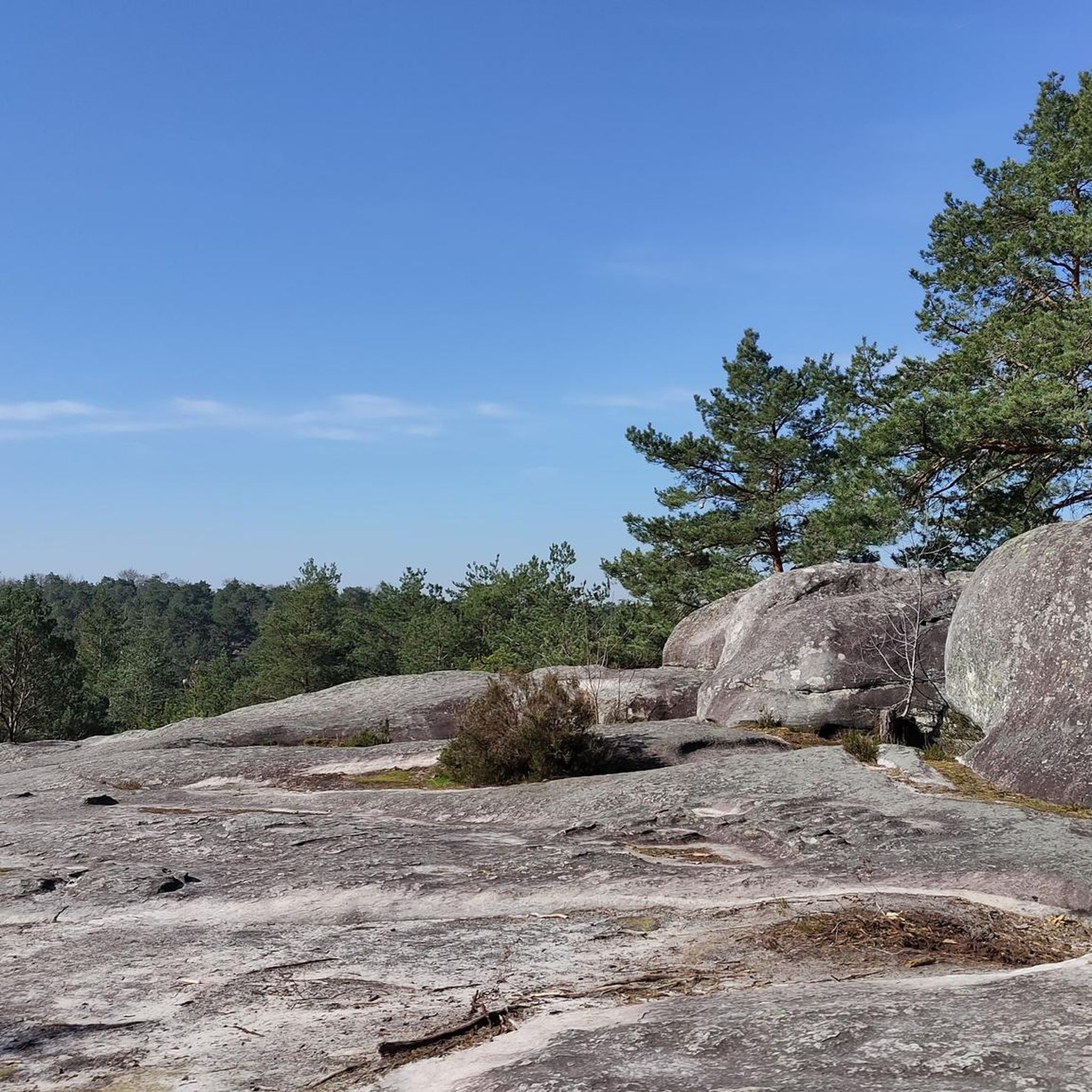
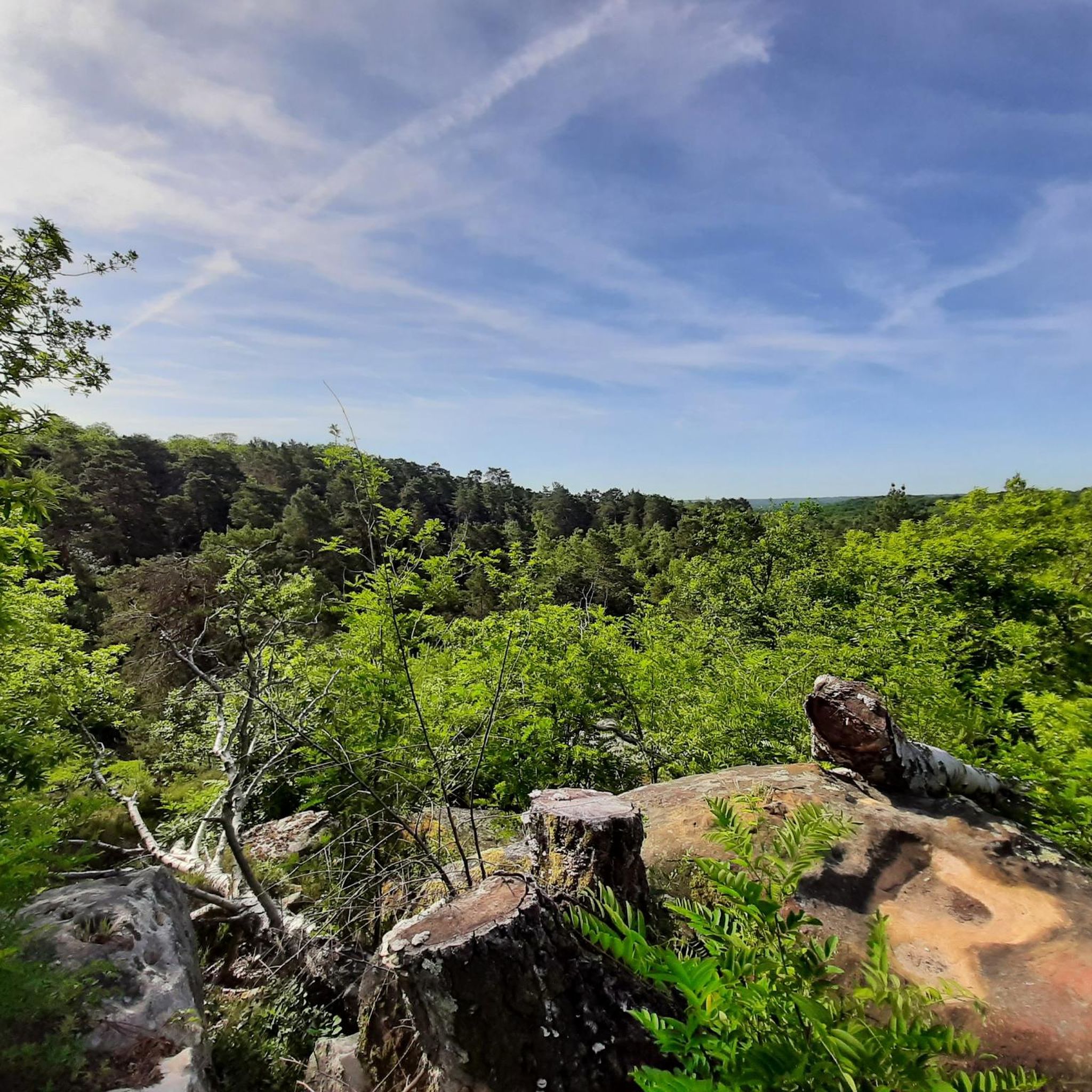
- The most popular caves is View of the Fontainebleau Forest from the Caverne des Brigands, a viewpoint that offers expansive panoramas over the Fontainebleau Forest. This spot provides magnificent views over the Gâtinais region, with trees extending as far as the eye can see.
- Another must-see spot is Grotte du Serment, a gorge featuring a cave where the vault is made of a single rock. Visitors can observe the letters D.F.D, engraved by Denecourt, signifying "Last Folie Denecourt."
- Visitors also love Druids' Den, a vast rock shelter within the Fontainebleau forest. This natural monument is a popular curiosity, offering a large sheltered space.
- Milly-La-Forêt is known for natural cavities, historical rock shelters, and bouldering "caves." The region offers a variety of geological formations to explore, from ancient shelters to challenging climbing spots.
- The caves around Milly-La-Forêt are appreciated by the komoot community, with 178 upvotes and 42 photos shared across various highlights.
Last updated: October 9, 2026
Grotte du Serment
Highlight • Gorge
Translated by Google •
Tip by

Druids' Den
Highlight • Cave
Translated by Google •
Tip by
Sign up now to discover places like this
Get recommendations on the best single tracks, peaks, & plenty of other exciting outdoor places.
Mouse Cave
Highlight • Gorge
Translated by Google •
Tip by

Bandits' Cave
Highlight • Cave
Translated by Google •
Tip by
View of the Fontainebleau Forest from the Caverne des Brigands
Highlight • Viewpoint
Translated by Google •
Tip by
Start today with a free account
Your next adventure awaits.

Tips from the Community

The mouse cave is a Milly classic that all children know. It is a large cavity about 20 meters long, where you cannot stand up. It is even possible to exit through a narrow passage.
0
0

On 06/23/25, blocked by vegetation at the 4th km.
1
0
I do believe this is an excellent website. I stumbled upon it I may revisit once again since I saved as a favorite it. https://www-sunpass.com
0
0
A hike over and between large stones
0
0

The cave of the oath is quite surprising, especially because the vault is made of a single rock. The letters D.F.D were engraved on the cave by Denecourt himself and mean "Last Madness Denecourt".
1
0
Here is another superb view of the forest of Fontainebleau, on the Barbizon side. The panorama over the Gâtinais is truly magnificent, with trees as far as the eye can see.
0
0

superb view of the forest of Fontainebleau
0
0

Good overview over the Apremont Climbing areas.
1
0
Frequently Asked Questions
What types of 'caves' can I explore around Milly-la-Forêt?
The region around Milly-la-Forêt, particularly within the Fontainebleau Forest, offers a unique interpretation of 'caves'. You'll find natural rock shelters with historical significance, such as the Abri du Cavalier, and numerous bouldering formations that climbers refer to as 'caves' due to their overhangs and sheltered spaces. There are also some natural cavities like the Grotte aux Tessons, recognized as the longest natural cavity in the Essonne department, though public access details vary.
Are there any family-friendly 'caves' or rock shelters to visit?
Yes, several spots are great for families. The Druids' Den is a vast rock shelter that children often enjoy exploring and hiding in. Another popular choice is the Mouse Cave, a classic Milly spot known by local children, featuring a large cavity about 20 meters long with a narrow passage exit.
Where can I see historical engravings or ancient art in the region's rock shelters?
For those interested in history and art, the Abri du Cavalier (The Horseman's Shelter) on the Mont des Ancêtres within the Trois-Pignons massif is a must-visit. It's renowned for its rich rupestrian art, featuring numerous anthropomorphic figures, Neolithic patterns, and medieval engravings, including a horseman and a unique 'sorcerer' hut-shaped carving.
What are the best areas for bouldering 'caves' near Milly-la-Forêt?
Milly-la-Forêt is an excellent base for bouldering in the Fontainebleau Forest. The Trois-Pignons Massif, very close by, is a highly popular climbing spot with diverse rock shapes and circuits for all skill levels. Specific areas like Cul de Chien and La Roche aux Sabots are easily accessible and offer classic Fontainebleau bouldering experiences.
Are there any 'caves' with interesting stories or unique features?
Absolutely. The Bandits' Cave was famously dug at the request of Denecourt in 1844, who invented a story of bandits to attract tourists. Another unique spot is the Grotte du Serment (Oath Cave), which is notable for its vault made from a single rock and engravings by Denecourt himself.
What outdoor activities can I combine with visiting these 'caves'?
The area around Milly-la-Forêt is perfect for various outdoor activities. Besides bouldering, you can enjoy extensive cycling and hiking. There are numerous routes for touring bicycles and traffic-free bike rides, such as those found in the Cycling around Milly-La-Forêt guide or the Traffic-free bike rides around Milly-La-Forêt guide. The forest also offers beautiful landscapes for general exploration and nature walks.
Can I find viewpoints near any of the 'caves'?
Yes, the View of the Fontainebleau Forest from the Caverne des Brigands offers a superb panorama over the Gâtinais and the vast forest, particularly on the Barbizon side. It's an excellent spot to appreciate the natural beauty of the region.
What is the best time of year to visit the 'caves' and rock formations?
The Fontainebleau Forest, where most of these formations are located, is beautiful year-round. Spring and autumn offer pleasant temperatures for hiking and bouldering, with vibrant foliage. Summer can be warm but provides long daylight hours, while winter, though colder, can offer a serene and less crowded experience, especially if you're prepared for the weather.
Are there any dog-friendly trails or areas near the 'caves'?
The Fontainebleau Forest generally welcomes dogs on trails, provided they are kept on a leash. Many of the paths leading to the rock shelters and bouldering areas are suitable for walks with your canine companion. Always check local signage for specific restrictions in certain sensitive natural areas.
What should I wear or bring when visiting the 'caves' and rock shelters?
For exploring the rock shelters and bouldering formations, comfortable walking shoes or hiking boots with good grip are recommended. If you plan to boulder, appropriate climbing shoes and gear are essential. Layers of clothing are advisable as temperatures can vary, and bringing water and snacks is always a good idea, especially for longer explorations in the forest.
Are there any truly underground caves in the Milly-la-Forêt area?
While the region is more known for its rock shelters and bouldering formations, the Grotte aux Tessons is recognized as the longest natural cavity in the Essonne department, located in Milly itself. However, information regarding public access or guided tours for this specific natural underground formation is not widely available.
Most popular routes around Milly-La-Forêt
Most popular attractions around Milly-La-Forêt

Get inspired with the komoot mobile app


