Top 5 Castles around Alviobeira
Best castles around Alviobeira are found in a region historically significant for its connection to the Knights Templar in Portugal. This village, located within the municipality of Tomar, served as an early base for the Templar Order. The area features a landscape marked by medieval fortifications and strategic positions, reflecting its role during the Christian Reconquista. Visitors can explore sites that chronicle centuries of Portuguese history and architectural evolution.
Best castles around Alviobeira
- The most popular castles is Convent of…
Last updated: July 3, 2026
Convent of Christ and Castle of Tomar
Highlight • Castle
Translated by Google •
Tip by

Tomar Templar Castle
Highlight • Castle
Translated by Google •
Tip by

Sign up now to discover places like this
Get recommendations on the best single tracks, peaks, & plenty of other exciting outdoor places.
Sign up for free
Main Cloister (Cloister of D. João III), Convent of Christ
Highlight • Historical Site
Translated by Google •
Tip by
Start today with a free account
Your next adventure awaits.
Login or Signup

Tips from the Community


Closes at 4pm (May 25), the courtyard has been kindly opened until 5pm.
0
0

The Templar Castle was built at a strategic point to defend the territory and support the conquest beyond the Tagus River. Construction began in 1160 under the Templar Master D. Gualdim Pais. The north wing and higher ground housed the Templar Palace, with two pillars: to the east and at its highest point, the citadel with its rectangular control tower, and to the west, the fortified religious temple—the Templar Charola. Several towers and turrets are located along the extensive wall. The entire outer perimeter of this wall was protected by a rampart—a stone wall simulating a hill at the base, thus impeding the advance of assault engines, sentinels, and climbers. The wall, towers, and quadrangular and semicircular turrets contain rectilinear loopholes and broad battlements. The various military-architectural solutions undoubtedly originate from the Middle East, where King Gualdim Pais stayed for five years during the Crusades. The Charola was probably built or completed shortly after the fortifications and is intended to commemorate the Holy Sepulchre and Solomon's Temple. This castle was also the headquarters of the Knights Templar in Portugal. https://opctj.pt/castelo-templario-charola-e-convento-de-cristo-de-tomar/ The castle complex, with its walls and extensive gardens, is open to the public free of charge.
1
0
Built from 1554 onwards, the imposing building is considered a masterpiece of the European Renaissance. The fountain at its very center is fed by the waters of the Aqueduct of Pegões. King John III had it built outside the castle walls. Adjacent to the monastery church, the main cloister flanks the south façade of the Manueline nave, with which his father, King Manuel I, had already expanded the existing Templar church. To help you place the eight cloisters within the complex jumble of buildings on the site of today's Convent do Christo, you can find help here: https://anyformsdesignmapas.blogspot.com/2014/09/convento-de-cristo-tomar.html https://de.wikipedia.org/wiki/Convento_de_Cristo#/media/Datei:TomarChurchPlanCC3-pt.jpg
1
0
Detailed plans of the complex, including the identification of the individual parts and monasteries, can be found here: https://campanha.cmjornal.pt/portugal-monumental/ https://de.wikipedia.org/wiki/Convento_de_Cristo#/media/Datei:TomarChurchPlanCC3-pt.jpg https://blogger.googleusercontent.com/img/b/R29vZ2xl/AVvXsEjONUon4tGroEfnLT311dfFBPy 7gkSdMIt7aDFXuB2X61MqnwjBYUVJwZs3nELeNox-cEindezimgkuppLnXY6-XxrO-2WJQ_62jz9Qme64FlLgng2leHtQJZ3iuys8kl6z1fh1M1Ns6SOV/s1600/05Tomar.jpg https://de.wikipedia.org/wiki/Convento_de_Cristo#/media/File:TomarChurchPlanCC3-pt.jpg
1
0

The remains of the Knights Templar in Tomar
12
1
beautiful stones
9
1

Tomar Castle is a castle in Portugal, where it is classified as a national monument. The Convento de Cristo was built within its walls. The castle was built by King Afonso Henriques around 1160 in a strategic location, on a hill and near the Nabão River. It has an external defensive wall and a citadel (alcáçova) with a tower inside. The keep, a central tower with residential and defensive functions, was introduced into Portugal by the Templars, and that of Tomar is one of the oldest in the country. Another innovation introduced into Portugal by the Templars (learned from decades of experience in Normandy and Brittany and elsewhere) are the round towers in the outer walls, which are more resistant to attack than the square towers. When the city was founded, most of its inhabitants lived in homes located within the castle's protective outer walls.
0
0
Frequently Asked Questions
What is the historical significance of Castelo de Ceras near Alviobeira?
The Castelo de Ceras holds significant historical importance as an early Templar fortification. Donated to the Knights Templar in 1159 by King Afonso Henriques, it served as a precursor to the much grander Convent of Christ and Castle of Tomar. Due to its ruined state, Grand Master Gualdim Pais chose a new site for the Castelo de Tomar in 1160, making Ceras the initial, albeit brief, base for the Templars in the region.
What makes the Castelo de Tomar (Convent of Christ) a must-visit site?
The Convent of Christ and Castle of Tomar is a UNESCO World Heritage site and an extraordinary complex. It was the headquarters of the Knights Templar in Portugal, featuring the iconic 12th-century *Charola* (rotunda). After the Templars, it became the seat of the Order of Christ, playing a crucial role in Portugal's Age of Discoveries. The site showcases a blend of Templar, Gothic, Manueline, Renaissance, and Baroque architectural styles, offering a deep dive into centuries of Portuguese history.
Are there family-friendly castles to visit around Alviobeira?
Yes, the Tomar Templar Castle, which is part of the larger Convent of Christ complex, is considered family-friendly. Its extensive walls and gardens are open to the public, providing ample space for exploration. The historical context and impressive architecture can engage visitors of all ages.
What are the best times of year to visit the castles in the Alviobeira region?
The best times to visit are generally spring (April to June) and early autumn (September to October). During these periods, the weather is pleasant for exploring the outdoor areas of the castles and the surrounding region. Summer can be very hot, while winter might bring cooler temperatures and more rain, though winter visits are still possible for indoor explorations.
Can I find hiking trails near the castles around Alviobeira?
Absolutely. The region around Alviobeira and Tomar offers various hiking opportunities. You can find routes like the 'Mouchão Park – Mouchão Hydraulic Wheel loop from Tomar' or the 'Sobreirinho River Beach – Roman Bridge of Fervença loop from Pedreira'. For more options, explore the hiking guide for Alviobeira.
What architectural styles can I expect to see at the Castelo de Tomar?
The Convent of Christ and Castle of Tomar is a living chronicle of Portuguese architecture. You'll encounter the robust Romanesque style of the original Templar fortifications and the *Charola*, Gothic elements, the distinct Portuguese Manueline style (especially in the nave and chapter house window), and later Renaissance and Baroque additions, particularly evident in the cloisters like the Main Cloister (Cloister of D. João III).
Is public transport available to reach the Castelo de Tomar?
Yes, Tomar is well-connected by public transport. You can reach Tomar by train or bus from major Portuguese cities. From Tomar, the Convent of Christ and Castle of Tomar is located on a hill just a short walk or taxi ride from the town center.
Are there any cycling routes that pass by or near the castles?
Yes, the area around Alviobeira and Tomar is suitable for cycling. Routes like the 'Tomar Town Hall – Castle of the Templars, Tomar loop from Olalhas' offer a chance to combine cycling with castle visits. For more cycling options, check out the cycling guide for Alviobeira.
What is the Main Cloister (Cloister of D. João III) within the Convent of Christ known for?
The Main Cloister (Cloister of D. João III), built from 1554 onwards, is celebrated as a masterpiece of the European Renaissance. Adjacent to the monastery church, it showcases exquisite architectural detail and is a significant part of the vast Convent of Christ complex.
What natural features or viewpoints can be found near the castles?
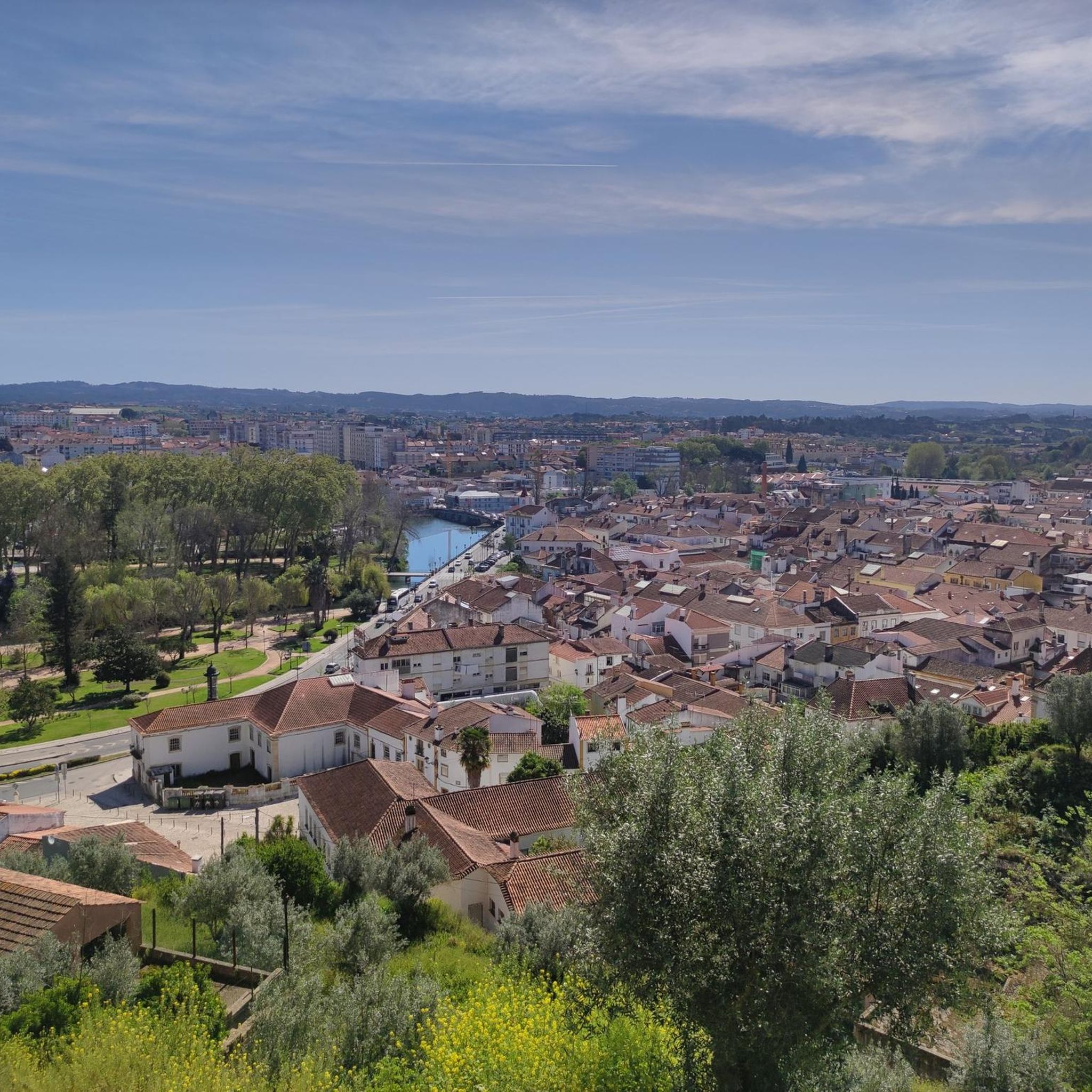
The Castelo de Tomar is strategically built on a hill overlooking the Nabão River, offering excellent views of the surrounding landscape and the town of Tomar. The region itself features river beaches and natural attractions along the Zêzere River, providing scenic viewpoints and opportunities for outdoor enjoyment near these historic sites.
Are there guided tours available for the castles around Alviobeira?
While specific guided tours for the smaller ruins like Castelo de Ceras might be limited, the Convent of Christ and Castle of Tomar, as a major UNESCO site, offers various guided tour options, both official and private, to delve into its rich history and architectural details. It's advisable to check their official website for booking and availability.
What do visitors enjoy most about the castles in the Alviobeira region?
Visitors frequently appreciate the immersive journey through centuries of Portuguese history offered by sites like the Convent of Christ and Castle of Tomar. The unique blend of military, religious, and artistic history, the mystique of the Knights Templar, and the stunning views from the ancient walls are often highlighted. The architectural evolution and the sheer scale of the complex also leave a lasting impression.
Most popular attractions around Alviobeira

Get inspired with the komoot mobile app


Explore more
Looking for the best castles somewhere else? Discover other guides around Alviobeira:
