The best gravel rides around Ranville-Breuillaud
12
riders
4
rides
Gravel biking around Ranville-Breuillaud offers routes through diverse landscapes in the Charente region of France. The area features cultivated fields, extensive woodlands like the Forêt de Tusson, and "Chemins Blancs" (white paths). These unpaved roads connect hamlets and natural spots, providing varied terrain for gravel cyclists. The region's topography includes gentle elevations and open countryside, suitable for exploring by bike.
Best gravel bike trails around Ranville-Breuillaud
- The most popular gravel bike trail is Tusson forest – Tusson loop from Aigre…
Last updated: July 9, 2026
2
riders
56.0km
03:43
450m
450m
Moderate gravel ride. Good fitness required. Mostly paved surfaces. Suitable for all skill levels.
2
riders
42.0km
02:35
320m
320m
Moderate gravel ride. Good fitness required. Mostly paved surfaces. Suitable for all skill levels.

Sign up for free
2
riders
60.8km
03:57
440m
440m
Moderate gravel ride. Good fitness required. Mostly paved surfaces. Suitable for all skill levels.
Our route recommendations are based on thousands of hikes, rides, and runs completed by other people on komoot.
Start today with a free account
Your next adventure awaits.
Login or Signup
Popular around Ranville-Breuillaud


Tips from the Community

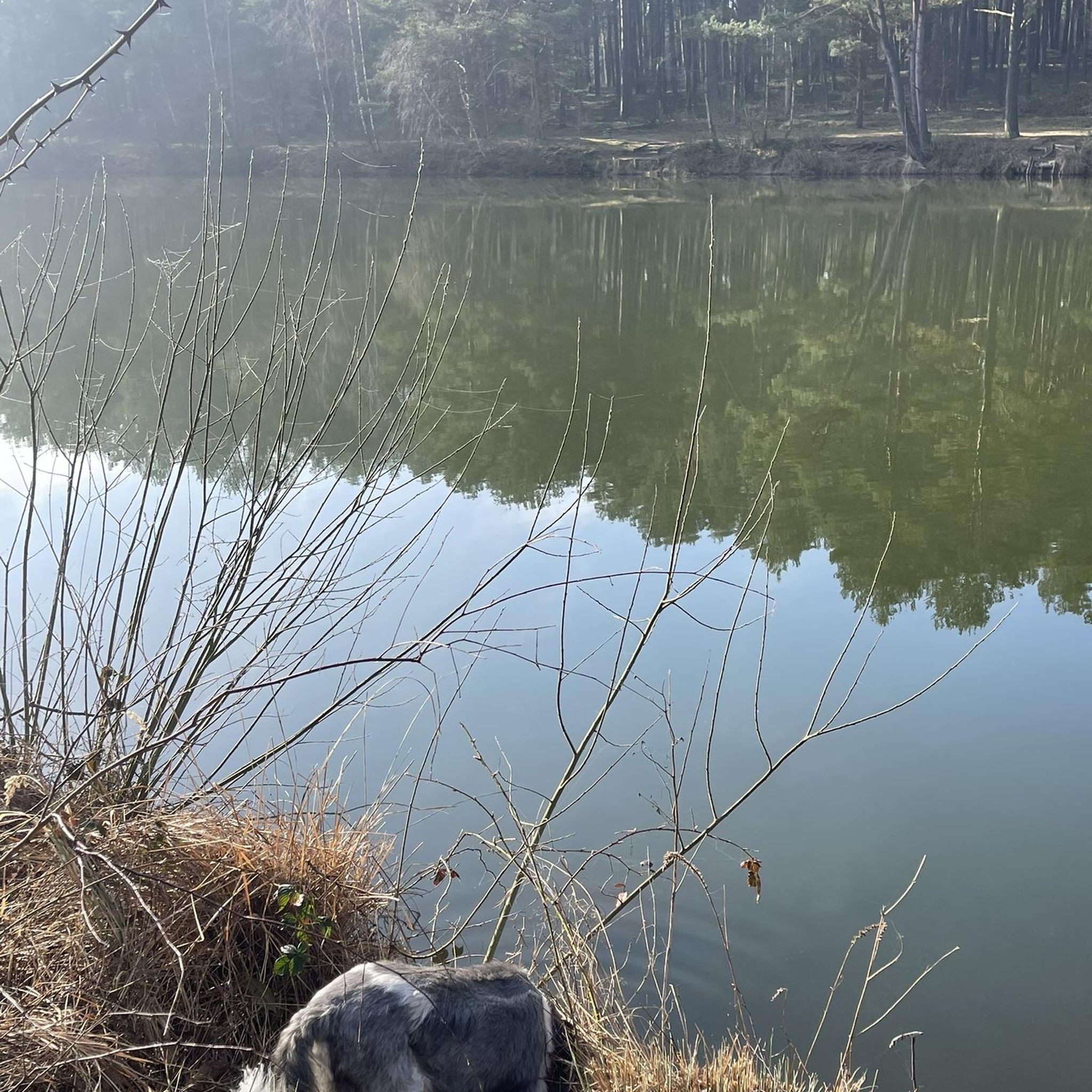
Here you are in the Tusson and Villejesus forest. This is classified as a natural area of ecological, fauna and flora interest. The oaks are very present. By taking the time to silently observe the nature around you, you may come across some animal species. Many raptors find refuge there.
0
0
The town of Tusson is rich in a unique historical heritage. The four tumulus of Tusson date from the fifth century BC and have the particularity of being aligned. These prehistoric monuments made up of one or more blocks of stone and earth were then raised above certain graves. Those of Tusson are among the largest in Europe. The priory and its monastic garden are also worth a look and take you back in time. In addition, gourmets can sit at one of the restaurants or tea rooms in the town to enhance their break.
1
0

The medieval gardens of the Abbey of St. Gall have been recreated there. Using ancient documents to trace and plant with precision, it consists of four separate gardens within the walled garden: an herb garden, a scent garden, a vegetable patch and an orchard.
2
0

Located in the archpriest of Ambérac, diocese of Angoulême, the conventual priory of Notre-Dame de Lanville, founded at an unknown date, was attached around 1120 to the rule of the canons regular of Saint Augustine. It will remain conventual until its suppression in 1791. The buildings were largely in ruins in 1632 and the difficulties becoming greater and greater, the priory was united with the abbey of Sainte-Geneviève du Mont. The visit reports of 1636 and 1672 indicate that major work was carried out to raise the priory in the second half of the 17th century. The buildings located to the south of the church could be the lodgings of the prior or the chaplain. They include a main building for residential use, flanked by two north and south wings constituting the outbuildings, arranged around a closed courtyard. The partly modern north wing has retained some openings characteristic of the 14th and 15th centuries. A long vaulted cellar of a broken cradle develops under the entire length of this wing. The south wing has semicircular openings alternating with small rectangular bays, no doubt from the 17th century. The rectangular main building opens, to the west, onto a terrace overlooking a pool spanned by a bridge-staircase. The house itself is built on a long barrel-shaped cellar with a basket handle. The church was fortified in the 15th century. In its primitive state, its nave was covered with three domes which collapsed and were replaced, in the 15th century, by ribbed vaults. In 1904, the presence of a channeled stream having weakened the foundations of the building, the facade collapsed.
1
0
Frequently Asked Questions
What kind of terrain can I expect on gravel bike trails around Ranville-Breuillaud?
The region offers diverse landscapes, including cultivated fields, extensive woodlands like the Forêt de Tusson, and characteristic "Chemins Blancs" (white paths). These unpaved roads provide varied terrain, from gentle elevations in open countryside to more challenging sections within forests, making it ideal for gravel biking.
Are there any challenging gravel bike routes for experienced riders?
Yes, for experienced riders seeking a challenge, the area offers routes with more demanding sections. For instance, the Tusson forest – Tusson loop from Aigre is classified as difficult and features extensive sections through the Forêt de Tusson, providing a robust gravel biking experience.
Can I find moderate-difficulty gravel bike trails in the area?
Absolutely. Many trails in Ranville-Breuillaud are of moderate difficulty, suitable for a wide range of gravel bikers. A great option is the Tusson – Saint-Fraigne Church loop from Aigre, which navigates through cultivated fields and offers scenic views of the Charentais countryside.
What are some scenic highlights or viewpoints along the gravel routes?
The region is known for its "very beautiful landscapes and magnificent viewpoints." Many routes traverse the "Sentier des Belles vues," offering expansive views of cultivated fields and passing through picturesque woodlands such as the Bois des Bouchauds and the Forêt de Tusson. You'll also encounter the unique "Chemins Blancs" that connect charming hamlets.
Are there any historical or cultural points of interest to see while cycling?
Yes, the trails offer glimpses into the region's history. You can ride along the wall of the historic Château d'Orfeuille, which stands on the site of an ancient Roman camp. The "Chemin du Moulin" also leads to the location of a destroyed ancient windmill, hinting at the area's agricultural past. Additionally, the village of Breuillaud features a quaint well and village pond.
Are the gravel bike trails around Ranville-Breuillaud suitable for families?
While specific family-friendly routes aren't highlighted, the presence of moderate trails and varied terrain suggests options for families. Routes that pass through open cultivated fields and less challenging woodlands could be enjoyable. Always check the route details for elevation and distance to ensure it matches your family's ability.
What is the best time of year to go gravel biking in Ranville-Breuillaud?
The Charente region generally offers pleasant conditions for cycling during spring, summer, and early autumn. These seasons provide comfortable temperatures and vibrant landscapes. Winter can also be suitable, but it's always advisable to check local weather conditions before heading out, as some paths might be muddier after rain.
Are there any circular gravel bike routes available?
Yes, many of the gravel bike routes in the area are designed as loops, allowing you to start and finish in the same location. Examples include the Tusson – Medieval Monastic Garden loop from Aigre and the Medieval Monastic Garden – Tusson loop from Villejésus, offering convenient circular journeys.
What are the typical distances for gravel bike routes in this region?
The routes vary in length to accommodate different preferences. You can find shorter loops, such as the Tusson – Medieval Monastic Garden loop from Aigre at approximately 16.6 miles (26.8 km), as well as longer, more extensive rides like the Tusson forest – Tusson loop from Aigre, which covers about 48.0 miles (77.3 km).
Are there any gravel bike trails that pass through the Forêt de Tusson?
Yes, the Forêt de Tusson is a prominent feature in the region and offers challenging gravel routes. The Tusson forest – Tusson loop from Aigre is a prime example, taking you through significant sections of this woodland, known for its diverse terrain.
What makes the "Chemins Blancs" special for gravel biking?
The "Chemins Blancs," or white paths, are unpaved roads characteristic of the Charente region. They are perfect for gravel biking because they connect different hamlets and natural spots, offering a unique blend of rural charm and varied surfaces that are ideal for gravel tires. They provide an authentic experience of the Charentais countryside.

Get inspired with the komoot mobile app


Explore more
Browse the best Gravel rides in other regions.
