Top 6 Castles around Gonça
Castles around Gonça are predominantly located in the nearby historic city of Guimarães, approximately 7.5 km away. This region of Portugal is recognized for its significant historical landmarks, particularly those associated with the foundation of the Portuguese nation. The area features granite hills and forested parks, offering a blend of historical and natural environments for exploration.
Best castles around Gonça
- The most popular castles is Palace of the Dukes of Braganza, a castle that served as the residence of…
Last updated: June 19, 2026
Palace of the Dukes of Braganza
Highlight • Castle
Tip by

Guimarães Castle Park
Highlight • Castle
Translated by Google •
Tip by

Sign up now to discover places like this
Get recommendations on the best single tracks, peaks, & plenty of other exciting outdoor places.
Sign up for free
Church of São Miguel do Castelo
Highlight • Religious Site
Translated by Google •
Tip by

Portugal Was Born Here (Guimarães City Walls)
Highlight • Historical Site
Translated by Google •
Tip by
Hermitage of Our Lady of Mount Carmel (Grotto)
Highlight • Religious Site
Translated by Google •
Tip by

Sign up for free to discover even more castles around Gonça.
Sign up for free
Already have an account?
Start today with a free account
Your next adventure awaits.
Login or Signup




Tips from the Community

A site well worth seeing. It looks more impressive from a distance than up close.
1
0
The small chapel is carved entirely out of stone.
0
0

A detailed plan of the complex with explanations can be found here: https://campanha.cmjornal.pt/portugal-monumental/
1
0
"Aquí nasceu Portugal" - "Here Portugal was born" - is emblazoned in large letters on the old city wall. Afonso Henriques is said to have come from this small town. He courageously broke away from Spain in 1139, proclaiming himself the first king of Portugal and making Guimarães its first capital.
2
0
The Church of São Miguel do Castelo, also known as the Chapel of S'o Miguel Castle, was built in 1239 by the Foundation of Our Lady of the Olive Tree. Legend has it that the first king of Portugal, D. Afonso Henriques, was baptized here. Over the centuries, it gradually fell into ruin, reaching a state of disrepair in the mid-19th century when the Martins Sarmento Society decided to restore it. https://pt.wikipedia.org/wiki/Igreja_de_S%C3%A3o_Miguel_do_Castelo
2
0

The Palace of the Dukes of Braganza was commissioned by Dom Afonso around 1420—the year of his second marriage to Constança de Noronha. Dom Afonso was the illegitimate son of King João I and acquired the titles of 8th Count of Barcelos, 2nd Count of Neiva, and 1st Duke of Braganza! It is considered a unique architectural example on the Iberian Peninsula!
2
0
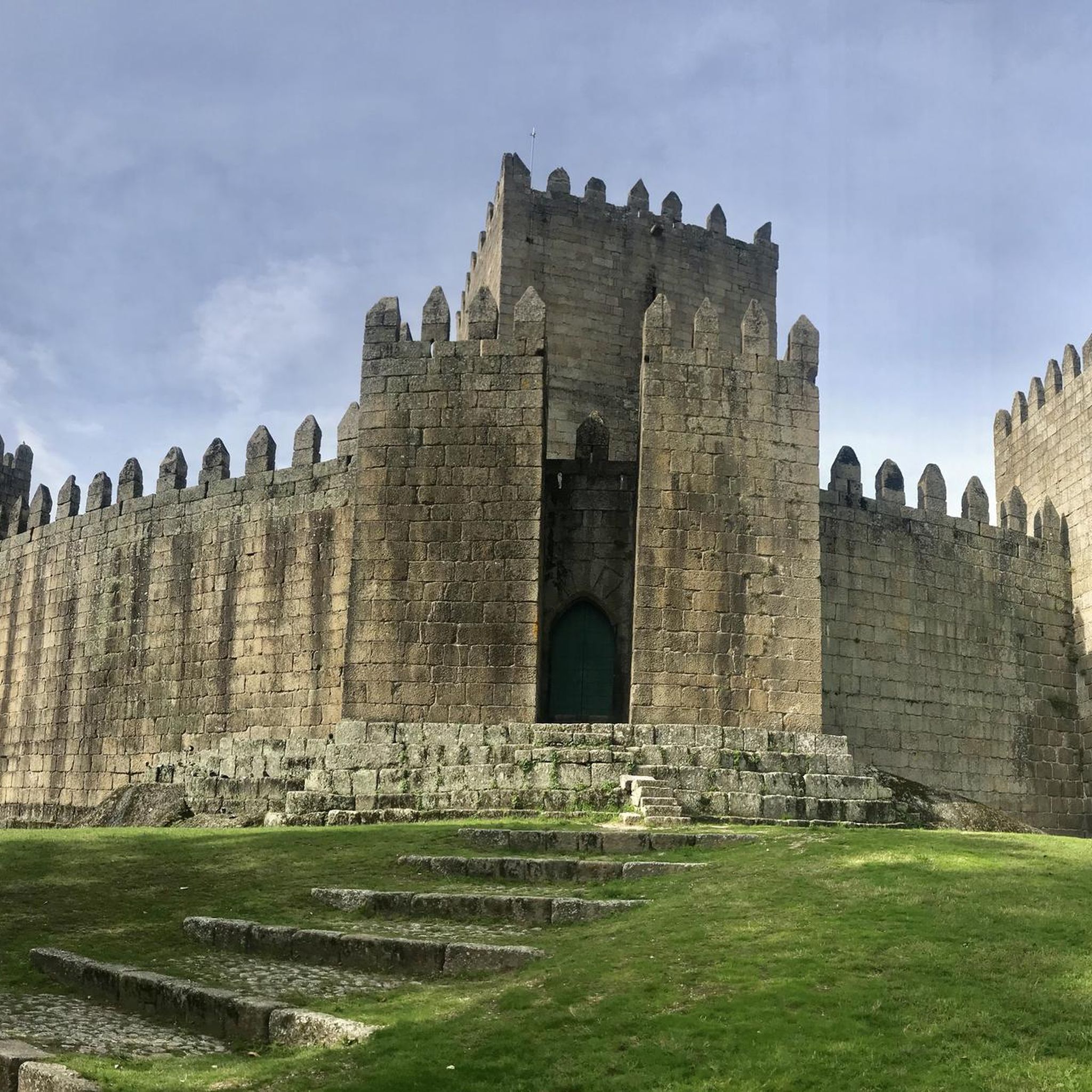
Guimarães Castle is the most visited medieval castle in Portugal and one of the most beautiful and important castles in the country. It has been recognized as a National Monument since 1881, a UNESCO World Heritage Site since 2001, and one of the 7 Wonders of Portugal since 2007!
1
0

Very beautiful and pleasant historic center/medieval village and very well-preserved castle. Medieval atmosphere/festivities a few days before the June 24th celebration (date of the founding of Portugal)
2
1
Frequently Asked Questions
Where are the main castles located relative to Gonça?
The primary castles and historical sites are predominantly located in the nearby historic city of Guimarães, which is approximately 7.5 km from Gonça. Guimarães is easily accessible and serves as the central point for exploring the region's rich history.
What is the historical significance of the castles near Gonça?
The castles in the Guimarães area hold immense historical significance, particularly as they are associated with the foundation of the Portuguese nation. Guimarães Castle Park, for instance, is considered the birthplace of Portugal's first king, Afonso Henriques, and played a crucial role in the country's early history. The region is often referred to as the 'cradle of the nation'.
What can I expect to see at the Palace of the Dukes of Braganza?
The Palace of the Dukes of Braganza offers a glimpse into the opulent lifestyle of Portuguese nobility from the 15th and 16th centuries. It features extensive collections of furniture, carpets, and tapestries, including copies of the Pastrana tapestries. Part of the property also functions as a museum, showcasing Portuguese dinner sets and Flemish tapestries. Its unique architecture and forested park setting are also notable.
What makes Guimarães Castle a significant historical site?
Guimarães Castle Park is a crucial landmark in Portuguese history, often associated with the birth of the Portuguese nation. Originally built in the 10th century, it's one of the most well-preserved medieval castles in Portugal. Visitors can explore its mighty complex, walk along its walls, and enjoy stunning views, immersing themselves in the site where Portugal's first king was born.
Are there other historically important sites near Guimarães Castle?
Yes, very close to Guimarães Castle Park is the Church of São Miguel do Castelo, a small religious building notable for its historical significance, including the baptismal font where the first king of Portugal was said to be baptized. Additionally, the nearby city walls bear the inscription "Aqui nasceu Portugal" (Portugal Was Born Here), marking Guimarães as the cradle of the nation.
Are there hiking opportunities around the castles near Gonça?
Yes, the region offers several hiking opportunities. For example, you can find easy hikes like the "Guimarães Castle – Oliveira Square, Guimarães loop" or the "Salado Monument – Palace of the Dukes of Braganza loop" which allow you to explore the historical sites and surrounding areas on foot. You can find more details on these and other trails in the Easy hikes around Gonça guide.
Can I go cycling near the castles?
Absolutely. The area around Gonça and Guimarães provides various cycling routes. You can explore routes such as the "Basílica de São Torcato loop from Barco" or longer, more challenging rides like the "Monument to Justice of Fafe – Igreja Nova de São José loop." For more cycling options, refer to the Cycling around Gonça guide.
Are the castles around Gonça suitable for families?
Many of the historical sites, including Palace of the Dukes of Braganza and Guimarães Castle Park, are considered family-friendly. They offer engaging historical exploration and are often set within parks, providing space for children to enjoy. The historical context also offers educational value for all ages.
What is the best time of year to visit the castles near Gonça?
The castles near Gonça are generally pleasant to visit throughout the year. Spring (April-June) and autumn (September-October) offer mild temperatures, making it ideal for exploring both the indoor and outdoor areas of the castles and nearby trails. Summer can be warm, while winter visits are possible, though some outdoor exploration might be limited by cooler, wetter weather.
How can I reach the castles in Guimarães using public transport?
Guimarães is well-served by public transport, including train and bus services from major cities in Portugal. Once in Guimarães, the main castles like Guimarães Castle Park and the Palace of the Dukes of Braganza are located in the historic center and are easily accessible on foot from the city's transport hubs.
Are there parking options available at the castles?
Yes, parking is available in Guimarães, particularly around the historic center where the main castles are located. There are several paid parking lots and some street parking options within walking distance of Guimarães Castle Park and the Palace of the Dukes of Braganza. It's advisable to arrive early during peak season to secure a spot.
Can I find cafes or restaurants near the castles?
The historic center of Guimarães, where the prominent castles are situated, is bustling with cafes, restaurants, and traditional taverns. You'll find plenty of options for refreshments, snacks, and full meals within a short walk of Palace of the Dukes of Braganza and Guimarães Castle Park, offering local Portuguese cuisine and international choices.
Are there any viewpoints offering scenic views of the castles?
Yes, the castles themselves, particularly Guimarães Castle Park, offer stunning views from their walls. Additionally, the Hermitage of Our Lady of Mount Carmel (Grotto), while a religious site, is also noted as a viewpoint, providing picturesque perspectives of the surrounding landscape and possibly glimpses of the castle area.
Most popular attractions around Gonça

Get inspired with the komoot mobile app


Explore more
Looking for the best castles somewhere else? Discover other guides around Gonça:
