Top 5 Castles around Lansac
Best castles around Lansac include historic feudal ruins and active wine estates. The region, situated in Gironde, France, is known for its rich history, particularly during the Hundred Years' War, and its prominent wine culture. Visitors can explore remnants of medieval structures alongside picturesque vineyards. The landscape offers a blend of historical sites and scenic beauty.
Best castles around Lansac
- The most popular castles is Château Reynaud 🏰, a castle described as a small manor house with a winery.…
Last updated: October 12, 2026
Citadelle Castle
Highlight • Castle
Translated by Google •
Tip by

Château Reynaud 🏰
Highlight • Castle
Translated by Google •
Tip by
Sign up now to discover places like this
Get recommendations on the best single tracks, peaks, & plenty of other exciting outdoor places.
Château La Croix de Millorit - Bayon-sur-Gironde
Highlight • Castle
Translated by Google •
Tip by
Superb Chateau de Bouilh
Highlight • Castle
Translated by Google •
Tip by

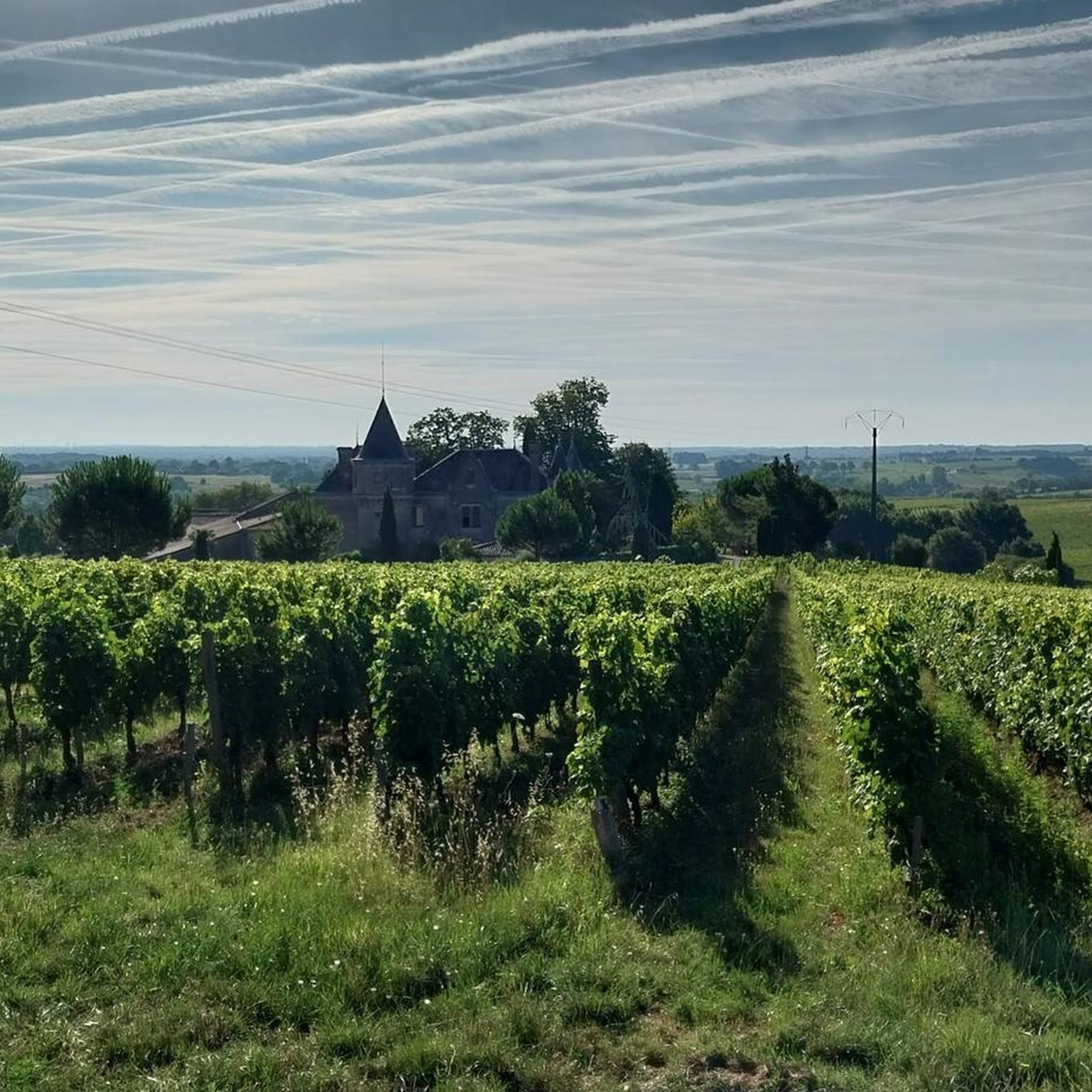
View of Château La Grave and Vineyards
Highlight • Viewpoint
Josiane …
Translated by Google •
Tip by
Start today with a free account
Your next adventure awaits.


Tips from the Community

In the 16th century, the Bourg citadel, the stronghold of Bordeaux, was elevated to the rank of impregnable citadel thanks to the work of the Duke of Épernon, whose vaulted passage remains a vestige that you can discover during guided tours. You'll also visit the basement, where the former stone quarries were used to build impressive 70-meter-long reinforced concrete oil tanks, used during World War II. The Bourg Citadel Museum is located near the castle, which features 18th-century neoclassical architecture. You'll be amazed by its collection of horse-drawn carriages, which you'll learn about during guided tours.
1
0

The view of the castle from the cypress-lined path and the valley behind it from the path is very beautiful.
1
0

Legacy of the priory of Milhegrand, stronghold of the abbey of Lagrasse in the 12th century, the estate then became a smallholding, maintained by a whole line of winegrowers. Josiane and Jean-Pierre OROSQUETTE, themselves from these families dedicated to the vineyard, have in turn perpetuated this long chain. In the 1970s, they decided to leave the cooperative cellar to settle in their own private cellar. They therefore settled on the La Grave estate where the vineyard, due to lack of maintenance, was in poor condition. From the first harvest, they discovered a lot of white grapes. Surprise ! The majority grape variety is Maccabeu, very appreciated for its aromas, it allows La Grave to obtain a great reputation for its white wines! This is the legendary grape variety of La Grave! Today, their son Jean-François has taken over. While continuing to produce excellent white wines, he developed red (and rosé) wines, bringing them elegance and finesse. The next generation arrives with nephew Tristan (vineyard side) and Jean-François' son, Julien... his sister Marie follows closely behind him! Château La Grave produces its wines under 3 appellations (white, rosé and red).
1
0
The terrace of the Chateau de la Citadelle de Bourg en Gironde offers a superb view of the Dordogne just before the junction with the Garonne, from where they form the Gironde estuary. You can still see the facade of the old 18th century charterhouse that was built there, as well as a view of the river. The Citadel of Bourg museum presents an impressive network of underground passages as well as a collection of horse-drawn carriages. Open daily between June and September.
2
0

Worth seeing small manor house with winery.
6
0
The Château du Bouilh is located in Saint-André-de-Cubzac, in Gironde. It is made up of a set of buildings: pavilion of honor and outbuildings arranged in a semicircle which date from the eighteenth century. The architect of the castle is Victor Louis who worked there from the end of 1786 to August 1789. The castle has been classified as a historical monument since March 17, 1943
2
0
The Chateau La Croix de Millorit is a typically Bordeaux construction from the 18th century. It has belonged to the JAUBERT Paule et Amédée family for more than half a century. Located on the best slopes of the burgundy and on the heights of the Gironde, this castle has remained family property whose management is ensured with care and rigor by two of their daughters, Dominique and Pascale. Hours: 9 am-12pm and 2 pm-5pm or by appointment Accommodation, tasting and sale of wine, languages spoken French & English https://www.cotes-de-bourg.com/chateaux/chateau-la-croix-millorit
1
0
Little cute castle among the vines. Private access, but nice owners.
9
0
Frequently Asked Questions
What types of castles can I visit around Lansac?
The Lansac area offers a diverse range of castles, from the historic feudal ruins of the original Château de Lansac to active wine-producing châteaux. You can explore medieval remnants, picturesque 18th-century Bordeaux constructions, and estates known for their wine tasting experiences and scenic vineyard views.
What is the historical significance of the castles in Lansac?
The region's castles hold significant historical value, particularly the original Château de Lansac, also known as 'Le Castelot.' Built in 1331 during the Hundred Years' War, it was a feudal castle that offers a glimpse into medieval history. Other châteaux, while primarily known for wine, often feature architecture from the 18th century, reflecting Bordeaux's rich past.
Are there family-friendly castles or activities near Lansac?
Yes, some châteaux in the area are noted for being family-friendly. For instance, Château La Croix de Millorit is categorized as family-friendly and offers wine tasting and accommodation. Additionally, viewpoints like the View of Château La Grave and Vineyards provide scenic spots that can be enjoyed by all ages.
What are some highly-rated castles to visit near Lansac?
Visitors particularly enjoy Château Reynaud 🏰, described as a 'little cute castle among the vines' with nice owners and a winery. Another popular spot is the Superb Chateau de Bouilh, an 18th-century historical monument in Saint-André-de-Cubzac. The View of Château La Grave and Vineyards is also highly regarded for its scenic beauty.
What is the history of the original Château de Lansac?
The original Château de Lansac, also known as 'Le Castelot' or 'Château Vieux Lansac,' was a large feudal castle constructed in 1331 with royal authorization. It remained in the Lords of Lansac family until the 18th century before falling into ruin. Originally a quadrangular structure with four round towers, only two of these towers remain visible today at the top of a small hill, offering a tangible connection to its medieval past.
Can I visit wine-producing châteaux in the Lansac area?
Absolutely. Several châteaux in and around Lansac are active wine estates. Château Reynaud 🏰 is a small manor house with a winery, and Château La Croix de Millorit offers wine tasting and sales. The area's prominent wine culture means many châteaux combine historical architecture with vineyard experiences.
What outdoor activities can I do near these castles?
The region around Lansac offers various outdoor activities. You can find numerous routes for mountain biking, running, and road cycling. For example, there are several MTB trails around Lansac, including loops like 'Bourg Citadel – Bourg-sur-Gironde Citadel.' Running enthusiasts can explore routes such as 'Le Reuille – Thau Castle loop,' and road cyclists can enjoy scenic rides like 'Beautiful views over the Garonne.' You can find more details on these activities in the MTB Trails around Lansac, Running Trails around Lansac, and Road Cycling Routes around Lansac guides.
What is the best time to visit the castles around Lansac?
While specific opening hours vary by château, the region's mild climate generally makes spring (April-June) and autumn (September-October) ideal for visiting. During these seasons, the weather is pleasant for exploring ruins, walking through vineyards, and enjoying outdoor activities without the intense heat of summer or the chill of winter. This also often coincides with harvest season for wine estates.
Are there any viewpoints to see the castles and surrounding landscapes?
Yes, the View of Château La Grave and Vineyards is a highly recommended viewpoint. It offers superb scenic views of the castle and the picturesque surrounding vineyards. The cypress-lined path leading to the view is particularly beautiful.
What amenities are available near the castles in Lansac?
The town of Bourg-en-Gironde, a short distance from Lansac, offers various amenities including cafes, pubs, restaurants, and accommodation options. Some châteaux, like Château La Croix de Millorit, also provide accommodation, tasting, and wine sales directly on site.
Are there alternatives to the ruins of Château de Lansac for historical exploration?
While the original Château de Lansac offers a unique glimpse into medieval ruins, you can also explore other historically significant sites. The Superb Chateau de Bouilh, an 18th-century historical monument, provides a different architectural and historical experience. Many wine châteaux also have buildings dating back centuries, offering a blend of history and wine culture.
How much time should I allocate for visiting castles in the Lansac area?
The time needed depends on the type of castle and your interests. For the ruins of Château de Lansac, a shorter visit of 1-2 hours might suffice. For wine-producing châteaux like Château Reynaud 🏰 or Château La Croix de Millorit, you might spend 2-3 hours, especially if you include a tasting or tour. To visit multiple sites and enjoy the surrounding landscapes, a full day or even a weekend would allow for a more comprehensive experience.
Most popular attractions around Lansac

Get inspired with the komoot mobile app


Explore more
Looking for the best castles somewhere else? Discover other guides around Lansac:
