Top 12 Castles around Quesada
Best castles around Quesada are found within the historic province of Jaén, a region known for its numerous fortifications and dramatic mountain landscapes. The area offers a blend of natural beauty and rich history, with many castles strategically positioned on high ground. While the town of Quesada itself once featured a fortified enclosure, the surrounding area provides access to well-preserved historical fortresses. This part of Spain is characterized by its rugged terrain and historical significance, making it a notable destination…
Last updated: June 20, 2026
La Yedra Castle
Highlight • Castle
Translated by Google •
Tip by

Castillo de La Iruela
Highlight • Castle
Translated by Google •
Tip by

Sign up now to discover places like this
Get recommendations on the best single tracks, peaks, & plenty of other exciting outdoor places.
Sign up for free
Castle of the Five Corners (Salvatierra Castle)
Highlight • Castle
Translated by Google •
Tip by

Cazorla
Highlight • Settlement
Translated by Google •
Tip by

Cazorla
Highlight • Settlement
Tip by

Sign up for free to discover even more castles around Quesada.
Sign up for free
Already have an account?
Start today with a free account
Your next adventure awaits.
Login or Signup
Popular around Quesada



Tips from the Community

High on the rugged slopes of the Sierra de la Villa in Villena, Alicante, stands the Castillo de Salvatierra, affectionately known as El Castillico. This ancient fortress, dating back to the 10th century, offers a fascinating glimpse into a bygone era when strategic military ingenuity and architectural ingenuity combined to create an impressive fortress.
13
0

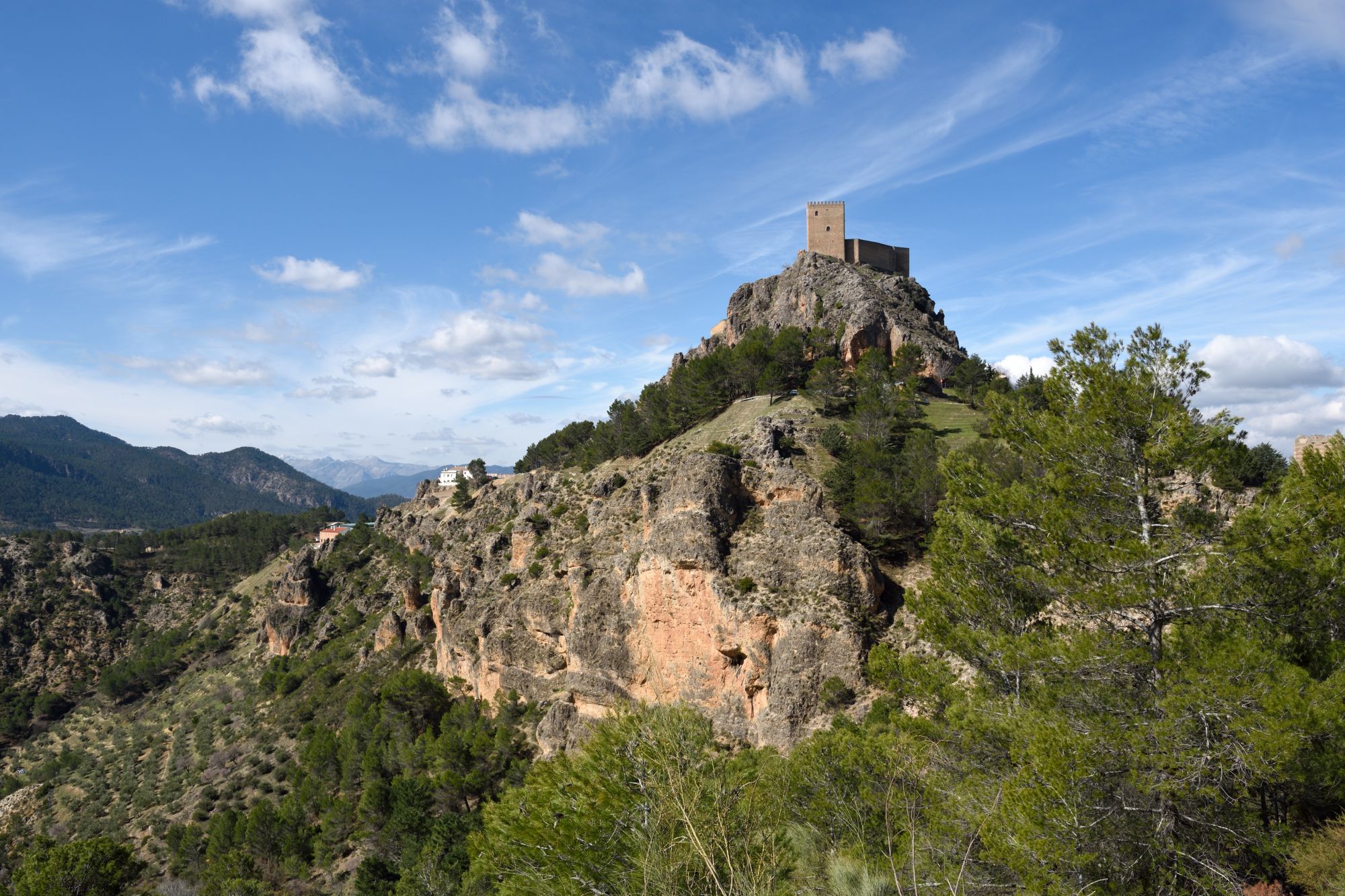
The Yedra Castle, located high above Cazorla (Jaén), is a historical and cultural gem that dominates the landscape of the Sierras de Cazorla, Segura, and Las Villas Natural Park. It was built exclusively for military purposes, not as a stately home. It was conquered by Ferdinand III in 1232, who adapted it to a Christian style.
2
0
The Yedra Castle, located high above Cazorla (Jaén), is a historical and cultural gem that dominates the landscape of the Sierras de Cazorla, Segura, and Las Villas Natural Park. It was built exclusively for military purposes, not as a stately residence. It was conquered by Ferdinand III in 1232, who adapted it to a Christian style.
2
0

An impressive town with endless options, including walking, hiking, eating, and enjoying its people.
0
1

This is not a Templar castle, as is often said, but it is a real wonder and well worth a visit. From the top of its keep, you have fantastic views of the entire Jaén countryside and its sea of olive trees. Closed on Mondays and Tuesdays, be careful!
0
0

The Castle of the Five Corners is a fortress built in the second half of the 14th century. It is located in the municipality of Cazorla, Spain, on a rocky plateau, near its summit. The hill is called Cerro Salvatierra, hence the castle is also known as Castillo de Salvatierra.
9
0

Cazorla is a town with a great history and culture. It is perfect to rest after a long route and visit the ruins of the church of Santa María, the vault of the Cerezuelo river and the Yedra castle. If you like blues, don't miss Bluescazorla, a festival that takes place at the beginning of July and is one of the most cutting-edge in Spain. Don't leave Cazorla without trying typical dishes such as gachamiga, andrajos, rin ran or ajoarina.
5
0
Frequently Asked Questions
What are the most historically significant castles around Quesada?
The region around Quesada is rich in history. Two particularly significant sites are the remains of the Arab fortress La Yedra Castle, which showcases Muslim and Castilian Gothic architectural elements, and Tiscar Castle (also known as Peña Negra Fortress). Tiscar Castle, likely of Muslim origin, played a crucial role in medieval conflicts and offers a blend of history and natural beauty.
Are there any castles with impressive views near Quesada?
Yes, several castles offer spectacular views. La Yedra Castle provides panoramic views of Cazorla and its surroundings. Similarly, Castillo de La Iruela, perched on the slopes of the Sierra de Cazorla, offers commanding views of the Guadalquivir valley. The ruins of the Castle of the Five Corners (Salvatierra Castle) also boast views of the mountains and Cazorla.
What outdoor activities can I do near the castles around Quesada?
The area around Quesada's castles is excellent for outdoor activities. You can find numerous trails for running, such as the challenging Río Cerezuelo Circular Trail or various loops around La Yedra Castle. For road cycling, explore routes like the Puerto de Tíscar Loop or longer rides connecting Quesada and La Yedra Castle. Gravel biking options are also available, with routes like the Cazorla – Collado Zamora Refuge loop. You can find more details on these activities in the Running Trails around Quesada, Road Cycling Routes around Quesada, and Gravel biking around Quesada guides.
What is the best time of year to visit the castles in the Quesada region?
The region's castles, often located on high ground, can be enjoyed throughout much of the year. Spring and autumn generally offer pleasant temperatures for exploring and hiking. Summers can be hot, especially at midday, but early mornings or late afternoons are still suitable. Winters are cooler but often clear, providing crisp views.
Are there family-friendly castles or historical sites near Quesada?
While many castles are ruins or require some walking, the town of Cazorla, which hosts La Yedra Castle, is considered family-friendly. It offers a great base to rest and explore historical sites like the ruins of Santa María church and the Cerezuelo river vault, in addition to the castle itself. The historical context and legends surrounding sites like Tiscar Castle can also be engaging for families.
What are the origins of the castles in the Quesada area?
The castles in the Quesada area primarily have Muslim origins, reflecting the region's long history under Moorish rule. Many, like La Yedra Castle and Tiscar Castle, were later adapted or rebuilt by Christians after the Reconquista, resulting in a blend of architectural styles, including Castilian Gothic elements. These fortifications were strategically important frontier posts.
Can I find hiking trails that start near the castles?
Yes, the Castle of the Five Corners (Salvatierra Castle) is noted as a starting point for some hiking routes in the Sierra de Cazorla. The strategic locations of many castles mean they are often integrated into or accessible via existing trails, offering a combination of historical exploration and outdoor activity.
What do visitors enjoy most about the castles around Quesada?
Visitors frequently appreciate the rich history and the stunning natural settings of the castles. The blend of Muslim and Christian architecture, the strategic locations offering breathtaking views, and the sense of stepping back in time are often highlighted. The integration of these historical sites with opportunities for hiking and cycling also adds to the appeal.
Is there a difference between Quesada (Jaén) and Ciudad Quesada (Alicante) regarding castles?
Yes, it's important to distinguish between the two. The historical castles mentioned in this guide, such as La Majuela and Tiscar Castle, are located in Quesada, Jaén province, which has a deep medieval history. Ciudad Quesada in Alicante is a more modern urbanization from the 1970s, and while it has defensive walls, these are not traditional medieval castles like those found in Quesada (Jaén).
Are there any legends associated with the castles in the Quesada region?
Yes, Tiscar Castle, in particular, is steeped in legends. One tale recounts its supposed impregnability and a daring night assault by a squire named Pedro Hidalgo that led to its capture. Another legend speaks of the defender, Mohammed Andón, having a vision of the Virgin of Tiscar advising surrender to avoid further casualties. These stories add to the mystique of the historical sites.
What kind of architecture can I expect to see in the castles around Quesada?
You can expect to see a fascinating mix of architectural styles. Many castles, like La Yedra Castle, originated during the Muslim period, featuring robust walls and strategic designs. Over centuries, after Christian conquests, these structures were often adapted and completed with Castilian Gothic styles, resulting in unique blends that tell the story of the region's changing rulers.
Most popular routes around Quesada
Most popular attractions around Quesada

Get inspired with the komoot mobile app


Explore more
Looking for the best castles somewhere else? Discover other guides around Quesada:
