Top 6 Caves around Santa Eulàlia De Ronçana
Best caves around Santa Eulàlia De Ronçana are found within a region characterized by narrow paths alongside cliffs, small valleys with streams, and deep ravines. While the municipality itself is known for its natural landscapes and historic sites, prominent cave systems are typically located in the broader surrounding area. These natural features offer opportunities for exploration, with some sites providing a cave-like atmosphere or containing actual cave formations. The area provides diverse natural environments for outdoor activities.
Best caves around…
Last updated: July 4, 2026
Sant Miquel del Fai Road
Highlight • Cycleway
Tip by

Sant Miquel del Fai Monastery and Waterfall
Highlight • Historical Site
Translated by Google •
Tip by

Sign up now to discover places like this
Get recommendations on the best single tracks, peaks, & plenty of other exciting outdoor places.
Sign up for free
The Swallows' Rock
Highlight • Natural Monument
Translated by Google •
Tip by

Balma la Miquelona
Highlight • Cave
Translated by Google •
Tip by

Pedra Foradada
Highlight • Natural Monument
Tip by

Sign up for free to discover even more caves around Santa Eulàlia De Ronçana.
Sign up for free
Already have an account?
Start today with a free account
Your next adventure awaits.
Login or Signup
Popular around Santa Eulàlia De Ronçana
Tips from the Community

Jaciment arqueològic amb pintures rupestres, declarat Patrimoni de la Humanitat.
0
0

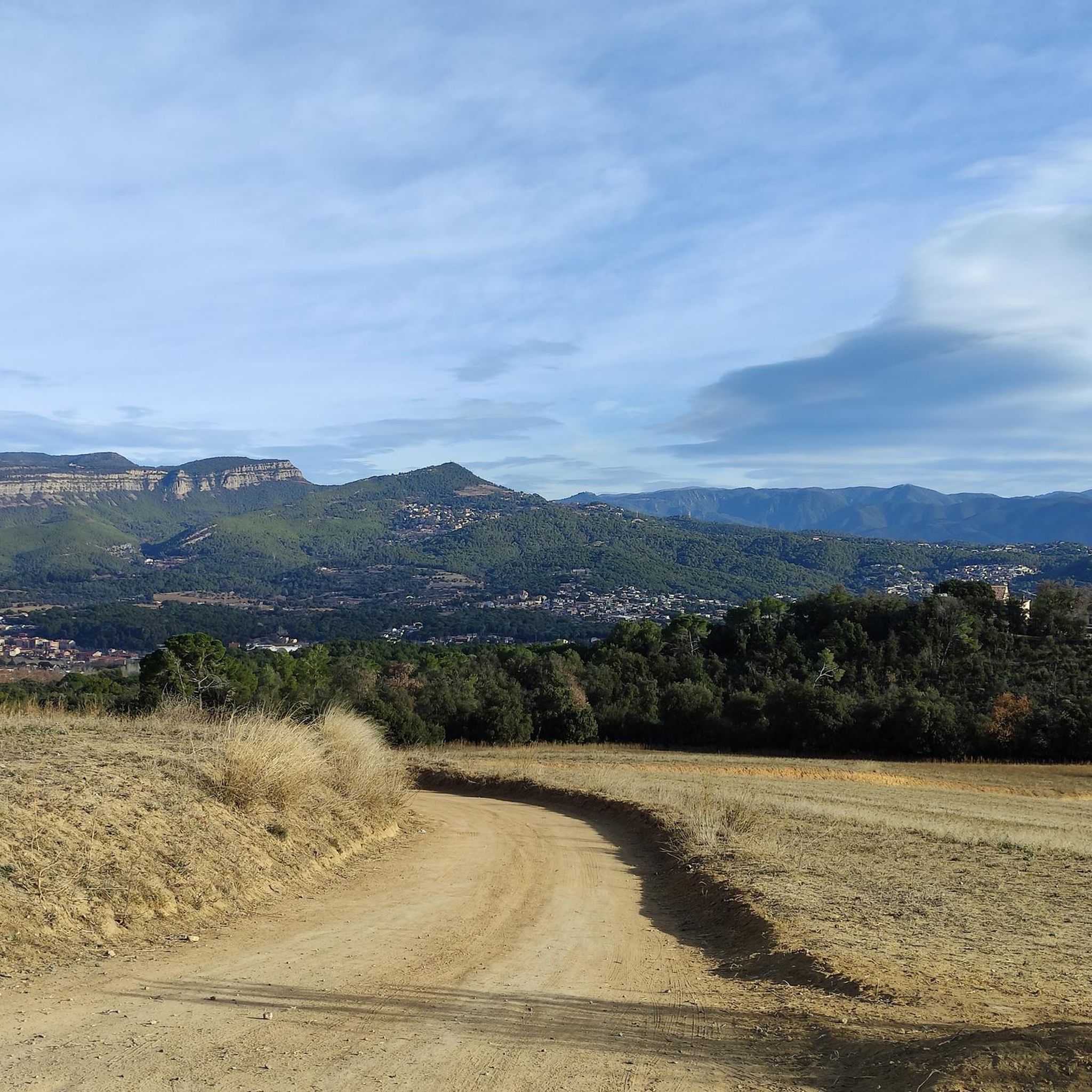
A real discovery! Superb views, decent asphalt and virtually no cars.
0
0


Another natural and magical gem of the area. Don't miss the prehistoric-style clay carvings by a contemporary street artist. Some say that ancient peoples used the stone in initiation rituals: young people who passed through the rock were "born again" as adults of the clan. It is said that if you passed through the hole, especially children or pregnant women, you were cured of illnesses or protected from spirits. It was like a kind of "magic door" between two worlds.
2
0
This cave, inhabited in prehistoric times, contains remains that demonstrate its use in the Neolithic or Bronze Age, such as stone tools, pottery fragments, and evidence of fire. Its strategic location, hidden but with good visibility of the surroundings, made it ideal as a refuge or stopover. Today, for cyclists like us, it's an excellent shelter in case of rain or to enjoy breakfast in the shade, thanks to its peaceful and protected location.
1
0

The "Pedra de Les Orenetes" (Swallows' Stone) is made up of a large granite block about 8 m long, 3 m wide and 3 m high, which has been heavily eroded. The basal part shows several cavities, one of which is a medium-sized shelter, which is the main area of the paintings. From this concavity, through which the block can be crossed from below, other concavities and eroded points with pictographic representations continue to the right. These correspond to curved, serpentine strokes, points, female figures, cruciform figures, bars, finger marks, anthropomorphic forms, quadrupeds, branch-shaped figures and human representations, as well as remains of pigment that are difficult to interpret. the schematic-semi-schematic to the stylized and naturalistic), chromatic (reddish, reddish-brown, reddish-orange and yellowish-orange) and techniques (fingering, simple stroke and flat ink) as well as a diverse degree of erosion that seems to indicate a process with superimpositions and diverse phases, some of which seem to be related to those of the Cogul shelter.
1
0

Especially if it has rained, it is spectacular
0
0

Spectacular rocks found in this area near the Bosc de Rsucalleda, with curious shapes.
6
0
Frequently Asked Questions
Are there actual caves within Santa Eulàlia de Ronçana municipality?
While Santa Eulàlia de Ronçana is known for its beautiful natural landscapes, prominent cave systems are not directly within the municipality itself. The area features natural rock shelters and geological formations, but for more extensive cave experiences, you would need to venture to the broader surrounding region.
What kind of cave-like experiences can I find near Santa Eulàlia de Ronçana?
Near Santa Eulàlia de Ronçana, you can explore sites like the Sant Miquel del Fai Monastery and Waterfall, which offers a dramatic natural setting with impressive rock formations and the opportunity to hike behind a waterfall and visit stalactite caves. There are also natural rock shelters with historical significance, such as The Swallows' Rock, which features cavities and prehistoric pictographic representations.
What is the Sant Miquel del Fai Monastery and Waterfall, and what does it offer?
The Sant Miquel del Fai Monastery and Waterfall is a historical site and natural monument located atop a mountain, suspended over a cliff. Visitors can admire a beautiful waterfall, hike behind it, and explore some stalactite caves within the natural area. It offers a unique vista within the Catalan mountain range.
Can I find historical or prehistoric sites related to caves in the area?
Yes, the region has sites with historical and prehistoric significance. The Swallows' Rock is a natural monument featuring a large granite block with several cavities, including a shelter with pictographic representations from prehistoric times. Another example is Pedra Foradada, a prehistoric site with a small cave into the rock, known for ancient rituals.
What is the difficulty level for exploring these cave-related sites?
Many of the highlighted sites, such as Sant Miquel del Fai Road and Sant Miquel del Fai Monastery and Waterfall, are rated as intermediate difficulty for exploration, often involving hiking or cycling on varied terrain. Some paths can be steep or have uneven surfaces, so appropriate footwear is recommended.
Are there any natural rock shelters suitable for a break or shelter?
Yes, Balma la Miquelona is a small natural rock shelter formed by the lateral excavation of the Sot del Bac stream. It's described as a suitable place for shelter or bivouac, historically used by human communities and currently by walkers and climbers. The Swallows' Rock also offers a sheltered spot.
What outdoor activities can I do near these cave sites?
The area around Santa Eulàlia de Ronçana offers diverse outdoor activities. You can find numerous MTB trails, running trails, and cycling routes. Many of these routes pass through the natural landscapes characterized by cliffs, streams, and ravines, offering scenic views and access to sites like Sant Miquel del Fai.
What is the best time to visit the cave-related sites near Santa Eulàlia de Ronçana?
The natural sites, especially those with waterfalls like Sant Miquel del Fai, are often most impressive after rainfall or during wetter seasons when the waterfalls are active. Generally, spring and autumn offer pleasant temperatures for hiking and exploring. Summer can be warm, while winter might be cooler but still suitable for outdoor activities.
Are these sites family-friendly?
Many of the natural areas and historical sites can be enjoyed by families, though some routes may involve intermediate difficulty. For instance, the walk to Sant Miquel del Fai Monastery and Waterfall is a spectacular walk that can be done on foot or by car to reach the historic site, making it accessible for various family members. Always check specific trail conditions for younger children.
What do visitors appreciate most about the cave-related sites in this region?
Visitors frequently appreciate the dramatic natural beauty, the unique historical significance of sites like the Sant Miquel del Fai Monastery, and the opportunity to explore geological formations. The scenic views, the tranquility of places like Balma la Miquelona, and the chance to witness active waterfalls are also highly valued.
Are there specific viewpoints or scenic routes related to these cave areas?
Yes, Sant Miquel del Fai Road is a cycle way that features tall cliffs and a dramatic gorge, offering fantastic views. The Sant Miquel del Fai Monastery and Waterfall itself provides a unique vista from its cliffside location. Many routes in the area traverse scenic landscapes with viewpoints over valleys and rock formations.
What should I wear when visiting these natural sites?
Given the varied terrain, which can include steep paths and uneven surfaces, it is advisable to wear comfortable hiking shoes with good grip. Layers of clothing are also recommended to adapt to changing weather conditions, especially if exploring areas with waterfalls or shaded rock shelters.
Most popular routes around Santa Eulàlia De Ronçana
Most popular attractions around Santa Eulàlia De Ronçana

Get inspired with the komoot mobile app


Explore more
Extend your search for the best caves by checking out these guides of the top ones around Santa Eulàlia De Ronçana:
