Top 5 Caves around Ágreda
Caves around Ágreda are situated in the province of Soria, Spain, notably on the slopes of the Moncayo mountain. This region is characterized by a significant karstic complex, featuring calcarea caves and numerous sinkholes. The area is part of the Natura 2000 network, recognized for its ecological value and natural environment within the Araviana valley. Ágreda serves as a gateway to the Moncayo mountain range, offering a landscape rich in geological formations.
Best caves around Ágreda
- The most popular caves is Cueva de los Pilares, a cave that features arches, vaults, and giant columns within a natural rock sanctuary. It is located in a spectacular setting within the Moncayo Natural Park.
- Another must-see spot is Cueva de Ágreda, a cave known for its significant bat colony and geological formations. Visitors can learn about its ecosystem at the Interpretation Center of Moncayo and Bats in the village.
- Visitors also love Source of the Queiles River, a natural monument where water flows from a cave at a rate of 3 cubic meters per second. This makes it a notable water source in Europe.
- Ágreda is known for karstic caves, calcarea caves, and sinkholes. The region offers a variety of geological formations to explore.
- The caves around Ágreda are appreciated by the komoot community, with 6 upvotes and 20 photos shared by users.
Last updated: June 20, 2026
Cueva de los Pilares
Highlight • Cave
Translated by Google •
Tip by

View of Cueva/Castillo de los Fayos
Highlight • Castle
The castle of Los Fayos played a strategic role on the borders between the kingdoms of Aragon, Navarre and Castile. Although today only a few vestiges remain, such as the cistern and the water collection system, the cave remains a place of historical and archaeological interest.
The entrance to the cave is located in a vertical cut in the rock, and a ladder is needed to access it. Inside the cave, several rooms can be seen, including the hearth and the cistern.
Translated by Google •
Tip by

Sign up now to discover places like this
Get recommendations on the best single tracks, peaks, & plenty of other exciting outdoor places.
Sign up for free
Source of the Queiles River
Highlight • River
Translated by Google •
Tip by

Cueva de Ágreda
Highlight • Cave
Translated by Google •
Tip by

Start today with a free account
Your next adventure awaits.
Login or Signup



Tips from the Community

It is worth visiting the source, and the waterfalls that form nearby
0
0

It is difficult to visit, but in the town there is a Cave Interpretation Center.
0
0

The Cueva del Castillo in Los Fayos is a fascinating place with a rich history. Located in the municipality of Los Fayos, in the province of Zaragoza, Aragon, this natural cave has been inhabited since the Bronze Age. In the 12th century, a defensive castle was built taking advantage of the natural cavity in the rock. The castle of Los Fayos played a strategic role on the borders between the kingdoms of Aragon, Navarre and Castile. Although today only a few vestiges remain, such as the cistern and the water collection system, the cave remains a place of historical and archaeological interest. The entrance to the cave is located in a vertical cut in the rock, and a ladder is needed to access it. Inside the cave, several rooms can be seen, including the hearth and the cistern.
4
0
It is the second most important water source in Europe, reaching 3 cubic meters per second. It flows from a cave in an explosive, bustling, gushing way. Fish farms and power plants have been established near the source. The path between Vozmediano and the source is very beautiful.
0
0
Beautiful town of Soria at the foot of Moncayo. Its name is due to its Cave that appears in the photo. Good bar and good torreznos.
1
0

At the Collado de la Atalaya you have to head northeast along the slope of the mountain range following a level path marked with stone markers. The path crosses the Las Hoyas de los Portillos valley and climbs halfway through the pine forest towards the wall of the Muela del Cerro Morrón. In the pine forest you have to keep climbing towards the east and at the base of the walls connect with the path coming from the north face of the mountain. The landmarks are clear between the pine trees and the mole wall, they jump a couple of small slopes near other cavities and lead to the spectacular Cueva de los Pilares, a fantastic natural rock sanctuary with arches, vaults and giant columns. The climb to the summit of the mole leaves from the cave through the canal located to the west, it is a clear and obvious climb, it has stone markers and although it seems that there is no exit with good visibility, it is a simple section along some aerial ledges without too many complications, unless the rock is wet, it cannot even be classified as a climbing step, rather technical mountain hiking. The milestones enter the large inclined molar plain and take the direction of the summit through the center of the mountain.
0
1

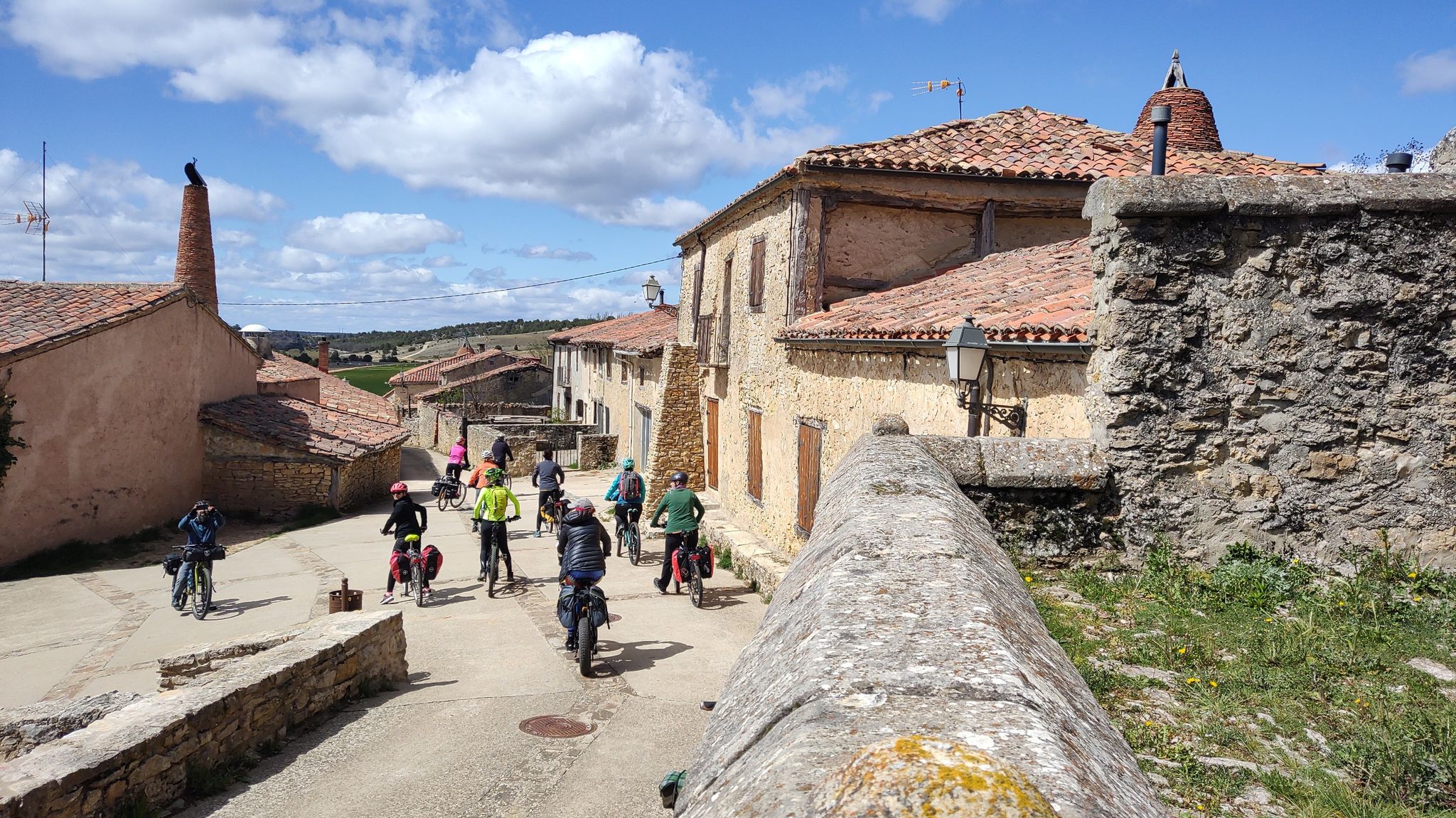
We visit the castle cave, a fortified cave with a lot of history. This 12th century medieval castle located in a cave at the top of the town of Los Fayos was a key place during the war of the two Pedros in 1357. We can book a guided tour to learn about its history and the hidden corners. We also have the option of leaving the bike and going up to the viewpoint of the castle with magnificent views of the Val dam and the town of Los Fayos. Of course, to get to it we will have to overcome the 333 steps that there are, but without a doubt, the reward is spectacular.
0
0
Spectacular setting in the Moncayo Natural Park with these formations at the entrance to the Cueva de los Pilares, at the foot of the Muela del Col
1
1
Frequently Asked Questions
What unique geological features can I explore in the caves around Ágreda?
The region around Ágreda is known for its significant karstic complex, featuring calcarea caves and numerous well-marked sinkholes (simas) like La Similla, Simhonda, and Sima de Los Trabucos. You can also visit Cueva de los Pilares, a spectacular natural rock sanctuary with arches, vaults, and giant columns.
Is Cueva de Ágreda accessible to visitors?
Direct access to the interior of Cueva de Ágreda is restricted due to its important bat colony. However, you can learn extensively about its features and ecological significance at the Interpretation Center of Moncayo and Bats in Ágreda village, which offers exhibits and information about the cave and its inhabitants.
What kind of wildlife can be found in the caves near Ágreda?
The most notable wildlife in the caves, particularly Cueva de Ágreda, is a substantial bat colony. The area is part of the Natura 2000 network, recognized as a Site of Community Importance and a Special Protection Area for Birds, highlighting its broader ecological value.
Are there any significant natural monuments or water sources related to the caves?
Yes, the Source of the Queiles River is a remarkable natural monument where water flows from a cave at an impressive rate of 3 cubic meters per second, making it one of Europe's notable water sources. The path between Vozmediano and the source is particularly scenic.
What outdoor activities can I do near the caves around Ágreda?
The rich landscape near Ágreda and Moncayo is ideal for various outdoor activities. You can find numerous options for cycling, road cycling, and running. For detailed routes, explore the guides for Cycling around Ágreda, Road Cycling Routes around Ágreda, and Running Trails around Ágreda.
Are there specific hiking trails that lead to or near the caves?
Yes, the area offers several hiking opportunities. For instance, the Cueva de los Pilares is located in a spectacular setting within the Moncayo Natural Park, accessible via marked paths. The region's karstic complex also features numerous well-marked sinkholes that can be explored on foot.
Are the caves around Ágreda suitable for families?
While direct entry to some caves like Cueva de Ágreda is restricted, the Interpretation Center of Moncayo and Bats offers a family-friendly way to learn about the caves and their ecosystem. The Source of the Queiles River is also considered family-friendly, offering a beautiful natural spectacle.
What is the best time of year to visit the caves around Ágreda?
The Moncayo region, where the caves are located, is beautiful year-round. However, for hiking and exploring the natural surroundings, spring and autumn generally offer the most pleasant weather conditions. Summer can be warm, while winter may bring snow to higher elevations.
Do I need a permit to visit the caves or hike in the area?
Generally, no specific permits are required for hiking on established trails in the Moncayo Natural Park or visiting the exterior areas of the caves. However, as mentioned, direct entry into Cueva de Ágreda is restricted to protect its bat colony.
Where can I find food and accommodation near the caves?
The town of Ágreda serves as a gateway to the Moncayo mountain range and offers various amenities. You'll find a selection of bars and restaurants where you can replenish your energy, and there are accommodation options available in the village itself.
What should I wear or bring when visiting the caves and surrounding areas?
For exploring the natural areas and hiking trails, it's recommended to wear comfortable hiking shoes, layered clothing suitable for varying weather conditions, and bring water. If you plan to visit the Interpretation Center, regular attire is sufficient. For any technical caving (which is generally restricted), specialized gear would be necessary, but this is not typically for public access.
Most popular attractions around Ágreda

Get inspired with the komoot mobile app


Explore more
Extend your search for the best caves by checking out these guides of the top ones around Ágreda:
