Top 11 Castles around Fortià
Best castles around Fortià are found within the Alt Empordà region, an area characterized by its rich history and diverse landscapes. Fortià itself offers a glimpse into medieval life through its preserved town structure and historical parish church. The surrounding Catalan landscape provides numerous significant castles and fortresses, ranging from grand military strongholds to medieval fortifications. This region combines cultural heritage with varied terrain, making it suitable for exploring historical sites.
Best castles around Fortià
- The most popular castles is…
Last updated: July 3, 2026
Sant Ferran Castle
Highlight • Castle
Translated by Google •
Tip by

Sant Martí del Far Church and Castle
Highlight • Historical Site
Translated by Google •
Tip by
Sign up now to discover places like this
Get recommendations on the best single tracks, peaks, & plenty of other exciting outdoor places.
Sign up for free
Sant Morí Castle
Highlight • Castle
Translated by Google •
Tip by
Citadel of Roses
Highlight • Historical Site
Translated by Google •
Tip by

Quermançó Castle
Highlight • Castle
Translated by Google •
Tip by
Sign up for free to discover even more castles around Fortià.
Sign up for free
Already have an account?
Start today with a free account
Your next adventure awaits.
Login or Signup
Tips from the Community

If you don't want to go about 400 m along the National Road, there is a path, although it is only for mountain bikes and you will still have to push through certain rather complex sections.
0
0

The octagonal fortress Castell de Sant Ferran, covering 32 hectares, was built to accommodate 6,000 people and 500 horses. It is the largest bulwark fortress built in Europe in the 18th century.
1
0

Panoramic views of the Alt Empordar maritime mountains. You have two benches and a picnic area next to the motorhome and parking area. The neighborhood just below the castle is a bit problematic, so don't leave your bike behind because it can be stolen by the group of young people who come up to smoke boil and...
3
0
https://castellsantferran.com/es/horarios https://castellsantferran.com/es/horarios https://www.youtube.com/watch?v=uB1WPtwXzCo The Castle of San Fernando in Figueres, known as Castell de Sant Ferran, is the largest bastioned fortress in Europe, its construction beginning in 1753 under the reign of Ferdinand VI of Bourbon. It was designed by military engineer Juan Martín Zermeño and could house a garrison of 4,000 men. During the War of Independence, it was occupied by Napoleonic troops and later recovered by the Catalan migueletes. In the Spanish Civil War, it served as a concentration point for the International Brigades and a refuge for the Spanish Artistic Treasure, and in 1939 it hosted the last meeting of the Republican Cortes in national territory. It was subsequently used as a barracks until the 1960s and was opened to the public in 1996. The fortress has suffered significant damage throughout its history, including the destruction of part of its walls and structures during explosions in the Civil War. .
3
0
Located on a hill, at the end of the Castell pujada, it is a large bastioned fortification built in the 18th century following the project of the commander of the Corps of Engineers Juan Martín Zermeño. It occupies an area of 32 hectares with a perimeter of 3,120 meters, and the cisterns, located under the parade ground, hold 9 million liters of water. The castle of San Ferran, which had a capacity for 4,000 men, currently constitutes a heritage legacy of the first order, the largest monument in Catalonia and the largest modern fortress in Europe. Due to its enormous dimensions, the sophisticated construction techniques applied in the military engineering of the time, and its excellent state of conservation, a visit to the Sant Ferran castle constitutes a unique experience.
3
0
The temple of Sant Martí del Far, located at the highest part of the town, was part of the castle built at the end of the s. XIII. It is a single nave church with a rectangular apse. The vault of the nave is pointed and followed, the presbytery has the same shape. The cover, located to the west, has three semicircular arches in gradation, lintel and smooth tympanum. The most remarkable element of this facade is the upper half-point arched window, of large dimensions and with saw-tooth decoration. A saddle bell tower with two semicircular arches and an upper corsair supported by nine corbels complete this facade. The walls of the apse rise above the level of its vault. In this area, on the roof, a set of long loopholes opens around this rectangular apse. The upper part of the wall is finished by a corsera formed by small pointed arches. The fortification of the apse and that of the bell tower on the front are from the same period as the rest of the temple; on the other hand, on the side walls of the nave are raised stone walls finished with rectangular battlements that correspond to a late reform, possibly from the 18th century. On each of the side walls of the nave there are also five gargoyles and in the apse we find four with a very simple decoration. The entire church presents a set of well-spaced ashlars that form perfectly consecutive rows. In the upper part of the apse where the loopholes open there is a frieze made up of three rows of ashlars of a darker color that stands out within the monument as a whole. The church of Sant Martí del Far has been documented since the 13th and 14th centuries. It seems that it was rebuilt during the 13th century, when the Count of Empúries had the castle built. It is a Romanesque temple that indicates the transition to the Gothic style.”
0
0
https://www.youtube.com/watch?v=oi0HgiBDuF0The imposing building that we can see today was built in the 15th century on the remains of a medieval castle documented since 1149 and that in the century XIII was owned by Bernat de Creixell. Historians do not agree on whether the monastery of Sant Miquel de Fluvià had the superior lordship. In any case, we know that the Creixells passed by marriage to the Vilaguts and from these to the Rocabertís, already in the 15th century. It was at that time when the first major transformation of the castle took place and when Queen Joana Enríquez, mother of Ferdinand the Catholic, settled there for a while. Since then it has been in the hands of the descendants of Pere de Rocabertí, the Cardona-Rocabertí and then the Sentmenat and the Moxó. Maria Mercè de Sentmenat i de Patiño received the title of Marchioness of Sant Mori in 1893. The castle is located in the middle of the town. It is configured as a large massive block, rectangular in plan, with a central courtyard. The main portal is dovetailed and on the facades there are several bigeminated crown windows, decorated with noble coats of arms, one of which shows the fleurs-de-lis of the Vilagut. Other windows are the result of modern restoration. swIf you want, you can rent it for rooms or weddings... https://www.airbnb.es/rooms/30806789?adults=1&children=0&enable_m3_private_room=true&infants=0&pets=0&check_in=2024-02-29&check_out=2024-03-05&source_impression_id=p3_1704139137_peqk24%2FuplIlvbBN&previous_page_section _name=1000&federated_search_id=8a9627cf-4904-4024- 9e09-702153ebb233
3
0
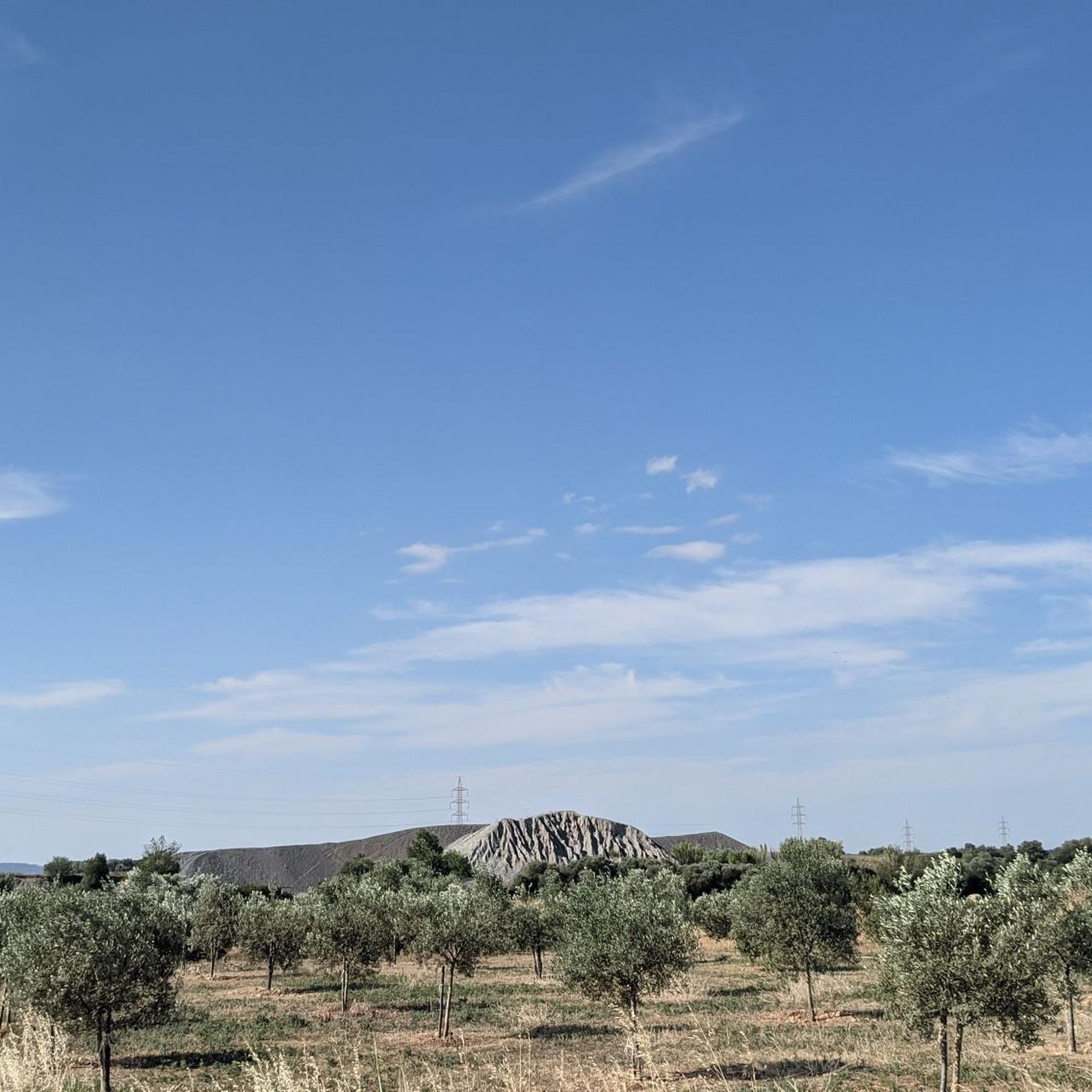
Ruins of the medieval castle, located on a high hill about two kilometers from the town of Vilajuïga. It is an isolated fortification that underwent many renovations and expansions during the 10th and 15th centuries. At the time, the complex was surrounded by a wall, today in a ruined state. Currently, part of the old Keep, the outer circular tower, and some later constructions are preserved. The castle of Quermançó is an important example of what early medieval Catalan castles were for defense, capable of resisting the onslaught of any crowd much larger than the few that could fit within its perimeter. https://www.catalunya.com/es/continguts/patrimoni-cultural/castillo-de-quermanco-17-16003-580470
4
0
Frequently Asked Questions
What are some of the most historically significant castles in the Alt Empordà region near Fortià?
The Alt Empordà region is rich in history. Notable castles include Sant Ferran Castle, one of Europe's largest 18th-century fortresses, and Sant Morí Castle, a medieval castle rebuilt as a Gothic-Renaissance palace. Other significant sites are Montgrí Castle, an unfinished 13th-century fortress with panoramic views, and Requesens Castle, a feudal construction dating back to 859.
Are there any castles near Fortià that offer stunning panoramic views?
Yes, several castles in the region provide excellent viewpoints. Sant Ferran Castle offers commanding views of the surrounding area. Montgrí Castle, though unfinished, is situated on the Montgrí Massif and provides breathtaking 360-degree vistas of the Costa Brava and the Empordà plain. Sant Martí del Far Church and Castle is also located at the highest part of its town, offering good views.
What kind of outdoor activities can I combine with a visit to these castles?
The area around Fortià and its castles is great for outdoor activities. You can find various routes for gravel biking, road cycling, and running. For example, you can explore routes like 'Gravel through the fortresses of medieval Empordà' or 'The monastery that dominated the sea' for gravel biking. Road cyclists might enjoy 'Parque Natural dels Aiguamolls de l'Empordà' routes. For more details, check out the Gravel biking around Fortià, Road Cycling Routes around Fortià, and Running Trails around Fortià guides.
Are there family-friendly castles to visit near Fortià?
Yes, several castles are suitable for family visits. Sant Ferran Castle is categorized as family-friendly and offers vast spaces to explore, including jeep tours of the moat and boat trips in underground reservoirs. The Citadel of Roses is also listed as family-friendly, with archaeological sites that can engage younger visitors.
What is the best time of year to visit the castles and surrounding areas near Fortià?
The Alt Empordà region generally enjoys a Mediterranean climate. Spring and autumn offer pleasant temperatures for exploring castles and engaging in outdoor activities like hiking and cycling. Summers can be hot, but coastal castles like Castell de la Trinitat or the Citadel of Roses might offer sea breezes. Winters are mild, making it possible to visit year-round, though some sites might have reduced hours.
Can I find any unique or unusual castles in the area?
Absolutely. The Gala-Dalí Castle in Púbol is a truly unique medieval fortification that Salvador Dalí bought and decorated for his wife, Gala. It offers a surreal glimpse into the artist's world and is part of the 'Dalinian Triangle,' making it a distinct cultural experience beyond a typical historical castle.
What kind of historical insights can I gain from visiting these castles?
The castles around Fortià offer a deep dive into centuries of history. For instance, Sant Ferran Castle played significant roles in the Napoleonic wars and the Spanish Civil War. The Citadel of Roses houses archaeological sites with vestiges from Greek, Roman, and Visigothic periods, alongside its Renaissance fortification. Quermançó Castle, a medieval ruin, showcases early medieval Catalan defense strategies and has seen sieges and occupations throughout its history.
Are there any castles near Fortià that have been recently restored or are well-preserved?
Yes, the Castell de la Trinitat in Roses, a five-pointed star-shaped coastal artillery fortress from 1544, has been recently restored and now features a museum. Sant Morí Castle, rebuilt in the 15th century, is also in excellent condition and can even be rented for events, indicating its well-maintained state.
What are the parking options like for visitors to these castles?
Parking availability varies by castle. For Sant Ferran Castle, there is a dedicated parking area, including space for motorhomes, near the castle. For other castles, especially those in or near towns, you might find public parking nearby. It's advisable to check specific castle websites for the most up-to-date parking information.
Can I find any castles that are part of a larger historical complex or town?
Yes, Fortià itself offers a glimpse into medieval life through its preserved town structure and historical parish church. Sant Martí del Far Church and Castle is a historical site located at the highest part of its town, with the church being part of the castle built in the late 13th century. The Citadel of Roses is an archaeological site within the city of Roses, encompassing various historical periods.
What kind of architectural styles can I expect to see among the castles in this region?
The castles around Fortià showcase a range of architectural styles reflecting different historical periods. You'll find grand 18th-century bastioned fortresses like Sant Ferran Castle, medieval castles rebuilt in Gothic-Renaissance styles such as Sant Morí Castle, and coastal artillery fortresses like Castell de la Trinitat. There are also Romanesque elements in churches that were part of castle complexes, and neo-medieval reconstructions like Requesens Castle.
Are there any castles that are particularly well-suited for a longer visit or offer unique experiences?
Sant Ferran Castle, being one of the largest fortresses in Europe, offers a unique experience with vast underground cisterns, extensive ramparts, and options for jeep tours and boat trips. Its sheer size and historical significance make it ideal for a longer, immersive visit. The Gala-Dalí Castle also provides a distinct cultural experience, blending history with surrealist art.
Most popular attractions around Fortià

Get inspired with the komoot mobile app


Explore more
Looking for the best castles somewhere else? Discover other guides around Fortià:
