Top 7 Gorges around Bardenas Reales De Navarra
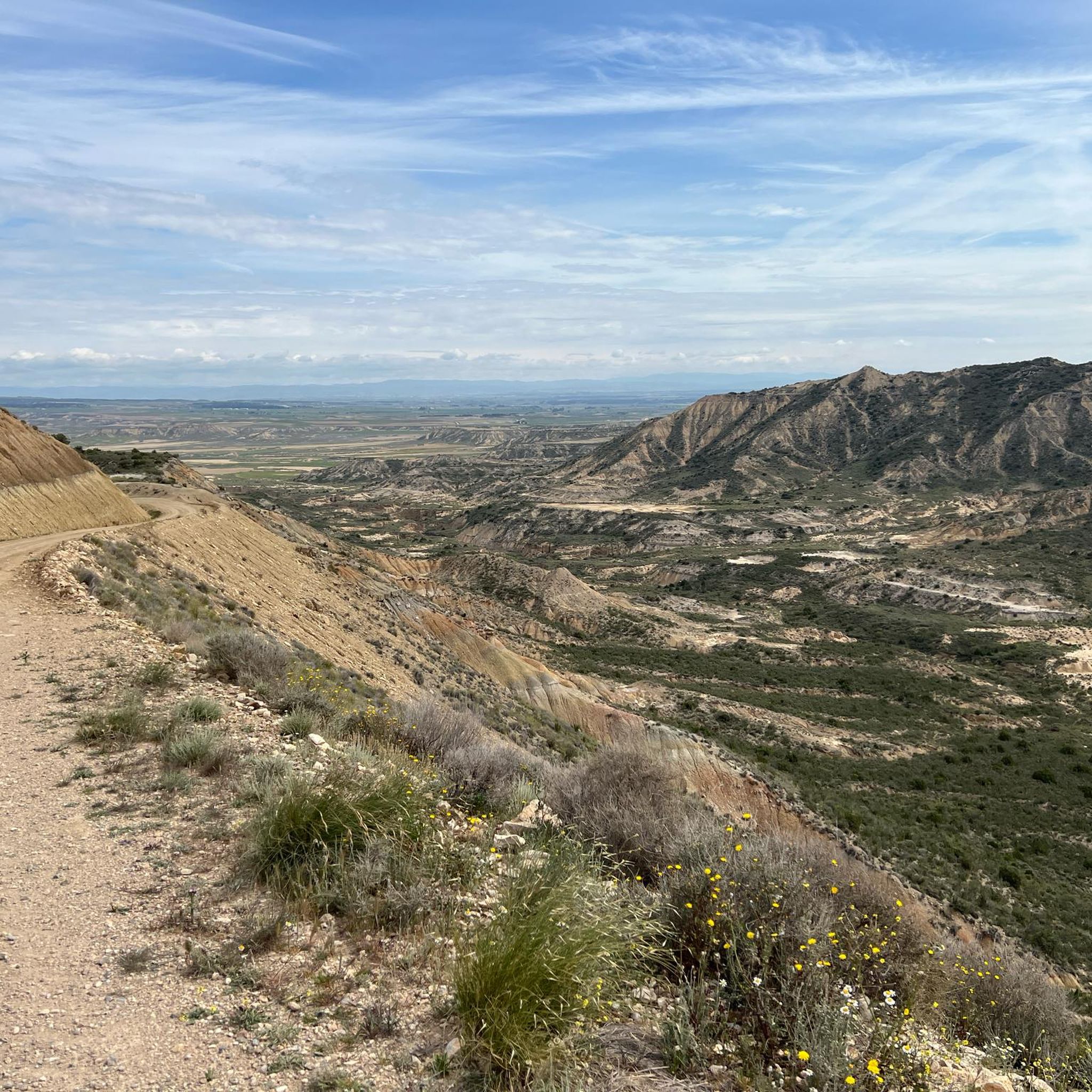
Best canyons around Bardenas Reales De Navarra are found within a semi-desert natural region in southeast Navarre, Spain. This UNESCO Biosphere Reserve features a landscape of clay, chalk, and sandstone, shaped by wind and water erosion. The area is characterized by numerous ravines, gorges, and isolated hills known as *cabezos*. It offers a unique topography for exploration, with formations like the Barranco de las Cortinas and the labyrinthine ravines around Cabezo de Piskerra.
Best canyons around Bardenas Reales De Navarra
…Last updated: August 27, 2026
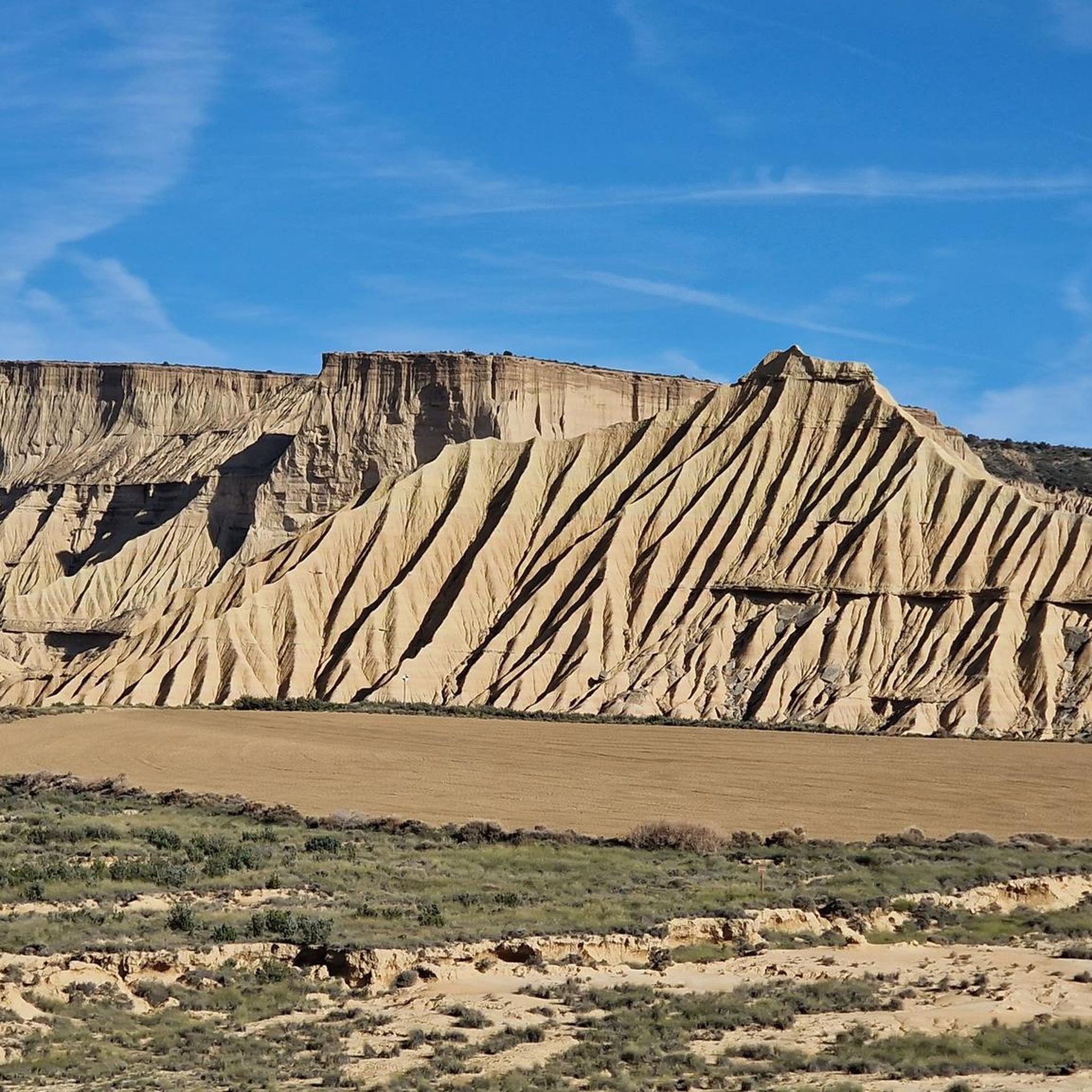
Bardenas Reales Natural Park
Highlight • Natural Monument
Translated by Google •
Tip by

Bardena Blanca Viewpoint
Highlight • Viewpoint
Translated by Google •
Tip by

Sign up now to discover places like this
Get recommendations on the best single tracks, peaks, & plenty of other exciting outdoor places.
Sign up for free
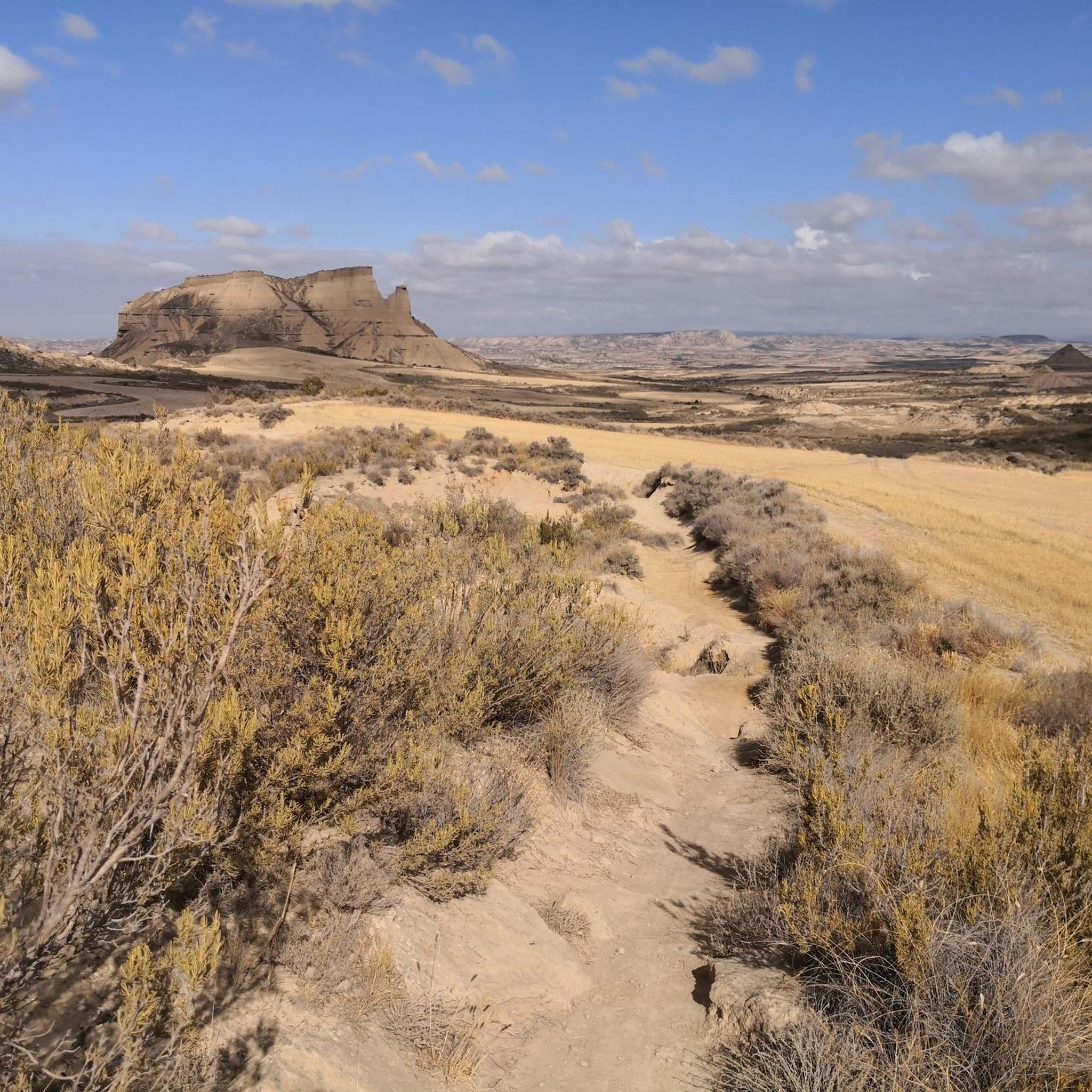
Piskerra
Highlight • Natural Monument
Translated by Google •
Tip by
Scenic Descent in the Bardenas Reales
Highlight • Trail
Translated by Google •
Tip by

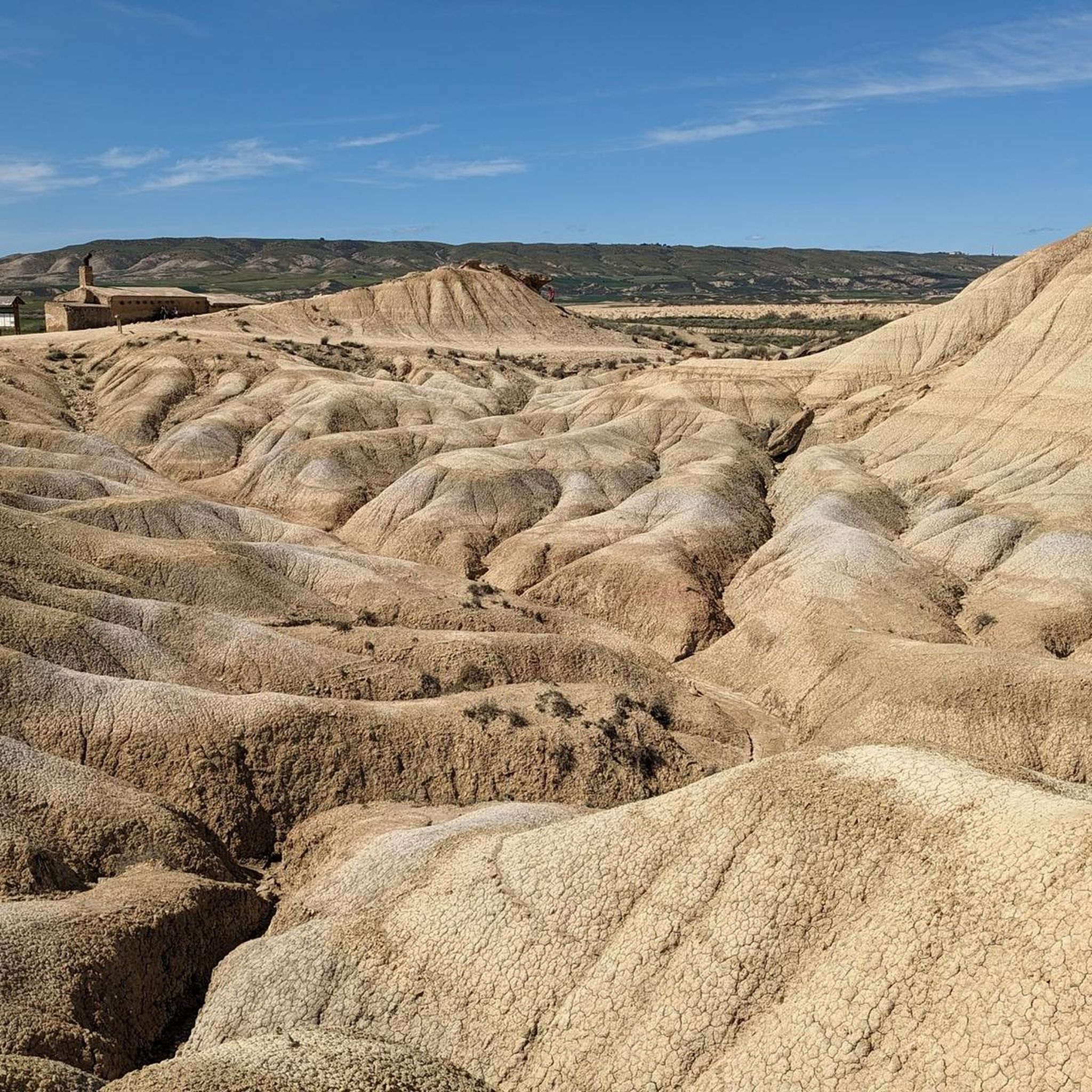
Bardenas Reales Badlands
Highlight • Natural
By discovering these lands both superb and arid, you may sing the chorus of the song …
Translated by Google •
Tip by

Sign up for free to discover even more gorges around Bardenas Reales De Navarra.
Sign up for free
Already have an account?
Start today with a free account
Your next adventure awaits.
Login or Signup
Popular around Bardenas Reales De Navarra

Tips from the Community

This route, while fantastic and spectacular, should be removed from Komoot. It's no longer visible, the steps are barely visible, and at too many points it's truly irresponsible and life-threatening!
0
0
Hi guys, I would highly recommend NOT TO HIKE this. This is not a proper hike, this is just craziness to go on this mountain. The path no longer exists. The stairs are completely broken. If you slip, you die. I never got scared like this and I’m a serious hiker. JUST DONT DO IT.
1
0

The Balcón de Pilatos is a plateau in the Bardenas that allows you to see it in its entirety from above. From here, you can see the Shooting Range; the Valfondo ravine; in the background to the right, "Las Cortinas"; to the left, "El Yugo," "La Estroza," etc. It has many "veres": in spring, it will be a beautiful green; in summer, a desert-like yellow-ochre, also beautiful to me; if it has rained beforehand, it will be a deep brown (don't even think about entering: you'll be trapped for several days, as many unfamiliar people are). Its characteristics are due to the deforestation carried out since ancient times to obtain wood to meet the needs of the new society following the unification of the Catholic Monarchs and the subsequent Imperial needs. At the beginning of the last century, the resin from the remaining pine trees was also used to make "pez" (one of the pitch ovens has been rehabilitated). Now we find ourselves with a territory that is declared a Natural Park in an attempt to "conserve" the natural disasters produced by the "wild deforestation" carried out: Bardenas Reales de Navarra is the fruit of human action that has turned an "immense Mediterranean forest" into a "semi-desert place with no possibility of recovery: It would not be bad if someone with greater environmental sensitivity thought about, and launched, a project to demonstrate the capacity for human environmental destruction instead of using European and military (NATO and Spanish) money to "conserve!?-exploit" for tourism purposes what a "Town Council" decides without control of a Democratic Parliament, in the best feudal style of those that still remain in our country. That's Bardenas!
1
0

Warning! Update 2025: Do not hike this trail! The descent from Piskerra no longer exists. The ascent to Piskerra is also not easy and not for beginners. The same applies to the broken steps. It took me three hours to complete the entire hike, twice as long as planned, and at times I was in mortal danger. No joke.
1
0
Warning! Update 2025: Do not hike this trail! The descent from Piskerra no longer exists. The ascent to Piskerra is also not easy and not for beginners. The same applies to the broken steps. It took me three hours to complete the entire hike, twice as long as planned, and at times I was in mortal danger. No joke.
2
0
The walks to Piskerra are no longer up to date, the steps have collapsed and other parts have unfortunately also collapsed.
1
0
Frequently Asked Questions
What are the most notable canyon-like formations to explore in Bardenas Reales De Navarra?
The region offers several distinctive canyon-like formations. The Bardenas Reales Natural Park itself features exciting rock formations and gorges. You can also explore the area around Castildetierra, which includes a canyon-like depression, or the 'labyrinth of ravines' near Cabezo de Piskerra, known for its surreal eroded ridges and striking orange hues. For a different experience, the Bardena Negra features deep fissures known as La Negra Falls, reaching depths of up to 270 meters.
Are there easy hiking options to experience the canyons in Bardenas Reales De Navarra?
Yes, there are accessible options. For instance, the Barranco de las Cortinas, located near Castildetierra, offers a leisurely 1-kilometer hiking route that follows its course, allowing visitors to immerse themselves in the eroded terrain. The climb to Cabezo de Piskerra is also considered relatively easy, rewarding hikers with magnificent vistas of the surrounding ravines.
What kind of natural features can I expect to see in the canyons of Bardenas Reales De Navarra?
You'll encounter a unique semi-desert landscape shaped by centuries of wind and water erosion. Expect dramatic badlands topography with clay, chalk, and sandstone formations, including isolated hills known as *cabezos*, deep ravines, and gorges. The area around Bardenas Reales Badlands is particularly known for its arid, eroded terrain reminiscent of other badlands formations.
What is the best time to visit the canyons in Bardenas Reales De Navarra?
The Bardenas Reales can be visited year-round, but spring offers a beautiful green landscape, while summer presents a desert-like yellow-ochre. It's important to note that if it has rained beforehand, the terrain can become very muddy and difficult to navigate. During winter months, thousands of sheep graze here, adding a unique pastoral element to the landscape.
Are there family-friendly activities or trails suitable for children in the canyon areas?
While specific 'family-friendly' categories aren't listed for all highlights, the more accessible areas like the 1-kilometer walk in Barranco de las Cortinas or the 2-kilometer path around Castildetierra are suitable for families looking for lighter exploration. The unique, otherworldly landscape itself is often captivating for children.
What are the typical terrain and difficulty levels for exploring the canyons?
The terrain varies from relatively easy, undulating gravel roads to more rugged, eroded paths. Many paths can be eroded and challenging to find, especially after rain, when they become super slippery. Some viewpoints, like Bardena Blanca Viewpoint, involve climbing deteriorated stairs. Always proceed with caution, as some areas are not easy or safe.
What outdoor activities can I do near the canyons of Bardenas Reales De Navarra?
Beyond exploring the canyons, the region is excellent for various outdoor sports. You can find numerous road cycling routes, gravel biking trails, and general cycling routes. The Bardenas Reales Natural Park is particularly well-suited for mountain biking.
Are there any historical or cultural sites near the canyons?
The Peñalén Gorge, also known as the King's Ravine, is a significant historical site. It's where the Navarrese King Sancho Garcés IV was assassinated. This gorge also offers stunning views where the Arga and Aragón rivers meet.
What do visitors enjoy most about the Bardenas Reales De Navarra region?
Visitors are consistently captivated by the region's unique, otherworldly landscape, often described as lunar or Mars-like. The exciting rock formations, breathtaking views, and the sense of being in a semi-desert environment are highly appreciated. Many find the area perfect for photography and an immersive encounter with nature's artistry.
Are there specific viewpoints to get the best panoramic views of the canyons?
Yes, the Bardena Blanca Viewpoint offers extensive views of the surreal, eroded landscape. Additionally, the Balcón de Pilatos is a plateau within the Bardenas that provides a comprehensive view of the area, including the Valfondo ravine and other formations.
Are permits required to visit the canyons in Bardenas Reales De Navarra?
The Bardenas Reales is a protected area and a UNESCO Biosphere Reserve. While it is well-developed for visitors, it's important to note the opening hours of the natural park, which are generally from 8 in the morning until one hour before sunset. Specific permits for general access are not typically mentioned, but always check local regulations before your visit.
What should I wear when hiking in the Bardenas Reales badlands?
Given the semi-desert environment, it's advisable to wear comfortable hiking shoes suitable for uneven and potentially slippery terrain. Sun protection, including a hat and sunscreen, is essential due to the open landscape. Layered clothing is recommended to adapt to temperature changes, especially between day and evening. Always carry sufficient water.
Most popular routes around Bardenas Reales De Navarra
Most popular attractions around Bardenas Reales De Navarra

Get inspired with the komoot mobile app


Explore more
Already discovered everything in this region? See additional gorges around Bardenas Reales De Navarra for your next adventure:
