Top 6 Castles around Viacamp Y Litera
Best castles around Viacamp Y Litera are situated in a region of Huesca, Spain, known for its historical fortifications. This area features a landscape of river valleys and mountain ranges, providing strategic locations for medieval structures. The castles here offer insights into the region's past and its role in historical conflicts. Visitors can explore various sites that combine historical ruins with natural settings.
Best castles around Viacamp Y Litera
- The most popular castles is Chinese Wall of Finestres, a…
Last updated: July 3, 2026
Chinese Wall of Finestres
Highlight • Natural Monument
Translated by Google •
Tip by

Castillo de Benabarre
Highlight • Castle
Numerous battles were fought in the castle of Benabarre and it was demolished at the beginning of the …
Translated by Google •
Tip by
Sign up now to discover places like this
Get recommendations on the best single tracks, peaks, & plenty of other exciting outdoor places.
Sign up for free
Collegiate Church of Sant Pere
Highlight • Religious Site
Translated by Google •
Tip by

Torre de Viacamp and Hermitage of San Esteban
Highlight • Historical Site
The fortified complex is located on a plateau above the village of Viacamp and consists of the remains of the perimeter wall, a slender cylindrical tower and a hermitage of Romanesque origin, possibly the castle chapel.
Translated by Google •
Tip by

Chiriveta Castle
Highlight • Castle
Translated by Google •
Tip by
Start today with a free account
Your next adventure awaits.
Login or Signup

Tips from the Community

A medieval watchtower. It was part of the network of towers and castles that were built throughout the Ribagorza and Sobrarbe mountain ranges during this period of reconquest (Vicampa, Luzás, Benabarre Castle, La Mora, Monzón Castle, Samitier, Puebla de Fantova, Cajigar...among many others...)
0
0


The route to the hermitage of Sant Vicente, the place where it is located and the views it offers of the reservoir.... these whims of nature 🏞️ are unforgettable 🤩
2
0

https://www.montsecdelestall.com/ruta/ficha/Torre_De_Viacamp The fortified complex is located on a plateau above the village of Viacamp and consists of the remains of the perimeter wall, a slender cylindrical tower and a hermitage of Romanesque origin, possibly the castle chapel. The tower has a circular plan, a diameter of about 11 meters and a height of 20 meters, with walls almost 3 meters thick. As it is built, it seems to have been built both inside and outside with the help of a double scaffold, which is due to the great thickness of the walls. Like most defensive structures of the period, the ground floor was walled, with a high, round-arched entrance facing south-east. The ground floor was used as a storage room and is not accessible from the outside. After the restoration work carried out in 2005 and 2006, it was found that the tower had five floors, although only four of them remain today. The upper part, which has now disappeared, could have been made up of small defensive openings in the form of battlements or a conical roof. Very close to the tower and within the walls is the church of San Esteban de Viacamp, of Romanesque origin, a classic among the fortresses of the Upper Ragon. Originally dedicated to the Archangel Michael, it was later dedicated to Saint Stephen. Next to the church is the old cemetery, which has not been abandoned. The remains of the external enclosure are in the areas bordering the plateau and are made of ashlar and masonry with some high-quality parts. Remains of walls and foundations or the beginnings of towers have been preserved, although they are not very high. (Wikipedia)
1
0

The collegiate church of Sant Pere de is located within the walled complex of Àger, in the highest part of the town. The collegiate church dates from the 10th century and was built on the ruins of an Arab fortress, which in turn was built on an old Roman castle.
0
0

Access point to the Castle and Church (in the image) by stairs. Numerous battles were fought in the castle of Benabarre and it was demolished at the beginning of the 17th century and reused in the 19th century with new executions, remaining active in the Catalan and Carlist wars. Due to these war conflicts, it was rebuilt to transform it into a rifle fort. Today it looks more like a 19th century fort, although it retains older walls from when it was the castle-palace of the counts of Ribagorza. Thus, it is a monumental complex of a single enclosure where all the transformations of the property parallel to the historical ups and downs are integrated. It is located at the top of the town and is visible from several points in the area. It is made up of the Romanesque church and the fortress, dating from the 12th century. It consists of two enclosures, an upper one, older and with a Muslim layout, of which there are walls at the base of the rock on which it sits, as well as the base of a quadrangular tower.
3
0
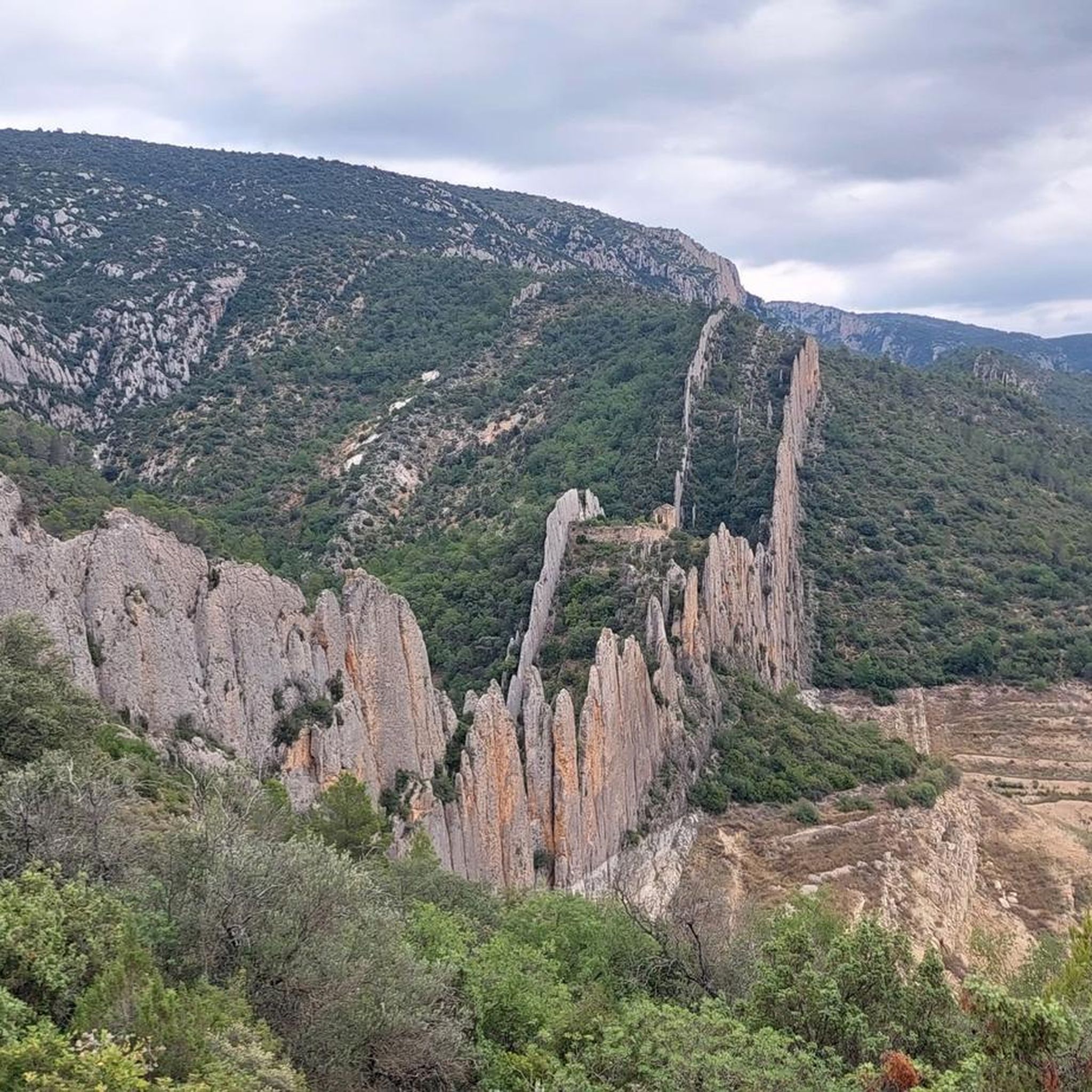
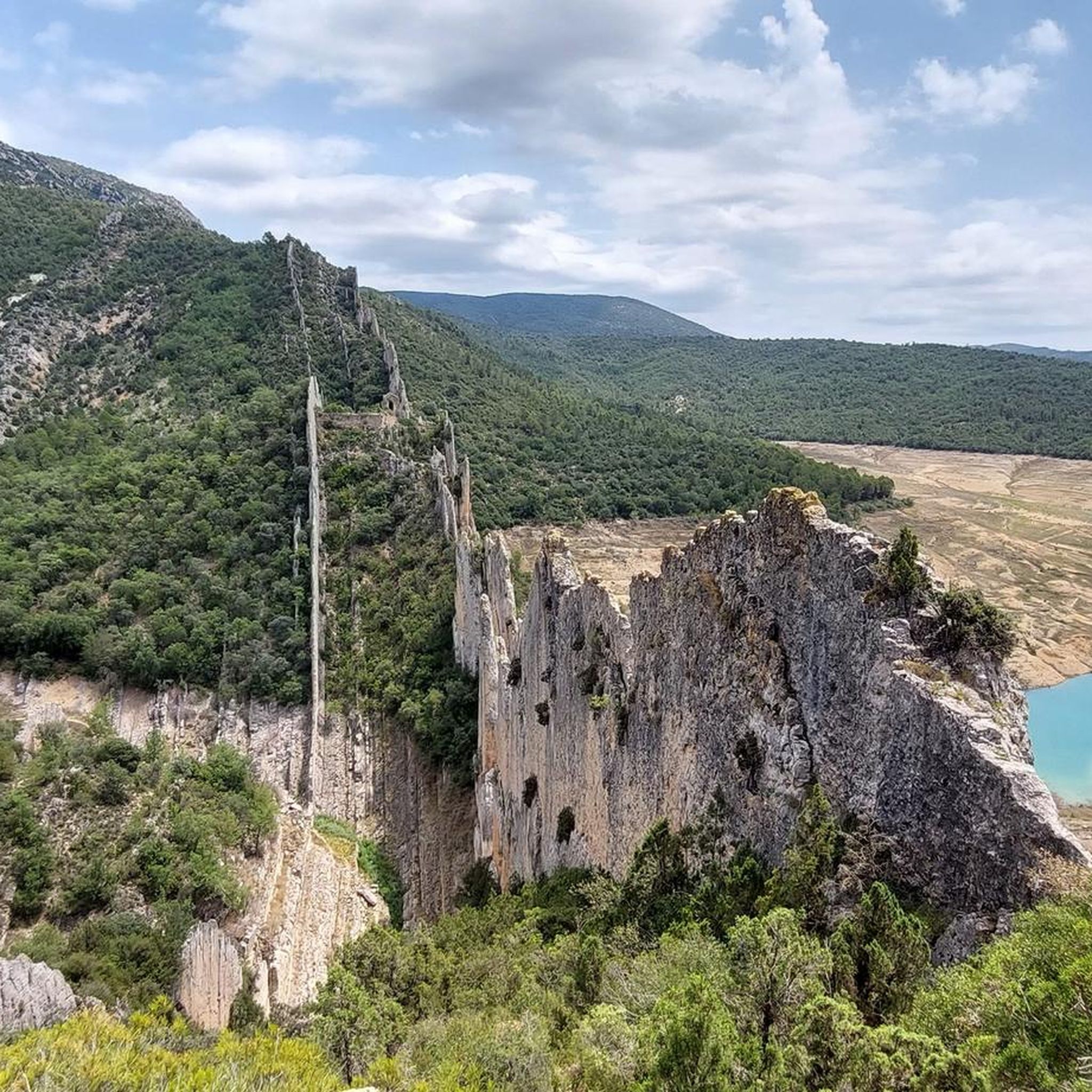
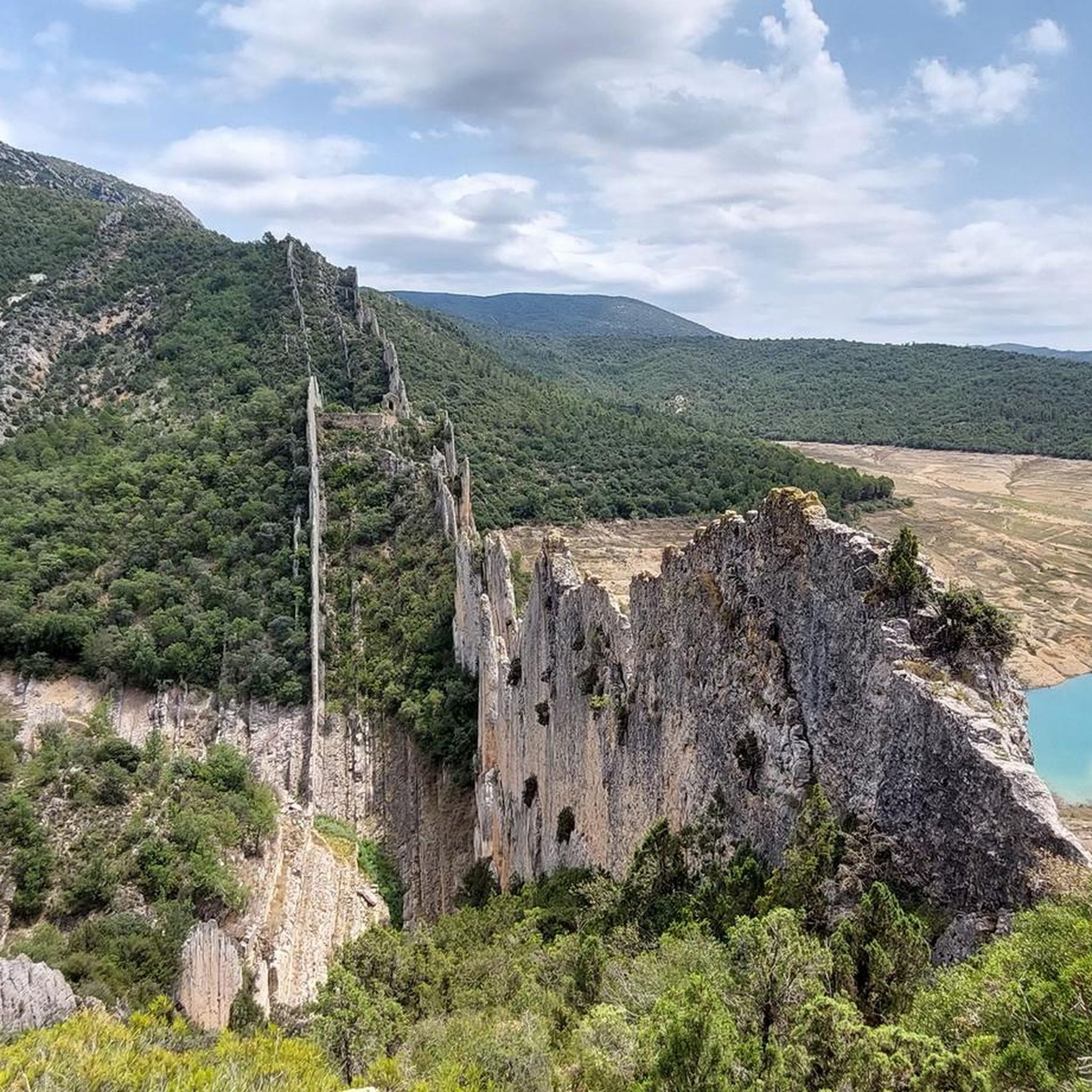
Traditionally known as "Roques de la Vila", this unique geological formation was renamed the Chinese Wall of Finestres to encourage tourism in the area. You can access the foot of it by boat through the Canelles reservoir.
4
0
Before the tourist name of "Chinese Wall of Finestres" was popularized, this place was known as Roques de la Vila. The particular rock formation, originated in the Cretaceous, came to be used as a true defensive wall for the ruins found between the two parallel walls.
3
1
Frequently Asked Questions
Which castles in Viacamp y Litera offer the best panoramic views?
For breathtaking panoramic views, visit the Torre de Viacamp and Hermitage of San Esteban. Perched at 860 meters, it offers exceptional vistas of the Noguera-Ribagorzana river valley and the Pyrenees. The Castillo de Chiriveta also provides unparalleled views of the Mont-Rebei gorge and the surrounding Mongay and Montsec mountain ranges.
Are there any castles integrated with unique natural landscapes in the region?
Yes, the Chinese Wall of Finestres is a prime example. This natural monument features the ruins of Castell del Vilot de Finestres integrated into a dramatic geological formation with two parallel rows of towering rock formations beside the Canelles reservoir. It's considered one of the most beautiful spots in the Pyrenees.
What historical periods do the castles around Viacamp y Litera represent?
The castles in this region primarily represent the Romanesque period, dating back to the 10th and 11th centuries. Sites like the Torre de Viacamp and Castillo de Chiriveta are significant Romanesque fortresses from the 11th century, playing a crucial role in the Reconquista. The Collegiate Church of Sant Pere, dating from the 10th century, was built on the ruins of an Arab fortress and an old Roman castle, showcasing layers of history.
What kind of outdoor activities can I do near these castles?
The area around Viacamp y Litera is excellent for outdoor activities. You can find numerous hiking and cycling routes. For hiking, consider the 'Montfalcó to Mont-Rebei Gorge Nature Trail' or the 'Chiriveta Tower and Ermita del Congost Loop'. Cyclists can explore routes like 'Penavera Bridge – Congost de Sacs loop'. You can find more details on these and other routes in the Hiking around Viacamp Y Litera and Cycling around Viacamp Y Litera guides.
How long should I plan for a visit to a castle in Viacamp y Litera?
Visit duration varies by site. For well-preserved structures like the Torre de Viacamp, you might spend 1-2 hours exploring the tower and hermitage, plus enjoying the views. For sites like the Chinese Wall of Finestres, the journey to the site itself, often involving a hike, can take several hours, making it a half-day or full-day excursion.
Are there family-friendly options among the castles in Viacamp y Litera?
While specific 'family-friendly' amenities aren't always present at these historical ruins, many offer an adventurous experience that older children might enjoy. The dramatic natural setting of the Chinese Wall of Finestres can be exciting for families who enjoy hiking. The relatively accessible Torre de Viacamp also provides an engaging historical experience with its impressive circular tower.
What is the best time of year to visit the castles in Viacamp y Litera?
The best time to visit is generally during spring (April-June) and autumn (September-October) when the weather is milder and more pleasant for exploring outdoor historical sites and hiking. Summers can be hot, especially in July and August, while winters can be cold, though the region offers stunning views year-round.
What should I wear when visiting these castles?
Given that many sites involve walking or hiking on uneven terrain, comfortable and sturdy footwear is essential. Layers of clothing are recommended, as weather conditions can change, especially at higher altitudes. Don't forget sun protection, such as a hat and sunscreen, and bring water, particularly during warmer months.
Can I find any hidden historical sites or lesser-known castles in the area?
Beyond the main highlights, the region is dotted with numerous historical remnants. The Castillo de Chiriveta, also known as Torre de Mongay, is a robust cylindrical watchtower offering a glimpse into 11th-century surveillance strategies, and it's located near the Romanesque hermitage of Nuestra Señora del Congost. Exploring the abandoned village of Finestres near the Chinese Wall of Finestres also offers a sense of discovery.
What makes the <a href="https://www.komoot.com/highlight/5271963" target="_blank" rel="noopener">Castillo de Benabarre</a> unique?
The Castillo de Benabarre is unique due to its extensive history of transformations. Originally a medieval fortress from the 12th century, it was demolished and rebuilt multiple times, notably in the 19th century as a rifle fort. Today, it presents a monumental complex that integrates these various historical layers, offering insights into its role in the Catalan and Carlist wars, and serving as a symbol of the historical legacy of the town.
Are the castles around Viacamp y Litera generally accessible?
Access varies significantly. Many of these historical sites are ruins located on hilltops or within natural landscapes, requiring walking on uneven paths. For example, reaching the Chinese Wall of Finestres often involves a challenging trek. The Torre de Viacamp has seen restoration work to improve accessibility, but visitors should still expect some walking. Wheelchair accessibility is generally limited due to the historical nature and terrain of these sites.
What is the significance of the <a href="https://www.komoot.com/highlight/5392776" target="_blank" rel="noopener">Collegiate Church of Sant Pere</a> in relation to castles?
The Collegiate Church of Sant Pere is significant because it was built within the walled complex of Àger, on the highest part of the town. It stands on the ruins of an Arab fortress, which itself was constructed on an old Roman castle. This layered history makes it a fascinating site, showcasing how different cultures and eras utilized the same strategic location for defense and worship.
Most popular routes around Viacamp Y Litera
Most popular attractions around Viacamp Y Litera

Get inspired with the komoot mobile app


Explore more
Looking for the best castles somewhere else? Discover other guides around Viacamp Y Litera:
