Top 20 Lakes around Koekelberg
Best lakes around Koekelberg are primarily found in the broader Brussels region, as Koekelberg itself is a densely populated municipality with limited natural lakes within its small area. While Koekelberg offers green spaces and parks, significant natural water bodies are located outside its immediate vicinity. These areas provide opportunities for walking routes and enjoying nature.
Best lakes around Koekelberg
- The most popular lakes is Red Monastery (Rouge-Cloître), a religious building with associated lakes. This former Augustinian priory is situated…
Last updated: June 30, 2026
Drowned Children Ponds
Highlight • Lake
Tip by

Boitsfort Ponds
Highlight • Lake
Tip by

Sign up now to discover places like this
Get recommendations on the best single tracks, peaks, & plenty of other exciting outdoor places.
Sign up for free
Étang Sec (Sonian Forest)
Highlight • Lake
Translated by Google •
Tip by

Red Cloister Abbey
Highlight • Religious Site
Tip by

Red Monastery (Rouge-Cloître)
Highlight • Religious Site
Translated by Google •
Tip by

Sign up for free to discover even more lakes around Koekelberg.
Sign up for free
Already have an account?
Start today with a free account
Your next adventure awaits.
Login or Signup


Tips from the Community

As a walking park and gateway to the Sonian Forest, the Red Monastery forms a whole of architecture, forest and nature reserve with a very great wealth. The centuries-long presence of one of the largest Augustinian priories in Brabant naturally left its mark on the landscape. But also the nature of the soil and the abundance of humid zones still make it a place with a magical aura today. Location Rood Klooster Rokloosterstraat, 7 1160 Oudergem Website More information on: http://www.rouge-cloitre.be
1
0

Forests are central to the fight against the triple global crisis of climate change, biodiversity loss, and pollution. They cover nearly a third of the Earth’s land surface and are home to the vast majority of terrestrial biodiversity. Despite efforts to halt deforestation and restore degraded areas, forest cover continues to shrink. Since the end of the last great ice age, about 10,000 years ago, 57% of the Earth’s habitable land was covered by forests. Over the past 10,000 years, a third of the world’s forests have been lost, an area twice the size of the United States. Half of that loss has occurred in the past century. Forests are essential to combating climate change. They contain 662 billion tons of carbon, more than half of the world’s total carbon stock in soils and vegetation. Societies derive significant benefits from forests and are heavily dependent on them. It is estimated that more than half of global gross domestic product is heavily dependent on what ecosystems provide. The forestry sector contributes more than USD 1.52 trillion to global gross domestic product and employs 33 million people. Yet many people living close to forests do not benefit sufficiently from them. Although 75 percent of rural residents live within 1 km of a forest, they have little right to those forests. Nearly three-quarters (73 percent) of all forests are state-owned, while 80 percent of people live in extreme poverty in rural areas. The COVID-19 pandemic had a major impact on forest value chains and trade in early 2020. Most sectors have recovered quickly, but the risk of future pandemics remains. Forest management is well-positioned to play a key role in a green recovery.
0
0

The Red Cloister, or Rouge Cloître, is a former monastery complex on the outskirts of Brussels, surrounded by a beautiful nature reserve. This historic monastery from the 14th century is surrounded by forests, ponds and hiking trails, making it a popular spot for nature lovers, hikers and cyclists.
0
0

Super nice and very cultural place
1
1

The Boitsfort ponds are located in Watermaal-Bosvoorde, between the Sonian Forest and the Tournay-Solvay park, on the edge of the International School park. This valley in Boitsfort consists of three consecutive ponds, connected by the Karregat, a tributary of the Woluwe. The variety of environments is great, with alternating moist forests, open vistas and a reed field. It is an extremely suitable place for amphibians and a favorite hunting ground for dragonflies.
4
0

Beautiful stopping place / pick-nick place with drinking and eating options.
3
0

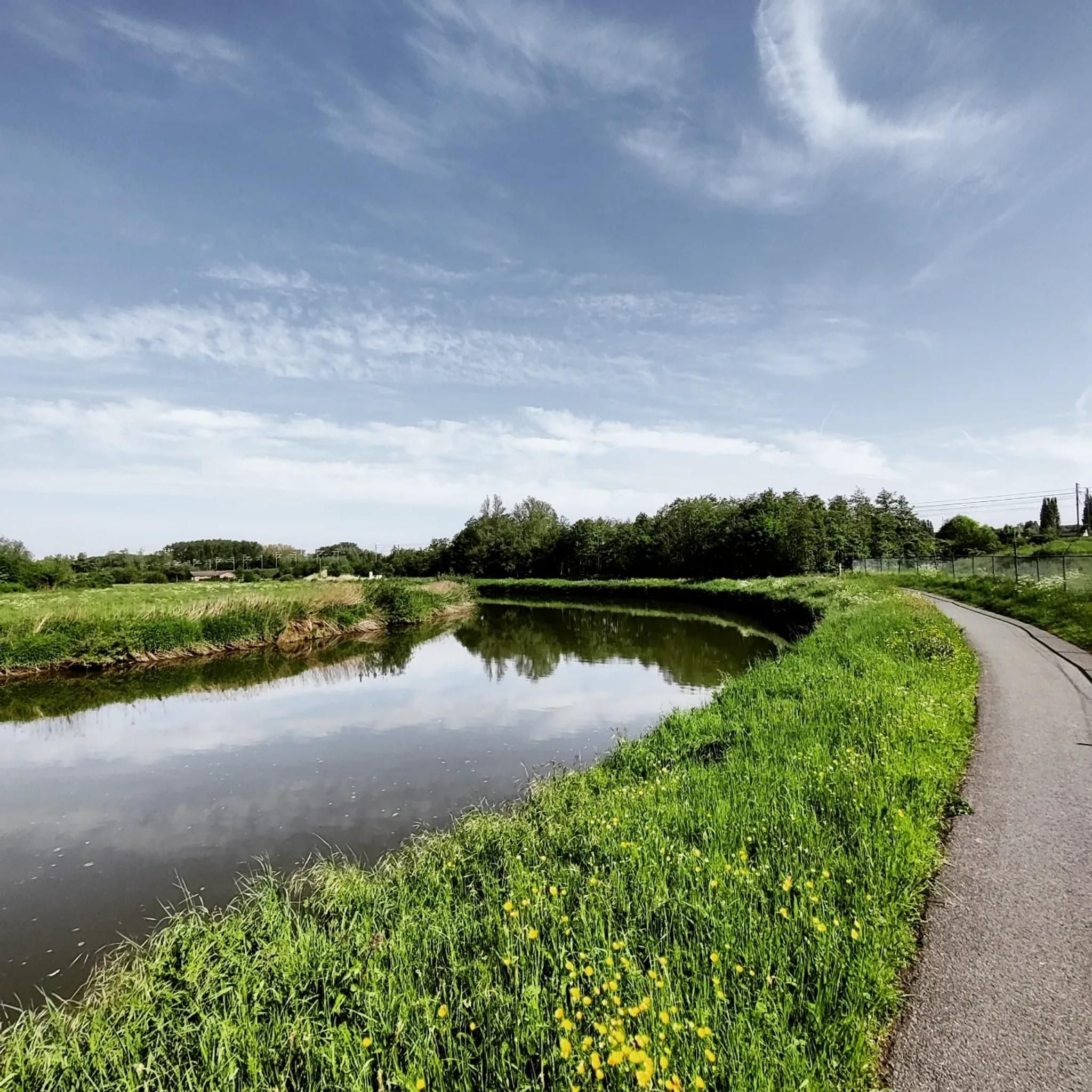
The Enfants Noyés is a nature reserve consisting of three large ponds located in a valley of the Sonian Forest in Brussels. The nature reserve consists of three different ponds: the Étang du Fer à Cheval, the Étang des Canards Sauvages and the Étang du Clos des Chênes.
2
1

It is simply accessible for free. No children have drowned there! more info at: https://www.brusselblogt.be/2006/07/12/de-verdronken-kinderen.html
2
0
Frequently Asked Questions
Where are the main lakes located around Koekelberg?
Koekelberg itself is a densely populated municipality with limited natural lakes. The most significant lakes are found in the broader Brussels region, particularly within the Sonian Forest, which borders the city. These include areas like the Drowned Children Ponds and the Boitsfort Ponds.
Are there family-friendly lakes to visit near Koekelberg?
Yes, several lakes around Koekelberg are suitable for families. The Drowned Children Ponds, Boitsfort Ponds, and Étang Sec (Sonian Forest) are all categorized as family-friendly. The Red Cloister Abbey also offers a walking park environment that families can enjoy.
What kind of natural features can I expect to see around these lakes?
The lakes around Koekelberg are primarily nestled within the Sonian Forest, offering lush forest environments. At the Boitsfort Ponds, you can observe a variety of environments including moist forests, open vistas, and reed fields, making it a suitable habitat for amphibians and dragonflies. The Drowned Children Ponds are part of a nature reserve with three distinct ponds.
Are there historical sites associated with the lakes?
Yes, the area features significant historical sites. The Red Monastery (Rouge-Cloître) and Red Cloister Abbey are former Augustinian priories located in the Sonian Forest, surrounded by ponds. These sites offer a blend of historical architecture, forest, and natural reserves, providing a unique cultural and natural experience.
What outdoor activities can I do near the lakes around Koekelberg?
The areas around these lakes, especially within the Sonian Forest, are excellent for various outdoor activities. You can find numerous hiking trails, as well as routes for gravel biking and mountain biking. For detailed routes, you can explore guides like Hiking around Koekelberg, Gravel biking around Koekelberg, and MTB Trails around Koekelberg.
Are there specific hiking trails near the lakes?
Yes, the Sonian Forest, where many of these lakes are located, offers a wide range of hiking opportunities. For example, you can find trails that lead through areas like the Jette Marsh and Poelbos Regional Forest, or explore routes around Brussels Park. You can find more information on specific routes in the Hiking around Koekelberg guide.
What do visitors enjoy most about the lakes and surrounding areas?
Visitors appreciate the tranquility and natural beauty of these areas, especially their integration with the Sonian Forest. The Red Monastery (Rouge-Cloître) is noted for its old monastery surrounded by ponds and even features an open-air bar in summer. The Red Cloister Abbey is loved as a walking park and a gateway to the forest, offering a rich blend of architecture and nature.
Are there viewpoints around the lakes near Koekelberg?
Yes, several lake areas offer scenic viewpoints. Both the Drowned Children Ponds and Boitsfort Ponds are highlighted as locations with good viewpoints, allowing visitors to take in the natural surroundings of the Sonian Forest.
What is the difficulty level of walks near these lakes?
The difficulty level of walks near the lakes varies. Many trails within the Sonian Forest and around the ponds are generally considered easy to moderate, making them accessible for a wide range of visitors, including families. For specific route difficulties, refer to the Hiking around Koekelberg guide.
Can I find places to eat or drink near the lakes?
Yes, some locations offer amenities. The Red Monastery (Rouge-Cloître), for instance, has an open-air bar (guinguette) in its central court during the summer months, perfect for a snack or refreshment. The Red Cloister Abbey is also described as a beautiful stopping place with drinking and eating options.
How accessible are the lakes by public transport from Koekelberg?
While Koekelberg itself is well-connected within Brussels, reaching the lakes, which are mostly located in the Sonian Forest or broader Brussels region, typically involves a combination of public transport (like trams or buses) and a short walk. Specific routes and connections would depend on the exact lake you wish to visit, but the Sonian Forest is generally well-served by Brussels' public transport network.
Most popular routes around Koekelberg
Most popular attractions around Koekelberg

Get inspired with the komoot mobile app


Explore more
Still not found your perfect lake around Koekelberg? Check out the guides of these regions to see even more beautiful places.
