Top 10 Castles around Camaiore
Best castles around Camaiore offer a glimpse into the region's medieval past, characterized by numerous fortified villages and strategic strongholds. Situated in Tuscany, the area's historical landscape reflects centuries of conflicts between powerful city-states like Lucca and Pisa. Many sites exist as ruins or well-preserved remnants, providing historical and archaeological interest. These locations often feature panoramic views of the surrounding valleys and coast.
Best castles around Camaiore
- The most popular castles is Nozzano Castle, a castle built by the people of Lucca to defend their territory from Pisan threats. Its strategic location was crucial during conflicts between Lucca and Pisa.
- Another must-see spot is Bargiglio Tower, a historical site known as the "Occhio di Lucca" (Eye of Lucca). It offers panoramic views of the Lucca plain and surrounding areas.
- Visitors also love Rocca di San Paolino di Ripafratta, a medieval historical-architectural complex that served as a strategic Pisan outpost. The site showcases distinct architectural layers, including 15th-century fortifications by Giuliano da Sangallo.
- Camaiore is known for its fortified villages, strategic strongholds, and castle ruins. The area offers a variety of sites, from intact towers to remnants of ancient fortifications, reflecting its rich feudal history.
- The castles around Camaiore are appreciated by the komoot community, with more than 170 upvotes and over 80 photos shared.
Last updated: August 24, 2026
Nozzano Castle
Highlight • Castle
Translated by Google •
Tip by

Bargiglio Tower
Highlight • Historical Site
Translated by Google •
Tip by

Sign up now to discover places like this
Get recommendations on the best single tracks, peaks, & plenty of other exciting outdoor places.
Sign up for free
Rocca di San Paolino di Ripafratta
Highlight • Castle
Translated by Google •
Tip by
Ruins of a Castle above of Peralla
Highlight • Castle
Translated by Google •
Tip by

Montecatino Tower and Ruins of the Church of Santa Maria Annunziata
Highlight • Historical Site
On the top of Montecatino there are the remains of the church of S. Maria Annunziata, with its almost intact bell tower (the bell is currently located in the parish church of S. Lorenzo della Cappella); furthermore around you can see the remains of the parish rooms and farmhouses. Thanks to the excavations carried out in the summer of 1986 it was discovered that starting from the V - III sec. B.C. the site was an Etruscan settlement. We do not know anything else until 1082 when reference is made, on the Lucchese Chapter, to the Montecativo castle located in that position, very useful strategically, as a signaling "tower" (from the top, in fact, you can see the entire Lucca plain).
Translated by Google •
Tip by
Sign up for free to discover even more castles around Camaiore.
Sign up for free
Already have an account?
Start today with a free account
Your next adventure awaits.
Login or Signup


Tips from the Community

A beautiful hike. Some trails are a bit abandoned and lack signage, but following the trail is fine. From the top of the tower, there would be a beautiful view, but we missed it due to fog and a myriad of flying ants.
0
0
It's a very beautiful castle but there are no shops so I recommend it as a short stop for a little climb
0
0

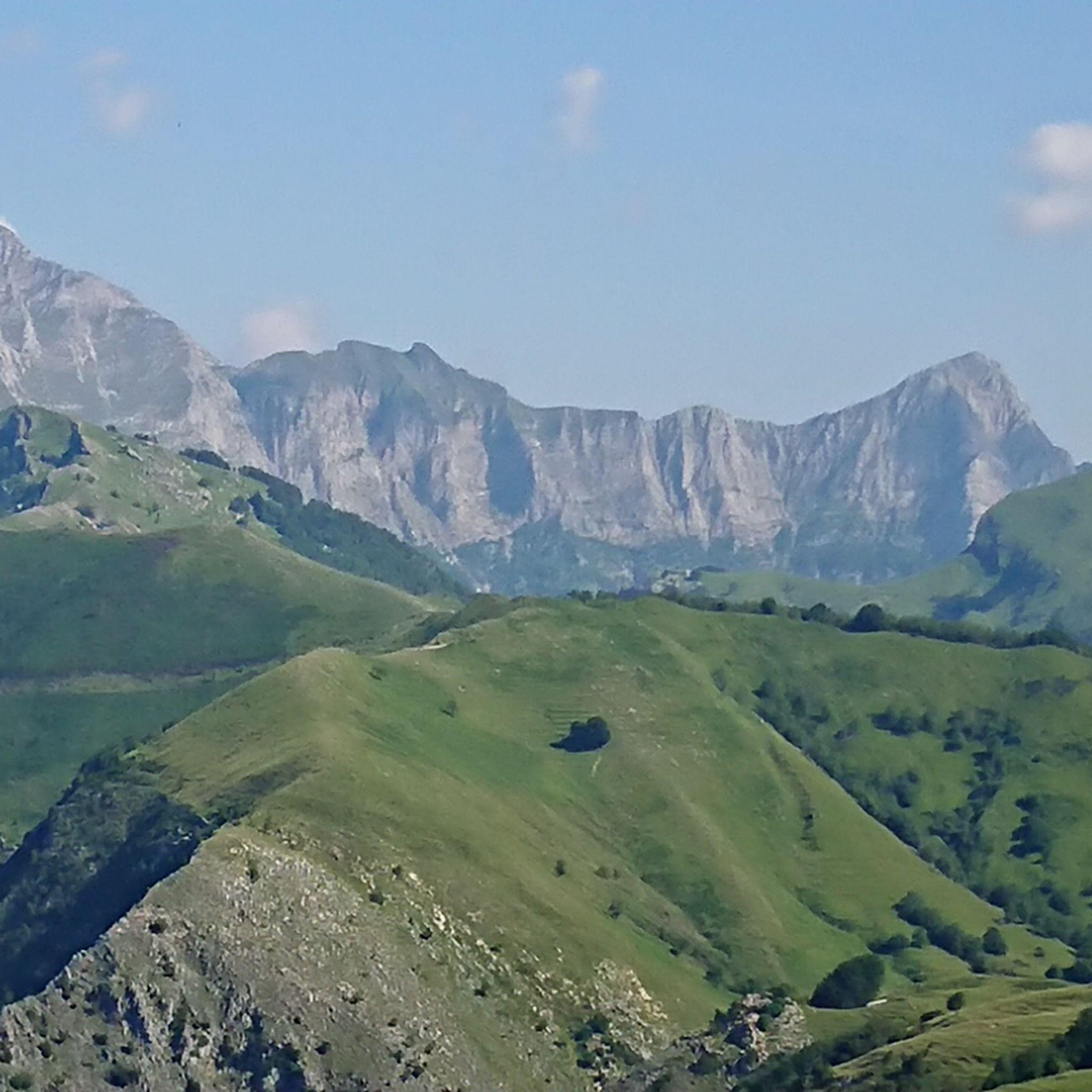
The ruins of the Tower, or Rocca, of Bargiglio stand on the top of the mountain of the same name at 866 meters above sea level at the gates of Garfagnana and the Media Valle del Serchio. Once you arrive at the Tower, it is clear why it has always been called the "Eye of Lucca": the view is panoramic at 360 degrees and offers a perfect view from the peaks of the Apuan Alps, with the Pania di Corfino clearly visible, to the numerous castles and fortresses of Garfagnana, such as the Castiglione Castle and the Mont'Alfonso Fortress. From here you can also dominate the entire Serchio Valley below, from the walls of Barga and Coreglia Antelminelli to Bagni di Lucca, up to the many towns in the Municipality of Pescaglia. And finally, in the distance to the south, the Lucca plain and then the Tyrrhenian coast. The origin of the fortification dates back to an unknown era, probably built by the Suffredinghi, one of the three potentates of Lombard origin who controlled the Serchio Valley who distinguished themselves for their tenacious resistance to the expansionism of the Municipality of Lucca, being bordered by the Este dominions of Garfagnana. It consisted of only one tower, used as an observation and control point of the vast territory, of the road that passed a little further down and of the small community that lived in the farmhouses surrounding the fortification and the ancient Hermitage of S. Bartolomeo.
0
0

The area hosts the ruins of an ancient castle, of Peralla, dating back to the XIII century. What remains of the castle today is only a circular tower and pieces of the walls, in the highest part of the village.
1
0

Nice looping road up to the castle. You can enter the castle for €3. Information is in Italian and English
0
0
If you want to go up to the castle you can go a little further on the main road before turning right and then looping your way up the hill to the castle gate entrance. You can also go inside when it's open (costs €3). Information signs and leaflets have both an Italian and English option. Really interesting history and well worth a visit
1
0

The Montecatino tower is located north of Lucca in the hamlet of Cappella, at the top of a hill about 483 meters above sea level. On the top of Montecatino there are the remains of the church of S. Maria Annunziata, with its almost intact bell tower (the bell is currently located in the parish church of S. Lorenzo della Cappella); furthermore around you can see the remains of the parish rooms and farmhouses. Thanks to the excavations carried out in the summer of 1986 it was discovered that starting from the V - III sec. B.C. the site was an Etruscan settlement. We do not know anything else until 1082 when reference is made, on the Lucchese Chapter, to the Montecativo castle located in that position, very useful strategically, as a signaling "tower" (from the top, in fact, you can see the entire Lucca plain).
3
0
The Rocca di San Paolino was a medieval historical-architectural complex of strategic military importance as a Pisan outpost in the struggles against Lucca. It is a fortification with an irregular polygon formwork and three towers with small squared limestone ashlars, the same one adopted for the construction in the medieval walls of Pisa. In the 15th century it was further fortified to withstand the impact of firearms, thanks to the work of the architect Giuliano da Sangallo. Even today the difference between the original part and the next one can be seen.When the town lost its importance as a strategic military bulwark, the fortress was unfortunately left to itself. On the entrance door you can still see the coats of arms of the Pisan and Florentine podestà, while the old towers remain that of Centino and that of Niccolai.
3
0
Frequently Asked Questions
What kind of historical sites can I expect to find around Camaiore?
Camaiore's history is rich with fortified villages and strategic strongholds, many of which now exist as fascinating ruins or well-preserved remnants. These sites offer a glimpse into the region's medieval past, particularly its conflicts between Lucca and Pisa, and often provide panoramic views. You'll find everything from ancient castle ruins to fortified town gates.
Which castles around Camaiore offer the best views?
Several sites provide excellent panoramic views. Bargiglio Tower, known as the 'Occhio di Lucca' (Eye of Lucca), offers sweeping views of the Lucca plain. The Castle of Montemagno, though mostly ruins, is strategically located and provides magnificent views of the spectacular Freddana valley. The medieval village of Monteggiori also dominates the Camaiore valley, Pietrasanta, and the coast.
Are there any well-preserved medieval fortifications in Camaiore itself?
Within Camaiore town, the most notable surviving fortification is the Arco del Rivellino. This is the sole remaining gate from the town's original fortifications, which began in 1374. It once featured a drawbridge and still displays historical coats of arms, providing a tangible link to Camaiore's defensive past.
Which castles are significant for understanding the historical conflicts between Lucca and Pisa?
For insights into the Lucca-Pisa conflicts, visit Nozzano Castle, built by Lucca to defend against Pisan threats. On the opposite bank of the Serchio River, Rocca di San Paolino di Ripafratta was a strategically important Pisan outpost. Both sites showcase military architecture shaped by this rivalry.
Can I visit the Castle of Montemagno, and what makes it special?
Yes, you can visit the Castle of Montemagno. Mentioned as early as 1099, it served as a noble residence and refuge. While only sections of its outer walls and the façade of the church dedicated to San Bartolomeo remain, these have been restored. Its strategic location controlled the Via Francigena, an important medieval pilgrimage route, and it offers magnificent views of the Freddana valley. You can find more information about it on Visit Tuscany.
Are there any castle ruins that offer an archaeological experience?
The Ruins of a Castle above Peralla, dating back to the 13th century, offer an archaeological experience. Here, you can explore the remnants of a circular tower and fragments of walls in the highest part of the village, imagining its former presence overlooking the landscape.
What kind of outdoor activities can I do near these castles?
The area around Camaiore offers various outdoor activities. You can find excellent mountain hikes, road cycling routes, and running trails. Many of these routes pass by or offer views of the historical sites, combining natural beauty with historical exploration.
Are there specific hiking trails that lead to or near castles?
Yes, many of the castles and fortified villages are accessible via hiking trails. For example, the medieval village of Monteggiori, with its preserved castle walls, is situated on the slopes of Mount Gabberi and can be reached by foot. Exploring the mountain hikes around Camaiore will reveal paths leading to these historical sites.
What is the best time of year to visit the castles and fortified sites around Camaiore?
The best time to visit is typically during the spring (April-June) and autumn (September-October) months. The weather is generally mild and pleasant for exploring outdoor ruins and hiking to fortified villages, and the landscapes are particularly beautiful.
Are there any other notable castle ruins or fortified sites worth exploring in the Camaiore area?
Beyond the main highlights, you can also explore the Castle of Montebello (known as 'il Castellaccio' with remnants of a round tower), the Castle of La Penna (remains of a fortified village), and the Castle of Pedona (with short stretches of walls from a 'castrum' mentioned in 1099). These sites, though less preserved, offer further insights into the region's feudal history.
What is the significance of <a href="https://www.komoot.com/highlight/4115283" target="_blank" rel="noopener">Montecatino Tower</a>?
Montecatino Tower, located north of Lucca, is significant for its strategic position. It was known as a signaling 'tower' from which the entire Lucca plain could be seen. Archaeological excavations have also revealed that the site was an Etruscan settlement as early as the 5th-3rd century B.C., adding layers of ancient history to its medieval importance.
Most popular routes around Camaiore
Most popular attractions around Camaiore

Get inspired with the komoot mobile app


Explore more
Looking for the best castles somewhere else? Discover other guides around Camaiore:
