Top 6 Castles around San Cesario Di Lecce
Best castles around San Cesario Di Lecce are found in this small town and the wider Salento region, offering a rich historical and architectural experience. San Cesario Di Lecce itself features significant historical structures, while the surrounding area boasts numerous impressive fortified residences. The region's castles provide insight into centuries of defensive strategies and noble history. Exploring these sites reveals diverse architectural styles and historical narratives.
Best castles around San Cesario Di Lecce
- The most popular castles is Copertino Castle…
Last updated: June 30, 2026
Bastion of the Urban Walls
Highlight • Historical Site
Tip by

Sternatia
Highlight • Settlement
Tip by
Sign up now to discover places like this
Get recommendations on the best single tracks, peaks, & plenty of other exciting outdoor places.
Sign up for free
Castromediano-Limburg Ducal Palace and Castle, Cavallino
Highlight • Castle
Translated by Google •
Tip by

Copertino Castle
Highlight • Castle
Translated by Google •
Tip by
Torre di Belloluogo
Highlight • Monument
Translated by Google •
Tip by
Sign up for free to discover even more castles around San Cesario Di Lecce.
Sign up for free
Already have an account?
Start today with a free account
Your next adventure awaits.
Login or Signup

Tips from the Community

Splendid medieval castle in the city centre
0
0
In the bar in the square, I don't remember the name
0
0

Castle and ducal palace from the 15th century, which dominates the main square of Cavallino.
1
0

historic center of Cavallino
0
0

Inserted in the collection Salento Fortifications https://www.komoot.it/collection/1396951/-salento-fortificazioni - It is no coincidence that one of the most renowned castles in Salento is worth stopping for a visit. https://www.comune.copertino.le.it/vivere-il-comune/territorio/da-visitare/item/castello-di-copertino
1
0
Posted in Salento Fortifications collection https://www.komoot.it/collection/1396951/-salento-fortificazioni - The castle, or ducal palace, of the Castromediano-Limburg is a construction of the second half of the fifteenth century with structural additions and affected reconstructions during the sixteenth and seventeenth centuries. The noble façade has a fifteenth-century entrance (normally open and accessible and allows you to visit the internal courtyard), while the battlements and bastion are from the sixteenth century. The north side of the factory was added in the 17th century. The interior, characterized by an atrium in which a Lecce stone statue depicting Kiliano di Limburg is positioned [Source: http://www.365giorninelsalento.it/it/m/attr/362/palazzo_castromediano_di_cavallino]
1
0
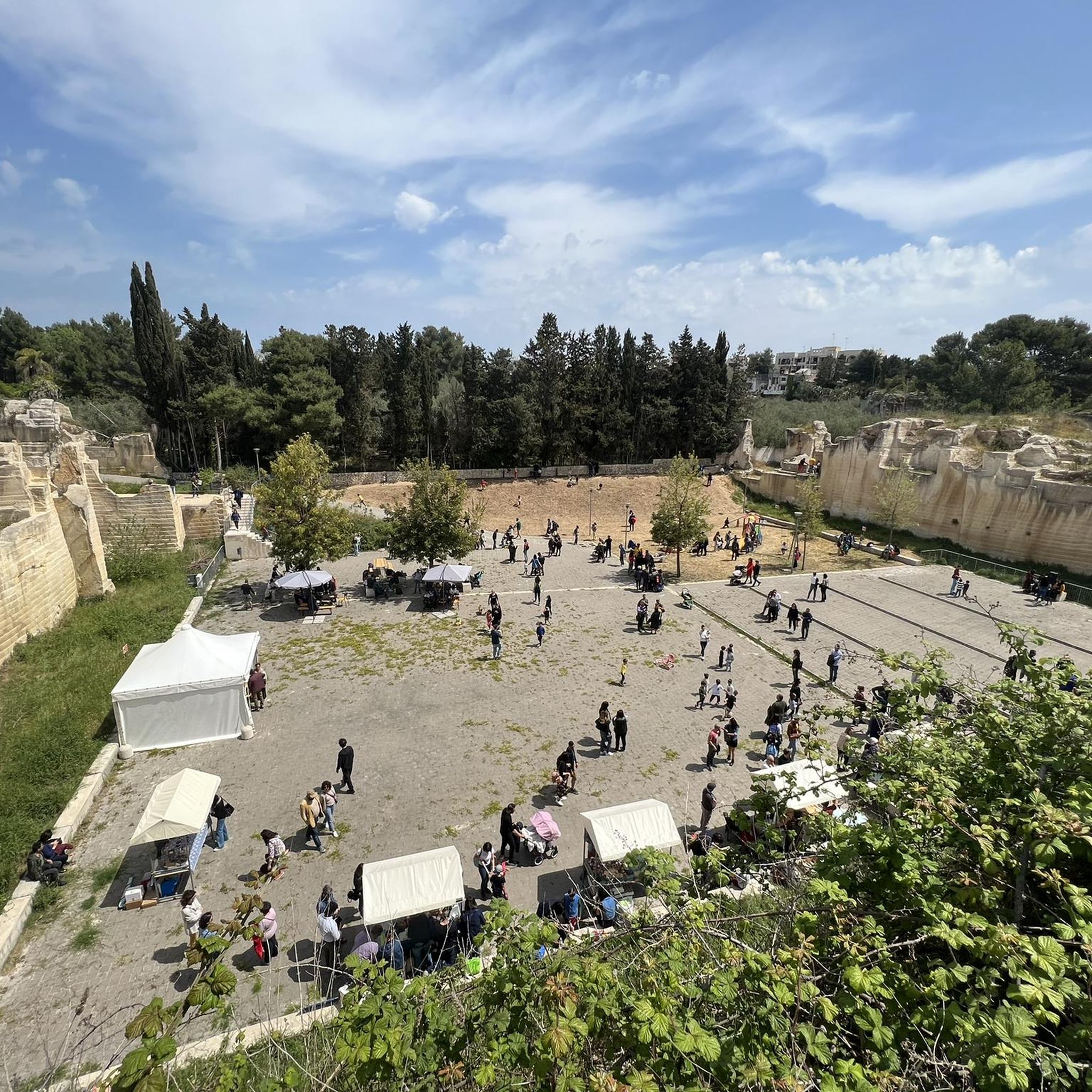
Beautiful city park very popular with Lecce. Great for relaxing lying in the green grass near the tower of the same name.
0
0

It's the village of the Grecìa Salentina area with the highest percentage of people speaking griko. The meaning of the word infact comes from 'Sterna' (cistern, well) and 'Thia' (sacred) which indicates that probably in the past there were wells or sacred cisterns where religious ceremonies were held. Since 1100 was under the Norman , the Swabian and had a certain importance also during the Angevins that in 1334 fortified it with solid walls. From the castle of Sternatia, seat of the Aragonese troops commanded by Giulio Antonio Acquaviva, of which expedition freed Otranto from the siege of the Turks in 1480.
0
0
Frequently Asked Questions
What are the most historically significant castles to visit near San Cesario di Lecce?
Beyond the local Palazzo Ducale, you'll find several historically significant castles. The Castello Carlo V in Lecce, just 5 km away, is a major fortress reinforced in 1539 and now a cultural hub. Another excellent example of 16th-century military architecture is the Castello di Acaya, known for its well-preserved structure and fortified village. For a medieval experience, consider Copertino Castle, one of Salento's most renowned medieval castles.
Are there any family-friendly castles or historical sites in the area?
Yes, several sites are suitable for families. Copertino Castle is noted as family-friendly. The Castello Carlo V in Lecce, with its impressive structure and the legend of the white bear in its moat, can also be engaging for children. Additionally, Torre di Belloluogo is a historical tower situated within a city park, offering green space for families to enjoy.
What kind of architecture can I expect to see in the castles around San Cesario di Lecce?
The region showcases a diverse range of architectural styles. The Palazzo Ducale in San Cesario di Lecce is a prime example of Palladian architecture, featuring precise mathematical proportions and intricate Lecce stone carvings. The Castello Carlo V and Castello di Acaya represent robust 16th-century military architecture, designed for defense. You can also see Baroque influences in structures like Palazzo Granafei, an imposing baronial residence built on a former Byzantine castle.
What outdoor activities can I do near these castles?
The area around San Cesario di Lecce offers various outdoor activities. You can find numerous routes for mountain biking, running, and cycling. For example, there are moderate MTB trails like the 'Acaya Castle – Acaya Castle loop'. If you prefer running, explore running trails such as the 'Lecce Cathedral at Night – Roman Amphitheatre loop'. Cyclists can enjoy cycling routes like the 'Acaya Castle – Acaya Castle loop from San Cesario di Lecce'.
Is there public transport available to reach the castles from San Cesario di Lecce?
While San Cesario di Lecce is a small town, its proximity to Lecce (just 5.3 km) means that public transport options to Lecce are generally available. From Lecce, you might find local buses or taxis to reach specific castles like Castello Carlo V. For Castello di Acaya, transport might be more limited, and checking local bus schedules or considering a car rental is advisable.
Are there guided tours available for the castles?
Many of the larger, more popular castles, such as the Castello Carlo V in Lecce and the Castello di Acaya, often offer guided tours or audio guides, especially during peak tourist seasons. These tours provide deeper insights into their history, architecture, and legends. It's recommended to check the official websites of individual castles for current tour availability and booking information.
What is the best time of year to visit the castles in the Salento region?
The Salento region, including San Cesario di Lecce, is pleasant to visit during spring (April-May) and early autumn (September-October). During these months, the weather is generally mild and comfortable for exploring historical sites without the intense heat of summer. Summer (June-August) can be very hot, but all castles are typically open. Winter months offer fewer crowds but some sites might have reduced hours.
Can I find cafes or restaurants near the castles?
Yes, especially near castles located in or close to towns. The Palazzo Ducale is in San Cesario di Lecce, where you'll find local amenities. The Castello Carlo V is in the heart of Lecce, a city with abundant cafes, restaurants, and shops. Even the fortified village surrounding Castello di Acaya might offer some local eateries, though options may be more limited compared to larger cities.
What is the <a href="https://www.komoot.com/highlight/4480092" target="_blank" rel="noopener">Castromediano-Limburg Ducal Palace and Castle</a> known for?
Located in Cavallino, this castle and ducal palace dates back to the second half of the 15th century, with significant additions in the 16th and 17th centuries. It's known for its noble façade, which features a 15th-century entrance, and its impressive battlements and bastion. Inside, you can find an atrium with a Lecce stone statue depicting Kiliano di Limburg, offering a glimpse into the noble history of the region.
What makes the <a href="https://www.komoot.com/highlight/2855295" target="_blank" rel="noopener">Bastion of the Urban Walls</a> an important historical site?
This imposing historical fortification is a testament to the 16th-century defensive interventions implemented by Emperor Charles V to counter Turkish invasions. The adaptation of these walls was overseen by architect Gian Giacomo dell’Acaya. It showcases how fortifications were modernized with bulwarks to resist new weaponry of the time, featuring a defensive front about 60 meters long and two floors.
Are there any castles or historical buildings that showcase Salento Baroque architecture?
Yes, the region is rich in Baroque architecture. While many castles are primarily defensive, you can find stunning examples of Salento Baroque in structures like Palazzo Granafei. This imposing baronial residence, built on a former Byzantine castle, features a finely decorated facade, Rococo frescoes of mythological scenes, and a beautiful hanging garden, making it a valuable example of the style.
Most popular routes around San Cesario Di Lecce
Most popular attractions around San Cesario Di Lecce

Get inspired with the komoot mobile app


Explore more
Looking for the best castles somewhere else? Discover other guides around San Cesario Di Lecce:
