Top 5 Caves around Capri
Best caves around Capri are natural formations along the island's coastline, characterized by their unique geological features and historical significance. Capri, an island in the Tyrrhenian Sea, is known for its sea caves and diverse rock formations. These caves often feature distinct colors in their waters and walls, resulting from sunlight interaction and mineral deposits. The island's geology provides a variety of cave experiences for visitors.
Best caves around Capri
- The most popular caves is Blue Grotto (Grotta Azzurra), Capri, a cave known for its ethereal blue light. This blue hue is created by sunlight filtering through an underwater cavity, reflecting upwards through the seawater.
- Another must-see spot is Matermania Cave, a cave also known as Grotta del Matrimonio. It is a cavity about 30 meters long and 20 meters wide, with an average height of 10 meters.
- Visitors also love The Cave of Minerva (also known as the Sanctuary of Athena), a historical site. This cave is associated with ancient worship and requires ropes for descent and ascent.
- Capri is known for sea caves, historical caves, and grottos with distinct water colors. Visitors can explore a variety of natural features, from the blue-hued Grotta Azzurra to the white calcareous deposits of Grotta Bianca.
- The caves around Capri are appreciated by the komoot community, with more than 30 upvotes and 14 photos shared by visitors.
Last updated: May 2, 2026
Blue Grotto (Grotta Azzurra), Capri
Highlight • Cave
Translated by Google •
Tip by

Grotta del Noglio Access and Swimming Spot
Highlight • Cave
Tip by

Sign up now to discover places like this
Get recommendations on the best single tracks, peaks, & plenty of other exciting outdoor places.
Sign up for free
Matermania Cave
Highlight • Cave
Tip by

The Cave of Minerva (also known as the Sanctuary of Athena)
Highlight • Cave
puntacampanella.org/aspetti-archeologici/tempio-di-atena-punta-campanella
To go down (and back up) you have to use ropes fixed to the rock.
The photos were taken by @aannuziat (Angelo)
Translated by Google •
Tip by

Start today with a free account
Your next adventure awaits.
Login or Signup
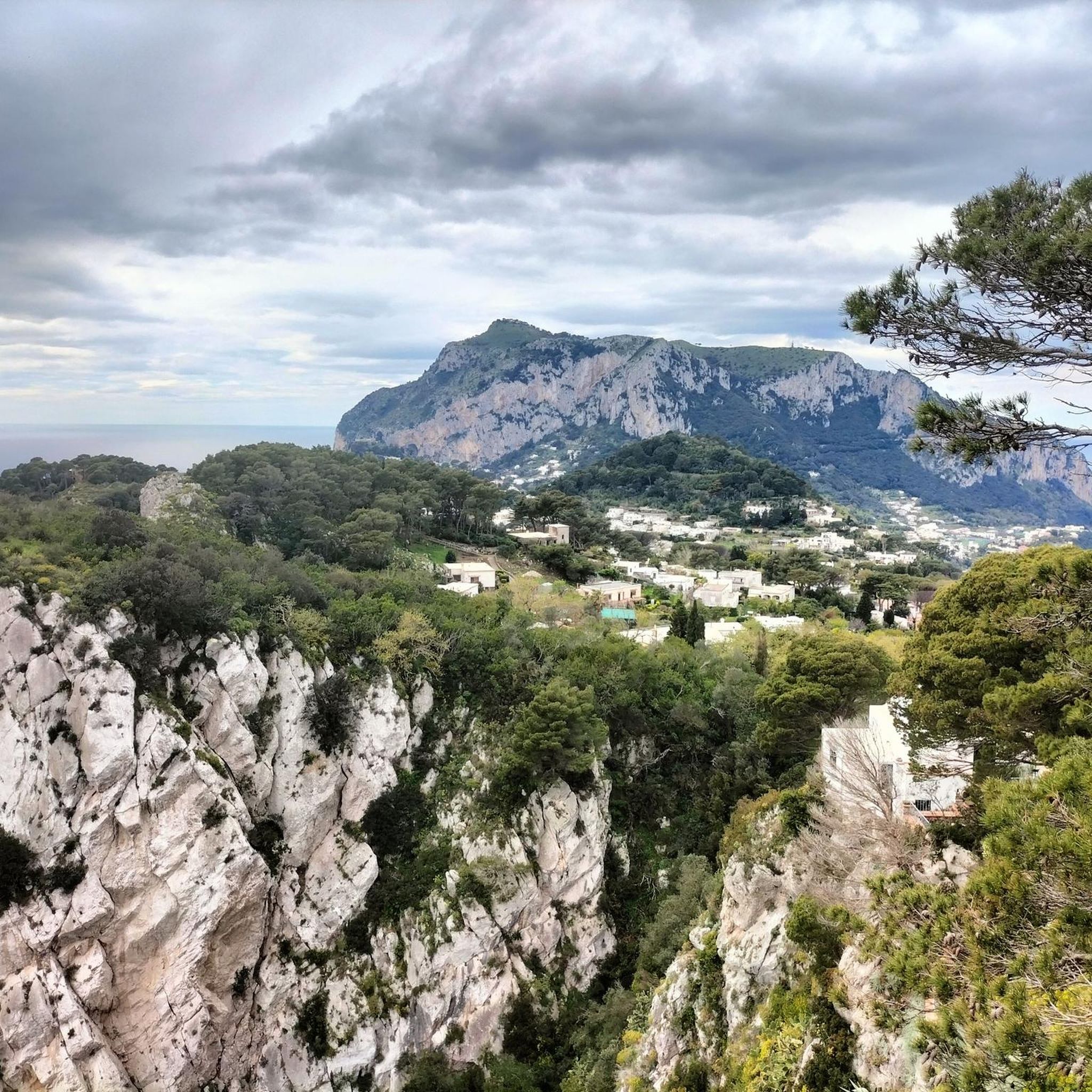
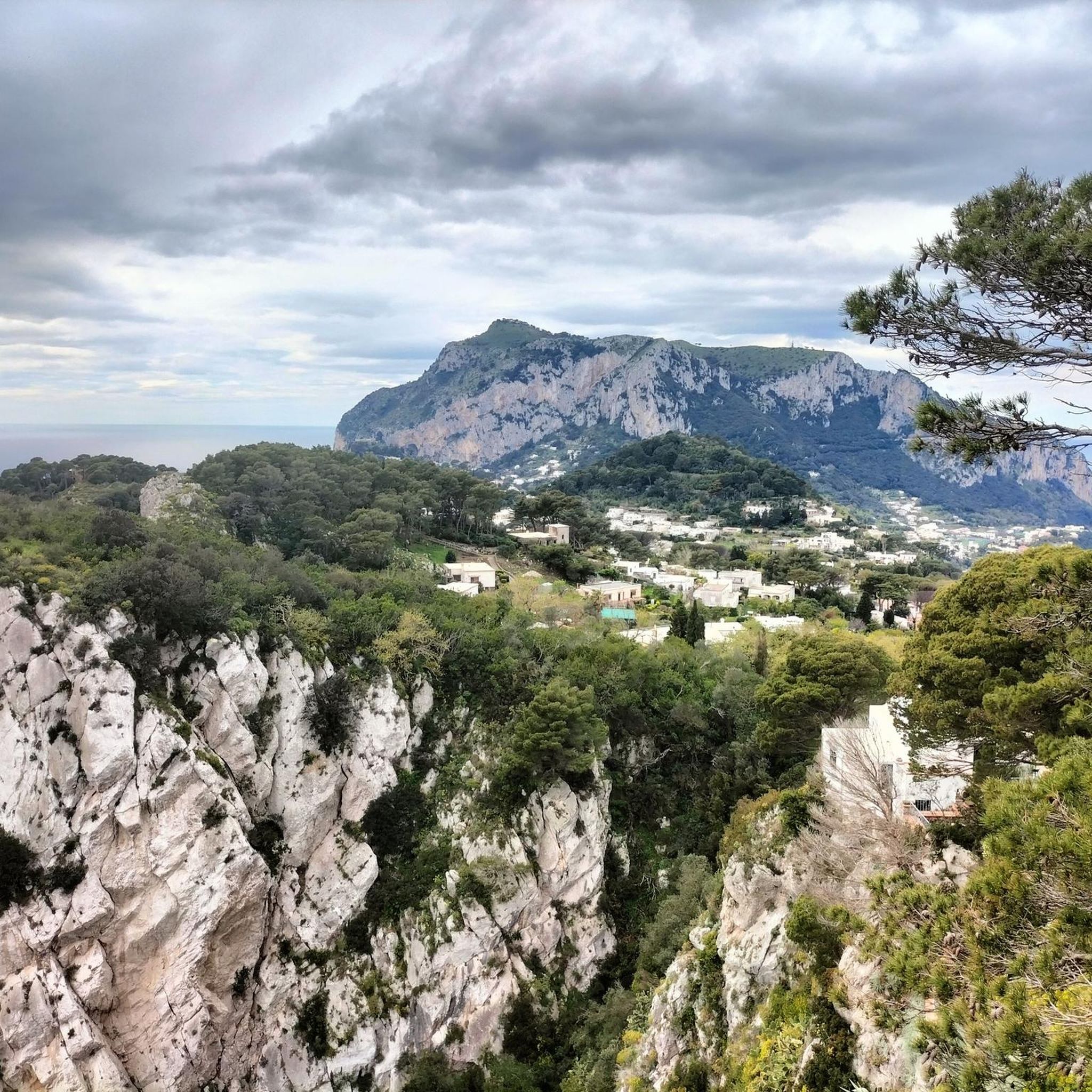
Other adventures around Capri

Tips from the Community

The temple of Athena (or Athena): https://www.puntacampanella.org/aspetti-archeologici/tempio-di-atena-punta-campanella To go down (and back up) you have to use ropes fixed to the rock. The photos were taken by @aannuziat (Angelo)
3
0

Descent towards the Minerva cave
0
0

Near the tower, in a crack in the ground, you can go down to the Grotta di Minerva or delle Sirene, where it is said that Partenope found refuge here when she was far from the island of Li Galli. The reflection of the sea, together with the reflections of light that penetrate from its openings, amplify the mystical aura of the place. Climbing routes are traced on the external walls of the cave overlooking the sea. The descent to the cave is not suitable for everyone, spurs of rock, slippery in places, force you to hold on to ropes set up for sections of mountaineering difficulty. Along the rocky wall of descent it is said that a rock epigraph was carved in the Oscan language that mentions the names of those who worked on the landing in the 2nd century BC.
0
0
Near the tower, in a crack in the ground, you can go down to the Grotta di Minerva or delle Sirene, where it is said that Partenope found refuge here when she was far from the island of Li Galli. The reflection of the sea, together with the reflections of light that penetrate from its openings, amplify the mystical aura of the place. Climbing routes are traced on the external walls of the cave overlooking the sea. The descent to the cave is not suitable for everyone, spurs of rock, slippery in places, force you to hold on to ropes set up for sections of mountaineering difficulty. Along the rocky wall of descent it is said that a rock epigraph was carved in the Oscan language that mentions the names of those who worked on the landing in the 2nd century BC.
0
0

Access via Via Grotta Azzurra and then only possible by boat.
1
0

The Blue Grotto is a cave whose entrance is a 1.5 meter high rock hole in the sea. The cave is about 52 meters long and 30 meters wide, the water inside is about 15 meters deep. Since daylight enters the grotto mainly below sea level reflected in the sea water, the water inside the cave shimmers in a peculiar blue hue. Max, 4 people have to lie in the boat to get into the cave. The gondolier has to watch for the right wave and then he pulls himself into the cave on a chain. The same also happens when exiting the cave. You have to lie on top of each other and the boatman pulls himself out with the chain. If the waves are too high then the cave will be closed.
1
2


Steep descent to the grotto but worth seeing
0
0
Frequently Asked Questions
What makes the Blue Grotto (Grotta Azzurra) in Capri so special?
The Blue Grotto is famous for its ethereal, shimmering blue light. This mesmerizing hue is created by sunlight filtering through an underwater cavity, reflecting upwards through the seawater. Visitors enter in small rowboats, often having to lie down to pass through the low opening, making it a truly unique natural wonder.
Are there other sea caves in Capri with distinct colors?
Yes, beyond the Blue Grotto, Capri boasts several other sea caves known for their unique colors. The Green Grotto (Grotta Verde) on the southern coast is distinguished by its vibrant emerald green waters. The White Grotto (Grotta Bianca) on the eastern coast earns its name from dazzling white calcareous deposits on its walls and white stalactites. There's also the Grotta del Corallo (Coral Grotto), characterized by reddish hues from sea tomatoes and purple coral.
What is the best time to visit the Blue Grotto for the optimal light effect?
The Blue Grotto is best visited around midday when the sunlight is optimal for creating its famous blue effect. However, access depends on sea conditions; if the waves are too high, the cave will be closed.
Are there any historical or ancient caves to explore in Capri?
Yes, Capri has caves with historical significance. The Matermania Cave, also known as Grotta del Matrimonio, is a large cavity with historical roots, believed to be a site of ancient worship. Additionally, The Cave of Minerva (Sanctuary of Athena) is a historical site associated with ancient worship, though it requires ropes for descent and ascent.
How difficult is it to access some of Capri's caves?
Access difficulty varies by cave. For the Blue Grotto, you enter by small rowboat, often needing to lie down due to the low entrance. Caves like The Cave of Minerva and Grotta del Noglio require ropes for descent and ascent, and their access points can be slippery, making them not suitable for everyone. Other caves like the Green Grotto have larger entrances and are more accessible by boat for swimming and snorkeling.
What kind of geological formations can be found in Capri's caves?
Capri's caves showcase diverse geological formations. The White Grotto features dazzling white calcareous deposits on its walls and clusters of white stalactites hanging from its roof. The Matermania Cave is a significant cavity, and the Blue Grotto's unique blue light is a result of sunlight interacting with its underwater cavity.
What outdoor activities can I do near the caves around Capri?
Beyond exploring the caves, the region around Capri offers various outdoor activities. You can find numerous routes for mountain biking, road cycling, and running. For mountain biking, consider trails like 'Mount Santa Croce and Mount San Costanzo' or 'Belvedere di Migliara loop from Anacapri'. Road cyclists can explore routes such as 'Grotta delle Felci – Palazzo a Mare loop from Capri'. Runners might enjoy 'Faraglioni of Capri – View of Villa Malaparte loop from Capri'. You can find more details on these activities in the MTB Trails around Capri, Road Cycling Routes around Capri, and Running Trails around Capri guides.
Are there any caves in Capri that are good for swimming or snorkeling?
Yes, the Green Grotto (Grotta Verde) is particularly suitable for swimming and snorkeling. It has a large entrance and crystal-clear waters, offering a tranquil experience compared to the often-crowded Blue Grotto.
What do visitors enjoy most about the caves around Capri?
Visitors frequently highlight the unique visual experiences, such as the ethereal blue light of the Blue Grotto and the vibrant green waters of the Green Grotto. The historical significance of sites like Matermania Cave and the adventurous access to others like Grotta del Noglio also appeal to many. The natural beauty and distinct geological features, along with the opportunity for boat tours, are often praised.
How long does a typical visit to the Blue Grotto last?
While the queue to enter the Blue Grotto can be long, the actual visit inside the cave is relatively short, typically lasting only a few minutes. Despite the brevity, many find the otherworldly blue glow and unique experience unforgettable.
Can I reach the Blue Grotto using public transport?
Yes, you can reach the area near the Blue Grotto via public transport, often involving a bus ride to the vicinity of Via Grotta Azzurra. From there, access to the grotto itself is only possible by boat.
Are there any less-known or 'hidden gem' caves in Capri?
While not as famous as the Blue Grotto, caves like Grotta Meravigliosa (Marvelous Grotto) and Grotta del Corallo (Coral Grotto) offer unique experiences. Grotta Meravigliosa, often associated with Grotta Bianca, requires a short swim for further exploration, appealing to adventurous spirits. Grotta del Corallo stands out with its reddish hues from sea tomatoes and purple coral, offering a different color palette.
Most popular routes around Capri
Most popular attractions around Capri

Get inspired with the komoot mobile app


Explore more
Extend your search for the best caves by checking out these guides of the top ones around Capri:
